Productive Transformation and the Creation of value: A Case of Human Rights & Dalit Activist in Nepal

Productive Transformation and the Creation of value: A Case of Human Rights & Dalit Activist in Nepal

Ganesh Bk
Rastriya Dalit Network, Nepal

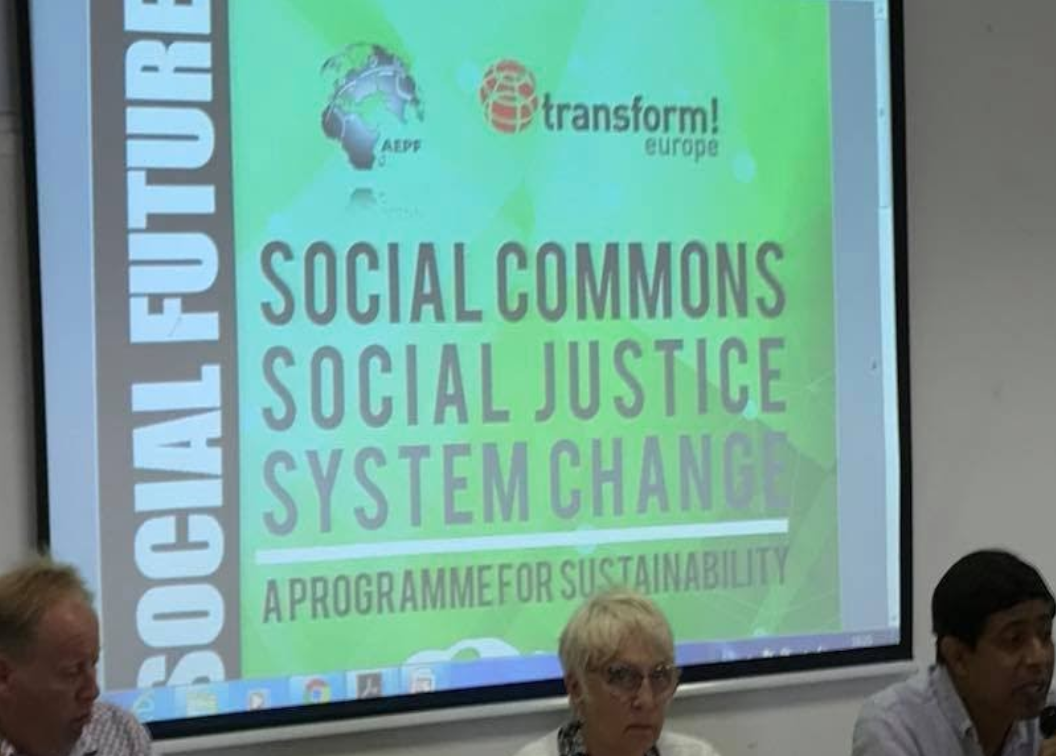
This is a presentation about the Dalits (Lower castes) in Nepal. It is recognized that Dalits (lowest castes in the Hindu caste system-deigned to be only menial workers) have been socially, economically and historically excluded. We show that the Dalits continue to be an excluded community. It is important for social movements to address the Dalit question in Nepal.

A. Political Sectors

  • Lack of inclusion in political parties : 
    • No major post 
    • Communist Party of Nepal (CPN) has 24 out of 341
    • Nepal Congress (NC) 5 out of 85
  • Lack of inclusion in parliamentary bodies : 
    • Federal Government: Minister. Only 1, province -0
    • Federal MPs: 19 (16 female and 3 male)
    • Province MPs: 34 (29 female and 5 male)
    • District Chair 6 (77), deputy Chair 3 (77)
    • Mayor 5, Deputy mayor  9 (393)
    • Village Chair 3 (753), Vice Chair 7(753)
    • Ward Chair 300 (6743), Dalit Women 5653(6743)
    • No Dalit became/chosen as a minister (2007 to 2057 BS).
  • Lack of inclusion of administrative bodies :
    • CDO 1 (77)
    • Secretory 0
    • Judge 2 (No one in Supreme Court)
    • Joint Secretory 1
    • Planning commission (0) despite 70 years history.

B. Economic Sectors

  • Landlessness : 
    • 44% Terai Dalits, 15% Hill Dalits 
  • Malpractices :
    • Haliya, Harawa\Charawa, Balighare
  • Unemployment:
    • There is no fact based data.
    • Only a reservation 45 equals 100

C. Social & Cultural Sectors

  • Lack of education (Dalit Literacy rate:33% (National average 54%)
  • Impunity (16 Dalits are killed)
  • Untouchability ( 1000s of case found).

New Constitution of Nepal and Dalits

  • The Preamble:
    It mentions non-discrimination and elimination of all forms of caste discriminations and untouchability.
  • Fundamental Rights and Duties includes 31 various rights relating to civil and political, economic, social and cultural rights; as well as right to development.
  • We have JUSTICE, LIBERTY, EQUALITY & FRATERNITY.
  • It makes clear that Identity, Accessibility and Representation in the constitution.
  • Constitutional Dalit Commission.
    1. Right to Freedom:
    2. Right to Equality:
    3. Right against Preventive Detention:
    4. Right to Women:
    5. Right to Dalit (Rights to land, empowerment, Health, Education, Housing)
    6. Right to Inclusion:
    7. Right to Social Justice:
    8. Right to Remedy: The Article 51 for the right to constitutional remedy and enforcement of fundamental rights is the weakest provision of the Constitution, ever made in Nepal.

But when 3 types of governments were formed but despite this, there has not been any significant change in the benefits or staus of Dalits. There has been no added value for Dalits in production relations, and no creation of value. There is no priority for the much needed land reforms in the country. The land reform issues has been converted into land management and agrarian development. In this connection we are demanding a: Dalit Rights Decade (2020 to 2030).

The Nepal Dalit movement requires:

Productive Transformation

  • Productive transformation that contributes to creating value of production, better jobs as a result of all sections of society working together.
  • We have many challenges: accumulation of productive capacity, technology adoption, quality education for competitiveness, safe and stable environment, Dalit friendly infrastructure and sustainability, among others.

Human Rights and Social Justice

  • Structural change & Ownership patterns for Dalits.
  • The global economic system and integration of Nepal
  • Global value chains,
  • Influence of the financial market and the new corporate governance system.
  • The political economy of technology upgrading.
  • Industrial policy, including its political and social dimensions
  • The practical design of structural upgrading strategy, including the development of appropriate indicators
  • Rights discourse and claims by marginalised groups.

Productive effects of contemporary neoliberal economics:

  • Polarization of labour market.
  • The number of high-education jobs (Doctor, Engineers) and middle-education jobs (clerks, machine operators, assemblers) is declining.
  • Number of low-education service occupations,
  • Technology was incorporated performed by middle-skill workers, causing substantial change.
  • Lack of Free Competition
  • Reservation or affirmative action has been insufficient.
  • Class problem, where there is a convergence of caste and class.

Mode of production, change in the future of work

  • Introduction of multifunctional robots has been most extensive in the developed world and gradually being transferred to the developing countries.
  • Massive investment to implement these labour displacing technologies is required and expenditure for social sector is diverted.
  • Collaborative economic models need to be researched.
    Intelligent machines will be increasingly capable of carrying out high-skill and possible non-routine tasks.

Impact in labor market

  • Industrial production, concerns about the potential displacement of labour emerge.
  • Displacement or productivity- will dominate in the artificial intelligence era?
  • New industries have also emerged, with a net positive impact on employment.
  • Past industrial revolutions in the west suggest that in the short run the displacement effect may dominate, but in the longer run, when market and society are fully adapted to major automation shock, the productivity effect can dominate and have positive impact on employment
  • The lesson from the west must be learnt.

Ways to integrate social issues & guarantee security for all?

  • The ability to use the technological advances for the benefit of their work requires developing particular digital skills through well designed policies
  • Policymakers will need to develop a framework of rules for the operation of machines and AI system.
  • Collective consultation with affected parties and experts.
  • Comprehensive debate on the regulation of the liability, safety, security and privacy of these technologies.
  • Updating of relevant skills and training program working with these new technologies.
  • Equilibrium approach- focus on automated technology, the industrials robots, and their impact on employment.
  • Respect/improve cultural norms and values of indigenous production system.

Challenges and opportunities

  • Accumulation of productive capacity.
  • Technology adoption.
  • Education for competitiveness.
  • Safe and stable business environment.
  • Infrastructure.

Summing up

  • Looking at the labour displacement and productivity effects of AI on employment, the middle-level jobs that require routine manual and cognitive skilled are the ones that are most at risk.
  • In the long run, initial labour displacement effects of job with routinized manual or cognitive skills, as in previous industrial revolutions, will be compensated for by the growth in non-routine jobs at the high and low end of the economy.
  • Need to take into account that firms’ market strategies and investment are endogenous to technology shocks.
  • Nepal needs stronger affirmative action to include Dalits into the political and economic and governance structures in Nepal.
Read More

Christphe Aguiton: “New Challenges for Social Protection in Europe”.

Christphe Aguiton "New Challenges for Social Protection in Europe"

French sociologist and activist Christophe Aguiton who  works with ATTAC, presents a power point on ‘New Challenges for Social Protection
in Europe.’

Christophe Aguiton shows that decent and increased social expenditure spending by governments helps people live sustainable lives. And leads to socially cohesive societies.
Read More

Refugees And Migration In Europe

Refugees And Migration In Europe

Kalle Sysikaski
The PEACE Union of Finland

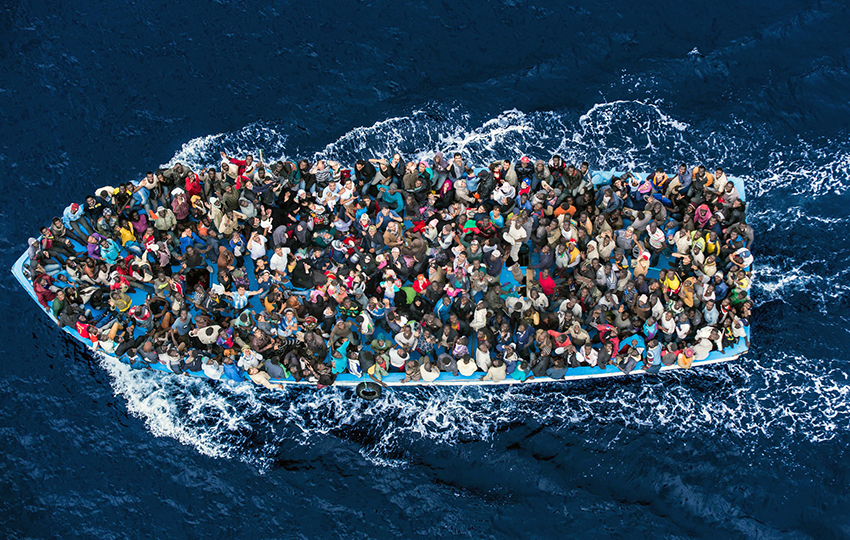
Irregular migration to Europe did decrease last year, primarily because fewer Syrians are fleeing their war-torn country. More migrants -almost 700 000 people- are also being detained in Libya. As a result many African migrants in Italy who have crossed the Sahara to Libya have stated that they eventually boarded a boat from there not as a final step toward Europe but to escape imprisonment or torture in Libya.

Migrant routes into the EU also continue to shift in response to closing boarders . Spain has seen sea arrivals increase tenfold since 2015. This is mainly because Italy where most refugees arrive by boat from North Africa has tried to keep migrants out in a different ways like outsourcing its border security. In 2017 Italy struck a deal to supply Libyan cost guard with vessels and anti-smuggling training.

The agreement promised USD325 million if Libyan agents would intercept migrants crossing the Mediterranean and return them to Libyan detention centres.

HR organisations have guestioned the deal, citing Libya´s political unrest and documented history of migrant enslavement and torture. When returning migrants to detention centers Libya may also violate international law because refugees cannot be kept safe there.

Persecution, conflicts and human rights violations continue to force people to flee their homes and seek safety in Europe keeping in mind that there are more than 60 million refugees alltogether in the world, out of whom only a small minority want to come to Europe.

In 2015 high numbers of migrants , most of them from Syria, Afganistan and Iraq entered the EU via Turkey,Macedonia, Serbia and other Balkan countries by foot.

An estimated 362 000 refugees and migrants risked their lives crossing the Mediterranean Sea in 2016 with 181,000 arriving to Italy and 173,000 in Greece. In the first half of 2017, over 100,000 refugees and migrants entered Europe. Many thousands have died or have gone missing since beginning of 2017.

Those arriving in Europe need adeguate reception and assistance ,particulaly those with specific needs including unaacomppanied and separated children and surivivors of sexual and gender based violence . More solidarity is needed within the EU to ensure protection including through efficient and speedy family reunion and relocation.

In 2015 some European states led by Germany, recognized that their strategy of seeking to block refugees moving across borders was unrealistic and harmful. Countries worked together to allow migrants to move onwards to the places they wished to reach, This allowed reception countries to focus their resources on supporting asylum seekers and considering claims.

But by 2016 support for this policy began to wane, with increased hostility towards migrants entering the political discourse -even if there were thousands of groups consisting of common people in European countries who wanted to help and support the asylum seekers. Certain countries along the migrant route began to close their borders. The situation further deteriorated when the EU´s decision to transfer 160 000 asylum seekers from Greece and Italy to other European member states was met with widespread resistance. In the end only few countries ,mainly in the north of Europe took the transfers.

In response to the failure to adeguately process asylum claims, the EU set up special hotspots in Greece and Italy. Hotspots identify,register and fingerprint incoming migrants and redirect them either towards asylum or return procedures. In practice many hotspots are turning into overcrowded and understaffed detention and expulsion centers with little external oversight.

In March 2016 the EU announced a deal in which Turkey would try to stop people from moving onward into Europe. In return Turkey was promised financial assistance, visa-free travel to the EU for Turkish citizens. But the deal failed to close the border, even if it slowed the movements from Turkey, and thousands of migrants continued to travel irregularly using smugglers and illegal risky means. Since the deal only about 1000 asylum seekers have been sent back from Greece to Turkey because Greek officials and courts consider Turkey to be an unsafe country.

This deal is one example of a controversial practice in which the EU links development aid or economic incentives to commitments by states to stem and manage the movements of people from their territory. Similar deals are planned with number of third countries including Libya, Egypt, Sudan and Nigeria.

The European Commission proposes a new “Partnership Framework” with third countries in the Middle East and Africa , leading to criticism by a broad range of actors for deal making with countries with poor human rights record and for conflicting with international protection frameworks, including the right to leave one´s own country.

The EU also continues to support refugees in host countries like Turkey, Lebanon and Jordan -where the majority of Syrian refugees are hosted – including through funding for UN agencies working in the field such as the UNHCR and The WFP.

With anti-immigration sentiment on the rise across the continent, the presence in Italy´s government of the far-right party of Matteo Salvini, which campaigned on a pledge to send 500 000 irregular migrants home, is making itself felt. The similarly rightwing, populist Freedom party is sharing power in Austria.

In Germany – which wellcomed more than 1 million migrants in 2015 under Angela Merkel´s open-door policy – the rightwing Alternativ fur Deutcshland party has kept immigration at the top of the political agenda. After many electoral setbacks Merkel has said she will not stand again. Polling shows immigration and terrorism remain EU citizens top concern. Every time there is a islamist terrorist attack or a migrant commit even to a small crime the right-wing parties try to benefit from that.

That is the case also in France, Finland, Sweden, Norway and Denmark where the government is governing with the support of the far right. The main political plank of the far right is to stir up anxiety and threat by migrants.

There is a wide political understanding that Europe needs to urgently overhaul its asylum and immigration rules. At present Spain, Italy and Greece take most of the strain owing to their geographical position on the Mediaterranean Sea and the fact that under EU law, asylum seekers must lodge their applications in the first country they enter.

However , no one can agree on what to do. The political leaderships in some countries want tougher external border controls, others fairer distribution of new arrivals. Any solution wll have to balance the concerns of frontline southern states with those of wealthier northern destination states while dealing with the refusal of hardline central and eastern ones like Hungary and Poland to accept migrants at all. Hungary´s leader Victor Orban is leading a call for a strong border to stop an invasion.

But the migration is one of the great challenges of the globalised world. Refugess will always move across borders to seek safety for themselves and their families in the face of war, percecution and conflict. People who face poverty in their home country will always move in search of a better life for themselves and their families.

The underlying causes of migration is instability and oppressions in their own country. Wars, militray interventions foment the breakdown of socieities. There are spill over of conflict to neighbouring regions. Such insecurity leads to massive migration. TheEU must ceize support to militray interventions, agrresive wars and rogue regimes. The political focus should be on humane policy and institutional responses to migration rather than on emergancy humanitarian relief.

Read More

‘Korean Peace Process’and Building the Multilateral Common Security System in East Asia (I)

‘Korean Peace Process’and Building the Multilateral Common Security System in East Asia (I)

23-24 Sept. 2019, Berlin

Jun Kyu Lee
(Senior Researcher, Institute for Unification and Peace Policy, Hanshin University, Republic of Korea)

1. As a citizen of divided country/nation which is the legacy of the Cold War, it is a very impressive experience to make a presentation on the Korean Peninsula and East Asia in Berlin.

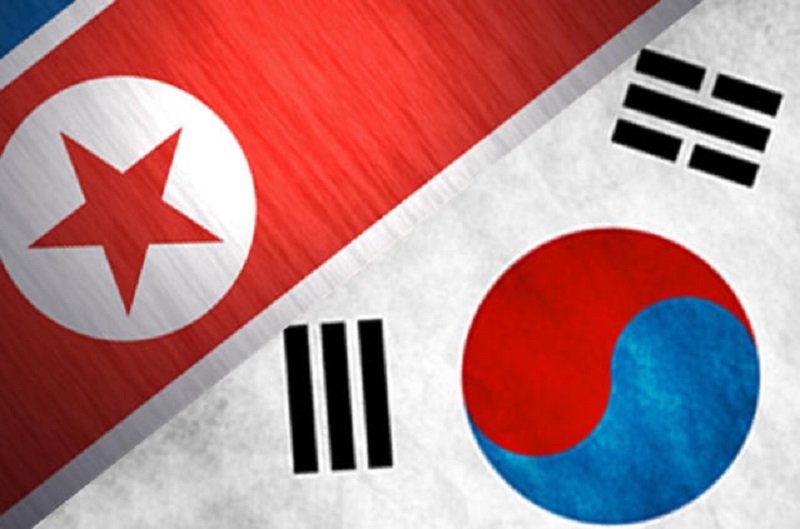
Compared to last year when drastic changes were a constant, the current situation on the Korean Peninsula following the ‘Hanoi No Deal’ is moving along step by step on a steep path. In June, the DPRK (North Korea), US, and the ROK (South Korea) had a lightning meeting at Panmunjom but official negotiations between the DPRK and the US have not yet resumed.

The current conjuncture of peace in international politics surrounding the Korean Peninsula has been constructed by the improvement of inter-Korean relations. Representative examples include the Pyongchang Winter Olympic Games, and three inter-Korean summits held on April 27, May 26 and from September 18 to 20 in 2018.   However, the deadlock in the DPRK-US negotiations has restrained the process of improving inter-Korean relations, and recently, the DPRK’s propaganda media have reinforced its tone of criticism against the South.

It seems clear that the DPRK is considerably dissatisfied with the ROK. In fact, the ‘Yongbyon card’ – permanently closing Yongbyon nuclear complex – proposed at the Hanoi Summit, which the US refused, was specified in the Joint Declaration by the Two Koreas’ Summit talks held in Pyongyang from 18 to 20 September 2018. In addition, various agreements between the South and the North are rarely implemented due to US and UN sanctions against the DPRK.

Of course, there have been small but significant advances such as the demilitarization of the DMZ, the halt of hostile and military action near the demarcation line, maritime peace zone in the West Sea and so on. In addition, at present, the peace process on the Korean Peninsula cannot move forward due to Washington’s reluctance to formally end the Korean War and initiate a peace agreement and treaty meeting.

The DPRK has launched and tested short-range missiles ten times since May this year, ‘subtle’ actions nevertheless still perceived by the South as a threat without provoking the US Trump administration and violating the North-South agreement.

According to media reports from the ROK and the US, there is a possibility that a working group dialogue may begin between the DPRK and the US by the end of September2019. DPRK’s government-running media also mentioned the possibility of resuming the dialogue. But we can most certainly not just ignore the current situation and simply be optimistic about the future of DPRK-US negotiations.

By the way, Bolton resigned or was fired- Bolton said “resigned” and Trump said “fired”. Anyway, Bolton’s resignation is not so much important. The problem is Trump’s unpredictability. Recently, the signal from Washington is not bad. Particularly Trump criticized the ‘Libya Model’ and mentioned “New Approach”.

2. In my opinion, in the background of the failure in the Hanoi Summit there are fundamental differences in the parties’ approach to the denuclearization process and the future of the Korean Peninsula.

Firstly, as you may have learned, the DPRK wanted a step-by-step approach while the US sought a drastic “big deal” to reach an agreement on everything. The Americans came to Hanoi seeing the DPRK’s WMDs as the central problem and tried to get the Kim Team to agree to comprehensive disarmament of his nuclear and biochemical arsenal. The North Koreans sought to entice them to agree to an initial confidence building measure as the first step toward a more comprehensive agreement in the long run. 1

In addition, the so-called Bolton Document, which was handed over to Kim Jong Un on the second day of the summit talks, contained contents that could clearly be interpreted as an insulting ‘surrender request’ from the DPRK’s perspective.2

Secondly, what the peace process of the Korean Peninsula is attempting to address now, is the complete denuclearization of the entire Korean Peninsula, not of North Korea alone. There is a difference in the understanding of the concept of denuclearization. If properly grasped as the denuclearization of the Korean Peninsula, this would entail a change in some form or another in the US nuclear forces and/or its “nuclear umbrella” as unavoidable.

The DPRK has not presented to neither the US nor ROK such a demand as a withdrawal of or breakaway from its “nuclear umbrella” through the course of negotiations up to now. Yet it has demanded the end to hostile policies towards North Korea from the US, therefore including a change in the offensive US nuclear forces, that we cannot overlook. Whether the change means merely the retreat of the currently forward deployed US nuclear forces or the ROK’s breakaway from the “nuclear umbrella” will be up pending negotiation agreements.

The future vision of a peaceful Korean Peninsula which was agreed upon with the “Pyongyang Declaration” in September of last year is “(we agreed) to make the Korean Peninsula a land of peace with no nuclear threat and no nuclear weapons”. We, therefore, must think about how to address the nuclear threat from the US, which Japan and the ROK has so far regarded as the “nuclear umbrella” and deterrence. According to the joint statement, complete denuclearization of the Korean Peninsula can only be accomplished through trust building, new relations between the DPRK and the US, and peace regime on the Korean Peninsula.

3. We need to note the achievements of the three inter-Korean summit talks last year. We can picture the journey of the ongoing conjuncture of peace on the Korean Peninsula. We may call this journey ‘Korean Peace process’.

In the Panmunjom Declaration, the two Korea’s leaders declared that there will be “no more war on the Korean Peninsula”. Additionally,

  • Improvement and development of inter-Korean relations, including the establishment of a joint liaison office in the Kaesong area, the resolution of humanitarian issues, multi-faceted exchanges & cooperation and so on.
  • Joint efforts to defuse military tensions and to substantially lower the risk and danger of war on the Korean peninsula. (=> war-preventing measures, confidence-building measures (CBMs), arms controls).
  • Building a permanent and stable peace regime on the Korean peninsula.  Bringing an end to the current unnatural state of armistice and establishing a firm peace regime on the Korean peninsula is a historic mission that must not be delayed any further. (Peace Regime or Peace System)

The third part of the declaration reaffirmed the non-aggression agreement and mentioned “carrying out disarmament”. In the declaration, the two Koreas agreed to declare an end to the Korean War and promote holding meetings to replace the existing Armistice Agreement with a Peace Agreement and establishing a permanent and solid peace regime. The two Koreas confirmed this as realizable through complete denuclearization.

Particularly, I would like to note the third part which is, in my opinion, the definition of Peace Regime on the Korean Peninsula. According to the definition, this peace regime will be constructed by a peace agreement, arms control and disarmament, including denuclearization.

The Military Agreement, a sub-agreement of the Pyongyang Joint Declaration (19 Sept. 2018), has provided concrete shape to the agreement between the two Koreas. As I mentioned earlier, the military agreement includes various measures alleviating military tension and avoiding war such as Maritime Peace Zone, Demilitarization of JSA, Demilitarization of DMZ, Removing Landmines in DMZ and so on.

The concept of common security includes the peaceful resolution of conflict, self-restrictions, interdependence of security not deterrence, arms control, arms reduction and disarmament. The contents of the declaration are connected to the principles of common security.

The conflict that broke out on the Korean Peninsula in June 1950 was inextricably connected to the earlier conflicts of the Asia-Pacific War and Chinese Civil War, and to tensions that continued long after 1953.” 

“The armistice document was supposed to be the first step toward a more general and lasting peace treaty. Going on 2018, that treaty has yet to be signed. Without a peace process to bring together the neighboring countries of Northeast Asia, the dangerous fissures between them, which had been drastically deepened by the war, festered rather than being healed.”

-Tessa Morris-Suzuki, The Korean War in Asia: a hidden history, 2018

Whatever the case, the above agreement is meaningful. Building a peace regime/system should not be recognized only as rewards to the DPRK. This is a peace process from the perspective of positive peace. From a so-called realistic perspective, it is far more feasible to push denuclearization by advancing the “Peace Process” on the Korean Peninsula. The DPRK has been obsessed with the development of asymmetric warfare capabilities such as nuclear weapons and ballistic missiles to overcome the isolation caused by the collapse of the Cold War on an international level and its inferiority to the military power of South Korea and the ROK-US alliance. For these reasons, the process of establishing a peace regime, including the alleviation of military tensions, arms control and disarmament, are necessary for the DPRK to proceed with denuclearization.

‘The opinion on the peace process in Korea’ which 55 NGOs issued on April 3 this year emphasized “Denuclearization as Peacemaking Process”. The joint statement, published at an international forum held by 20 civil associations from the ROK and Japan, held in Seoul from May 30 to 31 this year, specified that the denuclearization of the Korean Peninsula and Peace Process on the Korean Peninsula, including a peace agreement, the normalization of DPRK-US relations, DPRK-Japan relations and so on, should be carried out simultaneously and in parallel.

4. Some people point out that last year’s agreements between the two Koreas lack a Northeast Asian level/regional level vision. However, the agreements need to be understood in line with many of the previous agreements on the Korean Peninsula regarding nuclear issues.

For example, Six Party Talks and one of their results is ‘9.19 Joint Statement’

In ‘9.19 Joint Statement’ on 19 September 2005, the DPRK and ROK, two Koreas, the United States, China, Russia and Japan committed joint efforts for promoting security cooperation for lasting peace and stability in Northeast Asia.

Indeed, ‘2.13 Agreement’ in 2007, an agreement to determine a follow-up for the ‘9.19 Joint Statement’, included setting up a working group for security cooperation in Northeast Asia. The full title of ‘2.13 Agreement’ is Initial Actions for the Implementation of the 9.19 Joint Statement. Specifically, in the agreement “the Parties agreed on the establishment of the following Working Groups (WG) in order to carry out the initial actions” and the fifth working group was “Northeast Asia Peace and Security Mechanism”.3

The agreements agreed to, in the process between the two Koreas and international efforts to resolve Korean Questions have great implications not only for the Korean Peninsula but also for the future peace order in Northeast Asia and East Asia.

1 Jae-Jung Suh, “From Singapore to Hanoi and Beyond: How (Not) to Build Peace between the U.S. and North Korea” The Asia-Pacific Journal, Volume 17 Issue 10 Number 1, May 15, 2019.

2Reuter’s article, 30 March, 2019.

3Working groups: “Denuclearization of the Korean Peninsula”, “Normalization of DPRK-US relations”, “Normalization of DPRK-Japan relations” and “Economy and Energy Cooperation”.

Read More

‘Korean Peace Process’ and Building the Multilateral Common Security System in East Asia (2)

‘Korean Peace Process’and Building the Multilateral Common Security System in East Asia (2)

23-24 Sept. 2019, Berlin

Jun Kyu Lee
(Senior Researcher, Institute for Unification and Peace Policy,
Hanshin University, Republic of Korea)

1. As we showed in Part I the agreements agreed to in the process between the two Koreas and international efforts to resolve the Korean Questions, including the historic achievements of six party talks and the Two Koreas Summit Meetings, have great implications not only for the Korean Peninsula but also for the future peace order in Northeast Asia and East Asia. Let’s call those efforts to resolve Korean Questions ‘Korean Peace Process’.

It is President Kim Dae-Jung who has made the decisive progress of Korean Process which is the strategy to dismantle “the Cold War on the Korean Peninsula”. He learned from Willy Brandt’s Ostpolitik and emphasized exchanges and cooperation between North Korea and South Korea, particularly in the non-political and non-military issue area. And the priority in the external policies of his government was diplomacy toward 4 Powers-USA, China, Russia, Japan- surrounding the Korean Peninsula.

2. The division, war, and ideological-military confrontation on the Korean Peninsula is a product of the Cold War. As I mentioned yesterday, the word ‘Cold War’, according to historian John Dower, is “parochial and cruel jokes”. Anyway, we usually use the word. Therefore, I am using the East Asian Cold War.

Conversely, the Korean Peninsula was a decisive factor in the formation of the East Asian Cold War and thus it became the focus of the Cold War in this region. For example, 1951, during the Korean War, the Treaty of San Francisco was signed, which established the post-war order in East Asia. While Japan became the first US ally and a “military base state” under the San Francisco system created by the treaty, the ROK has become a “front-line state” to containment of “global communism”. Okinawa and Guam became strategic footholds for the US to operate in the Asia Pacific region politically and militarily, while the militarization of Okinawa and Guam was accelerated for that purpose.

Therefore, the advance of the Korean Peace Process, in other words the structural transformation of ‘the division system on the Korean Peninsula’ – a concept attributed to Professor Baek Nak-cheong, a prominent intellectual in Korea -, is not only limited to peace on the Korean Peninsula but also an opportunity to dismantle the existing East Asian Cold War structure.

Furthermore, the Korean Peninsula is located at the nexus where the great powers’ interests have intertwined and clashed. Even now, the US and China are waging a war of nerves over issues related to the Korean Peninsula.

The rise of China’s role at the stage of international politics is ambivalent from the perspective of Korean Peace Process. Prior to the surprising meeting between the US, DPRK, and ROK leaders at Panmunjom in June 2019, Xi Jinping himself visited the DPRK to have summit talks. Given the trade conflict between the US and China and potential clash between the superpowers’ grand strategies, Indo-Pacific Strategy and One Belt One Road, there is a concern that superpowers’ Power Politics may affect the peace process on the Korean Peninsula. However, China fought the US, South Korea and the UN forces during the Korean War. It cannot be denied that China is a main actor in the peace process on the Korean Peninsula.

Regarding the discussion about the current relations between the ROK and Japan and Moon Jae-In government’s policy toward Japan including ‘ending GSOMIA’, I would like to make a few comments. Simply speaking, GSOMIA is about the exchange of military information and securing military secret between the ROK and Japan, which is related to ROK-Japan military cooperation and connected to MD (Missile Defense) System. That is the reason the US backed it up. Basically, I agree the decision, ‘ending GSOMIA’ because I participated in the movement resisting against the agreement. But I have some questions. My questions are “Was it such a bold decision?”, “Does the Moon government and government party have a strategy or policy against power struggle/power shift and the potential clash between superpowers’ grand strategies?”.

3. In East Asia, power politics of Great Powers are tangled, including the current trade conflict between the US and China, maritime disputes between the US (along with Japan) and China, the rise of the ‘Japan Problem’- historian Wada Haruki’s concept-caused by movement toward the Right and the potential clash between the US’ grand strategy, ‘Indo-Pacific Strategy’, and China’s Grand Strategy, ‘One belt, One Road’.

Proceeding on the Korean Peace Process is a necessary condition for creating East Asian Peace order but is not a sufficient condition. Therefore, transformation of international political order at the level of Northeast Asia or East Asia should take place. In other words, the transformation of international relations and structures in East Asia, where various elements of conflict and conflicts exist and often new conflicts appear, is required.

To promote the process of peace and denuclearization on the Korean Peninsula and to spread the process throughout East Asia, I have actively proposed the Northeast Asian Nuclear Weapon Free Zone (NEA-NWFZ) Initiative as a regional agenda. NEA-NWFZ is yet should be developed. It is not yet the agenda of inter-governmental level. Therefore NEA-NWFZ is the initiative of civil society. However, I believe the NEA-NWZF building can be a useful tool, a kind of ‘facilitator’, for a multilateral security system in Northeast Asia. East Asia has meaningful foundations for NEA-NWFZ. Japan’s three non-nuclear principles are representative. The Southeast Asian Nuclear Weapon Free Zone sets a good precedent. Mongolia has successfully achieved Nuclear-Weapon-Free Status through the UN.

4. Finally, I’d like to propose two tasks on the horizon for the practice of civil society or people’s movement.

We must create consensus on the civic initiative calling for a regional multilateral security cooperation framework based on common security. The establishment of a cooperative order for a sustainable and positive peace in East Asia is not possible only by inter-state negotiation or limited to market integration. Civil solidarity pursuing universal values such as peace, human rights and nuclear abolition should continue the movement to promote the regional multilateral cooperation and project the civil agenda in its process.

Furthermore, the East Asian perspective and its practice which are not limited to Northeast Asia are required. Southeast Asia already achieved history by creating a regional multilateral cooperative order. For example, ‘Zone of Peace, Freedom and Neutrality Declaration (ZOPFAN)’, ‘Treaty of Amity and Cooperation in Southeast Asia’, ASEAN, ARF (ASEAN regional forum), ‘Southeast Asia Nuclear Weapon-Free Zone treaty’ and so on.

Collective practice aimed at an East Asian multilateral common security system should be closely linked to the historic achievements of Southeast Asia.

Many international political researchers say that it is difficult to build a multilateral order in East Asia, unlike Europe. One of the main reasons raised by the researchers points to cultural differences. However, thanks to the Information and Communication Technology Revolution, culture sharing is rapidly spreading, and human exchange and economic cooperation have continued to increase.

The functionalistic or neo-functionalistic assumption that exchange and integration of non-political and non-military issues such as cultural, human and economic exchanges will naturally lead to cooperation and integration in political and military issue area lacks practical relevance. Therefore, the role of civil society is important, and it is necessary for civil society to offer the alternative for exchange, cooperation and integration, and at the same time to call for cooperation between nations toward common security and peace.

Secondly, the discourse and practice of common security must meet with the discourse and practice of peace. The concept of common security emerged as a criticism and resistance against the discourse and its practice of mainstream security discourse but it is still a state-centered logic system, military-based security theory, and assumes an internal/external enemy and danger/threat, which is not so different from mainstream security discourse-practice. This is a limitation that appears because it is based on the concept of security. That’s why the discourse and practice of common security meet with those of peace that are aimed at anti-war, and furthermore anti-military bases, disarmament, breakaway from militarism and the resistance and emancipation against structural violence beyond anti-war. In doing so, it must create a dialectical Aufhebung at the horizon of practice.

Read More

Common Security, Common Peace and Nuclear-Weapon-Free Zones

Common Security, Common Peace and Nuclear-Weapon-Free Zones

Tom Unterrainer
(Bertrand Russell Peace Foundation & Campaign for Nuclear Disarmament)

The sabotage of the Intermediate-Range Nuclear Forces (INF) Treaty by the United States drastically undermines peace and security in Europe. The risk of ‘limited’ nuclear war has emerged once more. The call for a European Nuclear Weapon-Free Zone (NWFZ) is a coherent countermeasure to both the undermining of arms control regimes and to the threats posed by ‘limited’ nuclear war and ‘useable’ nuclear weapons. The Palme Commission report, Common Security: A Blueprint for Survival, made clear advocacy for Nuclear-Weapon-Free Zones as a step towards establishing common security. There are, however, issues – some practical, some a matter of historical reckoning – that need to be addressed in order for a useful approach to the question of a NWFZ in Europe to be formulated. 

Background

As nuclear weapons proliferated from the 1950s onward, so did moves to create Nuclear Weapon-Free Zones. Such zones exist on every continent of the planet and extend from the floors of our oceans to the moon1. Europe is one of the few places bereft of NWFZs, despite repeated efforts. Indeed, the whole concept of NWFZs originated in initiatives, consultations and negotiations of varying compositions and political orientations, to safeguard Europe.2

Why, then, did such efforts fail? In the early 1980s Ken Coates argued:

“If the pressure for denuclearised zones began in Europe, and if the need for them … remains direst there, why have governments in the Third World been, up to now, so much more effectively vocal on this issue than those of the European continent? Part of the answer surely lies in the prevalence of the non-aligned movement among countries in the Third World. Apart from a thin scatter of neutrals, Europe is the seed-bed of alignments, and the interests of the blocs as apparently disembodied entities are commonly prayed as absolute within it. In reality, of course, the blocs are not ‘disembodied’. Within them, in military terms, superpowers rule. They control the disposition and development of the two major ‘deterrents’. They keep the keys and determine if and when to fire…”3

Coates, through the Appeal for European Nuclear Disarmament (END) – which he and the Bertrand Russell Peace Foundation launched together with others  – campaigned for a NWFZ to be established in Europe. The END Appeal, formally launched in April 1980, declared:

“We must act together to free the entire territory of Europe, from Poland to Portugal, from nuclear weapons, air and submarine bases, and from all institutions engaged in research into or manufacture of nuclear weapons. We ask the two superpowers to withdraw all nuclear weapons from European territory.”4

Like previous such initiatives and despite significant political mobilisation and coordination across Europe, END was unsuccessful in this particular respect. However, success emerged elsewhere. Coupled with the call for a European NWFZ was the following text:

“In particular, we ask the Soviet Union to halt production of the SS-20 medium range missile and we ask the United States not to implement the decision to develop cruise missiles and Pershing II missiles for deployment in Europe.”5

The enormous CND demonstrations, the grassroots camps at Greenham Common and Molesworth, and END initiatives coupled with similar Europe-wide mobilisations of the ’80s demanded that such weapons be withdrawn from the continent. These mobilisations were sparked by the deployment of SS-20 and Pershing missile systems from 1977 onwards. Both the Soviet Union and NATO states – in practical terms, the USA – pursued a “dual-track” strategy, combining deployment with preliminary Treaty talks which began in 1980.6 

A full ten years after deployment and seven years after the opening of negotiations, the Intermediate-Range Nuclear Forces Treaty (INF) was signed whereby:

“…the Soviet Union and USA agreed not to possess, produce or flight test a ballistic missile or ground-launched cruise missile … with a range capability of 500 to 5500 kilometres, or to possess or produce launchers for such missiles.”7

Over the course of negotiating the INF Treaty – a full seven years of meetings, proposals, formulations, summits, ‘walks in the woods’ and tête-à-tête’s between President Reagan and General Secretary Gorbachev – many other aspects of disarmament, arms control and non-proliferation were discussed. For example – and at the extremes of what was discussed – on 15 January 1986 General Secretary Gorbachev announced plans for a ‘Soviet Nuclear Disarmament Initiative’ with the commitment to achieve “complete nuclear disarmament by the year 2000”.8

The nature of the INF Treaty negotiations throws significant light on Ken Coates’ diagnosis of the historic problems surrounding European NWFZ proposals: within Europe, “superpowers rule”. 

The remarkable processes through which the INF Treaty was finally agreed reflect significant political changes within the Soviet Union at the time and robust international structures, a ‘mature’ diplomatic outlook and a willingness to engage. Indicative of the seriousness of Gorbachev’s commitment is the following comment, made in the context of the economic, social, environmental and military issues faced by the Soviet Union and the world at large:

“Many have suddenly begun to perceive all these things not as something abstract, but as quite a real part of their own experience. The confidence that ‘this won’t affect us’, characteristic of the past outlook, has disappeared. They say that one thorn of experience is worth more than a whole forest of instructions. For us, Chernobyl became such a thorn…”9

The nuclear reactor at Chernobyl, Ukraine, exploded in April 1986, contaminating wide areas. 

Likewise, President Reagan publicly professed a personal commitment to eliminating nuclear weapons.10 To suggest that no such individual commitments and diplomatic conditions exist today should be uncontroversial. As such, the United States, which now conceives of itself as the sole superpower, is prepared to tear up the INF Treaty and, in so doing, significantly escalate nuclear tensions in Europe. 

In its 2018 Nuclear Posture Review, (NPR) the United States made the following ‘commitment’ to ‘Strengthening Deterrence in Europe’: 

“The United States will make available its strategic nuclear forces, and commit nuclear weapons forward-deployed to Europe, to the defense of NATO. These forces provide an essential political and military link between Europe and North America and are the supreme guarantee of Alliance security. Combined with the independent strategic nuclear forces of the United Kingdom and France, as well as Allied burden sharing arrangements, NATO’s overall nuclear deterrence forces are essential to the Alliance’s deterrence and defense posture now and in the future.”11

The bulk of ‘analysis’ in the Nuclear Posture Review is given over to highlighting the ‘risks’ posed by Russia in particular and the growing ‘risks’ associated with China’s rise as a global power. The commitment to maintaining the ‘availability’ of US strategic nuclear forces12 as the “supreme guarantee of Alliance security” – above and beyond the nuclear capabilities of Europe’s two declared nuclear powers – emphasises once more the degree to which the US continues to dominate the European defence and security agenda via its status as ‘superpower’. 

Note also the clear intertwining of ‘Europe’ and ‘NATO’. It is no secret that the majority of the 28 EU member states are also members of NATO, with exceptions including Austria and neutral Ireland. From 2001 onwards, relations between NATO and the EU were institutionalised but the scope of the relations does not extend to nuclear weapons.13 It should be assumed, then, that the EU was not consulted in any substantial way before Trump announced withdrawal from the INF Treaty despite the importance placed on ‘protecting Europe’ as outlined in the latest NPR and despite seventeen years of institutional relations between NATO – in which the US is the major force – and the EU. No wonder, then, that the response from a number of European leaders to news of the withdrawal was so sharp14. Others, notably the UK and Poland, supported the move. The typical response from European leaders can be found in the words of French President, Emanuel Macron, who firmly re-stated the importance of the INF Treaty and asserted France’s commitment to regimes of arms control.15

In fact, the text of the Nuclear Posture Review, Trump’s conduct at the 2018 Brussels NATO summit16 and his unilateral withdrawal from the INF Treaty are rendered comprehendible by simple acknowledgement that the US has enjoyed the status of an unrivalled hegemonic power – sole superpower status – since the collapse of the Soviet Union. It is taking reckless measures to shore-up its position in response to the emergence of rival centres of global power. As the global situation develops from a uni-polar to a multi-polar order, as the risks of nuclear confrontation grow17 and in the absence of countervailing political will – governmental or otherwise – the US will likely continue to assert itself in this manner. This means that NATO as an organisation and individual NATO member states will continue to be subjects of US dominance. In the context of a substantially expanded and expanding NATO, which pushed to the borders of Russia after the collapse of the Soviet Union against the stated intentions of the organisation18, the dominance of the US within NATO structures is pointing European states and their armed forces towards increasing confrontation with Russia.19

It is in this context that the call for a Nuclear Weapon-Free Zone in Europe should again be posed. “If the powers want to have a bit of a nuclear war, they will want to have it away from home”20 wrote Ken Coates some 38 years ago. That warning, and the calls for action that came with it, are as pressing today as they were in 1981. 

Nuclear Weapon-Free Zones – how they work

If the INF Treaty arose, at least in part, from the campaign for a NWFZ in Europe, then it acted as an important instrument against the threat that Europe could become an actual ‘theatre’ of nuclear war. Such a function is an essential component of NWFZ proposals. It has been suggested that the INF Treaty, in combination with the START 1 Treaty and ‘Presidential Nuclear Initiatives’ signed in 1991 and the 1992 Lisbon Protocol, combined – to all intents and purposes – to create a NWFZ in the Baltic States, Belarus, Bulgaria, the Czech Republic, Hungary, Moldova, Poland, Romania, Slovakia, and Ukraine.21 This combination of states composed the ‘core group’ of a NWFZ proposed by Belarus in 1990.22 The states in the core group have no nuclear weapons deployed within their boundaries. With the unilateral withdrawal of the US from the INF Treaty, this arrangement is under severe threat. 

Threats to this arrangement are of some considerable consequence, not only due to the likely disestablishment of a quasi-NWFZ in and of itself but because NWFZ’s carry the function of reducing risks of proliferation and escalation. The location of a quasi-NWFZ in the geographical periphery of Russia is of obvious importance and functionality: 

“To the extent that the incentive to acquire nuclear weapons may emerge from regional considerations, the establishment of areas free of nuclear weapons is an important asset for the cause of nuclear nonproliferation. Countries confident that their enemies in the region do not possess nuclear weapons may not be inclined to acquire such weapons themselves.”23

More broadly, the objectives of NWFZs were deliberated in some detail in a 1976 report by the United Nations Committee on Disarmament:

“the purpose of nuclear-weapon-free zones is to provide additional means for averting nuclear-weapon proliferation and halting the nuclear-arms race … It is thus argued that [NWFZs] provide complementary machinery to other collateral measures of disarmament, non-proliferation or nuclear weapons and the development of peaceful uses of nuclear energy. Most experts felt that [NWFZs] must not be regarded as alternatives to the principle of the Treaty on the Non-Proliferation of Nuclear Weapons … but should be entirely consistent with the objectives of the Treaty.”24

The complementary nature of NWFZ proposals is important to emphasise. Any proposal for a new initiative for the creation of a European NWFZ should be seen as specific measure in response to the proposed US withdrawal from the INF Treaty and not as an alternative to existing disarmament measures such as the Treaty on the Prohibition of Nuclear Weapons.25 In fact, encouraging the creation of NWFZs is the responsibility of signatories to the Treaty on Non-Proliferation of Nuclear Weapons (NPT). In the action plan agreed at the 2010 NPT Review Conference, Action 9 states:

Action 9: The establishment of further nuclear-weapon-free zones, where appropriate, on the basis of arrangements freely arrived at among States of the region concerned, and in accordance with the 1999 Guidelines of the United Nations Disarmament Commission, is encouraged. All concerned States are encouraged to ratify the nuclear-weapon-free zone treaties and their relevant protocols, and to constructively consult and cooperate to bring about the entry into force of the relevant legally binding protocols of all such nuclear-weapon free zones treaties, which include negative security assurances. The concerned States are encouraged to review any related reservations.”26

So the basis for the creation of a NWFZ in Europe is established, but what – beyond a response to the destabilising of the INF – could be its main objectives? The 2016 Peace Research Institute Frankfurt (PRIF) working paper, A Nuclear Weapon-Free-Zone in Europe: Concepts-Problems-Chances,27 outlines a number of such objectives: 1. Security objectives in the narrow sense, 2. Political-symbolic objectives and 3. Adapting defence policies to the political situation in Europe. More detail is given within each of the three objectives, as outlined below:

1. Security objectives in the narrow sense

Confidence-building in the regional neighbourhood: “All states in the region are loyal parties to the NPT, and for many of them, membership goes beyond compliance and involves active promotion of the spirit and letter of that treaty.”28 Acting upon Action Point 9 of the 2010 NPT Review Conference would build and reinforce trust amongst regional signatories to the NPT, and would signal to neighbours – Russia in particular – that no threat is posed.

Irreversibility and Stability: The creation of the NWFZ in Europe would be the result of a legally binding, verifiable and therefore “hard to revoke”29 arrangement. 

Immunizing the region against the consequences of a nuclear confrontation: “one objective of any NWFZ has always been to protect the region concerned against becoming a nuclear battleground”.30

2. Political-symbolic objectives

Strengthening the non-proliferation regime: Developing a NWFZ in Europe would mean signatories to the NPT acting on the 2010 Review Conference Action Plan. Such an act could only reinforce existing arms control and disarmament regimes.

Fostering nuclear disarmament: “Sub-strategic nuclear weapons are today one of the most nagging issues for nuclear disarmament … A NWFZ in Europe would intend to, eventually, cover an area in which NATO’s sub-strategic nuclear weapons are presently sited and to stimulate adequate reciprocal concessions by Russia concerning her capabilities in the same weapons category”.31

Helping delegitimize nuclear weapons/provoking debate: As the PRIF study points out, the legitimacy of nuclear weapons as an issue of debate has never been “dormant”. There have, however, been identifiable periods when debate and discussion adopted a much higher pitch than usual. The stark threats posed to the continuation of the INF should be an opportunity for the debate to gain traction and the proposal for a NWFZ in Europe can only boost such debates. 

3. Adapting defence policies to the political situation in Europe

“One of the most frequently heard observations by non-Europeans is the disconnect between the nuclear constellation and the political situation in Europe. The relation between the West and Russia is not without disputes and occasional tensions … but the idea of a war against each other sounds still far-fetched.”32 Developments since the PRIF study was published now make it much easier to imagine war, even nuclear war, breaking out between “the West and Russia”. Further, the general political situation in Europe has deteriorated markedly in the three years since the PRIF study, much ‘adaptation’ of defence policies is already underway.33 The development of plans for the NWFZ in Europe would add something definitively more positive to the current debate and could unleash an all-too-necessary political counter-dynamic to the current direction of travel. 

An important aspect of any proposal for a NWFZ in Europe is that it would, in fact, benefit from being part of a international system of such zones. In his indispensable study, Security without Nuclear Deterrence, Commander Robert Green notes:

Every year since 1996 the UN General Assembly has adopted a resolution introduced by Brazil calling upon the states parties and signatories to the regional NWFZ treaties ‘to promote the nuclear weapon free status of the Southern Hemisphere and adjacent areas’, and to explore and promote further cooperation among themselves.34

The first conference of states already participating in NWFZs took place in Mexico, April 2005. The declaration adopted by the conference reaffirmed a commitment to the “consolidation, strengthening and expansion of NWFZs, the prevention of nuclear proliferation and the achievement of a nuclear weapons free world.”35 So not only do signatories to the NPT share a commitment to establish NWFZs, but existing such zones are committed to their expansion. 

This only leaves the rather important question of ‘who’, or ‘what’, will have the capacity to drive forward the call for the NWFZ in Europe. 

Steps Forward

The President of the United States has pledged to begin the process of withdrawing from the INF Treaty on 2 February 2019. The immediate priority of peace and disarmament campaigns has been to campaign against the withdrawal. This is the right, proper and obvious course of action when faced with such a threat. As already considered, US withdrawal from the INF poses significant threats and sends ominous signals of the shape of things to come. 

The unfortunate reality is that conventional campaigning is unlikely to reverse Trump’s decision, nor will it be enough to deal with the consequences of withdrawal. The reason for this is not simply because of his individual failings, his appalling conduct, reactionary outlook and the rest. Trump’s presidency has coincided with a global political situation commonly heralded as another ‘Cold War’. As Michael Klare and others have pointed out, things are actually much worse.36 Klare describes not a “New Cold War” but a “new global tinderbox” where we are being steered “ever closer to a new Cuban missile crisis, when the world came within a hairsbreadth of nuclear incineration.”37

Such a miserable state of affairs is characterised by a blurring of distinctions between ‘peace time’ and ‘war’, “as the powers in this tripolar contest engage in operations that fall short of armed combat but possess some of the characteristics of interstate conflict”;38 a perpetual state of military assertiveness best represented by enormous and aggressive military exercises; a commitment to developing new – and ‘useable’ – nuclear weapon systems; economic protectionism and burgeoning trade wars; and the breaking down of ‘conventional’ diplomatic practice, amply demonstrated by the flight of experienced diplomats from the US State Department.39

We face a convergence of factors that have turned the world into a ‘global tinderbox’. One false move – just one spark – could set the world alight. 

What are these factors? First, developments in technology and the introduction of artificial intelligence into weapons systems has massively accelerated the destructive capabilities and the risks pertaining to the new weaponry. Between 2002 and 2016, the top 100 weapons manufacturers and ‘military service’ companies logged 38% growth in global sales. In 2016, these sales – excluding Chinese companies – amounted to $375 billion, turning $60 billion profit. Between 1998 and 2011, the Pentagon’s budget grew in real terms by 91% while defence industry profits quadrupled. 

 In the 1970s, investment in the ‘information technology’ sector stood at $17 billion. By 2017, investment in this sector exceeded $700 billion. In the same year, Apple’s market capitalisation stood at $730 billion, Google stood at $581 billion, and Microsoft stood at $497 billion. Meanwhile, Exxon Mobile – the highest placed ‘industrial’ company – had a market capitalisation of $344 billion. By comparison, the arms manufacturer Lockheed Martin had a capitalisation of around $321 billion and Rolls-Royce $21 billion at the end of 2017.

 Whilst the United States  and other countries continue to purchase – and use – vast quantities of ‘conventional’ weaponry, the extraordinary figures quoted above occurred alongside the unleashing of a ‘Fourth Industrial Revolution’, powered by significant leaps in capability in computing, robotics, artificial intelligence, biotechnology, ‘autonomous’ vehicles and the rest. Ever greater sums are being spent on military and policing applications of the ‘fruits’ of this ‘Revolution’. So much so, that the sociologist William I. Robinson identifies a trend towards what he terms ‘militarised accumulation’ as a ‘major source of state-organised profit-making’. 

 If this trend endures – as it surely will, unless arrested by concerted political action – then not only will ‘battlefields’ of the future look like a science fiction dystopia, but the processes that presently blur the lines between ‘wartime’ and ‘peacetime’ will surely accelerate. At what point will a large-scale computer hacking operation spill over into a ‘hot’ war? How much surveillance, how many drones, how many robotic weapons can be deployed before critical mass is reached? How many things must go wrong – and in what sequence – before these embodiments of what Mike Cooley terms our ‘delinquent genius’ might bring an end to us all?

 There is already a technological ‘arms race’ and with each new drone, autonomous field gun, hack or military satellite, this race intensifies. Any such intensification will drastically increase the risks of wide-scale military confrontation, including the prospect of nuclear war.

Second, these developments are fuelling nuclear arms renewal across the nuclear armed states. Third, this renewal involves hypersonic missiles and what have been termed ‘usable’ nuclear weapons. Fourth, the system of arms control treaties and arrangements has been sabotaged, removing any semblance of restraint or standard diplomatic functioning. Fifth, and lastly, the once dominant global power is no longer the only global power. 

Yet the United States continues to behave as if this is not the case. In the shift from a unipolar to a multipolar world order, the US has adopted an aggressive, hyped-up and unpredictable posture. Part of the reason for it sabotaging the INF Treaty and Iran Deal, for example, will be a determination in US policy circles that the ‘old power’ must reassert itself and re-shape global arrangements in its own favour. This is a desperate and dangerous move. 

The US has already tested a new intermediate-range nuclear-capable missile and is undoubtedly working on ‘useable’ nuclear weapons. There can be little doubt that the US will press to base such weapons systems in Europe. Such moves must be resisted but we will only be successful in preventing their deployment with a Europe-wide agreement, one which includes the ‘expansion’ of Europe’s existing nuclear-weapons-free zone.

Expanding Europe’s Nuclear-Weapon-Free Zone?

Article 5, subsection 3, of the Treaty on the Final Settlement with respect to Germany, signed in Moscow on 12 September 1990, states:

“(3) Following the completion of the withdrawal of the Soviet armed forces from the territory of the present German Democratic Republic and of Berlin, units of German armed forces assigned to military alliance structures in the same way as those in the rest of German territory may also be stationed in that part of Germany, but without nuclear weapon carriers. This does not apply to conventional weapons systems which may have other capabilities in addition to conventional ones but which in that part of Germany are equipped for a conventional role and designated for such. Foreign armed forces and nuclear weapons or their carriers will not be stationed in that part of Germany or deployed there.” [emphasis added]

The circumstances around the drafting and agreement of this Treaty were undoubtedly exceptional. In invoking Article 5, subsection 3, of the Treaty there is no intention to downplay or minimise this reality. However, the existence of a ‘really existing’ nuclear-weapons-free zone in a part of Europe, is of some significance when considering paths to common security and common peace. 

Section 5.2 of the recommendations issued in Common Security states:

5.3 Nuclear-weapon-free zones

The Commission believes that the establishment of nuclear-weapon-free zones on the basis of arrangements freely arrived at among the states of the region or sub-region concerned constitutes an important step towards non-proliferation, common security and disarmament. They could provide mutual reassurance to states preferring not to acquire or allow deployment of nuclear weapons as long as neighbouring states exercise similar restraint. This would improve the chances for the region not to become enveloped in the competition of the nuclear-weapon states. The nuclear-weapon states would have to undertake a binding commitment to respect the status of the zone, and not to use or threaten to use nuclear weapons against the states of the zone …

Should it prove impossible to agree on legally defined nuclear-weapons-free zones, states could, as an interim measure, pledge themselves not to become the first to introduce nuclear weapons in the region. The nuclear-weapon states would have to guarantee the countries concerned that they would not be threatened or attacked with such weapons.”40

Such proposals bring us back to the question of US power, and the exercise of US power in the Europe. Whereas Europe was once a “seedbed of alignments”, this is no longer the case. Alignment persists, but it points overwhelmingly in one direction: to the US. As has been explained, this situation is a consequence of shifts in world order, the consolidation and expansion of NATO in the post-Soviet era and the entanglement of the European Union within this matrix. Any approach to common security will have to confront these realities. 

All approaches will necessitate some form of confrontation with US power and a practical approach to common security will necessitate that European states – perhaps only some of them in the first instance – stage a ‘break out’. Such a necessity implies state level political action within the EU and wider coordination. For such moves to come about, the peace movements must act with an urgency that matches the urgent perils we all face. 

In 1981, Ken Coates posed the situation thus:

Solemnly, we must ask ourselves the question, knowing what we know of the acute social and economic privations which beset vast regions of the world: is it even remotely likely that humanity can live through the next ten years without experiencing, somewhere, between these or other conflicting parties, an exchange of nuclear warheads?41

Solemnly, we must ask ourselves these questions, knowing what we know: aren’t we now talking about such a risk in a much slimmer time-frame? Are we not at the point where another ‘Cuban Missile Crisis’ could develop at any time? As such, isn’t Coates’ 1981 call to action even more relevant?

In this new world of horror, remedies based on national protest movements alone can never take practical effect, while Governments remain locked into the cells of their own strategic assumptions. Yet something must be done, if only to arrest the growing possibility of holocaust by accident. 

We think the answer is a new mass campaign, of petitions, marches, meetings, lobbies and conferences. The fact that … confrontation has replaced negotiation only makes it more urgent that the peoples of Europe should speak out. All over Europe the nations can agree, surely must agree, the none will house nuclear warheads of any kind. The struggle for a nuclear free Europe can unite the continent, but it can also signal new hope to the wider world…

No-one believes that such a campaign as this can win easily, but where better than Europe to begin an act of renunciation which can reverse the desperate trend to annihilation?42


Notes

  1. NWFZs exist and are regulated under the following treaties: The Treaty of Tlatelolco (Latin America and the Caribbean), The Treaty of Rarotonga (South Pacific), The Treaty of Bangkok (Southeast Asia), The Treaty of Pelindaba (Africa), Central Asian Nuclear-Weapon-Free Zone Treaty. Source: Nuclear-Weapon-Free Zones (NWFZ) At a Glance, Arms Control Association (armscontrol.org). Other Treaties that also deal with denuclearisation include: The Antartic Treaty, Outer Space Treaty, Moon Agreement, Seabed Treaty. Source: United Nations Office for Disarmament Affairs (un.org/disarmament/wmd/nuclear/nwfz/) 
  2. NWFZ efforts and initiatives in Europe include: 1956 proposal from Soviet Union to USA, 1957 Rapacki Plan, 1957 Balkan Initiative, 1963 Mediterranean Initiative, 1963 Nordic Initiative, 1964 Poland proposed a Central European plan, 1969 Soviet Union revises Balkan Initiative, 1982 Palme Commission. Source: A Nuclear Weapon-Free Zone in Europe: Concept – Problems – Chances, Peace Research Institute Frankfurt, Working Papers No. 27, January 2016
  3. Coates, Ken (1984) The Most Dangerous Decade: World Militarism and the New Non-aligned Peace Movement, Spokesman, Nottingham, p 51
  4. The full text of the 1980 END Appeal can be accessed at:  http://www.russfound.org/END/EuropeanNuclearDisarmament.html 
  5. Ibid
  6. Intermediate-Range Nuclear Forces Chronology, Federation of American Scientists. Source: https://fas.org/nuke/control/inf/inf-chron.htm 
  7. Sile, Shannon N. (2018) ‘II. Russian-United States nuclear arms control’ in SIPRI Yearbook 2018: Armaments, Disarmament and International Security, Oxford.
  8. Intermediate-Range Nuclear Forces Chronology, Federation of American Scientists. Source: https://fas.org/nuke/control/inf/inf-chron.htm
  9. Gorbachev, Mikhail (1987) ‘The Reality and Guarantees of a Secure World’, Pravda, 17th September 1987 quoted from Coates, Ken (Editor) (1988) Perestroika: Global Challenge, Spokesman, Nottingham
  10. In a message to Congress on the Non-Proliferation Treaty, Reagan stated: “My central arms control objective has been to reduce substantially, and ultimately to eliminate, nuclear weapons and rid the world of the nuclear threat. The prevention of the spread of nuclear explosives to additional countries is an indispensable part of our efforts to meet this objective.  I intend to continue my pursuit of this goal with untiring determination and a profound sense of personal commitment”, 25th March 1988
  11. Nuclear Posture Review, United States Department of Defense, 2018, page 36
  12. Strategic nuclear forces include weapons and weapon systems trained on territory away from an immediate battlefield according to a systematic, strategic plan. A chilling example of such a plan, the Strategic Air Command Atomic Weapons Requirements Study for 1959, which includes detailed assessments of projected casualty figures, can be viewed online at the US National Security Archive: https://nsarchive2.gwu.edu/nukevault/ebb538-Cold-War-Nuclear-Target-List-Declassified-First-Ever/ 
  13. ‘Relations with the European Union’, 18th July 2018, NATO website. Source: https://www.nato.int/cps/en/natohq/topics_49217.htm
  14. The German Foreign Minister, Heiko Maas, criticised the “damaging effect” of Trump’s unilateral action and warned that international agreements struck with the US were “no longer reliable”. Source: https://www.politico.eu/article/heiko-maas-attacks-donald-trump-on-foreign-policy/
  15. Source: https://www.theguardian.com/world/2018/oct/22/eu-us-nuclear-arms-race-inf-treaty-bolton-moscow
  16. For a taste of what transpired, see https://www.bloomberg.com/graphics/2018-nato-summit/ 
  17. See Rogers, Paul (2018) ‘Nuclear Posture Review: Sliding Towards Nuclear War?’, Will we be blown up? The Spokesman 138, Spokesman, Nottingham for an assessment of the risks
  18. See Sarotte, Mary Elise (2014) ‘A Broken Promise? What the West Really Told Moscow About NATO Expansion’, Foreign Affairs, September/October 2014 for a survey of evidence on what assurances were made about NATO expansion and for a lively engagement with counter-claims
  19. See Mikhail Gorbachev’s most recent intervention on this question, published as an editorial in the New York Times here: https://www.nytimes.com/2018/10/25/opinion/mikhail-gorbachev-inf-treaty-trump-nuclear-arms.html. For an analysis of the impact of withdrawal from the INF on US/China relations, see Jude Woodward’s article ‘US launches ‘all-front’ attack offensive against China’ here: https://newcoldwar.typepad.com/blog/2018/11/us-launches-all-front-offensive-against-china.html
  20. Coates, Ken (1981) European Nuclear Disarmament, Spokesman Pamphlet No. 72, Spokesman, Nottingham
  21. Finaud, Mark (2014) The Experience of Nuclear Weapon-Free Zones, BASIC. Source: http://www.basicint.org/publications/marc-finaud/2014/experience-nuclear-weapon-free-zones
  22. Non-core states included Albania, Austria, Finland, Sweden and the states of the former Yugoslavia, with Norway, Denmark and Germany proposed as additional members. Source: http://www.basicint.org/publications/marc-finaud/2014/experience-nuclear-weapon-free-zones. See also https://fas.org/programs/ssp/nukes/ArmsControl_NEW/nonproliferation/NFZ/NP-NFZ-CE.html for more information on the Belarus proposals of 1990. 
  23. Goldblat, Joseph (1997) ‘Nuclear-Weapon-Free Zones: A History and Assessment’, The Nonproliferation Review, Spring-Summer 1997
  24. Comprehensive Study of the Question of Nuclear-Weapon-Free Zones in all its Aspects, Special Report of the Conference of the Committee on Disarmament, United Nations, New York, 1976
  25. See http://www.icanw.org/why-a-ban/positions/ for the most recent information on the status of the TPNW
  26. Text accessed at https://dfat.gov.au/international-relations/security/non-proliferation-disarmament-arms-control/policies-agreements-treaties/treaty-on-the-non-proliferation-of-nuclear-weapons/Pages/2010-npt-review-conference-64-point-action-plan.aspx
  27. Műller, Harald et al (2016) A Nuclear Weapon-Free Zone in Europe: Concepts-Problems-Chances, PRIF Working Paper No. 27, January 2016
  28. Ibid
  29. Ibid
  30. Ibid
  31. Ibid
  32. Ibid
  33. See Lösing, Sabine (2018) ‘Militarising Europe Again’, Europe for the Many, The Spokesman, issue 140, Spokesman, Nottingham
  34. Green, Robert (2018) Security without Nuclear Deterrence, Spokesman, Nottingham
  35. Ibid
  36. Klare, Michael (2018) ‘This is Not Your Mother’s Cold War’, The Nation, 30 October 2018, accessed at https://www.thenation.com/article/this-is-not-your-mothers-cold-war/ 
  37. Ibid
  38. Ibid
  39. Savransky, Rebecca (2018) ‘60 percent of State Department’s top-ranking career diplomats have left: report’, The Hill, 17 January 2018, accessed at https://thehill.com/policy/national-security/369279-60-percent-of-state-depts-top-ranking-career-employees-have-left
  40. Palme Commission (1982), Common Security: A Blueprint for Survival, Simon and Schuster, Lodnon 
  41. Coates, Ken (1981) European Nuclear Disarmament, Spokesman Pamphlet No. 72, Spokesman, Nottingham
  42. Ibid
Read More

Conference on “Challenges of a Common Security Policy in Eurasia”

Conference on Challenges of a Common Security Policy in Eurasia

Asia Europe Peace Forum (AEPF) Peace and Security Cluster and
International Peace Bureau (IPB)
 24-25 September 2019 

Common Security and South East Asia
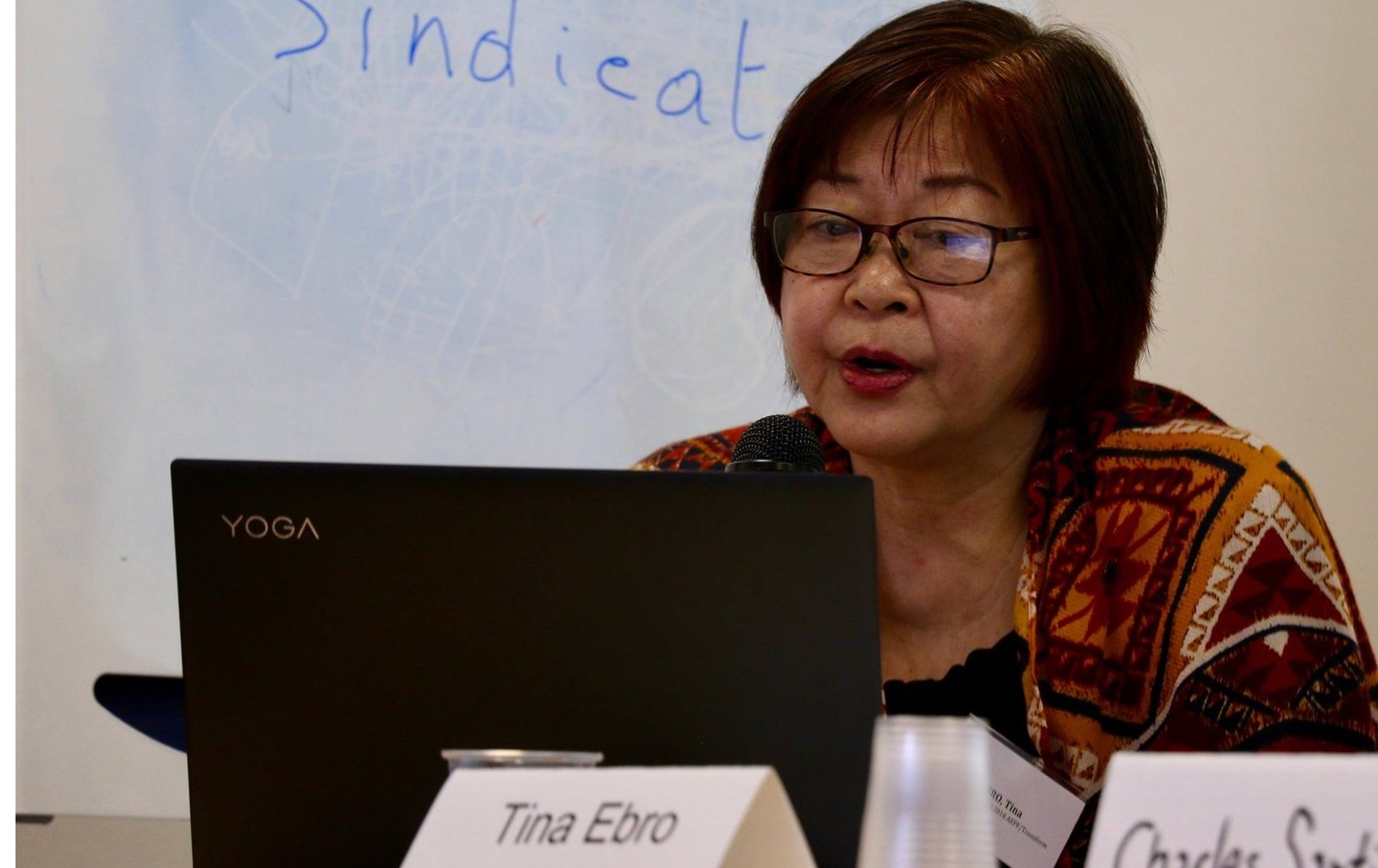
by Tina Ebro

Discussions on the idea of common security by peace groups in Asia and Europe who have been working untiringly for peace, demilitarization and a nuclear-free world through the years is an important step.

I live in the Philippines, one of the nations with claims to the South China Sea in the Asia/Pacific region. It is a region identified as the geopolitical center of the struggle for world power, where its people are caught between the strategic competition between the US and China. Hence their peace, human security and livelihoods are imperiled.

In 2005, at the first AEPF Peace and Security Conference in Malaysia, scholars already warned about the definite plans of the US to contain China and the tectonic implications to countries in East Asia and Southeast Asia in the aftermath of a nuclear war. Thereafter, when the United States perceived China as a threat to its imperial dominance, two-thirds of US naval forces were transferred to Asia and the Pacific. Since then, 400 American bases surround China, from Australia to Japan, Korea and across Eurasia to Afghanistan and India, including a 1.7 trillion US dollars commitment to rebuild its entire nuclear arsenal.

In the meantime, China has 200 nuclear weapon warheads, 3 fleets of nuclear submarines with underground tunnels and military airstrips in the South China Sea. Although China has reiterated its “no first use” doctrine, its latest military budget is 170 billion US dollars, and is reinforcing its second-strike arsenal in the face of rising US challenge.

In addition, Korea, Taiwan and the South China Sea remain as the region’s most likely flash points for catastrophic war. Further, we have Kashmir in the frozen India-Pakistan conflict.

Is it therefore not surprising that Noam Chomsky and other scholars are posing this compelling question today: With a climate emergency and a severe threat of nuclear war, can organized life on earth survive in this millennium ?

At this crucial moment, Dr. Walden Bello advocated that our first imperative is to revitalize our efforts to demilitarize and denuclearize the Asia Pacific region in the immediate future.

But what does this imperative entail and require?

  • Do we launch a call and campaign for a Common Security in the 21st Century that will enable us to wage vigorous advocacies? As a first step, should this call include the carbon emissions of the military and the impact of the military-industrial complex into the Climate Agreements which is greater than the emissions of 140 countries all together?
  • Is a Common Security Manifesto needed that will be disseminated massively through social media and mainstream media? Should popular language be used to redefine security?
  • Is effective lobby and networking work needed to cultivate more champions among legislators and policy-makers? Also among key civil society networks for multi-sectoral and inter-faith dialogues? Transform through their security specialist? Katerina Anastasiou proposed to include activating scientists and engineers with a network of scientists refusing to research and develop weapons is thus strategic.
  • How do we link this campaign to demilitarize and denuclearize with other movements like the climate, social justice, labour and anti-rasctist movements? Closely related to this is the on-going advocacy to slash military expenditures critical to fund people’s vital needs like renewable energy programmes and green jobs, public services like decent housing for all, universal health care and living pensions.
  • Do we need to build more mass movements and broad coalitions at the national level, regional and global level?

It has been encouraging to note that 122 states, more than half of the U.N. member states, have promulgated the Treaty to abolish nuclear weapons and this provides much hope to those working for nuclear disarmament. Nonetheless our fellow activist, Dr. Joseph Gerson, has these significant recommendations which I summarize: Winning nuclear weapons abolition still requires building mass movements, in alliance with other social movements, within the nuclear weapons and “umbrella” states like the NATO nations, Japan, South Korea, and Australia. These nations and their disarmament movements lie at the center of the struggle. If just one or two of these NATO governments are led by their people and reject the strictures of their nuclear alliances, the world’s nuclear architecture will be weakened and eroded.

He also stressed that we need to engage China and Russia, and to reach out to influential and sympathetic civil society networks, academicians, parliamentarians and policy -makers in these countries.

Friends, the AEPF critically engages the ASEM (Asia Europe Meeting), whose countries in Asia and the Pacific are the ASEAN countries, Australia, China, Japan, India and Pakistan, among others. In Europe, the members of ASEM are the NATO and nuclear power countries and Russia, among others. ASEM has members, too, that have declared their nuclear-free zone status: New Zealand and Mongolia.

A cornerstone of AEPF’s work is holding People’s Forums every 2 years and advancing the People’s Agenda at ASEM Summits. Further, its work is about providing spaces for dynamic movements in Asia and Europe, including progressive scholars and parliamentarians to caucusing and reflecting on urgent advocacies and alternatives, and on how these could be widely disseminated through the social and mainstream media to generate broad public awareness raising and support.

So that big mobilizations of people, south and north, can happen in the near future. So that that we can generate and exercise the power of collective action, in various forms at the local, national and global level. Since we know that there will be changes in national and global policies — only when we have strong social movements that embrace the fight for peace, the fight for social, economic and climate justice, and for system change across countries and across continents.

Read More

Re-imagining Democracy and Peoples’ Agency in a Time of Populist Authoritarianism and Neoliberalism – A Framing Report

Re-imagining Democracy and Peoples’ Agency in a Time of Populist Authoritarianism and Neoliberalism - A Framing Report

Introduction and Objectives

This Conference of human rights defenders, grassroots activists, movements and individuals committed to participatory democracy and human rights analysed the state of democratic rights in the midst of a wave of populist authoritarianism and neoliberalism. 

The objective of the conference was to analyse the trend where right wing nationalist authoritarian leaders entrenched themselves in many countries across Asia and Europe. To highlight the comparisons between countries, to see the different contexts, to discuss the reasons for this trend and to make a plan and calendar to help ignite popular action to restore and rekindle participatory democracy. 

To set the context, the series of elections in Asia and Europe 2018-2019 elections-–and their implications was analysed. It is evident that expanding corporate power concurrently supports a nexus between political, economic and social trends. This directly promotes and deepens political authoritarianism and increases social-cultural instability.  

There is great need to connect progressive forces in civil society, peoples/social movements and those political parties, which are the drivers of resistances to political authoritarianism, social-cultural insecurity, neoliberalism and corporate power. The methodologies of forging alliances/partnerships among progressive forces across Asia and Europe–including civil society, people’s movements, parliamentarians and political parties—to resist and stop authoritarianism and oppression, and build/strengthen participatory democracy, peoples’ rights and non-capitalism economies is a challenge and objective of this conference.

The Context:

Since migrants are presented as the causes of economic instability by right wing forces, creating complex and dangerous “push and pull” forces, it is appropriate to create the correct perspective on this issue from the framework of participatory democracy and human rights.  At the Global level there has been a major defeat and roll-back with the Global Compact for Safe, Orderly and Regular Migration adopted by the UN in Marrakesh, December 2019. This is a roll-back to voluntary recommendations – far from the binding obligations of the International Convention for the Human Rights of all Migrant Workers and Members of their Families. 

The discussion showed that there is a nexus between political forces, capital and neoliberalism. This nexus has deep social-economic impacts that include:  expected/unexpected political outcomes and forces that are evident from recent elections; the elements that have enabled the rise and expansion of extreme authoritarianism, majoritarian rule, narrow nationalism, and the move away from secular democracy. However the reasons for migration (economic distress, war, resource conflicts, displacement from land-grabbing, infrastructure and investment projects, political, religious and social persecution, disasters/threats, etc.) are often hidden but need to be addressed.  Migration is related also to asylum seekers and refugees. The trend in Asia and Europe are fortified by cross currents from the US where the conscious organising of right wing forces at grassroots level has intensified. 

Europe

The rise of authoritarianism and right wing populism has been further entrenched in the 2019 European Parliament Elections.  However, there has also been a counter-trend e.g. in the outcome of the Spanish and Denmark’s national elections where the Social Democrats gained significantly in a context where the right wing parties were expected to make advances. 

 Across countries, the issue and situation of migrant and refugee people is at the centre of the political agenda. The earlier legislative frameworks that had some empathy with migrants and refugees have been rolled-back: e.g. in Italy, Austria, Hungary – and these are not officially contested at the EU level, since immigration and asylum policy has always been a matter of national jurisdiction.  There is an EU-wide collaboration on an ’architecture of the hostile environment’ which includes measures like: hard borders, externalization/militarization of border policy, based on by a diversion of development funding; the complicity of governments of the Maghreb and Turkey for the out-sourcing of EU/Europe’s security on the Mediterranean and Aegean Sea; widespread criminalisation of the migrant and refugee sector itself as well as criminalisation of opposition and solidarity. 

There are however hopes and signals of growing resistance. Some positive  instances include: – Migrant and Refugee organisations have organised 5 Sessions of the Permanent Peoples Tribunal (PPT) over the past 2 years and have generated  a narrative of an in-depth alternative analysis from the forced displacement in the global south to an opposition to detention and racist discrimination in Fortress Europe. -This is contributing to a new narrative on humanizing the different and showing the significance of labour and gender rights-where increasingly there are ‘sites with rights’ and ‘sites without rights’. 

  • There are exciting practices of a new nexus of transnational activism and solidarity between migrants, refugees and citizens. And there are the Game-Changing initiatives of Mayors of 10 cities strongly opposing the necropolitics of the Mediterranean.
  • The resistances to “austerity” (Yellow Jackets); and impressive mobilisation on Climate Change show the gradual but significant build-up of a counter hegemonic discourse and action.

Asia

The survey of recent elections in the Philippines, Thailand and India reveals how the ‘strong men’ in the region got popular support (Rodrigo Duterte, Prayuth Chan-Ocha and Narendra Modi) even as in their differing ways, they tightened their grip on the levers of power in their respective countries, post-polls. 

Striking similarities manifested themselves in these processes in all three countries: the crushing of the opposition, the consolidation of support across class-caste lines, with the middle class playing a central role; the hollowing out of institutions of regulation and oversight, including the judiciary; the tightening of executive control on the electoral machinery; the deployment of police repression and use of laws against sedition and terrorism to neutralize opposing views…these were only some of the features common to all three electoral contests. 

In Indonesia, religion and race are used as political drama to build the support base of right wing leadership. This was played out in the Jakarta elections which bore witness to how parties gained control. Democracy is stagnant in Indonesia and the military still controls some important business such as the natural resources. For instance mining and palm oil industries are controlled. Speaking about the Indonesian Presidential elections, a strong voice called it a “horrible political drama”, 

there have been good changes on a state level, such as the provision of water with the people being the victims of the chaos.   

In Malaysia for free for the poor as well as protection of healthcare for the underprivileged.  However, it will take time for the federal government to make large scale changes, as the civil servants are still loyal to the previous government which ruled the country since independence. The elites are thought to have been damaging to the political process, and that the running members knew how to manipulate racial sentiments to invoke nationalism as a bid to win votes. Has diversity been eroded to gain power? “People use social media for 14 hours a day” says MP Charles Santiago as he points out that social media is becoming a player in democracy. Those who control social media may control the narrative that people will believe. Social media was a key player in the Malaysian elections, and it can become an ally for the left if it is harnessed and utilised effectively. In Thailand, social network is used widely during elections. It is also notable that some peoples’ lives are not revolving around social media but to remain active in politics, social media is used liked an airstrike.

In Burma/Myanmar, Cambodia, India, Ireland, Philippines, Malaysia & Thailand are all examples of countries in which identity based nationalism is a game changing technique used to gain hegemonic power. ‘Popular Sovereignty’ based on ethnicity, race & religion are constructed using xenophobia, chauvinism, extremism as modalities of governance. Enemies (generally the minorities, migrants and the different) are defined and majority & minority conflicts are dramatised. Also this pattern is far removed from the real issues of addressing poverty and in fact is deemed to result in deeper impoverishment. Populism is connected to authoritarianism which results in ONE strongman emergence as an iconic symbolism of nationalism.

Populist Methods

The Populists work by capturing and controlling institutions and societal discourse through legal and extra-legal means (for e.g., social media, vigilantism, rogue security actors). Violence is used against minorities, migrants, ‘dissenters,’ women, indigenous peoples and anyone who differs from the dominant narrative. Force is perpetrated directly or supported by the state, is justified and normalized. Misogyny and new manifestations of patriarchy are on the rise.

Under authoritarian populist regimes the character of the state and civil institutions is threatened by a nexus and cartels which entrench themselves in the democratic space. We have a military industrial – corporate nexus, business – oligarchy nexus, judiciary – corporate nexus, corporate – media nexus. The state uses repressive laws to control the opposition.

One major force that has exacerbated right-wing authoritarianism is neo-liberalism. Populists are able to link numerous and varied forces and crises in social, economic, political and cultural life to reject the liberal order, social justice and traditional elites.

Populists are able to link numerous and varied right wing forces in social, economic, political & cultural life that rejects social justice and liberal order. People who benefit from this nexus and right wing populism are international finance institutions such as the IMF, World Bank, WTO, corporations, arms manufacturers, upper class & caste, religious groups, party cadres.

Voices of Resistance

  • Activists from the Philippines have been working on various issues related to authoritarianism, alongside various sectors from the country, one of them being the Church to help spread their message of counter authoritarianism. Authoritarianism in the Philippines has meant a decrease in the democratic freedoms of the people, and activists have teamed up with prominent human rights lawyers to fight for the people’s freedom and right to free speech and a free press. The activists also emphasised that a large chunk of what they do is work with local communities, as they say that collaboration with them is crucial in the fight against authoritarianism. Activists in the Philippines reported that Multinational Corporations often ensure that articles that speak of their crimes are silenced, and thus the use of social media has been vital to these activists to bring the truth to light. An organisation like “ I Defend “ is a conglomeration of various organisations including the families of extrajudicial violence, with the idea to expose the nature of Duterte’s rule which draws on the support of a huge overseas Filipino population. So now these categories are being approached to expose Duterte.
  • Activists and professors from India spoke on resistance to the Modi government in India. The farmers’ movements are seen to be one of India’s biggest hopes for oppositional politics. However the divide among the people is because the opposition is without a strategy for a united front for freedoms and even of land rights. People need to realise that authoritarian leaders exploit the various religions and castes to create a divide. The only way that resistance can be sustainable is if they remain united. One of the heartening developments in India is that groups that were not talking or working together are today exploring common ground to resist the ruling forces. A panellist member from India brought up that recently, 49 prominent figures wrote an open letter to the Prime Minister on the rise of mob lynchings in the name of religion and their outrage over this. The case launched against them had to be withdrawn as thousands others joined the protest.
  • In Europe, in relation to the constituency of transnational migrants, one of the biggest issues is access to rights and the racist nature of policing. This fosters animosity and unrest amongst the public, and leads to a democracy having to deal with civil unrest and unable to focus on other policies. The activists reported that the Permanent People’s Tribunal is being used to address immigrant concerns. However, economic inequality and the rise of Shell corporations also pose a threat to European democracy, where the most industrialised regions are often actually one of the poorest. “Shell is able to manipulate democracy” says a voice, talking about how these companies don’t have to pay taxes in the Netherlands. Netherlands is Europe’s biggest Tax haven”.
  • In Burma/ Myanmar, student unionists are the new forces resisting the authoritarian order. This is quite powerful, as the youth are using their rising influence on social media apps to attract a global attention to the ongoing genocide. Women’s groups from different ethnic nationalities are also quite progressive, supporting resistance groups and activists. This shows that Burmese can form a united front in the fight against authoritarianism. Unfortunately when the attacks on the Rohingya broke out only one women’s group came out against them. Moving forward, resistance groups need to remain active even in the worst conditions.
  • Talking about Cambodia, activists work with a range of groups including those of farmers, water activists, sex workers, garment workers and others. These are cross sectoral networks of people who are powerless or left behind.  Cambodian activists have learnt to use action research methods that include learning of social realities and use this learning to build counter strategies. With the rise of nationalism, these research strategies will prove powerful to help change the narrative to one that is willing to stand up for democracy.
  • Thailand does not seem to have a Left movement and so the emphasis becomes on building unlikely alliances of victims across various divides. The tactics of the Thai Junta has also become more violent. There have been disappearances, killings, beatings.  The people have responded with very unconventional forms of activism, such as the symbolic three finger gestures.
  • In Pakistan, there has been a peasant movement in defiance of the military. Here peasants, largely women, by refusing sharecropping payments to the military, are resisting military take-over of their lands. When military agents tried to destroy the cemeteries of Christian peasants, Muslims peasants came out in support of their Christian counterparts.

Alternative Strategies

The key question is how do we counter this authoritarian trend?  How do we consolidate ourselves & how to strengthen analysis and capacity against capitalism and Neo-liberalism?  The participants felt that elections alone will not be enough for the new left wing politics, social movements need to actively engage.  

  • New challenges of the downfall of big parties in Europe where a reform is needed indeed, for example there is a need to nationalize large parts of the economy.
  • There is a need to develop the ability to show that how some religious leaders convince the population to choose a stance on policies blindly, even though some of their arguments do not have a logical view.
  • To counter nationalist authoritarianism we have to go back to the basics, in organising against dictatorship. 
  • It is vital to work with the media, to connect those who are both inside and outside of government. 
  • Empowering youth is fundamental to take stock of the issues. Rather than only talking about problems, we need to address and challenge all issues by engaging with representatives of the government, networking and building local capacities.
  • The kind of common actions that can be initiated are: data monitoring, coordination between the local and international, building allies, having flexibility to assess important issues and energy to work in an inclusive manner. Counter narratives are also a part of the larger narrative and is important to spark interest and awareness.
  • There should be global opposition to racism, religious nationalism, islamophobia, and majoritarianism. 
  • More work needs to be done on the analysis of the nexus between politics & finance, using all human rights mechanisms nationally, regionally & internationally. To be able to develop a new thinking paradigm to challenge the legality of these alliances.
  • Building law from below, building peoples sovereignty & community based laws. It is important to manage youth energy to make them active in the economic sphere and not to be driven as puppets by political parties. 
  • The weak understanding of political ideology in Myanmar was discussed which is used to silence communities. Hence, as in Thailand and some other countries it is necessary to engage across sectors in partnerships, including politicians who cannot be isolated and who provide legitimacy to resist negative forces. For instance, using the Church and religion to collaborate with local communities. 
  • Even while directing energies to counter the negative forces there must be transparency and democracy within movements as well. That is ‘walk the talk’ and ‘back to basics’.
  • Flexibility in terms of constant reorganisation is vital to resist negative forces and new narratives and open data knowledge and resources needs to counter shrinking spaces.

Priorities and Recommendations:

  • AEPF analysis on authoritarianism connection neoliberalism, corporatism, racism and political economy. Understanding new reality
  • Academics, scholars, people’s movements: immersion and learning sharing.
  • New narratives: How we do things
  • Training
  • Link campaigns for example with the International Human Rights campaigns.
  • Meeting of Lawyers that will frame legal strategies. For example, an international campaign against sedition as a way to curb freedom of speech and right to dissent.

II The Interface between Asian and European Parliamentarians

MPs and CSOs in the AEPF Conference on Re-Imagining Democracy and People’s Agency were concerned with the shrinking spaces for freedoms even within democracies. The combination of the growing power of corporations, linked with exclusive nationalism is a matter of great concern. The conference looked for strategies to reclaim people centred democracy. 

Since the holding of the AEPF 12 in Ghent, Belgium we have witnessed the further rise of authoritarianism and right wing populism has been further entrenched including in the European Parliament Elections (we give the data when it is available). Countries across Asia witness, including those where democracy had taken roots see a sliding scale of repressions where the nascent democratic and human rights are systematically violated and an atmosphere of fear prevails. In the already authoritarian- militarized countries, there is even more repression against dissenters, minorities, migrants and the different). 

There has also been a counter-trend e.g. in the outcome of the Spanish national elections where the Social Democrats gained significantly in a context where the right wing parties were expected to make advances. The conscious organising of right wing forces and organisations at grassroots level and in institutions has intensified – with cross currents from the US. There are operative linkages between Steve Bannon and his brand of ideology and politics and key populist leaders and networks of neo-fascists. 

Meanwhile the situation of Migrant and Refugee people is at the centre of the political agenda. The legislative frameworks at national levels have gone into further roll-back: e.g. Italy, Austria, Hungary – and these are not officially contested at the EU level (immigrations and asylum policy has always been a matter of national competence). At the same time, there is an EU-wide collaboration on the ‘architecture of the hostile environment”; borders and externalisation of borders policies; expansion of militarisation and diversion of development funding into forced complicity on governments of the Maghreb and Turkey for the out-sourcing of EU/Europe’s security on the Mediterranean and Aegean Sea; widespread criminalisation of the migrant and refugee sector itself as well as criminalisation of opposition and solidarity. In Asian countries too, migrants are the main targets as new citizenship laws are being enacted and violent repression used to displace and force out migrants.  

There are however hopes and  strong signals of growing resistance – Migrant and Refugee organisations have organised 5 Sessions of the Permanent Peoples Tribunal (PPT) over the past 2 years and have generated with their protagonism and struggles as an in-depth alternative analysis from the forced displacement in the global south to -detention and racist discrimination in Fortress Europe. In Hong Kong the resistance to new laws on extradition brought millions to the streets. This is contributing to a new narrative on human, labour and gender rights-where increasingly there are ‘sites with rights” and “sites without rights’; exciting practices of a new nexus of transnational activism and solidarity – between migrant, refugees and citizens. And there are the Game-Changing initiatives of Mayors of 10 cities strongly opposing the necropolitics of the Mediterranean; the resistances to “austerity” (Yellow Jackets); and impressive mobilisation on Climate Change. 

Links

1)  Programme of the Conference at
https://aepf.info/wp-content/uploads/2017/08/The-Program.pdf

2) Statement from Parliamentarians: https://aepf.info/single-post/Petaling-Jaya

3) Media Statement : https://aepf.info/single-post/2019/07/25/AEPF-Media-Statement-From-Petaling-Jaya-Malaysia

4) Glimpses of AEPF Conference on: https://aepf.info/single-post-2/AEPF-Malaysia-Glimpses


AEPF Website

Day 1 Video: https://aepf.info/single-post/AEPF-APHR-Malaysia

Day 2 Video: https://aepf.info/single-post-2/AEPF-Malaysia-Glimpses

Interviews: https://aepf.info/videos/


Asia-Europe People’s Forum (AEPF)
Interface with Asian and European Parliamentarians

Kuala Lumpur,   24 July 2019

Aims of the Meeting

  • Facilitate a strategic interface between Asian and European Parliamentarians and AEPF.
  • Share experiences of Parliamentarians from each region on the current situation.
  • Enable involvement of Parliamentarians in some key aspects of the AEPF Peoples Agenda and the Ghent spirit.
  • Learn how Parliamentarians are using strategic tactics and parliamentary processes to work in the current very difficult situations.
  • Prepare and release a Common Statement with the key goal on rights and participatory democracy, as well as continuing interface between civil society and parliamentarians.

Panel Of Parliamentarians

Charles Santiago (Malaysia)
Mercy Barends (Indonesia)
Deepak Bhatt (Nepal)
Coining Dorji (Bhutan)
Aida Kasymalieva (Kyrgyzstan)
Hassan Murtaza (Pakistan)
Mylvaganam Thilakarajah (Sri Laka)
Eulàlia Reguant (Spain)

Resource Persons:

Brid Brennan (Ireland/Netherlands)
Kamal Chenoy (India)
Geo-Sung Kim (South Korea)
Achin Vanaik (India)
Farooq Tariq (Pakistan )
Tian Chua (Malaysia)
Leong Tsu Quin (Malaysia)
Tina Ebro (Philippines)
_____________________________________________________________________________________

____________________________________________________________________________________________

the state of democracy, growing authoritarian tendencies and peoples’ resistances in their own countries in a brief way, What they face and what are strategies in their own countries as located regionally and globally. In the light of growing populist authoritarianism and deepening neo liberalism, These below are some  questions you that can guide and focus the discussion: 

  • Can you sum up state of democracy in your country.
  • Is there hate speech, who is targeted and by whom?
  • What are the connections between the political, economic and social trends that support the increasing corporate control (and foreign capital in Asia) How important is the impact of foreign capital on your domestic economy and how does it impact policy making?
  • Which forces are supporting the increased executive power and why? 
  • Who is benefitting from the growing authoritarian policies?
  • What new laws are squeezing democratic spaces, helping foreign capital?
  • Which forces are creating space for resistance and are the source for giving alternate agendas?
  • Who are challenging and what are the ways to counter right wing xenophobic nationalism ?
  • Is there any exception to these hegemonic policies? (eg. Nepal, Denmark) and what is the impact on your country from neighbours and ‘greater powers’?
  • Any success stories of electoral victories? Any success stories in the economy and in the environment?
Read More

Challenges of a Common Security Policy in Eurasia

Challenges of a Common Security Policy in Eurasia

Narrative Report – AEPF & IPB Conference
23-24 September 2019, Berlin

We need to recall and re-build the positive ideas and outcomes of the 1980-82 Common Security Report and the promises of the Charter of Paris 1990, for a just and sustainable peace and environment. This Conference Report sums up some of these arguments.

Download the full Narrative Report here

The workshop was attended by representatives of peace movements, researchers, civil society stakeholders and academics.
(For more detailed information: https://www.ipb.org/events/workshop-on-challenges-of-a-
common-security-policy-in-eurasia/)

We sum up the outcome of the workshop.

The workshop centred on the conviction that a renewed and re-imagined Common Security policy and architecture are urgently needed.

Why we are recalling Common Security and the Paris Charter?

There is an urgent need to recall the positive ideas and outcomes generated from the Palme Commission Report on Common Security (1980-82) that proposed a new security architecture and promoted détente and arms control negotiations from 1980s.

The key points of the Common Security document:

(i) re-conceptualizing security, as “interdependence”, “joint responsibility” and “security for” instead of “security against.”

(ii) The task of Willy Brandt was common solutions and contextualizing that security has to be inclusive (President Brezhnev was engaged, and his representative Georgi Arbatov from USSR, plus representatives from NAM minus China) and was unanimous

(iii) It was different than ‘Collective Security’ that was practiced as one system against the other. But the key in Common Security was to use the realities and convince enemies to make agreements not to go for war.

(iv) Proposed a basic lowest common denominator on common security through arms control, a nuclear free zone in Europe, spiral down nuclear threats and maintain balanced reduction and by cooperation between nations; A nuclear free path in Central East Europe and Nordic region; nuclear freeze, no first use. This was acceptable to many states.

(v) Recognized need for multilateralism. Strengthening UN collective security procedures.
Transferring some powers to multilateral agencies like the UN and OSCE.

(vi) Moral and political pressure of NPT on Third World. Asked for safeguards of human rights, legitimising humanitarian intervention. Thus, broadened the concept of both threats and security, so non military threats. It thus lay the groundwork for more expanded reports like The Human Security Commission and Reports (1994).

(vii) Spoke directly to state power advocating a basic minimum, used a framework between realism and idealism.

In the same context we recall the Charter of Paris and the promise of the 1990 meeting of the OSCE. This Charter signed as the Cold War (After Soviet disintegration) ended, was signed by 57 countries of the OSCE. It stated that since the division of Europe into confronting blocs was at an end, logically then, the vision and politics should be one where security is indivisible. However EU did not hold to its promises and with the march of NATO to the East the politics of confrontation continued.

The Workshop agreed that a return to Common Security and the Charter of Paris and OSCE coincide with Chapter VI of the United Nations on disarmament, and economic and civil human rights for all; with Goal 16 (peace and security) and 17 (partnership) of the Sustainable Development Goals, accepted by all nations, with human security and support the goals of climate change movements.

Since the OSCE has 57 member countries, including all former countries of the Soviet Union, Mongolia, Turkey and relations with ten more countries including Korea and Japan, it is possible and strategic to have one organisation that will accept Common Security.

The one organisation that is opposed to the OSCE is NATO. The OSCE does not cover nuclear weapons.

Further EU countries are also militarised and need to come back to the peace process, strengthen the regional process and the UN. This workshop thus calls for a new Palme Commission and the peace movement must be part of this.

Peace Movements and Common Security

The gap between peace movements and states for peace needs to be filled. Peace movements cannot keep away from the new Palme Commission.

The Common Security (Palme Commission) Report was based on realist approach. It was part of the politics of the state. So peace movements could support it, but not be part of it. So the first task peace movements currently is to re-activate the Palme approach
and engage with those actors that can support it. So belief in arms control. Second, for civil society to support a common approach.

Common Security is not just the past, but the future (Katherine MP) Challenge is how to overcome tendency to marginalize peace movements. The question was also raised of the ‘simple peace movements’ that NATO could be simply dissolved. So the tactic for the
alternative was to create a alternative security architecture in Europe and let it reach out to Asia and others. It was emphasised that currently capitalism continues to rise at the cost of, and in contradiction with the environment and climate. Risk of nuclear weapons use is unacceptable.

The current situation and its impact on peace, security and people

Currently it is undisputable that there exist at least six interdependent crises of

(i) International economic and social production processes; (ii) fragmentation of social cohesion, (iii) rise and election of nationalist authoritarianisms, (iv) crises of multilateralism and disregard of international law, (v) almost irreversible climate catastrophe, (vi) destruction of ecology.

These crises have led to anxieties amongst large sections of people who have supported the easy solutions offered by the Far Right and targeted migrants, increased Islamaphobia and all forms of racisms. Most states have increased their defence expenditure, as they build threat perceptions. Simultaneously there is an increased militarisation (of civilian institutions); building many new walls, physical security
mechanisms and weaponisation as responses to basic human needs (Forthcoming Report on Walls, TNI).

Even while most national security documents from the EU, Russia, China, US state that the major security threats are from decling environment, climate, terrorism, etc, yet the nuclear/arms control treaties are collapsing. There was a quasi nuclear weapons free
zone in East Europe, but with the end of the INF this has collapsed. Currently the argument of Michel Klare (2018) ‘This is not your mother’s Cold War’ indicates the looming threats of violent conflagration.

Threats of nuclear and arms use have been speeded up. Example the ease of taking nuclear war decisions.

The problematique remained that NATO and the EU are designed to be forces of war and insecurity (tuned primarily towards Russia), opposing the forces of peace and human security.

Asia

The detailed discussion on Asia raised several general and specific issues, especially the role of China, the Korean peace process, South Asia tensions and common security for small states:

In East Asia the situation is critical since it is the frontline between USA and China. The trade war by the US on China is a continuum of military war by the US. This is dangerous as economic war has become part of military war. The US sees China as the principle enemy, (and Russia as a subsidiary one). Chinese actions in the South and East China Seas of sending patrol boats and seizing Islands, threatening oil rigs of Malaysia, Philippines, Vietnam and others is part of Chinese method of supremacy. Chinese actions are violations of the International Law of the Sea and in violation of the International Tribunal judgments from The Hague.

Some analysts argued that China in the 1970’s had the goal of self-reliance but now has an expansionist logic. At the same time China is the only country in the UN which for 40 years has not imposed unilateral sanctions, no first use of nuclear weapons, is not part of
any military bloc; has not demonized the US; resolved most border conflicts except with India. China uses ‘common security’ language. However Chinese response to others is strategic defence because they are surrounded by US military bases, that create “Island chains” from Korea, Philipines, Japan, and Indo-Pacific Command.

China has combined uneven and contradictory developments within, with features of under development but also autonomous capital accumulation and ‘catching up’. Further China’s rhetoric of ‘peaceful rise’ is also the rise of an expansionist China.

The discussion on the Hong Kong movement showed that it was essentially on retaining autonomy within the paradigm of ‘One state two systems’. The movement was to maintain the Basic Law of Hong Kong and in opposition to laws being proposed like extradition, and sedition and was not as China said about ‘independence’ or foreign inspired.

Analysts present showed that the BRI is unfolding as part of the Chinese development model. The BRI plan is assisting China to become tributary empire, but also is a geo-strategic response to US encirclement.

It was however projected that any US-China rivalry will be a naval conflagration as China cannot match the US navy.

The smaller states who are caught between the emerging powers like China, India, Japan and others, were ‘balancing’ and seeking the best option between these powers. They could opt for Common Security.

The ASEAN countries thus have ‘fluid’ and balancing responses/ alliances.

Nepal for instance has to balance between two powerful neighbours. The politics of the Rakhine State in Myanmar is caught also in geo politics. While China is driving politics with a view to BRI, but peace process is supported by EU. Some of these states could opt for Common Security approach.

The negotiations between Trump and North Korea are the opposite of Common Security, in that it is more about politics than peace. European civil society needs to support humanitarian aid to North Korea.

Azerbaijan was another example, where there were some internal peace processes.

Ulan Bator process in Asia is vaguely about Common Security.

The Challenge of current geo politics of Asia:

(i) The bipolar security complexes of post war decades have transited to multiple, fragmented security complexes with additional militarized actors and rivalries like China, India, Pakistan, Japan, Turkey.

(ii) Regional conflicts have global geo political spillovers, example Afghanistan, Syria etc.

(iii) Many states, are immune to civil society actions and ignore international peace and other movements.

(iv) Majoritarian authoritarian/populist leaders globally prefer to ignore and disconnect the real human security threats from climate to equity to justice.

(v) Non state actors and illegal trafficking from ISIS, Taliban and others have to be seriously taken by alternate groups because a mass of people believe the Right wing’s narrative and diffusion of Islamophobia and migrants.

(vi) There are fewer progressive elected representatives and policy makers who will push alternate and common security reports into policy making realm.

Europe

The workshop was of the view that the US remains the most hegemonic and militarized country and its approach to international politics endangered human security. It was shown that US militarization is linked to both the military industrial complex and dark money from the gun lobbies like the NRA as well as corruption in politics. The critical education that was the foundation of liberal views in the 1960’s in US universities has ended. It appears the Brezinski’s theory that ‘the problem is there is too much democracy’, has gained popularity with some classes. Since education debt is high, political activity is low. The military is the most respected institution in the US. All this contributes to the decline of the US.

The resurgence of militarism in the West post 1990’s, it was argued is on account of NATO expansion to the East, as NATO reneged on its promises to the disintegrating Soviet Union. Many internal developments in Russia are on account of such geo-strategic
developments.

The EU industrial policy is a massive drive for militarization for profit. The EU is no longer a common project. The supremacist ideology was pushed back after World War II, but is now on the rise again.

The European Defence Fund is in the name of efficiency but is increasing militarisations and diverting money from social sectors to defence. Concerns were raised that in Europe the construction of threats is threat from others including migrants.

So there is a urgent need to de-construct these approaches. Behaviour of politicians get support from that part of society which is toxic.

Challenges for Common Security:

Re-imagined Common Security is the basis of an alternative and new epistemology. This approach would outline what are the real and multiple threats to security? We can use the Critical Studies approach. We argue for a security not based on fear and arms, but
bottoms up and feminist analysis of interdependence (Tickner). Since security is not neutral, we will not be able to convince those who have a realist/ subjectivist/ military-industrial state approach.

Need to talk to women and youth in peace processes. Being flexible about moral issues. Re talk to states who violate human rights also. Dialogue as part of the structure. Need to engage Russia and China.

Common Security is a rule based system. It facilitates the move from a politics of fears, threats, walls, and confrontation. For Asia move from balance of power diplomacy (which is de-stabilising Asia) to a non nuclear and de-militarised response through the ASEAN.
Common Security in Asia will have to pressurize India, China, Japan and Pakistan to find common, non militarised solutions. This is possible by joining of small states.

Non-violence works approach. International Arms Controls Treaties, like the one in Iran is deeply flawed and need to be re-looked at.

It was argued that the multiple crises needed non market solutions. The Global Green New Deal was a positive proposal, endorsed by several political formations already. Proposals for a ‘New politics of Détente’ by way of a re-worked Common Security were seen as offering alternatives. Common Security was seen to have a strategic role in de-escalatingng rivalries, in re-building trust, limiting militarisms.

Cyrance Vance’s argument was correct when he stated in 1982 in the Prologue to the Common Treaty: “No matter how many weapons a nation develops, no matter how strong its armed forces become, they can never guarantee its freedom from attack.” Common
Security in Europe will have to defy US power.

Common Security already has an international basis. It however requires deepening relation with global commitments, for example link the Sustainable Development Goals (SDGs) 1 to 15 on poverty, climate, development are inexplicably linked with SDG 16 (Peace and Justice) and Common Security to SDG 17 on Partnership. Tactics will be to get those parties who can be committed to it,( Transform, Corbyn) The tactic of getting support from the Church and other religious groups and step by step approach is acceptable.

Some specific Recommendations

  • Withdrawal of foreign bases.
  • Get major Asian powers to a Common Security (including Japan) grid.
  • Common Security cannot be national security. As every national security
    has a repercussion.
  • Common security is a strategy for a joint survival.
  • Common security in Europe will have to defy US power
  • The US-China rivalry and India-Pakistan tensions are threats to small countries.
  • Restoration of the INF Treaty and extension of the New START Treaty combined with efforts to bring China and other nuclear powers into these treaties.
  • A universal halt in deployment of new nuclear weapons and their delivery systems.
  • Eliminating launch on warning systems and first strike nuclear doctrines.
  • Credible steps toward fulfilling the Nuclear Nonproliferation Treaty’s obligation for good faith negotiations for the complete elimination of nuclear arsenals.
  • Reaffirmation and updating the Conventional Forces in Europe Treaty.
  • Multi-lateral negotiations to reduce the risks of attacks on computer technologies and
    networks, especially those of nuclear-armed states.
  • Fulfillment of the provisions of the Minsk II agreement.

In Conclusion

A Statement from the workshop was released (link at: https://aepf.info/AEPF-IPB-Berlin-Conference-Statement )

In addition it was advocated that for the peace movements, there was a need to create a global inter-Party network on Nuclear Ban Treaty and Common Security.

For example, (this started in the German Parliament with 2-3 MPs joining with ICAN movenment. This has to spread to all responsible parliamentarians.)

Need for the Eurasian Left to have a strategy against militarisation and construction of knowledge.

Peace movements need to deepen discussions and seek independent answers from the Government. Further, they should see which governments are helpful for peace.

Russia must be engaged and for that NATO expansion to Ukraine and Georgia stopped. Nuclear free corridor in Nordic States.

Governments try to hide the link between military companies and ecology. Peace movement has to be hand in hand with climate justice
and just trade.

Références:

Charter of Paris available at:
https://www.osce.org/mc/39516?download=true

Joseph Gerson at:

Best Social Worker 2014

Call for a Re-imagined Common Security, Statement of AEPF/IPB at:

Best Social Worker 2014

OSCE at:
https://www.osce.org/mc/39516?download=true

*Supported by Asienhaus and the Rosa-Luxemburg Stiftung, International Eurasia Press Fund, Co-funded by the European Union

Download the full Narrative Report here

Read More

Peoples Mobilisation to Reclaim Peoples Rights over TNCs, Corporate Profits and impunity

Peoples Mobilisation to Reclaim Peoples Rights over TNCs, Corporate Profits and impunity

Activities towards and Binding Treaty on Transnational Corporations which respects human rights as part of the Week of Mobilisations in Geneva in October 2019.

During the period October 11-19 2019 at the UN Human Rights Council in Geneva, Asian and European organisations from the AEPF were among the more than 100 organisations from affected communities, social movements, women’s organisations, trade unions, indigenous peoples, migrant organisations, parliamentarians participating in the activities. The mobilisation brought together delegations from Latin America and Africa in which all contributed to generate a dynamic and constructive environment for the debate on the ‘Revised first Draft of the Treaty on TNCs and Human Rights’.

Please also read an important background article – by Brid Brennan and Gonzalo Berron (TNI)
https://longreads.tni.org/corporate-power-the-david-and-goliath-struggle-of-the-21st-century/

And an article by Dottie Guerrero (Global Justice Now, UK)
https://www.globaljustice.org.uk/blog/2019/oct/14/crafting-treaty-stop-corporate-impunity-challenges-we-face-fifth-session

and the Final Joint Submission to the Open-ended Inter-Governmental Working Group on the Treaty https://www.stopcorporateimpunity.org/final-declaration-of-the-global-campaign-to-claim-peoples-sovereignty-dismantle-corporate-power-and-end-impunity-in-relation-to-the-v-session-of-the-oeigwg/

Download:
Peoples Mobilisation to Reclaim Peoples Rights over TNCs, Corporate Profits and impunity

Read More