The climate crisis is being militarised to profit corporations and to entrench global inequality with severe repercussions for human rights and democracy

The climate crisis is being militarised to profit corporations and to entrench global inequality with severe repercussions for human rights and democracy

Testimony by Nick Buxton, Transnational Institute related to the Tribunal’s second charge – Failure to address social and economic injustices

Jury, rapporteurs, presiding officers and everyone present here today, I am here on behalf of Transnational Institute, an international research institute based in Amsterdam, to testify to the way the most powerful nations at UNFCCC and corporations are not just responsible for causing the climate crisis, they are worsening the human impacts of the climate crisis through their responses.

In effect, the world’s most powerful elites have decided that rather than tackle the climate crisis, they will seek to militarise and even profit from its consequences. This not only will fail to address the world’s deep social and economic divides, it will most likely deepen the injustice many people face as they deal with the growing impacts of climate change.

I have been researching the response of the military and corporations to climate impacts since the early 2000s and collaborated with a team of global researchers and activists on a book, The Secure and the Dispossessed – How the military and corporations are shaping a climate-changed world, that collated our findings and came out in 2015. Since then, I have worked with more researchers to specifically look at the way borders are being militarised against refugees including those partly displaced by climate disasters. This is providing booming profits to a a small and powerful border security and immigration enforcement industry while threatening the rights and often the lives of those most affected by climate change.

It is impossible to detail all the findings, but here is some key evidence that supports that the richest countries and corporations are deepening the climate crisis by their responses to its impacts:

At the same time as the world’s richest nations have failed to agree sufficient emission cuts and support for climate finance at climate summit after climate summit, they started to develop and invest in climate security plans to anticipate and plan for the consequences of climate change. These include the 2007 Age of Consequences report in the US and the EU Climate change and international security paper of 2008. The plans look to strengthen the already bloated militaries of the Global North, to capitalise on melting ice in the Arctic, to protect corporate supply chains, and militarise borders.

  •  This has led to massive growth in military and border spending by states. Global military spending has almost doubled since the end of the Cold War to $2 trillion today, and border spending has exploded. In Europe, the budget for the European Union (EU) border agency, Frontex, has increased by a whopping 2763% since its founding in 2006 up to 2021. Similar rises have happened in border budgets in other industrialised countries.
  • In our latest report, Global Climate Wall, we found that seven of the biggest historic emitters of GHGs – the United States, Germany, Japan, the United Kingdom, Canada, France and Australia – collectively spent at least twice as much on border and immigration enforcement (more than $33.1 billion) as on climate finance ($14.4 billion) between 2013 and 2018. Canada spent 15 times more, Australia 13 times more and the US almost 11 times more. At the same time, we know that none of these countries are reducing emissions in line with the Paris Agreement. In other words, the richest nations are choosing to prioritise arming themselves against people displaced by climate change, rather than tackling climate change and investing in supporting countries to deal with climate impacts, including displacement.
  • In the process, they are providing booming profits and increased influence and power to a growing border security industry, made up of many of the same arms firms that are also hope to profit from anticipated climate wars. The border industry market is expected to be worth $65 billion by 2025, and is active in the corridors of power in Washington DC, Brussels, London and elsewhere lobbying successfully for ever more resources to fund militarised borders. Our recent research showed in the US that the top border contractors through individual donations and their Political Action Committees (PACs) gave more than $40 million during the 2020 electoral cycle to both the Democrat and Republican parties.
  • This diverts resources and attention from what is needed  – funding a Green New Deal, paying the rich countries’ climate debt to the South, paying for the loss and damage caused by climate change. It does nothing to tackle the structural inequities in the global economy where 22 men have more wealth than all the women in Africa. Rather it consolidates that injustice.
  •  It is also driving a new wave of authoritarian politics and repression of human rights. Throughout Europe, Australia and North America, migrants are being illegally pushed back, including right now on the border with Poland and Belarus, detained in terrible conditions, and deported back to countries which are known to be dangerous for civil and human rights. Rather than rescue desperate people, the richest countries are cutting back rescue efforts in areas like the Mediterranean, leaving tens of thousands to die. Even well outside the richest nations, migrants aren’t safe, as the richest countries seek to impose and finance border control efforts within neighbouring nations. In North Africa, the European Union is so obsessed with controlling migration, that they are funding security forces in 35 countries to restrict migration, of which half have an authoritarian government and only four can be deemed democratic. Meanwhile, those who reach out in solidarity to assist refugees are increasingly being criminalised. Activists in the Mediterranean saving lives when states refuse to do so have faced seizures of ships, charges of smuggling, legal threats, massive fines, armed police raids, and even imprisonment.

All of this shows that the most powerful countries in the UNFCCC and its corporations are not solving but deepening climate injustice. Their actions if unimpeded by popular movements will turn our climate crisis into a climate hell for the dispossessed of the world. They are turning those most impacted by climate change into threats that must be tackled and confronted with walls and guns, rather than people who deserve justice and demand international solidarity.
Read More

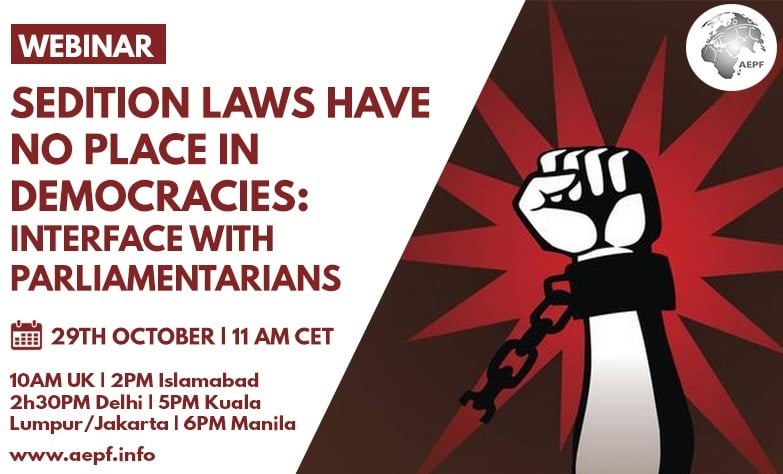
Webinar – Sedition laws have no place in democracies: Interface With Parliamentarians

Webinar - Sedition laws have no place in democracies: Interface With Parliamentarians

This is the first webinar in a series of three on the “Right to Dissent”!

This conversation with parliamentarians from different countries will focus on the laws that many states use to curb the right to speech and peaceful assembly.

Watch the Webinar: 

Also Watch: 

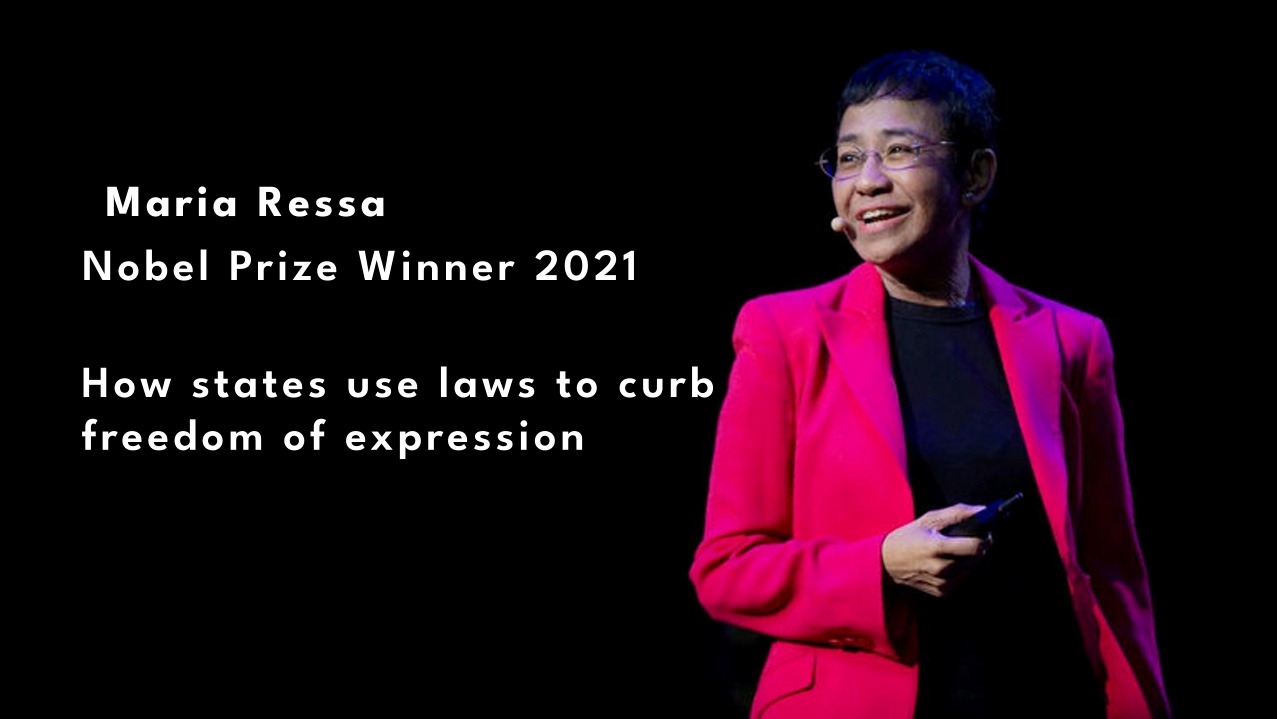
Maria Ressa, Nobel Prize Winner 2021 speaks: How states use laws to curb freedom of expression.

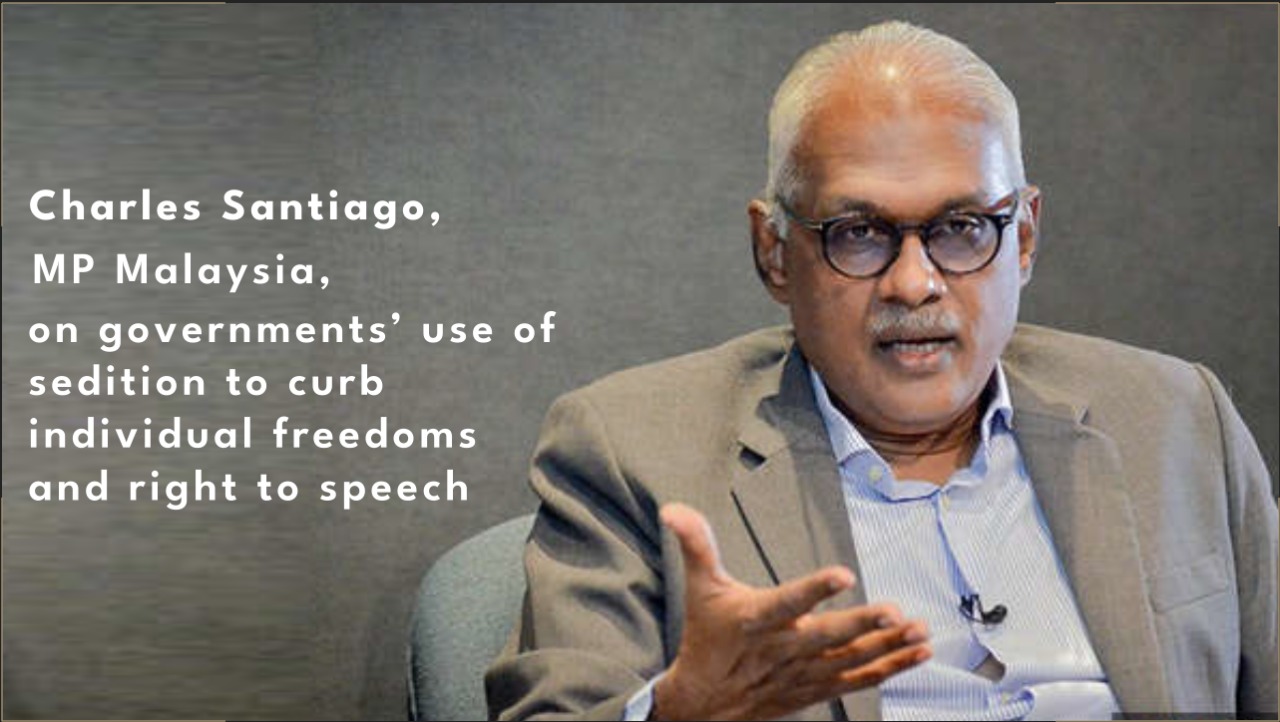
Charles Santiago, MP, Malaysia speaks on: Governments’ use of sedition to curb individual freedoms and right to speech

Read More

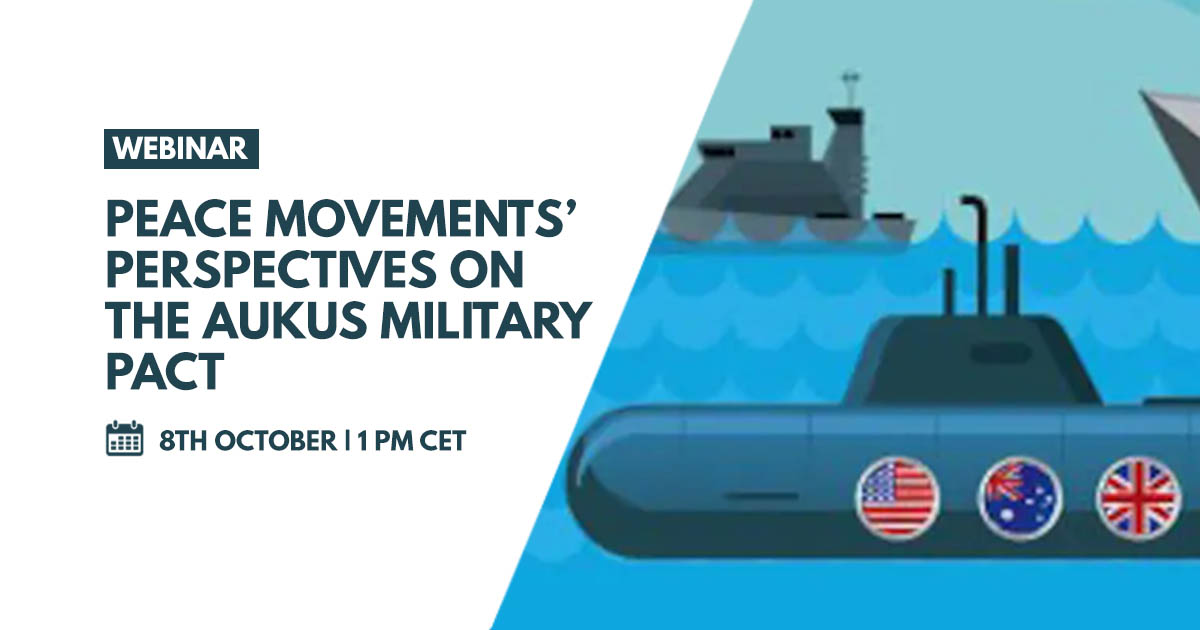
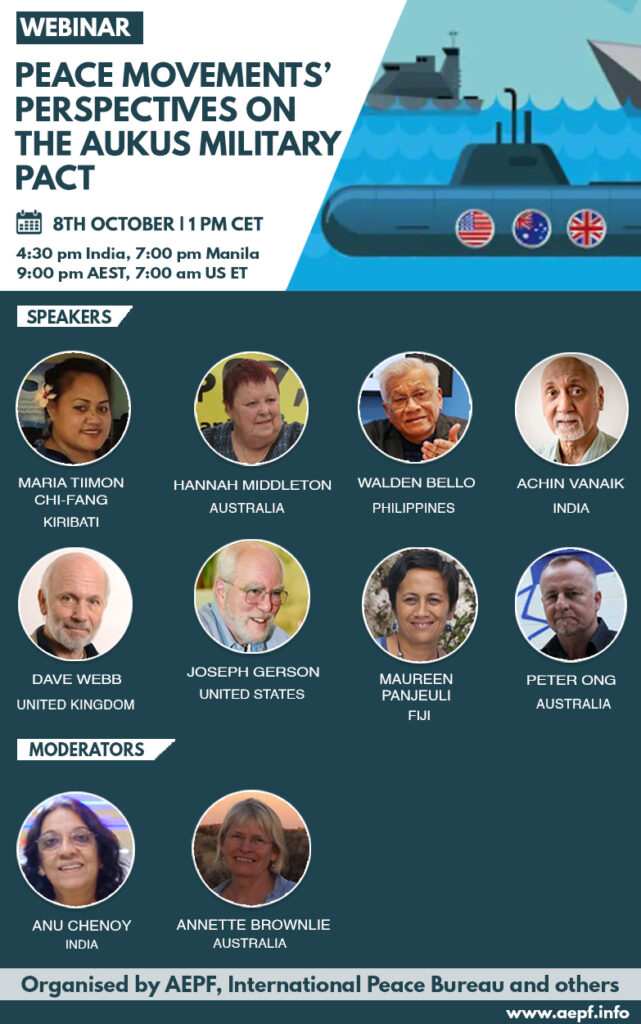
Webinar: Peace Movements’ Perspectives on the AUKUS Military Pact

Webinar: Peace Movements’ Perspectives on the AUKUS Military Pact

International peace movements’ representatives analyse the deep and long term impacts of the Australia-UK-US (AUKUS) military partnership. They deconstruct the geostrategic, political and economic ramifications and the arms and nuclear race this pact escalates. They show how this partnership endangers the Asia Pacific Region and goes against the interests of people of this region.

Watch the Webinar:

Co-Organizers:

  • Asia Europe Peoples Forum
  • International Peace Bureau
  • Independent and Peaceful Australia Network
  • Campaign for Peace Disarmament and Common Security
  • Campaign for Nuclear Disarmament UK
  • Campaign for Nuclear Disarmament & Peace India
  • Australian Anti Bases Campaign Coalition
  • Committee for a Sane U.S.~China Policy
  • Laban ng Masa
  • US Peace Action

Read More

Peace and Common Security Advocates from Around the World Oppose QUAD (Japan, India, US, Australia), & AUKUS (Australia, UK, US) Militarism & Urge Common Security Collaborations to Address Existential Nuclear, Climate & Pandemic Threats

Peace and Common Security Advocates from Around the World Oppose QUAD (Japan, India, US, Australia), & AUKUS (Australia, UK, US) Militarism & Urge Common Security Collaborations to Address Existential Nuclear, Climate & Pandemic Threats

Meeting on the eve of the QUAD alliance summit, peace, justice and common security advocates from the QUAD and AUKUS member countries, and Australia, Philippines, Vietnam, Japan, South Korea, India, Britain, Germany, and the U.S. met to analyze and build opposition to the dangerous and increased militarism of the QUAD and AUKUS alliances.

The incipient coalition decries the QUAD and AUKUS alliances which dangerously intensify geostrategic military tensions with China. In addition to increasing the dangers that accidents or miscalculations to trigger escalation to catastrophic wars, this increased military competition seriously undermines the possibility of U.S.-Chinese and broader international cooperation to reverse the existential threats of nuclear weapons, the climate emergency, and pandemics. The strategic competition between the great powers includes the danger of a great power war which will destroy the planet.

Opposing the recently announced U.S.-Australian-British alliance, Australian peace organizations are demanding that Australia not become a staging point for the U.S. military, that Australian sovereignty not be abrogated to the U.S. and their government must not encourage the nuclear proliferation and risk environmental catastrophe inherent in the agreement to purchase submarines powered by highly enriched uranium.

President Biden has spoken of an inflection point. Negotiation and announcement of the AUKUS alliance indeed marks a dangerous turning point in geostrategic situation. Among them:

  • Instead of increasing stability and security, the QUAD and AUKUS alliances fuel dangerously spiraling cold war-like arms races that must be reversed with common security diplomacy.
  • The transfer of highly enriched uranium and related technologies to Australia, violates the Nuclear Nonproliferation Treaty, and encourages nuclear weapons proliferation. It provides Australia with resources needed to become a nuclear power, and significant political and military figures in India, South Korea and Japan ask why they have been denied these capabilities.
  • Announcement of the AUKUS alliance has disastrous global strategic ramifications. Coming on the heels of the precipitous NATO withdrawal from Afghanistan, the Biden Administration has again acted without consulting its NATO allies. This fuels calls from European and E.U. leaders to create an independent European military superpower. The new military alliance strengthens worldwide the arms race
  • The AUKUS alliance increases pressure on ASEAN and other nations to choose between sides in a way that compromises their independence.

Forty years ago, the adoption of common security diplomacy played major roles in the negotiation of the Intermediate Nuclear Forces Treaty and the end of the Cold War. The new international peace coalition is committed to building international pressure for Indo-Pacific demilitarization and common security diplomacy to address and reverse the existential threats posed by nuclear weapons, the climate emergency, and pandemics.

No to military alliances and preparation for catastrophic wars. Yes to peace, disarmament, justice, and the climate.

(Signatories as of 0400H Manila time of Sept.25, 2021)

International Peace Bureau
Asia Europe Peoples Forum – Peace and Security cluster
Independent and Peaceful Australia Network
Australian Anti Bases Campaign Coalition
Campaign for Peace, Disarmament and Common Security
Global Network Against Weapons & Nuclear Power in Space
Guahan Coalition for Peace and Justice (Guam)
Le Mouvement de la Paix (France)
Veterans For Peace Chapter 113 Hawaii
Peace Women Partners, Philippines
Action for Sovereign Philippines
I Hagan Famalao’an Guahan, Inc. (Guam)
KILUSAN (Movement for National Democracy) Philippines
KAISAKA (Unity of Women for Liberation) Philippines
Maui Peace Action (Hawaii)
Bukluran ng Manggagawang Pilipino (Solidarity of Filipino Workers/BMP) Philippines
Committee for a Sane U.S.-China Policy (US)
Philippine Women’s Network for Peace and Security
Hawaiʻi Peace and Justice
ʻOhana Koa / Nuclear Free and Independent Pacific
Blue Banner Mongolia
Initiatives for International Dialogue
ALAB Katipunan (Philippines)
Japan Asia Africa Latin America (Japan)
MapaladKa Peace Movement (Philippines)
Communist Party of Australia
Malu ‘Aina Center For Non-violent Education & Action
Dap-ayan ti Babba-I (North Luzon, Philippines)
YouWin (Young Women’s Initiatives)
Kauai Women’s Caucus (Hawai’i)
‘Those listed above have signed in a personal capacity only and the organisations associated with them are for identification purposes.”
Read More

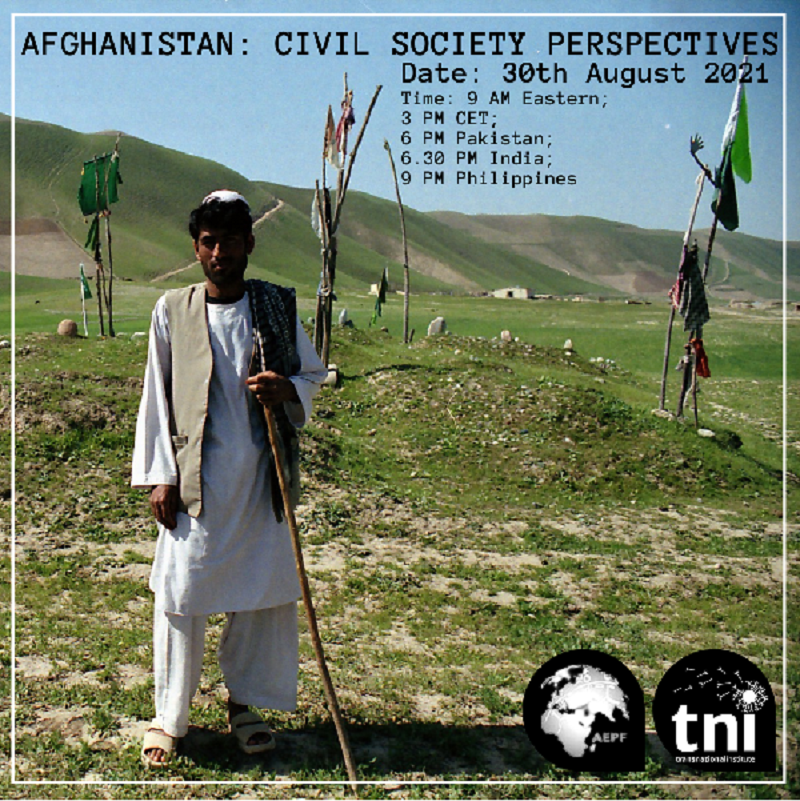
Webinar – Afghanistan: Civil Society Perspectives

Webinar - Afghanistan: Civil Society Perspectives

AEPF and TNI organised a Webinar with a number of international experts to discuss a civil society approach to the crisis in Afghanistan.

Civil society internationally needs to extend solidarity with the Afghan people who have been betrayed by military interventions by the US and other powers. The takeover by the Taliban and imposition of religious extremisms further oppresses Afghan women and society. Experts talk of the various developments in Afghanistan in this webinar.

Watch the Webinar: 

Webinar Summary: 

Focus on Afghanistan: Civil Society Perspectives.  – A Brief Report by Kris Vanslambrouk

Afghanistan has been in international spotlight in recent weeks. Many experts, witnesses and journalists were able to share their analyses. However, the views of civil society activists barely got space in the media. The Asia Europe People’s Forum and the Transnational Institute (TNI) filled this gap with a webinar on August 30th. A number of strong statements and recommendations were formulated under the skilful  moderation of Gie Goris, who has long standing expertise on Afghanistan and far beyond.

Sahar Saba of RAWA (Revolutionary Association of Women of Afghanistan) called not to abandon the Afghan people in the first place and pressed the international community to make more efforts to protect human rights activists: “There is more protest against the Taliban then expected, especially by women. It remains to be seen how strongly this will resonate and whether the Taliban will take a more moderate stance.”

Afrasaiab Khattak (former chairman of the Pakistan Human Rights Commission) emphasises that ‘Afghanistan has been highly urbanised over the past 20 years and new universities and institutions established. The Taliban will have to adjust, the population has changed. Pakistan’s positions will play an important role, many civil society organisations are involved in solidarity actions with Afghan activists, such as providing a safe shelter in our country.’

Achin Vanaik (writer, activist and retired professor at Delhi University) is a strong advocate of open borders and against international isolation. “We must assist the population with food aid and medical assistance, but at the same time we must be open to a debate about conditional cooperation with the Taliban, and maintain a certain military pressure. However, a new intervention is out of the question.”

Anuradha Chenoy (Professor -retired, School of International Studies at Jawaharlal Nehru University) reminds us that civil society organisations had predicted the current scenario: “We have always strongly condemned military intervention.” She also questioned the hypocrisy of the international community and their demand to install an “inclusive government”: “As if Russia, China, India and even the US have inclusive governments.”

Khury Petersen-Smith (Institute of Policy Studies, Washington) emphasises that the refugee crisis, once again, presses the international community to face the facts: “It is high time to rethink the concept and status of refugees. Imagine what can be done with the billions of dollars left unspent by the US withdrawal. There must be creative ways to support Afghan civil society by working with the diaspora and progressive forces within the country itself. It’s our duty to give people in danger a safe place, the US has done so much damage in this country, we have to make up for this somehow

Speakers:

1. Khury Petersen-Smith is a Fellow of Institute for  Policy Studies, Washington and researches U.S. empire, borders, and migration.

2. Achin Vanaik Fellow at TNI, is a writer, social activist and retired Professor, University of Delhi.

3. Sahar Saba, Afghan women’s rights activist and former spokesperson for Revolutionary Afghan Women’s Association.

4. Afrasaiab Khattak, former Senator and former Chairperson Pakistan Human Rights Commission.

5. Anuradha Chenoy Former Dean and Retired Professor, School of International Studies, Jawaharlal Nehru University.

 Moderators: Gie Goris- Belgian Journalist, author, who has covered Afghanistan for more than two decades.

Organized by: Asia Europe Peoples Forum (AEPF) & Transnational Institute (TNI)

Read More

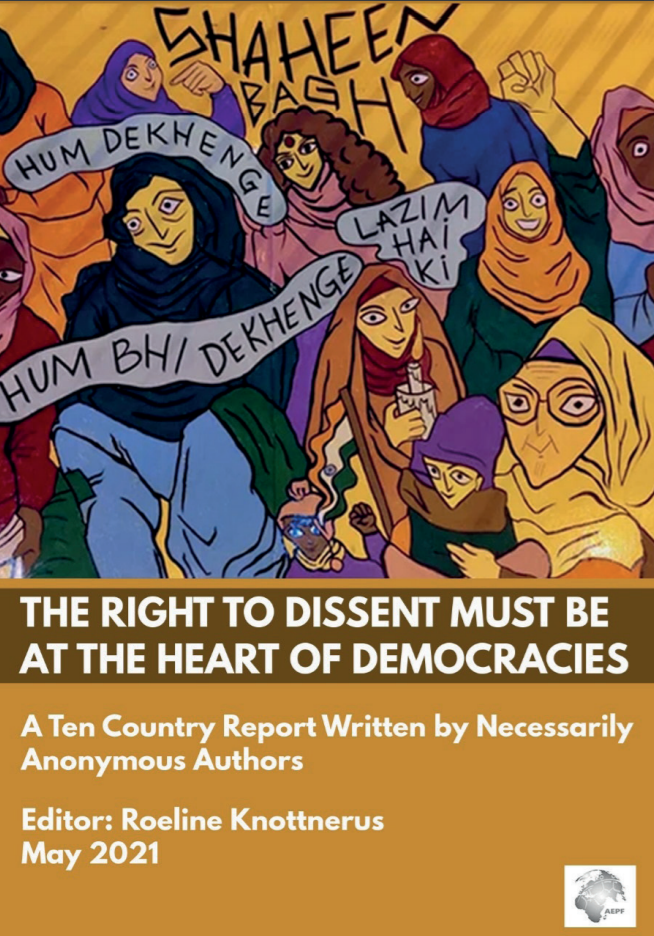
REPORT: THE RIGHT TO DISSENT MUST BE AT THE HEART OF DEMOCRACIES

REPORT: THE RIGHT TO DISSENT MUST BE AT THE HEART OF DEMOCRACIES

This 10 country study analyses trends on how, who and why dissent is being throttled in these countries. It gives examples of laws and methods being used to curb dissent and what mechanisms are employed and how they curb democratic voices. The publication has a theoretical framework and conclusion that show broad trends in these countries.

AEPF’s 10-country study reveals that ‘Dissent is at the heart of Democracy’ (Download)

Read More