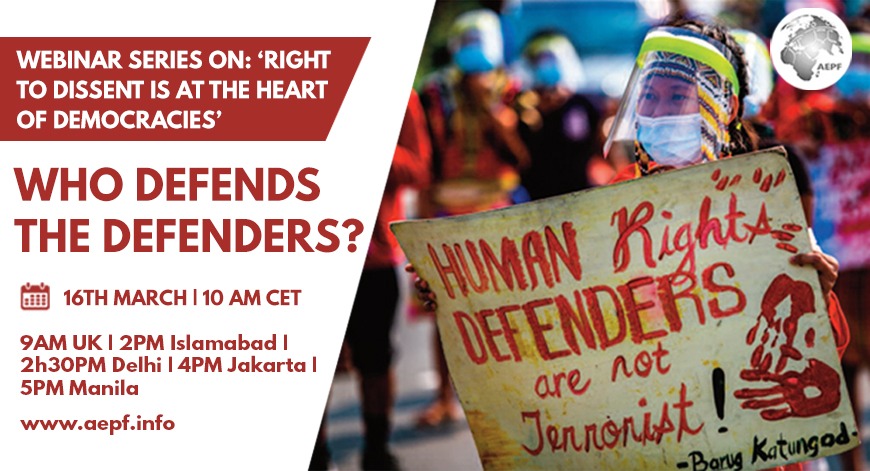
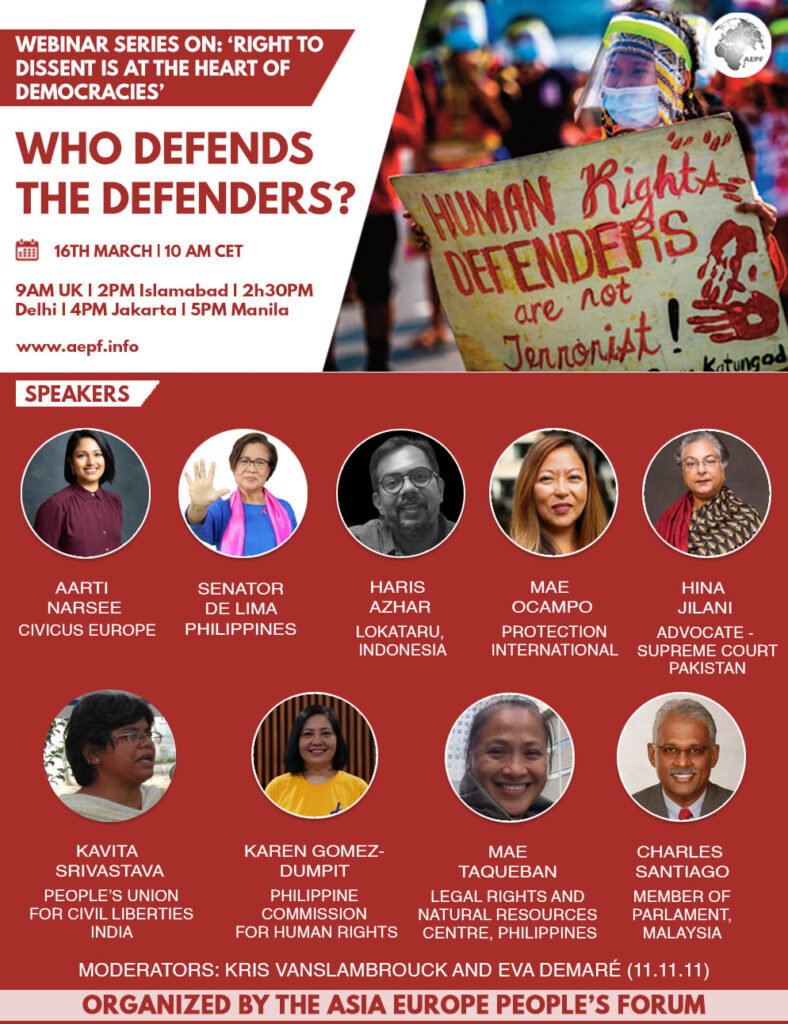
Webinar: Who Defends the Defenders? (Webinar Series on ‘Right to Dissent is at the Heart of Democracies’)

Webinar: Who Defends the Defenders?

AEPF Parliamentarians Network collaborating with the Participatory Democracy working group with the Communications Team.
Webinar Series on ‘Right to Dissent is at the Heart of Democracies’

Watch the Webinar

Download ‘Human Rights Defenders Bill’ by Senator De Lima
Download ‘Defend the Defenders’ by Mae Ocampo 

Right to Dissent is at the Heart of Democracies

The right to dissent is at the heart of democracies and impacts every other right. Defenders of rights who break the silence to protect the climate, the environment, stand to defend land rights, lead protests for labour and women’s rights, for social justice are on the frontlines today. They feel the wrath of corporates, states, private militia, threats and public attacks. They face incarceration, legal cases, physical attacks and harm to their families. These rights defenders’ and their families often have to face this alone as civil society as institutional mechanisms have been increasingly been hollowed out nationally and globally.

It is in this context that the AEPF with the Parliamentarians Network along with the ASEAN Parliamentarians for Human Rights organised the third webinar in the series on the Right to Dissent. This webinar aimed to build coalitions of support for Rights Defender’s including environmental, women’s, labour, land and human rights defenders’.

Aims and objectives of this webinar:

  • To present the context of people’s experiences from Asia and Europe
  • Enable presentations and exchanges between representatives of organisations who are trying to protect Rights Defenders and advocate for a range of rights already enshrined and confirmed in national and international law. They would be encouraged to share their practice, challenges and positive initiatives.
  • Enable presentations and exchanges between representatives of organisations who are trying to promote and take forward strengthening of legislation/laws at national and, where possible, regional levels. They would be encouraged to share the examples of what they are doing/trying to do, their challenges and, where appropriate, progress.
  • Acknowledge the pressure that individuals face and the solidarity and support we need to give them because of the harm, fear, isolation and vulnerability they face for being a dissenter, and especially a female dissenter.
  • Link parliamentarians, international networks and organisations and movements globally to better collaborate – to better ‘Defend the Defenders’.

 The objective is to strategize with Rights Defenders’, Parliamentarians, jurists and others on how to take forward our campaign on this critical issue of our times.

Read More

Webinar – DARE TO WIN: Lessons from Farmers Movement in India

Webinar - DARE TO WIN: Lessons from Farmers Movement in India

Watch the Webinar: 

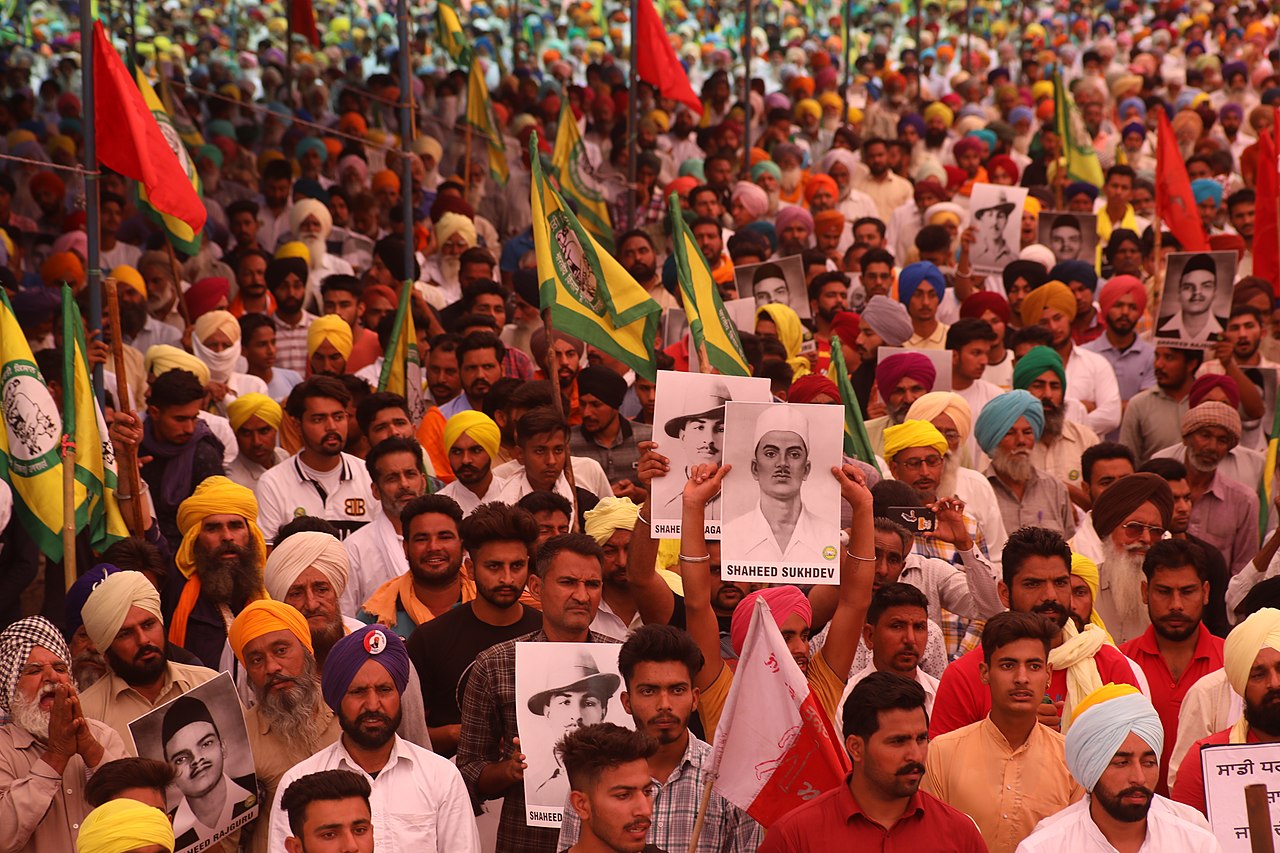
The Farmers Movement in India has inspired millions around the world fighting for justice, democracy and solidarity. In the face of threats, intimidation and relentless propoganda, the farmers held their ground, and forced the Modi government to repeal the farm bills. This was one of the most spectacular victories of ordinary people against the combined assault of corporate power and the state, showing that determined struggle can defeat the mightiest of forces.

Given the historic victory of the Farmers Movement in India, AEPF’s Food Sovereignty and Resource Justice cluster and Collectif BreakFree Suisse are co-hosting the webinar, “DARE TO WIN: Lessons from Farmers Movement in India”. Join leaders of the movement in India in conversation with activists of La Via Campesina as well as activist-scholars from Asia and Europe to discuss the movement, its significance for pro-peoples’ movements in the struggles ahead.

Speakers: 

– Dr Darshan Pal Ji: President, Krantikari Kisan Union
– Dr Ashok Dhawale: National President, All India Kisan Sabha/ Member Samyukta Kisan Morcha
– Chukki Nanjundasamy: Managing Director of Amritabhoomi International Centre for Sustainable Farming and Development
– Morgan Ody: La Via Campesina’s General Coordinator / European Coordination of Via Campesina
– Hashim bin Rashid: SOAS researcher on farmer struggles in Pakistan/ Member Pakistan Kisan Rabita Committee

Moderators: Sandeep Chachra and Katie Sandwell

Read More

Lao People’s Democratic Republic – Mr. Sombath Somphone’s enforced disappearance and demands for his safe return

Lao People’s Democratic Republic – Mr. Sombath Somphone’s enforced disappearance and demands for his safe return

The Rt. Hon. Amanda Milling MP
Minister for Asia and the Pacific
Parliamentary Under Secretary of State for the Foreign, Commonwealth and Development Office 

15th December 2021

Dear Minister,

Lao People’s Democratic Republic – Mr. Sombath Somphone’s enforced disappearance and demands for his safe return

We write to you again as we remain deeply concerned about the safety and wellbeing of Mr. Sombath Somphone. It is now nine years since his enforced disappearance. 
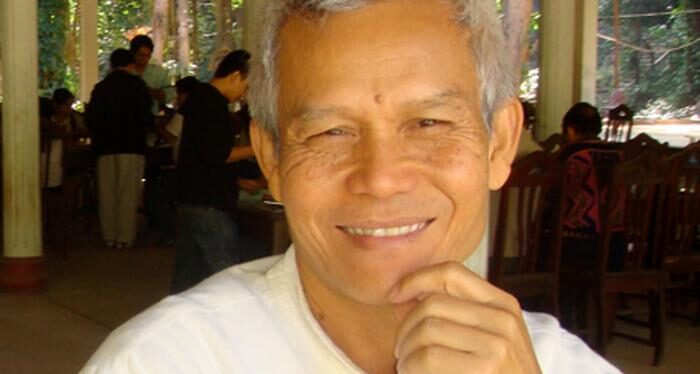
We express our continuing outrage at the Lao government’s failure to independently, impartially, effectively, and transparently investigate Sombath Somphone’s disappearance on 15th December 2012, reveal his whereabouts, and return him to his family.

The Lao government’s continued silence and obfuscation of the facts around Sombath’s enforced disappearance have subjected his family to nine years of fear and uncertainty over his fate and whereabouts, which remain unknown to this day. 

As you are aware, Sombath is one of the most respected and influential voices for sustainable people-centred and just economic and social development in Laos. He is the founder and former Director of the Participatory Development Training Centre (PADETC), and the winner of the 2005 Ramon Magsaysay Award for community leadership. He was the most prominent Lao co-organizer of the Asia Europe People’s Forum 9 (AEPF9), which was held in October 2012 in the Lao capital Vientiane, before the Asia-Europe Meeting, ASEM9. 

On 15th December 2012 Sombath Somphone disappeared, taken away in a truck by unknown persons after being stopped by police in Vientiane. Nobody has seen or heard from him since. 

Sombath was last seen at a police checkpoint on a busy street of the Lao capital, Vientiane, on the evening of 15th December 2012. His abduction was captured on a CCTV camera near the police checkpoint. The footage strongly suggests that police stopped Sombath’s vehicle and, within minutes, unknown individuals forced him into another vehicle and drove him away in the presence of police officers. CCTV footage also appears to show an unknown individual driving Sombath’s vehicle away from the city centre before returning sometime later. The presence of police officers at Sombath’s abduction and their failure to intervene strongly indicates state agents’ participation in Sombath’s enforced disappearance.

On June 2013, Amnesty International issued a major briefing document on Sombath’s disappearance which stated that “Based on the evidence, the most plausible conclusion is that Sombath Somphone is a victim of an enforced disappearance, for which Lao officials are responsible.” 

It has been noted that during consideration of Laos under the UN Universal Periodic Review in March 2015, the Lao delegation clarified: 

that the Investigation Committee was always open to views or suggestions to help the investigation, and was ready to receive suggestions from any interested parties with regard to the ongoing investigation. The delegation gave assurances that the authorities were still conducting its investigations and would continue to conduct a thorough investigation into this case in order to find the truth and bring perpetrators to justice in accordance with the law.” 

However this claim and others by the Lao authorities that there is an ongoing investigation are barely credible. Responsible government ministries have revealed no information that transparently and concretely demonstrates that an in-depth and thorough police investigation is taking place. Instead, the Lao authorities and government officials have given inadequate and often dismissive responses to requests for information, as well as attempting to silence or avoid mentions of concern about Sombath Somphone among civil society in Laos and the region.  

The fact that police officers appeared to have witnessed Sombath’s abduction and failed to intervene strongly indicates state agents’ involvement in, or acquiescence to, Sombath’s disappearance. Despite this evidence, the Lao authorities have not presented any new findings with regard to their investigation of the case. Despite claiming in various international fora that the investigation is “ongoing”, the government has not issued an official report on the investigation’s progress since 8th June 2013.

The government’s ongoing failure to thoroughly, independently and impartially investigate the cases of Sombath and other alleged victims of enforced disappearance is compounded by its total lack of commitment to address this issue.

In June 2020, during the third Universal Periodic Review (UPR) of Laos at the United Nations Human Rights Council, the government refused to accept all five recommendations calling for an adequate investigation into Sombath’s enforced disappearance. The government also refused to accept another eight recommendations calling for investigations into all cases of alleged enforced disappearance.

 Despite the government accepting that “the search for missing Lao citizens, including Sombath Somphone, is the duty of the Lao government”, it failed to demonstrate any will to effectively execute or fulfil this duty. The government stated that investigations into cases of enforced disappearances were “considered on a case by case basis,” but did not reveal how many investigations it had conducted, for which cases, or any updates on developments in the alleged investigations. They also failed to provide any information about their efforts to determine the fate and whereabouts of Sombath Somphone. 

However, over the past year a curtain of silence has fallen on Sombath’s case. The government’s last public remarks on Sombath’s case were made on 28th September 2020, during the UN (United Nations) Human Rights Council’s adoption of the third Universal Periodic Review (UPR) of Laos. During that review, the government did not accept all five recommendations that called for an adequate investigation into Sombath’s enforced disappearance, despite stating that it recognised that “the search for missing Lao citizens, including Sombath Somphone, is the duty of the Lao government.”

On 5 February 2021, four UN Human Rights Council’s Special Procedure mandate holders wrote to the Lao government to reiterate their concern regarding the lack of progress in the investigation into Sombath’s disappearance. In their communication, the UN human rights experts noted an “absence of evidence to indicate that efforts have been made to further the search for his [Sombath’s] fate and whereabouts.” To date, the government has not replied to this communication.

 In addition, the government failed to commit to ratifying the International Convention for the Protection of All Persons from Enforced Disappearance – a treaty signed by Laos in September 2008.

We renew our call for the establishment of an independent and impartial investigative body tasked with determining Sombath’s fate and whereabouts. The new body should receive international technical assistance in order to conduct a professional and effective investigation in accordance with international standards.

We also urge the Lao government to ratify the International Convention for the Protection of All Persons from Enforced Disappearance without delay, incorporate its provisions into the country’s legal framework, implement it in practice, and recognize the competence of the UN Committee on Enforced Disappearances to receive and consider communications from or on behalf of the victims in accordance with Article 31 of the Convention.

We thank the UK government through the letter from The Rt. Hon Nigel Adams MP of 5th January 2021 reconfirming:-

– Your deep and continuing concern about the disappearance of Sombath Somphone;
– Your continuing commitment to monitor his case closely and work alongside your international partners to urge the Lao PDR Government to undertake a full and proper investigation into Sombath Somphone’s enforced disappearance;
– at the Universal Periodic Review of Laos, held at the UN in Geneva in January 2020, the UK called on Laos to undertake impartial, thorough and transparent investigations into all enforced disappearances, including Sombath Somphone.
– That you raised the case with Vice Minister of Foreign affairs, Mr, Sengphet Houngboungnuang and with Mr Phoukhong Sisoulath, Director General for the Department of International Treaties and laws at the Ministry of Foreign Affairs;
– that the UK Ambassador to the Lao PDR

  • continues to offer technical support to the investigation into Sombath’s enforced disappearance;
  • has continued to regularly raise his case both bilaterally and via coordinated lobbying with the EU;
  • has raised his disappearance with the Lao Prime Minister’s Office.

We welcome confirmation that UK representatives have met with Shui Meng Ng, Sombath’s wife, have lobbied for the Lao PDR to officially recognise Sombath as a ‘missing person’ and have attended the annual commemoration of his enforced disappearance.

Despite sustained appeals from his wife and many hundreds of individuals, numerous governments and international organisations, including the Asia Europe People’s Forum, and widespread media coverage, the Lao PDR government has yet to conduct an adequate investigation into Sombath’s disappearance or provide a satisfactory explanation for his abduction.  

Laos was the Chair of ASEAN during 2016, an increased spotlight was on the country. It is regrettable that the ASEAN People’s Forum, traditionally hosted by the country holding the Chair, was not held there. The Forum is an opportunity for civil society groups and organisations in ASEAN to come together and hold a range of events and meetings on topics of concern to everyone living in the region. Many of them have voiced concerns over Sombath Somphone’s disappearance. It is a sad indictment that restrictions and obstacles on freedom of expression and peaceful assembly prevent Laos and particularly Lao civil society from benefiting from this gathering which took place in East Timor instead of Laos.

There have been repeated enquiries through diplomatic channels, including by the British Ambassador to Laos and five delegations of parliamentarians to Laos; two from the Association of Southeast Asia Nations (ASEAN), two from the Europe Union (EU) and one joint European and ASEAN delegation.

The 13th annual UNDP coordinated Round Table Implementation Meeting took place virtually on 17th November 2021 The 13th High Level Roundtable Meeting in Lao PDR | United Nations in Lao PDR  under the theme: “enhancing partnership to improve the effective implementation of the 9th five-year National Socio-Economic Development Plan aiming to accelerate the country’s achievement of the Sustainable Development Goals and graduation from the Least Developed Country status in the mid of COVID-19 recovery.” 

It appears that at this meeting UN Representatives shared that that “The 9th National Socio-Economic Development Plan presents an opportunity for Lao PDR to pursue a smooth graduation”  “The meeting comes at an important moment for Lao PDR as the country enters its first year of the implementation of the 9th National Socio-Economic Development Plan and is beginning the preparatory period for graduation from the Least Developed Country status” At a previous roundtable it was stated that “The initial concept of the 9th NSEDP (2021-2025) will … then contribute to its formulation, taking into account measures necessary for acceleration of the SDGs implementation and sustainable graduation from the Least Developed Country (LDC) status by 2024.”

In 2018, Lao PDR began to be reviewed against markers for graduation, including respect for and adherence to human rights, from LDC status as a beginning of the process of assessing Lao PDR’s aspiration to graduate from LDC status by the 2024.  This is a deep concern.

At the 14th November 2014  12th Round Table Meeting, a high-level dialogue on Official Development Assistance between the Lao government, Development Partners and other related stakeholders the European Union made a clear statement, 

At last year’s RTM we raised the issue of the unexplained disappearance of Mr. Sombath Somphone. We were re-assured by the government that it had taken all steps to continue the investigation and to bring the perpetrators to justice. One year later (and almost two years after the disappearance occurred), we note with grave concern that no progress has been made and Mr. Sombath has still not returned to his family. Once again, we urge the government to resolve this case urgently. We also suggest inviting the UN Working Group on Enforced or Involuntary Disappearances with regard to this specific case. Continued uncertainty around this case will not reflect well on the Lao PDR in the upcoming Universal Periodic Review (UPR) process.

International Human Rights organisations and the Asia Europe People’s Forum are of the opinion that the Lao Government is in breach of its human rights commitments, due to the enforced nature of Sombath’s disappearance and its failure to ensure the safe return of Sombath.  There are also significant concerns about the restrictions on civil society.  

We believe that it is now the time to review the grants and flow of ODA to Laos, including any from the United Kingdom, in the light of the Lao Government’s breach of its human rights commitments and of these being in breach of the principles and commitments by which ODA is agreed and disbursed by The United Kingdom and The United Nations.  

Trade and Foreign Direct Investment is a significant component of the Lao Government’s national Development Strategy. We believe that it is time for the UK Government to reassesses its trade and investment facilitation and promotion policies and practices with Laos.  

Laos has been a member of the WTO since October 2012. Chinese Ambassador YI Xiaozhun, who chaired the working party of members negotiating with Laos, welcomed the decision: “Lao PDR’s WTO accession is a strong, positive and clear signal for its commitment to engaging with the global economy in the framework of the rules-based trading system.” Ambassador Yi said.

We believe that the Government of Laos is in breach of its obligations and commitments required following its membership of the WTO since October 2012.  We request the UK government to raise this concern with the WTO. 

Sombath’s disappearance has created a climate of fear in Laos’s fledgling civil society. There is an increasing realisation that the ‘spaces’ for dialogue, discussion and debate on how to achieve more sustainable economic and social development are shrinking, with reports of harassment of civil society groups and individuals. This climate of fear is in sharp contrast to the climate of positive and constructive dialogue that AEPF9 sought to engender.

Sombath’s case is not the only case of an unsolved enforced disappearance in Laos. Lao authorities have failed to provide information on the fate or whereabouts of many other individuals, including community activists, who have been victims of enforced disappearance.

The Lao government’s failure to undertake adequate investigations into all cases of enforced disappearances violates its obligations under international human rights law, including Article 2(3) of the International Covenant on Civil and Political Rights, to which Laos is a state party.

We urgently call on the UK government to demand, again, that the Lao government immediately provide information on Sombath’s fate or current whereabouts, and other details surrounding Sombath’s enforced disappearance, as well as all other cases of enforced disappearance, in order to determine the victims’ fate or whereabouts. Lao authorities should commit to making the findings available to family members of the disappeared, and provide regular public updates on their progress on all cases of enforced disappearance. The Lao government should also ensure that those responsible for enforced disappearance, regardless of title or rank, are held accountable in trials that comply with international fair trial standards.

Lastly, we strongly urge the Lao government to ratify the International Convention for the Protection of All Persons from Enforced Disappearance, incorporate its provisions into the country’s domestic legislation, and implement it in practice.

Enforced disappearance of Sombath Somphone is a grave human rights violation and heinous crime. We will continue to work vigorously and continue to raise his case at any and every opportunity and to press other governments and institutions to do the same, including during this coming year. 

As long as Sombath has not been returned safely to his family, many organisations and individuals are committed to continuing, for as long as necessary, international activity. We are asking that until Sombath’s safe return, his disappearance should dominate bi-lateral, multi-lateral and international discussions with and about Laos.  

We are fully aware of the continuing and recognised actions of the UK Government, and the continuing and recognised actions of the UK Embassy in Laos and their collaboration with international partners. 

We would like to sincerely thank the UK Government and the UK Embassy in Laos for their continuing initiatives and collaboration in this regard. 

Minister, given the enforced nature of Sombath’s disappearance we respectfully request that you take the following actions:

  • Demand that the Lao Government uses its extensive resources to enable the safe return of Sombath Somphone to his family, and, again, offer Britain’s technical assistance for the same;
  • Continue, in coordination with international partners,  to call on the Lao Government to conduct a comprehensive and transparent investigation of the case of Sombath Somphone, including  urging the Lao government to heed previous calls to establish a new independent commission to undertake an impartial and thorough review of all the evidence, including of the detailed CCTV footage of his abduction, identifying and questioning all those present, and of details pertaining to the white pick-up truck in which Sombath Somphone was last seen;  
  • Continue, in coordination with international partners,  to call on the Lao Government to fully cooperate with UN bodies such as the Working Group on Enforced Disappearances in Geneva; 
  • As a member of the multi-lateral institutions, including UNDP, that are donors to Laos, The United Kingdom should actively engage in, and if necessary initiate, discussions to suspend the flow of ODA to the Lao PDR;  
  • Initiate a review and reassessment of UK trade and investment facilitation and promotion policies and practices with Laos. To this we request a comprehensive written statement presented on 15th December each year of the UK trade and investment facilitation and promotion policies and practices with Laos; 
  • Begin representations to the WTO to raise this concern that Laos is in breach of its obligations and commitments required following its membership of the WTO since October 2012 and request you begin discussions with the WTO to this end;
  • Ensure that as part of the discussions, that have apparently begun in 2018 for Lao PDR’s aspiration to graduate from LDC status by 2024, that there are explicit and transparent statements that conditional review markers for graduation from LDC status include human rights commitments and practice. This respects the Istanbul Declaration http://www.unohrlls.org/UserFiles/File/IPoA.pdf  It is the view of many organisations that Lao PDR graduation from LDC status is not acceptable given its consistent record of human rights violations , including the enforced disappearance of Sombath Somphone;
  • Should suspend support for Lao citizens through the Chevening Fellowships and Scholarships Programme;
  • Insist that the Lao Government ensures a secure, enabling environment that encourages learning and reflection and provides space for open, respectful, diverse and constructive debate for people committed to sustainable development in Laos; 
  • Inform the Lao Government that while Sombath remains missing, there will be a growing negative perception of Laos at a time when the country is seeking to integrate further into the world economy and attract foreign direct investment; and
  • As human rights commitments underpin and are integrated into many of the bi-lateral and multi-lateral agreements with Laos, share, and continue to share, your concerns about the disappearance of Sombath with the UN, the Asian Development Bank, the World Trade Organization and others, and request that they too demand the safe return of Sombath.

Thank you very much for considering our sincere and urgent requests.

Yours sincerely,
Andy Rutherford,
International Organising Committee, Asia Europe People’s Forum
andyfresheyes@gmail.com

Download this letter

Read More

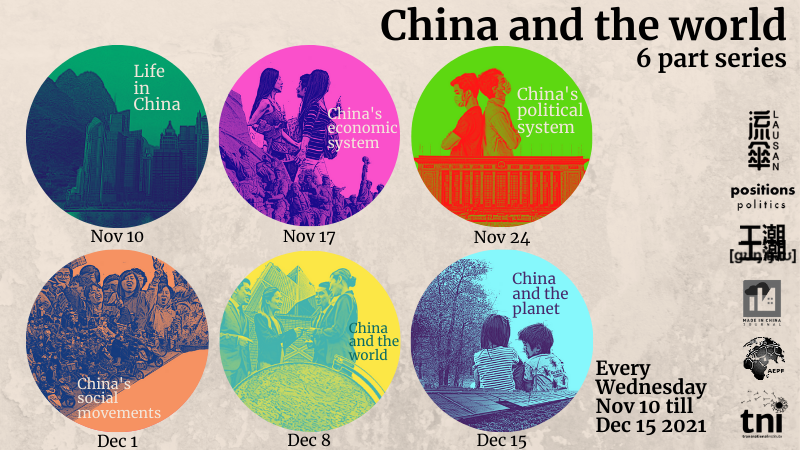
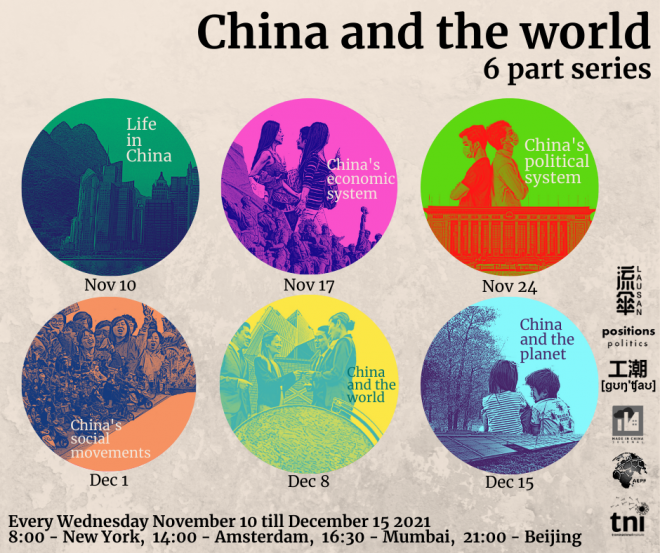
China and the world webinar series

China and the world webinar series

China’s rise in the last three decades has reshaped the global economy and politics. For activists and movements committed to social and environment justice, what are the implications for our struggles for systemic change?

China today has the second largest global economy, ranks first in outward foreign direct investment, has become the world leader in AI and a driver of economic growth globally. Global capitalism today would not survive in its current form without China’s dynamism and pivotal role. As the country’s wealth and influence has grown, the Chinese state is looking to consolidate power at home, while also playing a more assertive role within Asia and globally. This has led its global geopolitical role to be constantly scrutinised by outside commentators, most often in relationship to US power.

Yet China, despite its size and power, remains a state, nation, country and people that is little understood and poorly portrayed – most of all by mainstream media and politicians outside China. This is often a projection of the fears, ideologies and political interests of those outsiders, rather than an honest examination of China’s unique history, politics and peoples and their own struggles for meaningful well paid work, good education, quality healthcare, a clean environment.

To confront some of the mythologies, and also to deepen understanding of the country, Transnational Institute together with gongchao.org,  Made In China Journal, Lausan, Critical China Scholars and the Asia-Europe Peoples’ Forum put together a six webinar series on China. It was intended for activists anywhere in the world who want to have a basic understanding of China’s political and economic system, its global impact and role, and the best ways to engage with the Chinese state, its institutions and corporations, and its communities and grassroots groups.  The six week series was intended as a first introductory edition, and was concluded with a survey to decide on future webinar editions that could deepen learning, as well as possible spin-offs from the series including publications.

Sessions

1. Life in China, 10 November
What is the reality like for most working people in cities and the countryside? How has this changed since 1949 and particularly in the last 3 decades? How are people organised socially and how is this changing? What are the dominant attitudes on issues of gender, race and sexuality, as well as perceptions on globalisation and Chinese nationhood? What has been the impact of rapid economic growth socially and the rise of inequality?

  • Dong Yige, University of Buffalo and currently working on book, The Fabric of Care: Women’s Work and the Politics of Livelihood in A Chinese Mill Town
  • Eli Friedman, Cornell University and author of forthcoming book, The Urbanization of People: The Politics of Development, Labor Markets, and Schooling in the Chinese City
  • Yutong Lin, Nomadic Department of the Interior research collective
  • Moderator: Kevin Lin, Critical China Scholars/Made in China Journal

2. China’s economic system, 17 November
Is it capitalist or communist? How does it differ from US or EU neoliberal capitalism? What has it achieved since the revolution in 1949? What are its flaws? What can we learn from it? What is the current economic strategy? How does it fit into the global economy? Who are the biggest Chinese corporations, how do private and state corporations differ, and what relationship do business elites have with political elites? What is the relationship between Chinese institutions and global capital?

  • Ralf Ruckus, editor of gongchao.org and author of The Communist Road to Capitalism
  • Joel Andreas, UCLA and author of Disenfranchised: The Rise and Fall of Industrial Citizenship in China
  • Others to be confirmed

3. China’s political system, 24 November (please note this is at 3-5pm CET)
How is China governed? In what ways is it democratic or not? Who has political power in China and how did they win and hold onto power? How is political power distributed or concentrated? How can we interpret the situation in Xinjiang, Hong Kong and Tibet in terms of understanding Chinese state power and political strategies?

  • Rebecca Karl, New York University and author of China’s Revolutions in the Modern World: A Brief Interpretive History
  • Darren Byler, Simon Fraser University and author of Terror Capitalism: Uyghur Dispossession and Masculinity in a Chinese City
  • Yangyang Cheng, Yale Law School and columnist at SupChina

4. China’s social movements, 1 December
What are the main forms of social and collective organising in China? What space and autonomy do community organisations, independent media, academia and labour organisations have ?  How do movements from below and resistance shape Chinese society and politics? How does this differ in  Hong Kong compared to the rest of mainland China? How can  movements based in other countries best work with and alongside Chinese movements and social forces? How can we confront Sinophobia globally?

  • Au, activist from Hong Kong
  • Manfred Elfstrom, University of British Columbia and author of Workers and Change in China
  • Crystal L, Chinese feminist activist
  • May Wu, social justice organiser
  • Moderator, Ralf Ruckus, Gongchao.org

5.  China and the world, 8 December
What is the Chinese state’s strategy in terms of its foreign policy, global investments, and its deployment of hard and soft power? What does it advocate for in terms of global governance? How does it mirror or differ to US or EU foreign policy? How can we understand the Belt and Road Initiative? What are the impacts of Chinese capital in Europe, Africa, Asia and Latin America? Are they any different to Western transnational interests? How can we confront the anti-China politics (or policies) and the threat of a new Cold War pushed by the political establishment of the US and other Western countries? How can we confront Sinophobia globally?

  • Brian Hioe, activist in Taiwan, editor of New Bloom Magazine
  • Lee Jones, Queen Mary University London, author of forthcoming book, Fractured China: How State Transformation is Shaping China’s Rise, with Shahar Hameiri
  • Stella Hong Zhang, John Hopkins University and co-editor of the https://thepeoplesmap.net
  • Walden Bello, Focus on the Global South, and author of China: An imperial power in the image of the West
  • Moderator: Stephanie Olinga-Shannon, Transnational Institute

6. China and the planet, 15 December
What is China doing to address climate change and environmental crises? What is working and where is it failing? To what extent is climate & environmental issues being integrated into both its domestic policies and its foreign investments outside China? Are there any internal movements or forces that challenge an extractivist form of development? What openings and opportunities are there for change?

  • Tobita Chow, activist and founder of Justice is Global
  • Isabel Hilton, founder and senior advisor of China Dialogue
  • Ying Chen, The New School and co-author of Global Green New Deal: A Global South Perspective
  • Moderator: Nick Buxton, Transnational Institute


Read More

AEPF Congratulates the Indian Farmers on their historic victory

AEPF Congratulates the Indian Farmers on their historic victory

December 13, 2021

The AEPF congratulates the Indian farmers’ on their victory as the Government of India conceded to their demands after one year of non-stop protests. We pay homage to the over 700 lives martyred in the course of this struggle as the farmers braved a hostile environment and adverse weather conditions as they camped in the open on the borders of New Delhi.

The AEPF believes that this victory is shared by peoples’ movements world over as the farmers’ struggle goes beyond their own livelihood, to ensure that food prices remain affordable, that food growers retain dignity and the right to their labour and food sovereignty. The Indian farmers’ movement succeeded in halting laws that facilitate the corporatization of food production and distribution systems, and thereby dealt a blow to neoliberal reforms.

The AEPF lauds that women joined this movement in great numbers in their own right as cultivators and agriculturists. This movement collectively thwarted attempts to break its unity and demonise social movements. The Indian farmers movement has restored the majesty of non violent mass movements with a collective and responsible leadership that arose from within the struggle through discussions and negotiations across many political worldviews. This movement generated its own cultural symbols, songs, creative expressions, and expressed solidarity with other smaller movements and expressions of democracy like minority rights and accountable dissenters.In a word this movement has been a model of resistance that deepens democracy that has seen erosions in India as in many other parts of the world.

The leadership- Samyukt Kisan Morcha (SKM) has resolved to take forward the interests of the farmers and workers. The AEPF once again congratulates them and stands in solidarity with them.

Save the Date:
Dare to Win: Building on Lessons from the Indian Farmers Movement

Date: January 20, 2022
Time: 10 CET
Webinar

Read More

Global Pact of Solidarity for the rights of migrant and refugee people

Global Pact of Solidarity for the rights of migrant and refugee people

Dear Colleagues,

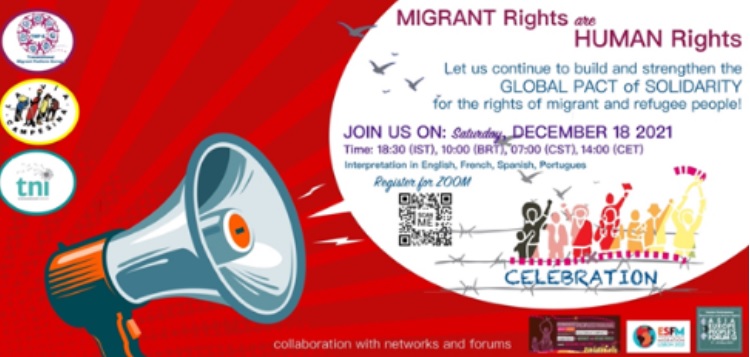
Many of the organizations and movements from different global regions that have campaigned for the rights of migrant and refugee people throughout 2021, and of course for much longer, are coming together to mark and celebrate International Migrant Rights Day. on Saturday, December 18 (14.00-15.30 CET). We will share important initiatives for 2022 which can strengthen our movements and networks in the year ahead and explore ways to converge our efforts to build the Global Pact of Solidarity, against continuing genocide, and all forms of repression, racism, and criminalization of solidarity.

A detailed programme will be sent soon. 

Please save the date and register here: 

https://viacampesina.zoom.us/meeting/register/tZYpce6uqzkqHNEllnTJ-WWKmNgxyAtbPK2z

In the struggle and in solidarity

Cristina (LVC), Jille (TMP-E) Brid (TN()

Preparation Work Group Dec 18th, 2021

Read More

Webinar: Towards Just Media For Rights & Freedom Of Expression

Webinar: Towards Just Media For Rights & Freedom Of Expression

Watch the Webinar:

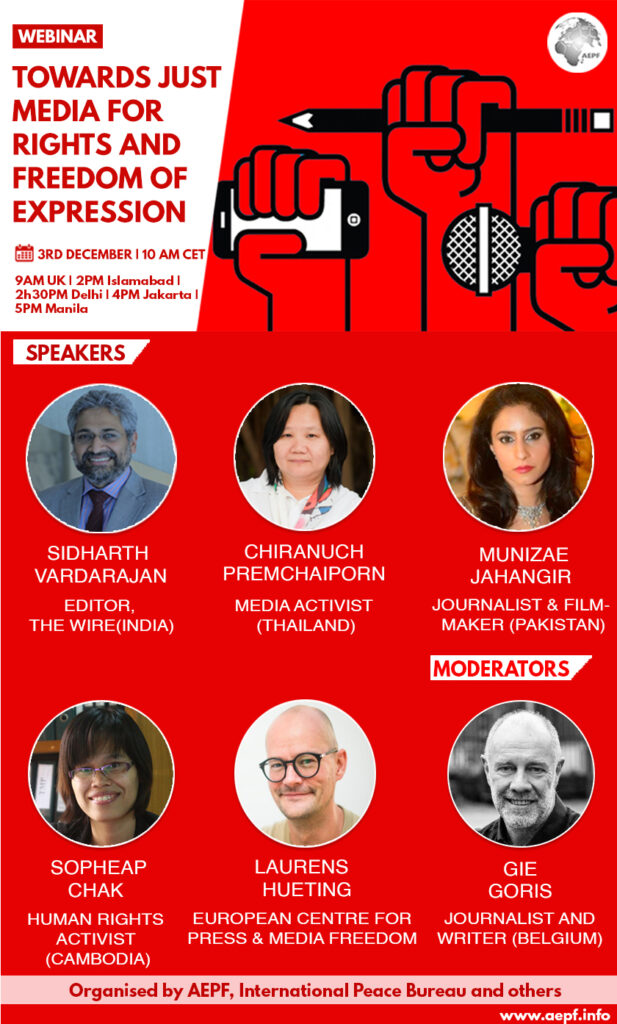
Building upon the findings of AEPF’s ‘The Right to Dissent must be at the Heart of our Democracies: 10 Country Report’, Asia Europe People’s Forum is continuing our commitment to work together to understand and challenge growing suppression of the Right to Dissent. For this webinar, to be held on December 3rd, renowned journalists come together to consider our collective imperative ‘Towards Just Media for Rights and Freedom of Expression’.

Report: https://aepf.info/right-to-dissent-report

Speakers:

– Sidharth Vardarajan, The Wire (India)
– Laurens Hueting, European Centre for Press and Media Freedom (UK)
– Munizae Jehangir, VoicePk (Pakistan)
– Chiranuch Premchaipon, Foundation for Community Educational Media (Thailand)
– Sopheap Chak, Cambodian Centre for Human Rights

Moderator: Gie Goris, Afghans in Antwerp (Belgium)

Read More

Presentation by the Asia Europe Peoples’ Forum to the Asia and Europe Heads of State and Government – the ASEM13, Held online on 25th and 26th November 2021 Hosted by Cambodia

Presentation by the Asia Europe Peoples' Forum to the Asia and Europe Heads of State and Government – the ASEM13, Held online on 25th and 26th November 2021 Hosted by Cambodia

Presented by our representatives

    Lidy Nacpil, Director of the Asian Peoples’ Movement on Debt and Development (APMDD) and
    Nick Dearden, Director of Global Justice Now

 Presentation:

DOWNLOAD THE PRESENTATION

NOW is the time for us all to join together for profound change and action.  

We must all change! 

Faced with the fundamental challenges of Climate Change and Growing Inequalities, we must transform how we live, govern and co-exist with our environments.

On behalf of the Asia Europe Peoples’ Forum we shared the key recommendations from our recent multi-country and well attended AEPF13. Through its 47 sessions over 8 days of engagement and expression by active citizens, we contributed to both our Peoples’ Agenda for ASEM Parliamentarians ( The People’s Agenda for ASEM Parliamentarians – AEPF) and our Peoples’ Charter for ASEM Parliamentarians. (AEPF: People’s Charter & Agenda – AEPF)

We urge governments to work effectively to address our common challenges of climate crisis and biodiversity loss, rising social inequalities and growing authoritarianism in governments

Together we must build a Just, Equal, Inclusive and Environmentally Sustainable Asia and Europe. 

AEPF urges all Asian and European governments to work for people-centred change.  

On behalf of the Asia Europe Peoples’ Forum we share key recommendations articulated in our Peoples’ Agenda and Peoples’ Charter for Parliamentarians.

Towards Climate Justice, Just Transition and meeting the Paris goal of keeping global temperature rise to below 1.5C and empowering people to deal with the fast escalating climate impacts, we urge all governments  to ensure core commitments become realities by 2025, including:-

  •     The end of all public financing of fossil fuel industries and major progress in the equitable, fair and swift phase-out of fossil fuel production and consumption
  •     Delivery of full obligations by European and rich governments to provide climate finance for all developing countries in Asia and worldwide

Call to make the People’s Vaccine a reality. We call on all governments to support the TRIPS waiver proposed by India and South Africa at the WTO next week. This is essential to overcoming the COVID-19 pandemic

 Ensuring Social Justice for All depends on global tax reform, including:

  •     The establishment of a democratic global tax body under the auspices of the UN to address the problem of illicit financial flows  
  •     Taking urgent action to stop tax avoidance by multinational corporations

 In response to growing authoritarianism and discrimination we must strengthen our commitments to: 

  •     Freedom of Expression, Organisation, Association and an Independent Media, as well as
  •     Condemning attacks on Defenders of Human Rights

 Following a 10-Country Report presented to the UN Special Rapporteur at AEPF13 we reaffirmed that the Right to Dissent must be at the heart of our democracies (THE RIGHT TO DISSENT)

Our presentation is on behalf of all participants in AEPF13 and dedicated to our colleague, Sombath Somphone, who co-organised AEPF9 in Laos, who was then enforced disappeared in 2012, and has yet to be returned safely home.

25th November 2021 

Read More

AEPF Activism during COP26

The climate crisis is being militarised to profit corporations and to entrench global inequality with severe repercussions for human rights and democracy

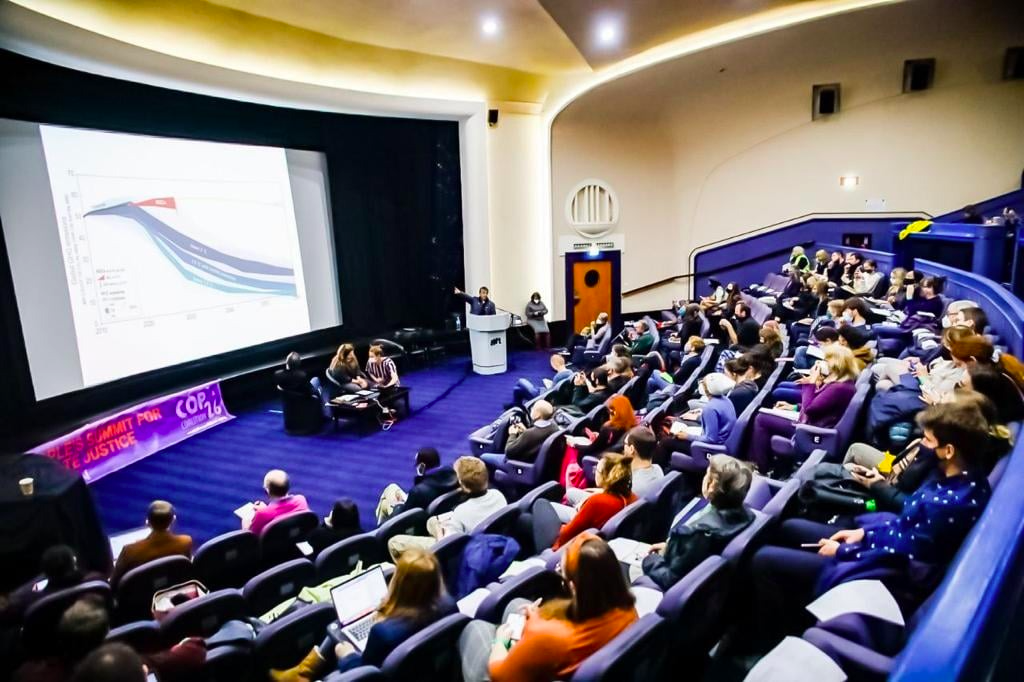
1. COP26: Peoples Tribunal: People and Nature vs THE UNFCCC, A People’s Tribunal on the UN Framework Convention on Climate Change
Co-organised by Global Justice Now, Focus on the Global South, TNI, APMDD, AEPF, ATTAC (France) and others.

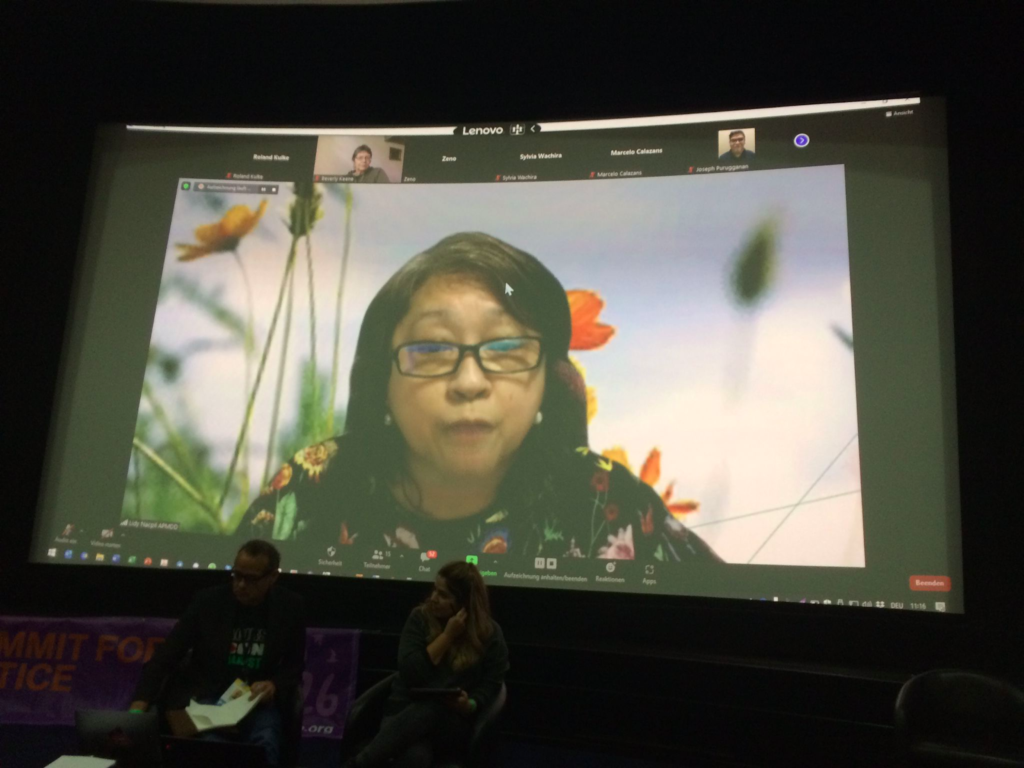
2. Lidy Nacpil giving testimony to the Tribunal

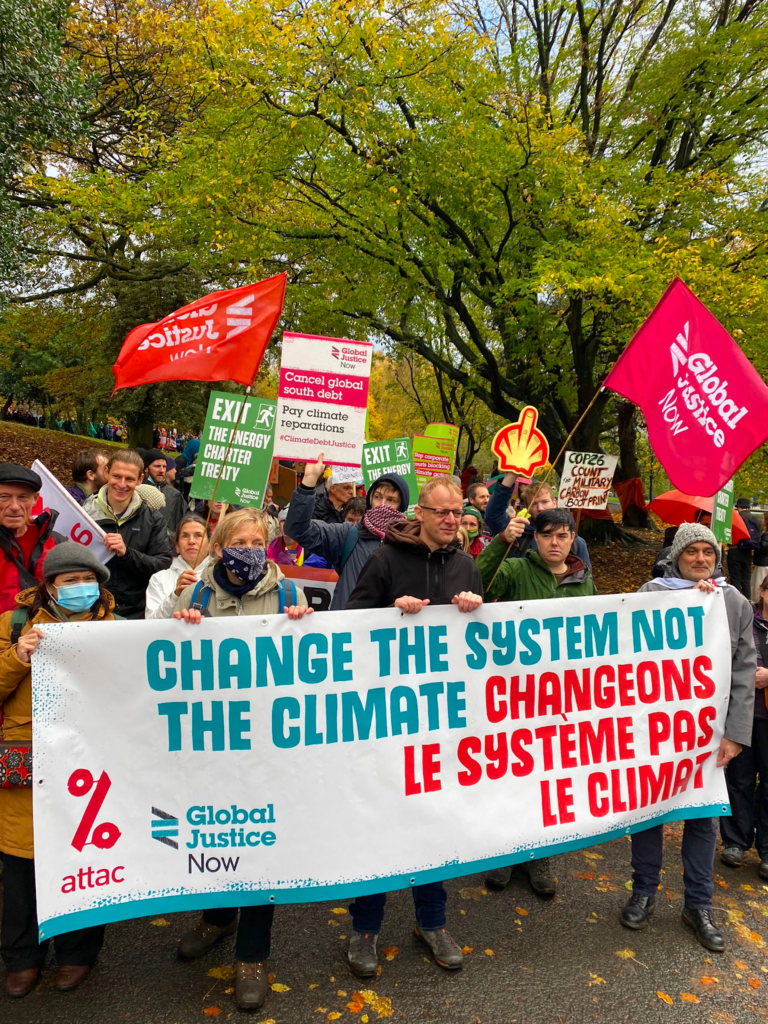
3. Global Justice Now, ATTAC France, Fresh Eyes, AEPF activists, on November 6, 2021 Global Day of Action, London.

4. Dorothy Guerrero and Zeno from ATTAC, Opening Speech during the Tribunal

5. Dorothy Guerrero and Kris Vansbrouk at the civil society demonstrations in Glasgow, COP26

6. COP26: People and Nature vs THE UNFCCC, A Peoples Tribunal on the Un Framework Convention in Climate Change

AEPF Activists’ presentations

Shalmali Guttal, Testimony at the UNFCCC Tribunal (COP26)

7. Testimony by Nick Buxton, Transnational Institute related to the Tribunal’s second charge – Failure to address social and economic injustices

The climate crisis is being militarised to profit corporations and to entrench global inequality with severe repercussions for human rights and democracy

8. Charles Santiago and Lidy Nacpil and APMDD

Press Release — Parliamentarians Call for a Fossil Fuel Free Future

9. APMDD’s comprehensive statement on the COP26 Outcome

APMDD reaction to the Glasgow Climate Pact: ‘COP26 deal fails to step up for climate justice’

10. Global Justice Now (@GlobalJusticeUK) Tweeted:

11. AEPF participation at Pakistan’s Climate Justice March

12. Dorothy Guerrero speaks on behalf of the Demand Climate Justice group at the Opening Session of COP26

Read More