Find and Punish Anousa’s Attackers; End Violence and Impunity!

Find and Punish Anousa’s Attackers; End Violence and Impunity!

Asia-Europe Peoples Forum.  May 4, 2023

The Organising Committee of the Asia-Europe Peoples’ Forum (AEPF) expresses our shock and anger at the brazen attempted murder  of Anousa “Jack” Luangsouphom, a young Lao blogger, on Saturday, 29 April 2023.   Anousa was shot twice at point blank range by a person in plain clothes in the  After School Chocolate & Bar in Lao’s capital city Vientiane. He is currently in hospital and his family and friends are scared for his and their safety. The shooting was caught on the coffee shop’s security cameras and publicized by Laophattana Daily News (a state media outlet) as well as on Facebook and Twitter by numerous users.  However, Lao Authorities have yet to provide any updates about investigation into the attempted murder, nor have they acted to ensure the safety of Anousa and other witnesses of the attack.

Along with three colleagues, Anousa runs a public Facebook site, “Kab Kuan Duay Keyboard” (Driven By Keyboard) and a closed Facebook group “Laos Drama” on which, they post news and analyses about social, environmental, political, and human rights issues in the Lao PDR (Laos). Both sites have amassed a large following among young people, journalists, and civil society organisations both inside and outside the country. Anousa is a vocal advocate for human rights, press freedom, civil liberties, democratic pluralism and ending corruption.

Anousa’s attempted murder has sent shock waves among activists and social media users in Laos, many of whom believe that the murder was politically motivated to silence the growing movement – comprised largely of young people – for civil-political rights, freedom of expression and meaningful participation in the country’s governance. The brazenness of the attack indicates the shooter’s confidence of impunity, and has deepened fear of violent reprisals against those who speak out for sustainable development, justice, and accountability.

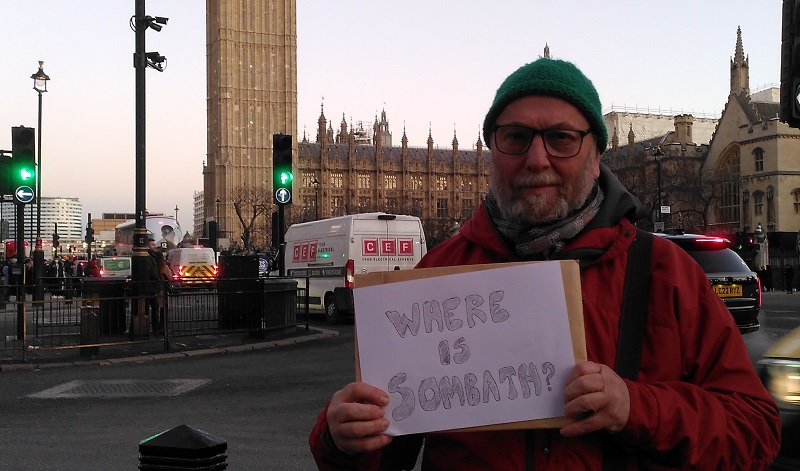
Judicial repression, extra-judicial violence and state reprisals are not new in Laos: in December 2012, eminent community leader Sombath Somphone was disappeared in full public view from a checkpoint manned by uniformed police and remains missing to this day.  In 2019, Od Sayavong, a member of the “Free Lao” group was disappeared in Bangkok after meeting with the UN Special Rapporteur on Extreme Poverty and Human Rights, just before his official visit to Laos. Numerous Lao people have been arrested for participating in peaceful demonstrations in Laos and Thailand, and for sharing news and views about issues considered ‘sensitive’ by the ruling regime. Lao Authorities remain silent on the whereabouts  of the disappeared and the conditions of those incarcerated, in contravention to the human rights conventions that the country is signatory to.

We join human rights organisations and civil society in condemning in the strongest possible terms the attack on Anousa and the use of brute force to silence critical and dissenting voices.     Like many young people in Laos, Anousa and his colleagues are exercising their rights to citizenship by sharing information and facilitating discussion about issues that are critical to the sustainable development of Laos and to their futures as Lao citizens. 

We call on the Lao Government to immediately launch an independent, impartial, and comprehensive investigation into Anousa’s attempted murder and ensure that the perpetrators are held accountable to the highest standards of law. Equally urgent is providing protection to and ensuring the safety of Anousa and other witnesses to the attack throughout the investigation and subsequent judicial processes.  

We ask Laos’ donors, who are pouring millions into the country as development aid, to urgently demand prompt, impartial and effective investigation and accountability, and an end to the pervasive culture of violence and impunity.  The European Union and other bilateral and multilateral donors who claim to be supporting human rights and civil society need to make an honest assessment as to whether their efforts are creating a false impression that human rights and civic space are actually improving in the country. Democracy can never flourish, or even take root in a social-political context of repression, violence, fear, and absence of public accountability.

Read More

Pakistan in Systemic Crises

Pakistan in Systemic Crises - By Farooq Tariq

Pakistan is facing one of worst economic and political crises at present. The political crisis is best manifested by the fact that almost half of the National Assembly (Lower House of the parliament) members have resigned while two of the four provincial parliaments were dissolved a year before the elections otherwise due in October this year-2023.

 The two provincial parliaments, in the provinces of Punjab and Khyber-Pakhtunkhwa, were dissolved by the former prime minister Imran Khan. His party, Pakistan Justice Party (PTI) held a majority in these two houses. He had hoped that the dissolution of the two provincial parliaments would force the federal government to announce an early general election. 

The caretaker governments in these two provinces have refused to call the elections, otherwise due within 90 days of assemblies’ dissolution. This delay is in violation of the Constitution of Pakistan. The pretext for the delay in elections is the lack of funds. But popular perception is that the delay is a manipulation by the army. The army fears a PTI victory in the elections. Ironically, in 2018, the army was accused of rigging elections to secure a victory for Imran Khan. 

There is great political manoeuvring going on at the judicial level.  The chief justices of the Supreme Court and the Lahore High Court are Imran Khan supporters. This has been manifested by the verdicts issued by the judges in several political cases, that are not seen to be just. 

Every time, the PTI moves the courts, everyone knows the verdict in advance. For instance, a Supreme Court bench consisting of three judges, known for supporting Imran Khan, ordered on April 4 that elections be held in the Punjab Province on May 14 this year. However, this 3 member bench initially included nine judges. Those judges are not supportive of Imran Khan were removed by manoeuvring by the court officials. The Supreme Court judges often issue contradictory statements. This reveals that the judiciary is as divided as any other institution in the country.

The Federal Government and the Punjab caretaker government have rejected the Supreme Court decisions regarding elections on May 14.  This public conflict between the Supreme Court and the federal government aggravates the political crisis. 

Most state institutions are stuffed with pro-PTI as well as pro-Muslim League elements. The Muslim League, controlled by the Sharif dynasty, is presently ruling in coalition with the Pakistan People’s Party (the party of the Bhutto dynasty). 

The Supreme Court has the power to remove the present government on the charge of contempt of court. However the question is: who would take over a collapsing Pakistan? 

The spectre of a military takeover is often under discussion. Pakistan’s turbulent political history is marked by 32 years of direct military rule ever since independence in 1947. When not in power, the military controls from behind the scene. At present the military establishment is posing to be “neutral”. However, they too have little credibility.

In fact, as stated above, the 2018 general elections that brought Imran Khan to power were rigged by the military establishment in his favour. When the military establishment withdrew support from Imran Khan in early-2022, his government collapsed. 

Imran Khan tried to find scapegoats for his downfall by blaming, firstly, the USA, then the military establishment and many others in his ever-changing narratives. He is ridiculed as a man of ‘U turns’. He is known to repeatedly contradict himself in different public speeches- a sign of his inconsistency and desperation to cater to the public he addresses. 

The Imran Khan government was replaced by a coalition government of Shahbaz Sharif, heading the Muslim League (after his elder brother and three-time prime minister Nawaz Sharif was banned from politics in 2018). When Mr Sharif tried to implement the conditionalities of the IMF, Imran Khan regained popularity, by gaining mass support. 

The IMF has become very unpopular in Pakistan amongst the masses. Whenever there was an unprecedented price hike announced by the government, the IMF was cited as the reason. The only pretext to justify the IMF conditionalities by the PML-led coalition government is: ‘if we do not meet the IMF conditions, Pakistan will go bankrupt’. Masses have already gone bankrupt, and so has the state in real terms but a formal announcement on this bankruptcy has been delayed. 

Coupled with the severe political crises, a new upsurge of religious fundamentalism is visible. For example, terrorist attacks by the Tehreek Taliban Pakistan (TTP) have increased manifold. The TTP is an off-shoot of the Afghan Taliban. They are targeting and attacking the police and military forces. They have safe havens in Afghanistan under a very helpful Taliban government. 

Imran Khan in his last days of power, released hundreds of arrested Pakistani Taliban, apparently in his bid to hold peace dialogues. In fact, known as Taliban Khan, he and some of his military backers sympathize with the Taliban. Now the security forces are paying the price of this strategy.  

The economic crises are far more severe than the political crisis. The coalition government is implementing the anti-people conditionalities of the IMF by raising the prices of oil, gas, electricity, general sales tax and every other consumer item. 

The Pakistani Rupee is losing its value almost daily against the US dollar and other foreign currencies. On 7th April, one dollar fetches over 290 Rupees, up from 150, a year ago. There are hundreds of containers full of imported goods lying at the Karachi port waiting to be cleared. The government has refused to clear the dues to be paid in dollars for these imported items. 

There has been a series of indirect taxation measures on almost all edible goods and daily consumer items during the last six months. There have been several min-budgets imposed on the people, sometimes announced without any prior notice. 

Peoples are unable to cope and are evidently collapsing,  as is Pakistan under the huge economic burden without raising wages or compensations, leaving alone adequate social security.

Pakistan is trying its best to fulfil the conditionalities imposed by the IMF to fetch the last instalment of 2 billion dollars of a 6 billion dollar loan negotiated by the previous Imran Khan government in 2019. This is the 23rd time Pakistan has taken a loan from IMF. 

Pakistan’s external debt servicing rose by 70 per cent in the first two quarters of 2022-23. Pakistan paid USD 10.21 billion in external debt servicing during this period. This at a time when Pakistan witnessed the worst climate disaster in the year 2022. Instead of suspending the debts because of the climate calamity (where Pakistan witnessed the worst flooding in decades), the IMF increased pressure to pay back even more than the last year.  

The foreign reserves are at a historic low. Pakistan’s central bank foreign exchange reserves have dropped to $4.2 billion due to recent external debt repayment.  To please the IMF and meet the conditionalities, Pakistan has increased the interest rate to a record 21 percent. Wholesale inflation is at an unprecedented level: 37.5 percent, the highest since 1973. The result is a real disaster for the working-class and middle-class Pakistanis. 

The inequalities are at a historic high in Pakistan. Deregulation, privatization, liberalization, and lower progressive taxation contributed to this extreme inequality. According to one survey, the average income of the richest is more than 16 times the average for the poorest.  According to a report by OXFAM, the country’s top 1 percent holds more wealth than the bottom 70 percent of the population. 

Pakistan’s economy is expected to grow only 0.4 percent in the current fiscal year ending June 2023. By all measures, Pakistan performs poorly compared to all other South Asian countries. 

There is no hope amongst the people, that things will improve. The ruling elite of Pakistan has miserably failed in solving the basic problems of the masses like free education, health and employment. An alternative pro-people political and economic agenda is the need of the hour. The progressive forces are weak but trying to fill the gap in some working-class areas.

Farooq Tariq
President Haqooq Khalq Party
General secretary
Pakistan Kissan Rabita Committee
farooqtariq3@gmail.com 

@Farooqtariq3 (Twitter)

Read More

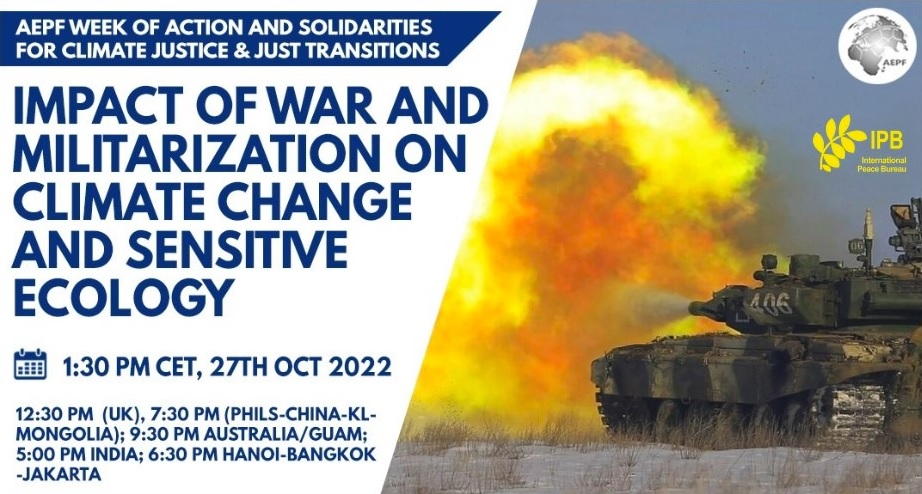
NATO’s Geostrategic interests towards China: How strong are AUKUS and the QUAD really?

NATO's Geostrategic interests towards China: How strong are AUKUS and the QUAD really?

Watch the Webinar

Organised by No to NATO network, Asia Europe People’s Forum (AEPF); International Peace Bureau (IPB)

This webinar looks at NATO and militarization of the Indo Pacific and intentions towards China, with outstanding experts and unique analysis.

Speakers:

– Ann Wright (USA)
– Theresa Arriola (Marianas Islands)
– Jun Chisaka (Japan)
– Sung-Hee Choi (South Korea)
– Cameron Leckie (Australia)

Moderator: Anu Chenoy (India)

Read More

China’s Geostrategic Challenge

China’s Geostrategic Challenge

By Anuradha Chenoy 

China has released three foreign policy documents in quick succession,  one year after the Ukraine Conflict that lay out the Chinese vision of the international system and the geostrategies path they are likely to follow. The quick message is that China provides an alternate vision for the international system and the period of China’s engagement with hegemonic powers is over. 

The first ‘Global Security Initiative’ (February 21, 2023)   is a vision paper that calls for  ‘common security’ which should be comprehensive, cooperative ad sustainable unlike competitive security. This paper continues with earlier appeals made by President Xi Jinping for negotiated settlements to all conflicts,  opposes unilateralism and hegemonism. This paper presents an international alternative to the hegemonic vision on geopolitics- shown in the Table below:

Issue Hegemonic Position (US+West) Chinese Alternative
Protecting national Sovereignty and territorial integrity Interventions in states; regime change; colour revolutions Respect national sovereignty and no intervention in internal affairs of other states
International law Rule based order is selective use or violation of I. Law to suit hegemon. Unilateral  Rule based order violated principles of international law; multilateral and international law based approach
Sanctions and export  Unilateral sanctions- economic war against select states Accept sanctions only when mandated by UN Security Council
Overall approach to security Cold War mentality: competitive security; based on exclusion, targeted use of force;  Common Security; comprehensive, cooperative, focus on negotiation; inclusion of all; regional security

The second document: ‘US Hegemony and Its Perils’ is the sharpest and direct attack on US foreign hegemonic policies in recent times. It alleges that the US foreign policy ‘playbook’: intervenes in the domestic politics of states through colour revolutions, instigates regional disputes; directly launches wars, clings to Cold War strategies, continually abuses export controls, forces unilateral sanctions, is selective in the use of international laws; imposes rules to suit themselves under a ‘rules based order’. Each of these claims are validated by fact based lists of examples. It goes back to the Monroe Doctrine to the Bush-Obama wars to the current US wars and interventions,  cites numbers of  killed and states destroyed by the US. The Paper concludes that US ambitions for hegemony are ‘unilateral, egoistic, and regressive practices’ that are now drawing criticism and opposition from  the international community. This paper states that China opposes all forms of hegemonism and rejects intervention in others internal affairs. This document is the clearest chargesheet that the Chinese have made against the US in decades. It clearly posits the Chinese views as an alternative to US hegemony. It addresses the Global South and asks them to be vary of the great hegemon. 

The third is a position paper for a broad pathway that can lead to a political settlement  for the ‘Ukraine crises’ (February 24, 2023). Of course, the actual terms of any such settlement have to come from the parties to the conflict and the Chinese do not attempt detailing any ground settlement. In its 12 points, the Chinese consider of absolute importance, respecting national sovereignty, point to the necessity of ‘abandoning the Cold War mentality’, underline the need of a European security structure that avoids bloc confrontation based on exclusive and competitive security.  The Chinese call for a ceasefire,  an end to hostilities,  resumption of peace talks. They also ask for steps to reduce strategic nuclear risks, propose steps for resolving humanitarian crises and advocates steps for  normalising trade, maintaining grain supplies and industrial safety. It reiterates the traditional Chinese opposition to unilateral sanctions. This paper shows the way forward to all disputes but at the same time seems to warn that the Cold War mindset will block the way. 

These documents indicate a shift of Chinese traditional strategy in foreign policy where they restricted themselves to making statements and then busying themselves in trade and business as usual. From now they are likely to take more active positions in response to the West. These documents have no mention of disarmament which means that the Chinese will further their military and nuclear capability to higher levels. Further their policy towards the region from South China Seas to India and Central Asia will have to be watched closely. 

Timing of the Documents

The Chinese have timed these papers come after one year after the Ukraine War. This past year has witnessed an escalation of hostility in US positions towards Russia and China. The background of this year in Chinese view is:

  1. The US is increasingly hostile towards China. Every national security and strategy document of the US sees China as the main threat to US hegemony and advocates curtailing and containing China.   The Chinese response has been muted so far as they have tried to engage with the US on the economic, trade, bilateral, multilateral, diplomatic fronts. But US positions continue hardening.
  2. The US has sidestepped as and when they want,  the 1970’s agreements on the One China policy, stepping up arming of Taiwan; actions like the visit of House Speaker Nancy Pelosi, supporting Taiwan pro-independence parties that upsets the status quo that held for decades. 
  3. US trade policy towards China crafted by Janet Yellen of ‘friend shoring’ i.e. trade between friends- targets and excludes China, ‘de-coupling’ industries and manufacturing away from China, has shown China that they need to prepare for alternatives to US.
  4. Sanctions like the ‘Chip Act’ that prohibits China from accessing specific sensitive technologies have been put in place.
  5. US policies in the Indo-Pacific from Agreements like the QUAD, AUKUS (Australia, UK US) that have a military component like providing nuclear submarines to Australia; US push to revive military bases and step up arming Philippines and South Korea have enhanced Chinese threat perceptions. 
  6. War talk by US officials and especially the recent Hearings  of the US Congress Select Committee related to China, that show the bipartisan support to enhance military preparedness targeting China.
  7. US officials have been fanning the China and Russia threat across the world. Pressuring states to sanction Russia and provide weapons to Ukraine and simultaneously talking of Chinese threats, Chinese debts on account of the BRI etc. 

All these actions are seen by China as hostile acts by the US that China needs to respond to. 

Lessons Learnt from the Russian Experience:

The Chinese have learnt many lessons from Russia-Ukraine proxy war.

  1. There is enough evidence to show NATO has high stakes in continuing this proxy war till they achieve their agenda weakening Russia and promoting regime change;  US involvement in the Ukraine civil war, coup, and arming Ukraine; the betrayal by NATO leaders of Russia multiple times from expanding NATO to signing the Minsk Agreements only to hoodwink Russia while they prepare. The Chinese now believe that it is better not to take the words of the collective west seriously and they can say one thing and not hold even to formal signed agreements.
  2. Ukraine is being systematically destroyed and held up entirely by Western military and financial support. There is little interest in the lives and safety of the Ukrainian people and no negotiations are visible or probable. Taiwan can follow a similar fate.
  3. The US has bombed the Nord stream Pipeline in an act that goes against their own ally- Germany and so are willing to go to any lengths to maintain their hegemony in globally. Germany has accepted this. Chinese draw the lesson that the Europeans can as easily betray the Chinese if the US requires them to.
  4. The Chinese have witnessed that the US assessment that the Russian economy will collapse because of Western unilateral sanctions has failed and Russia remains economically resilient.
  5. NATO’s assessment that Russia would run out of weapons and missiles very soon also failed, as Russian military industrial capacity has proved very capable of churning out the artillery needed and in fact it is NATO that is running out of weaponry. 

The Chinese Geostrategic Projections

The Chinese geostrategic position that emerges from these three position documents clearly affirms: 

  1. The Chinese are committed to the construction of a multipolar world and oppose hegemonic politics. 
  2. The Chinese at this juncture see themselves in a position to challenge US hegemonism economically, technically, politically and possibly militarily- though they would like peaceful plural global environment. 
  3. China is addressing the West but also making an appeal to the Global South through these position papers.
  4. The Chinese appear to have concluded that the US will target them soon militarily, economically, technologically  in a hybrid war and they need to be fully prepared. This is evident from US National Security documents and bi-partisan statements made in the US Congress Select Committees on the PRC in recent times. 
  5. The Chinese have come to the conclusion  that in any conflict with the West, their strongest  ally will be Russia. This is because the trust between Russia and West is broken and hard to repair and that Russia sticks to its word and does what it says. 
  6. Chinese geostrategic positions are very similar to those the Russians. Both  challenge US hegemony. Russia and China have similar geostrategic vision on most international issues from no foreign intervention in Eurasia, opposition to NATO expansion, etc. They both argue for a common security as opposed to the competitive and exclusive security of the West. The Russians would agree with every point in the Chinese chargesheet on US hegemony.
  7. Russia has vast resources that China needs like oil, gas, and other commodities. Further despite contradictions the Russians have proved to be reliable partners to the Chinese historically, and the ‘limitless friendship’ is genuine. Russia is not just a major Eurasian power that the Chinese need for strategic depth, but it is also a Pacific power with great infrastructure- whether the ports of Vladivostok, the railways, the pipelines, the Russian Far East resources.  The Russians have been able to take on all of NATO with little effort. The Chinese have admired the Russian war strategies in Ukraine and against NATO.  Also, the Russians share the Chinese world view which is the construction of a multipolar world and is anti-hegemony.
  8. The Chinese are likely to step up their military, strategic, nuclear and technical capability. 

China’s geostrategic positions show an important shift. The Chinese will no longer take a subdued position vis-à-vis US policies that seek hegemony. Their earlier position to focus on trade and the Chinese economy and stand back on international issues has shifter to a more assertive one. This does not mean that China will engage militarily with the US on distant conflicts. Nor will the Chinese initiate or join any military pact or even alliance. Only that China is ready to take on any superpower on the question of Taiwan and their interests in the Pacific. China is saying this loud and clear, especially to the Global South.

                                    –#–

(Adjunct Professor Jindal Global University and former Dean, School JNU)

¹Ministry for Foreign Affairs, People’s Republic of China, Global Security Initiative Concept Paper, 21 February, 2023,  At: https://www.fmprc.gov.cn/eng/wjbxw/202302/t20230221_11028348.html
 ²Ministry for Foreign Affairs, People’s Republic of China, ‘US Hegemony and its Peril’,  20 February, 2023, at: https://www.fmprc.gov.cn/mfa_eng/wjbxw/202302/t20230220_11027664.html
³Ministry for Foreign Affairs, People’s Republic of China, ‘China’s Position on the Political Settlement of the Ukraine Crises’ 24 February, 2022, at: https://www.mfa.gov.cn/eng/zxxx_662805/202302/t20230224_11030713.html
The Senate Strategic Competition Act, 2021. https://thediplomat.com/2021/04/senates-strategic-competition-act-will-make-china-us-relations-worse-not-better/
US Congressional ‘House Arms Service Committee  Meeting on PRC (at: https://www.youtube.com/watch?v=UHSjrLbO1DY)
President’s website: http://en.kremlin.ru/supplement/5770
Read More

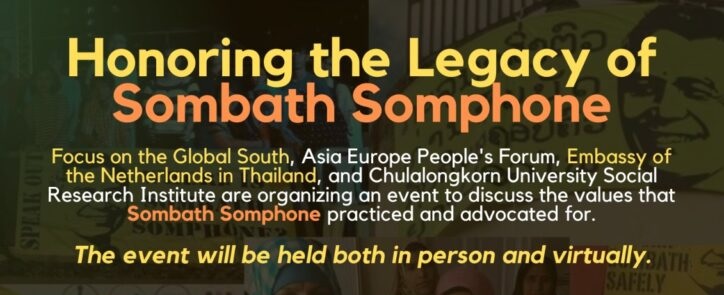
Ten Years since Sombath was Enforced Disappeared

Ten Years since Sombath was Enforced Disappeared

On today, the tenth year since the Enforced Disappearance of Sombath Somphone, the AEPF IOC member Andy Rutherford presented a detailed letter of demands to the appropriate representative of the UK Foreign Office. The ‘in person’ meeting enabled a clear and detailed discussion on how the UK government and their ambassador in Laos can continue to put pressure on the Lao Government.

The presented letter is attached below and can also be downloaded here.

Lao People’s Democratic Republic – Mr. Sombath Somphone’s enforced disappearance and demands for his safe return

The Rt. Hon Anne-Marie Trevelyan MP,
Minister of State (Indo-Pacific),
Parliamentary Under Secretary of State for the Foreign, Commonwealth and Development Office
15th December 2022

Dear Minister,

We write to you again as we remain deeply concerned about the safety and wellbeing of Mr. Sombath Somphone. It is now ten years since his enforced disappearance. 

We express our continuing outrage at the Lao government’s failure to independently, impartially, effectively, and transparently investigate Sombath Somphone’s disappearance on 15th December 2012, reveal his whereabouts, and return him to his family.

The Lao government’s continued silence and obfuscation of the facts around Sombath’s enforced disappearance have subjected his family to ten years of fear and uncertainty over his fate and whereabouts, which remain unknown to this day. 

As you are aware, Sombath is one of the most respected and influential voices for sustainable people-centred and just economic and social development in Laos. He is the founder and former Director of the Participatory Development Training Centre (PADETC), and the winner of the 2005 Ramon Magsaysay Award for community leadership. He was the most prominent Lao co-organizer of the Asia Europe People’s Forum 9 (AEPF9), which was held in October 2012 in the Lao capital Vientiane, before the Asia-Europe Meeting, ASEM9. 

On 15th December 2012 Sombath Somphone disappeared, taken away in a truck by unknown persons after being stopped by police in Vientiane. Nobody has seen or heard from him since. 

Sombath was last seen at a police checkpoint on a busy street of the Lao capital, Vientiane, on the evening of 15th December 2012. His abduction was captured on a CCTV camera near the police checkpoint. The footage strongly suggests that police stopped Sombath’s vehicle and, within minutes, unknown individuals forced him into another vehicle and drove him away in the presence of police officers. CCTV footage also appears to show an unknown individual driving Sombath’s vehicle away from the city centre before returning sometime later. The presence of police officers at Sombath’s abduction and their failure to intervene strongly indicates state agents’ participation in Sombath’s enforced disappearance.

On June 2013, Amnesty International issued a major briefing document on Sombath’s disappearance which stated that “Based on the evidence, the most plausible conclusion is that Sombath Somphone is a victim of an enforced disappearance, for which Lao officials are responsible.” 

It has been noted that during consideration of Laos under the UN Universal Periodic Review in March 2015, the Lao delegation clarified: 

that the Investigation Committee was always open to views or suggestions to help the investigation, and was ready to receive suggestions from any interested parties with regard to the ongoing investigation. The delegation gave assurances that the authorities were still conducting its investigations and would continue to conduct a thorough investigation into this case in order to find the truth and bring perpetrators to justice in accordance with the law.” 

However this claim and others by the Lao authorities that there is an ongoing investigation are barely credible. Responsible government ministries have revealed no information that transparently and concretely demonstrates that an in-depth and thorough police investigation is taking place. Instead, the Lao authorities and government officials have given inadequate and often dismissive responses to requests for information, as well as attempting to silence or avoid mentions of concern about Sombath Somphone among civil society in Laos and the region.  

The fact that police officers appeared to have witnessed Sombath’s abduction and failed to intervene strongly indicates state agents’ involvement in, or acquiescence to, Sombath’s disappearance. Despite this evidence, the Lao authorities have not presented any new findings with regard to their investigation of the case. Despite claiming in various international fora that the investigation is “ongoing”, the government has not issued an official report on the investigation’s progress since 8th June 2013.

The government’s ongoing failure to thoroughly, independently and impartially investigate the cases of Sombath and other alleged victims of enforced disappearance is compounded by its total lack of commitment to address this issue.

In June 2020, during the third Universal Periodic Review (UPR) of Laos at the United Nations Human Rights Council, the government refused to accept all five recommendations calling for an adequate investigation into Sombath’s enforced disappearance. The government also refused to accept another eight recommendations calling for investigations into all cases of alleged enforced disappearance.

Despite the government accepting that “the search for missing Lao citizens, including Sombath Somphone, is the duty of the Lao government”, it failed to demonstrate any will to effectively execute or fulfil this duty. The government stated that investigations into cases of enforced disappearances were “considered on a case by case basis,” but did not reveal how many investigations it had conducted, for which cases, or any updates on developments in the alleged investigations. They also failed to provide any information about their efforts to determine the fate and whereabouts of Sombath Somphone. 

On 5 February 2021, four UN Human Rights Council’s Special Procedure mandate holders wrote to the Lao government to reiterate their concern regarding the lack of progress in the investigation into Sombath’s disappearance. In their communication, the UN human rights experts noted an “absence of evidence to indicate that efforts have been made to further the search for his [Sombath’s] fate and whereabouts.” To date, the government has not replied to this communication.

In addition, the government failed to commit to ratifying the International Convention for the Protection of All Persons from Enforced Disappearance – a treaty signed by Laos in September 2008.

We renew our call for the establishment of an independent and impartial investigative body tasked with determining Sombath’s fate and whereabouts. The new body should receive international technical assistance in order to conduct a professional and effective investigation in accordance with international standards.

We also urge the Lao government to ratify the International Convention for the Protection of All Persons from Enforced Disappearance without delay, incorporate its provisions into the country’s legal framework, implement it in practice, and recognize the competence of the UN Committee on Enforced Disappearances to receive and consider communications from or on behalf of the victims in accordance with Article 31 of the Convention.

We thank the UK government through the letter from The Rt. Hon Nigel Adams MP of 5th January 2021 reconfirming:-

  • Your deep and continuing concern about the disappearance of Sombath Somphone;
  • Your continuing commitment to monitor his case closely and work alongside your international partners to urge the Lao PDR Government to undertake a full and proper investigation into Sombath Somphone’s enforced disappearance;
  • at the Universal Periodic Review of Laos, held at the UN in Geneva in January 2020, the UK called on Laos to undertake impartial, thorough and transparent investigations into all enforced disappearances, including Sombath Somphone.
  • That you raised the case with Vice Minister of Foreign affairs, Mr, Sengphet Houngboungnuang and with Mr Phoukhong Sisoulath, Director General for the Department of International Treaties and laws at the Ministry of Foreign Affairs;
  • that the UK Ambassador to the Lao PDR
  • continues to offer technical support to the investigation into Sombath’s enforced disappearance;
  • has continued to regularly raise his case both bilaterally and via coordinated lobbying with the EU;
  • has raised his disappearance with the Lao Prime Minister’s Office.

We welcome confirmation that UK representatives have met with Shui Meng Ng, Sombath’s wife, have lobbied for the Lao PDR to officially recognise Sombath as a ‘missing person’ and have attended the annual commemoration of his enforced disappearance.

Despite sustained appeals from his wife and many hundreds of individuals, numerous governments and international organisations, including the Asia Europe People’s Forum, and widespread media coverage, the Lao PDR government has yet to conduct an adequate investigation into Sombath’s disappearance or provide a satisfactory explanation for his abduction.  

Laos was the Chair of ASEAN during 2016, an increased spotlight was on the country. It is regrettable that the ASEAN People’s Forum, traditionally hosted by the country holding the Chair, was not held there. The Forum is an opportunity for civil society groups and organisations in ASEAN to come together and hold a range of events and meetings on topics of concern to everyone living in the region. Many of them have voiced concerns over Sombath Somphone’s disappearance. It is a sad indictment that restrictions and obstacles on freedom of expression and peaceful assembly prevent Laos and particularly Lao civil society from benefiting from this gathering which took place in East Timor instead of Laos.

There have been repeated enquiries through diplomatic channels, including by the British Ambassador to Laos and five delegations of parliamentarians to Laos; two from the Association of Southeast Asia Nations (ASEAN), two from the Europe Union (EU) and one joint European and ASEAN delegation.

The 13th annual UNDP coordinated Round Table Implementation Meeting took place virtually on 17th November 2021 The 13th High Level Roundtable Meeting in Lao PDR | United Nations in Lao PDR  under the theme: “enhancing partnership to improve the effective implementation of the 9th five-year National Socio-Economic Development Plan aiming to accelerate the country’s achievement of the Sustainable Development Goals and graduation from the Least Developed Country status in the mid of COVID-19 recovery.” 

It appears that at this meeting UN Representatives shared that that “The 9th National Socio-Economic Development Plan presents an opportunity for Lao PDR to pursue a smooth graduation”  “The meeting comes at an important moment for Lao PDR as the country enters its first year of the implementation of the 9th National Socio-Economic Development Plan and is beginning the preparatory period for graduation from the Least Developed Country status” At a previous roundtable it was stated that “The initial concept of the 9th NSEDP (2021-2025) will … then contribute to its formulation, taking into account measures necessary for acceleration of the SDGs implementation and sustainable graduation from the Least Developed Country (LDC) status by 2024.”

2022-2026 Lao PDR-UN Sustainable Development Cooperation Framework (UNSDCF).

In 2018, Lao PDR began to be reviewed against markers for graduation, including respect for and adherence to human rights, from LDC status as a beginning of the process of assessing Lao PDR’s aspiration to graduate from LDC status by the 2024.  This is a deep concern.

At the 14th November 2014  12th Round Table Meeting, a high-level dialogue on Official Development Assistance between the Lao government, Development Partners and other related stakeholders the European Union made a clear statement, 

At last year’s RTM we raised the issue of the unexplained disappearance of Mr. Sombath Somphone. We were re-assured by the government that it had taken all steps to continue the investigation and to bring the perpetrators to justice. One year later (and almost two years after the disappearance occurred), we note with grave concern that no progress has been made and Mr. Sombath has still not returned to his family. Once again, we urge the government to resolve this case urgently. We also suggest inviting the UN Working Group on Enforced or Involuntary Disappearances with regard to this specific case. Continued uncertainty around this case will not reflect well on the Lao PDR in the upcoming Universal Periodic Review (UPR) process.

International Human Rights organisations and the Asia Europe People’s Forum are of the opinion that the Lao Government is in breach of its human rights commitments, due to the enforced nature of Sombath’s disappearance and its failure to ensure the safe return of Sombath.  There are also significant concerns about the restrictions on civil society.  

We believe that it is now the time to review the grants and flow of ODA to Laos, including any from the United Kingdom, in the light of the Lao Government’s breach of its human rights commitments and of these being in breach of the principles and commitments by which ODA is agreed and disbursed by The United Kingdom and The United Nations.  

Trade and Foreign Direct Investment is a significant component of the Lao Government’s national Development Strategy. We believe that it is time for the UK Government to reassesses its trade and investment facilitation and promotion policies and practices with Laos.  

Laos has been a member of the WTO since October 2012. Chinese Ambassador YI Xiaozhun, who chaired the working party of members negotiating with Laos, welcomed the decision: “Lao PDR’s WTO accession is a strong, positive and clear signal for its commitment to engaging with the global economy in the framework of the rules-based trading system.” Ambassador Yi said.

We believe that the Government of Laos is in breach of its obligations and commitments required following its membership of the WTO since October 2012.  We request the UK government to raise this concern with the WTO. 

Sombath’s disappearance has created a continuing climate of fear in Laos’s fledgling civil society. There is an increasing realisation that the ‘spaces’ for dialogue, discussion and debate on how to achieve more sustainable economic and social development are shrinking, with reports of harassment of civil society groups and individuals. This climate of fear is in sharp contrast to the climate of positive and constructive dialogue that AEPF9 sought to engender.

Sombath’s case is not the only case of an unsolved enforced disappearance in Laos. Lao authorities have failed to provide information on the fate or whereabouts of many other individuals, including community activists, who have been victims of enforced disappearance.

The Lao government’s failure to undertake adequate investigations into all cases of enforced disappearances violates its obligations under international human rights law, including Article 2(3) of the International Covenant on Civil and Political Rights, to which Laos is a state party.

We urgently call on the UK government to demand, again, that the Lao government immediately provide information on Sombath’s fate or current whereabouts, and other details surrounding Sombath’s enforced disappearance, as well as all other cases of enforced disappearance, in order to determine the victims’ fate or whereabouts. Lao authorities should commit to making the findings available to family members of the disappeared, and provide regular public updates on their progress on all cases of enforced disappearance. The Lao government should also ensure that those responsible for enforced disappearance, regardless of title or rank, are held accountable in trials that comply with international fair trial standards.

Lastly, we strongly urge the Lao government to ratify the International Convention for the Protection of All Persons from Enforced Disappearance, incorporate its provisions into the country’s domestic legislation, and implement it in practice.

Enforced disappearance of Sombath Somphone is a grave human rights violation and heinous crime. We will continue to work vigorously and continue to raise his case at any and every opportunity and to press other governments and institutions to do the same, including during this coming year. 

As long as Sombath has not been returned safely to his family, many organisations and individuals are committed to continuing, for as long as necessary, international activity. We are asking that until Sombath’s safe return, his disappearance should dominate bi-lateral, multi-lateral and international discussions with and about Laos.  

We are fully aware of the continuing and recognised actions of the UK Government, and the continuing and recognised actions of the UK Embassy in Laos and their collaboration with international partners. 

We would like to sincerely thank the UK Government and the UK Embassy in Laos for their continuing initiatives and collaboration in this regard. 

Minister, given the enforced nature of Sombath’s disappearance we respectfully request that you take the following actions:

  • Demand that the Lao Government uses its extensive resources to enable the safe return of Sombath Somphone to his family, and, again, offer Britain’s technical assistance for the same;
  • Continue, in coordination with international partners,  to call on the Lao Government to conduct a comprehensive and transparent investigation of the case of Sombath Somphone, including  urging the Lao government to heed previous calls to establish a new independent commission to undertake an impartial and thorough review of all the evidence, including of the detailed CCTV footage of his abduction, identifying and questioning all those present, and of details pertaining to the white pick-up truck in which Sombath Somphone was last seen;  
  • Continue, in coordination with international partners,  to call on the Lao Government to fully cooperate with UN bodies such as the Working Group on Enforced Disappearances in Geneva; 
  • As a member of the multi-lateral institutions, including UNDP, that are donors to Laos, The United Kingdom should actively engage in, and if necessary initiate, discussions to suspend the flow of ODA to the Lao PDR;  
  • Initiate a review and reassessment of UK trade and investment facilitation and promotion policies and practices with Laos. To this we request a comprehensive written statement presented on 15th December each year of the UK trade and investment facilitation and promotion policies and practices with Laos; 
  • Begin representations to the WTO to raise this concern that Laos is in breach of its obligations and commitments required following its membership of the WTO since October 2012 and request you begin discussions with the WTO to this end;
  • Ensure that as part of the discussions, that have apparently begun in 2018 for Lao PDR’s aspiration to graduate from LDC status by 2024, that there are explicit and transparent statements that conditional review markers for graduation from LDC status include human rights commitments and practice. This respects the Istanbul Declaration http://www.unohrlls.org/UserFiles/File/IPoA.pdf  It is the view of many organisations that Lao PDR graduation from LDC status is not acceptable given its consistent record of human rights violations , including the enforced disappearance of Sombath Somphone;
  • Should suspend support for Lao citizens through the Chevening Fellowships and Scholarships Programme;
  • Insist that the Lao Government ensures a secure, enabling environment that encourages learning and reflection and provides space for open, respectful, diverse and constructive debate for people committed to sustainable development in Laos; 
  • Inform the Lao Government that while Sombath remains missing, there will be a growing negative perception of Laos at a time when the country is seeking to integrate further into the world economy and attract foreign direct investment; and
  • As human rights commitments underpin and are integrated into many of the bi-lateral and multi-lateral agreements with Laos, share, and continue to share, your concerns about the disappearance of Sombath with the UN, the Asian Development Bank, the World Trade Organization and others, and request that they too demand the safe return of Sombath.

Thank you very much for considering our sincere and urgent requests.

Yours sincerely,

Andy Rutherford,
International Organising Committee, Asia Europe People’s Forum
andyfresheyes@gmail.com

1UN special procedures, Alleged enforced disappearance of human rights defender Sombath Somphone, 5 February 2021;
https://spcommreports.ohchr.org/TMResultsBase/DownLoadPublicCommunicationFile?gId=26000

ANNEX 

Subject: NEWS RELEASE – Lao Government must shed light on whereabouts of activist Sombath Somphone: UN experts

Date: 13 December AD 2022 

Laura Macini <laura.macini@un.org>

Lao Government must shed light on whereabouts of activist Sombath Somphone: UN experts

GENEVA (13 December 2022) – The Government of Lao must intensify efforts to investigate the enforced disappearance of Mr. Sombath Somphone, a development worker and human rights defender, whose fate and whereabouts are still unknown 10 years after his abduction, UN human rights experts* said today.

 “Credible, prompt, thorough, independent and impartial investigations are essential to ascertain the fate and whereabouts of the disappeared and hold perpetrators of the crime accountable,” the experts said in a statement on the 10th anniversary of Somphone’s enforced disappearance. 

 “We reiterate our call for the Government to request international assistance and technical cooperation to carefully review existing evidence and engage effectively in the search of Mr. Sombath Somphone in a transparent and participatory manner, in accordance with international standards governing the search for the disappeared,” they said.  

 Experts also stressed that “enforced disappearances are prohibited by international law and constitute a particularly aggravated form of arbitrary detention”. 

 On 15 December 2012closed-circuit television (CCTV) footage reportedly registered Mr. Somphone’s vehicle being stopped by the police at checkpoint in Vientiane. Within minutes, he was forced into another vehicle by unknown individuals and driven away in the presence of the police officers. Mr. Somphone has never been seen again since.

 According to reports no independent and credible technical examination of the footage has ever been undertaken and a decade later official investigations into the case remain inconclusive. 

 The experts said that like many human rights defenders, Mr. Somphone had worked relentlessly to address the adverse human rights impact of business activities, supporting the rural poor and victims of land confiscation. 

“His enforced disappearance had a chilling effect on civil society and other human rights defenders in the country,” they said.

 “Disappeared persons and their loved ones have an inalienable right to truth, justice and reparations, which are long overdue with the passing of time and lack of meaningful progress in official investigations,” the UN experts said. 

 “We urge authorities to thoroughly investigate this and all other cases of enforced disappearance in the Lao People’s Democratic Republic, effectively search for disappeared persons, bring perpetrators of the crimes concerned to justice, provide adequate redress for harm suffered by victims and their relatives and ensure their safety,” they said.

 The UN experts also urged the authorities of the Lao People’s Democratic Republic to ratify the International Convention for the Protection of All Persons from Enforced Disappearance, signed in 2008, and recognise the competence of the Committee on Enforced Disappearances to receive and examine individual and inter-state complaints.

 “The Government must refrain from adopting any measures that would be inconsistent with the spirit and purpose of the Convention and urgently incorporate its provisions into their domestic legal framework,” they said. 

 ENDS

 *The experts: Ms. Aua Baldé (Chair-Rapporteur), Ms. Gabriella Citroni (Vice-Chair), Mr. Luciano Hazan, Ms.Angkhana Neelapaijit and Ms. Grażyna Baranowska of the UN Working Group on Enforced or Involuntary DisappearancesMs. Fernanda Hopenhaym (Chairperson), Ms. Pichamon Yeophantong (Vice-Chairperson), Ms. Elżbieta KarskaMr. Robert McCorquodale and Mr. Damilola Olawuyi of the Working Group on human rights and transnational corporations and other business enterprisesMs. Mary LawlorSpecial Rapporteur on the situation of human rights defendersMs. Irene KhanSpecial Rapporteur on the promotion and protection of the right to freedom of opinion and expression; and Ms. Miriam Estrada-Castillo (Chair-Rapporteur), Mr. Mumba Malila (Vice-chairperson), Ms. Ganna Yudkivska, Ms. Priya Gopalan, and Mr. Matthew GillettWorking Group on arbitrary detention.

 The Special Rapporteurs, Independent Experts and Working Groups are part of what is known as the Special Procedures of the Human Rights Council. Special Procedures, the largest body of independent experts in the UN Human Rights system, is the general name of the Council’s independent fact-finding and monitoring mechanisms that address either specific country situations or thematic issues in all parts of the world. Special Procedures’ experts work on a voluntary basis; they are not UN staff and do not receive a salary for their work. They are independent from any government or organization and serve in their individual capacity.


Read More

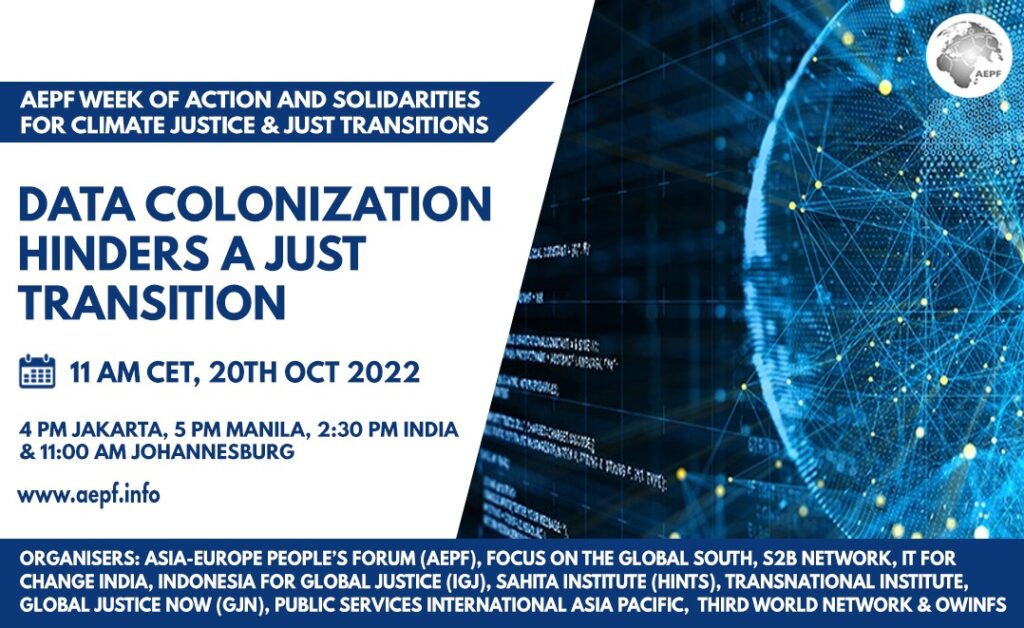
Webinar Report: Data Colonization Hinders Just Transition

Webinar Report: Data Colonization Hinders Just Transition

A Webinar summarized by Rachmi Hertanti (member of AEPF Cluster on A just trade and Corporate Accountability)

The digital economy is globally organised and there is considerable merit for it remaining so, which enables easy exchanges and flow of data. Data is the key resource in a digital society and economy. But currently, most of data value is extracted in and by one or two digital superpowers who control most of the global digital platforms.

Many questions on the control of data and its impact on people, such as who makes decisions on the utilization of data and who secures, who benefit from the use of this data, what is the state of regulation, and who is shaping the digital governance regime nowadays? 

During the AEPF Week of Action on Solidarities for Climate Justice and Just Transition on October 2022, a webinar on “Data Colonization Hinders a Just transition” tried to answer all these questions. It was organized by Focus on the Global South, S2B Network, Transnational Institute (TNI), Global Justice Now (GJN), IT for Change India, Indonesia for Global Justice (IGJ), Sahita Institute (Hints), Public Services International Asia Pacific, Third World Network, Asia-Europe People’s Forum (AEPF).

The webinar aimed to raise awareness of social movements (at grassroots and national level) of the fundamental problems of data colonialization in realizing climate justice and just transition to the peoples in the Global South, and broadening the network to campaign against digital capitalism in the global trade agreement negotiations at the WTO JSI E-commerce and FTAs driven by big techs interest. 

Digital Colonization

The big problems arising from the digital economy is not well understood at all. This is because people who control the narrative do not want it to be understood for what it is. Parminder Jeet Singh from IT for Change revealed the true facts behind this big problem. He explained the fundamental problem of data monopoly and cross-border data flows. 

Data is raw material because it provides intelligence about the subjects of data. And therefore, the real asset is intelligence and the corporations which are at the top of the value chain today, are those corporations which own the intelligence of the sector. These corporations  supersede the intellectual property owned relations, which were till a few years back, at the top of the global value chains.

What is happening today is that for the first-time systematic intelligence has been disembodied from human beings into machines. Not just the intelligence we know in a computer which is a recorded or a deflected intelligence, but a somewhat autonomous system, artificial intelligence and machines that can run whole sectors’ activities and actors almost autonomously.

Now, when looking at Amazon and Uber, the next question is what kind of company are they? Many people only see these companies as platforms for retail and transport. The platform does not really mean much. But, with the data collected by Uber, the autonomous system at once is able to orchestrate the actors activity in the whole Transportation sector. These corporations’ main asset is the intelligence system owned by them. Therefore, these platform companies are called the intelligence corporations. 

In the digital transformation age, the new chain is the data produced in developing countries collected by platforms which are owned by majority big techs in developed countries. The product of intelligence resides inside servers and is controlled by the big tech companies in the US, EU, and even China where then it is exercised over by the physical activity in most of developing countries. UNCTAD statistic shows that 90% of data ownership is divided between the US and China big techs and this is a kind of concentration of wealth. 

That is how the digital colonization happens. If we go to the Industrial Age as an analogy, the industrial colonization consisted of a chain of economic activities where  raw material was produced in the colonies, who were forced  to remain as producers of raw material for the industries in the west, or industrialized countries from where than the finished product was then sold to all, including to the colonies.  And these sectors were monetized, precisely to be able to sell their finished products. Once we keep on getting dependent on what is called ‘Outsource intelligence’, that dependency is acute. There is nothing in comparison to this intelligence-based and database dependencies which are being created. 

So, one of the biggest things we need to do, to address the power of foreign platforms is to have data infrastructures as public infrastructure. India has a committee report of non-personal data framework. It has come up with mandatory sharing of data by platforms of important data. This obliges big data companies, to put the data on infrastructure inside the country where everyone could use it equally within the country. It is not allowed to put the data outside the country. Without the provision of putting up data within the host country, it will create another form of data colonization, but within the country if data infrastructure is developed, then the platforms that collect data are mandated to share that data and therefore local industry can be developed. And we can start digital industrial policy at the national level. 

The Impact in the Agricultural Sector

In the age of rapid expansion of digitalization in every sphere of  life, there is a need for the farmers of the world to wage a war against this monopoly of data across the world. Afsar Jafri, a researcher of GRAIN, unpacked the phenomena where data is being used to monopolize the agriculture system in the developing world where farmers and farming are already in big distress.

In food and agriculture, the industry 4.0 is termed as agriculture 4.0. And interchangeably is also called  ‘smart farming’ and digital agriculture changes. The whole food supply chain is getting increasingly digitalized, or turned into digital information, using data related technologies, such as Precision agriculture, automatic sensory, tracking devices, Internet of Things, mobile and Cloud Technologies, artificial intelligence, or blockchain. Therefore,  data is the core of the digital agriculture system. 

The OECD report 2019 says that the agriculture sector is both an important consumer and supplier of data for the big tech companies. Farm data are particularly important to facilitate global value chain integration. So, as per this report, farmers and farming are the new market. But this report also cautions that essential information like soil conditions, climate and water quality that should be publicly accessible to farmers as it is necessary for agriculture production can easily be extracted, stored, privatized, and monopolized by a handful of agribusiness and digital companies. 

The implementation of digital technologies in agriculture, like the artificial intelligence drones and e-commerce are growing at lightning speed. Agribusiness corporations are teaming up with digital technology companies and creating their own digital arms to create products and services targeting food Supply chains. Today, there is an unprecedented level of investment in digital information, platforms, connected to their cloud services from digital and ICT information and communications  technology companies that traditionally have not worked in the agriculture sector and these are the platform companies like Microsoft, Apple, Google, and Facebook. 

The GRAIN research shows that in 2020 investment in Agri-tech has been more than tripled to 31 billion dollars from 9 billion dollars in 2016. These big company are sitting on vertical and horizontal integration as happens along the food supply chain. The Corporations see the potential of gathering agriculture data enabling enabled by digital technologies to monopolize the supply chain and maximize their profit by using drones and artificial intelligence, and censoring devices. The Big Techs are able to harvest real-time farmers data and analyses the condition of their soil and water, the pattern of growth of their core crops and situation regarding  pests and diseases and the looming weather and climate changes. 

For example, Microsoft has developed a digital platform called Azure FarmBeats that operates through the company’s massive Global Cloud technology called Azure. The platform is being designed to provide farmers with real-time data and analysis on conditions of their soils and water. In addition they will provide date on the growth of their crops, the situation with pests and diseases, the looming weather, and climatic changes they may face. The value of this information and advice depends on the volume and quality of data that Microsoft can Harvest and analyse with algorithms. This is why Microsoft has partnered with the leading companies, that are developing farm drones and censoring devices as well as with those company developing technologies that can receive and act upon the information transmitted from FarmBeats, the high-tech tractors, pesticide spraying drones and other machines hook up to Azure cloud.  

In September, 20, Microsoft and Alliance for a Green Revolution (AGRA) in Africa, which is also one of the big programs by the Bill and Melinda Gates Foundation, developing a partnership to help Microsoft expand its Azure FarmBeats platform across Africa, and deepen their joint effort to deploy Microsoft chatbot app called Kuzabot. This app provides small farmers with advice via WhatsApp and SMS, including information on what inputs to use, and which companies to buy from. 

In India, we have seen a similar exercise. Microsoft signed an MoU with the Union agriculture Ministry in April 2021 to set up AgriStack, which is a unified farmer services interface to provide Indian farmers “End To end Services” across the agriculture food value chain. With this, Microsoft could possibly get access to the database of 50 million farmers and their land records, maintained by the government under different programs with the possibility of more data being added later. Data collected could include personal details, for example, family and bank details, profile of land, health, the measurement of the land, the fertility of the soil, the production details,  sowing details crop quality and the financial details for the gum, how much loan the farmer had, what kind of the credit rating, etc. The farmers’ every  details will go to to the Microsoft data bank. 

Experts fear that the huge amount of data that this project is going to collect can lead to massive exploitation of farmers using their own data against them along with the erosion of their privacy.

Another example is BAYER field view, which is a digital platform and farming platform, that extracts 87,5 billion data points from 180 million Acres of Farmland in 23 countries and funnels it into the Cloud Server of Microsoft and Amazon. Like Microsoft, BASF also has its own app called Xarvio,  run by Microsoft or by Bayer and BASF which identifies weeds, diseases, insects in farms field, and predicts when they would become a problem. to. They use cloud computing platforms of Amazon web services. One of the biggest big tech companies that controls the world’s cloud service and is ahead of Microsoft, Google and Alibaba.

In 2024, the major platforms, like Alibaba, Amazon, Google and Microsoft alone, accounted for 67 Percent of revenue accruing from Global Cloud infrastructure Services. Similarly, Yara, which is one of the largest fertilizer companies in the world, offers a whole set of digital tools to assist farmers fertilizer needs such as the YaralRix, a tool for precision farming that allows farmers to measure crop and nitrogen requirements using their smartphones. It allows farmers to analyse their fields with satellite images and selectively apply fertilizer. Many leading food and beverages processors companies already control Digital Data for raw materials or sourcing processing marketing and delivery.

In this process, data has become a major driver of consolidation. This integration is getting more and more strengthened through corporate partnerships, mergers, and takeovers, creating the possibilities for a much more profound and complete control capture of food system. 

So here the question arises and this is one of the most important questions: who owns and controls  agricultural data generated through digitalization by big tech and agribusiness corporations. 

In fact, when India signed the MoU with big tech companies, like Microsoft, Amazon, and Cisco, one of the activist group in India called ASHA, which is an alliance for sustainable and holistic agriculture,  raised this issue of privacy and data ownership, and in a letter to the Prime Minister, they said that this new development is taking place in a policy vacuum with respect to data privacy of farmers and their related issues.  Till today, India’s does not have a law regarding control and ownership of digital data. Therefore, it’s very important to know where all the data is getting stored, who owns it and who has control over this data. In December 2018 in a speech by one of India’s multinational company CEO, Mukesh Ambani, demanded that Indian government prevent corporates, especially global corporations from owning Indian data. He said data colonialism is an as bad as previous forms of colonization. Data freedom is as precious as freedom we gained in 1947.

Another example in India, when Farmers buy equipment like tractors from John Deere, the farmers must sign up for certain conditions with respect to data that John Deere will gather from the tractor. Farmers sign up a license to operate the vehicle but they are not the owners of the equipment, the software embedded in it, or the data generated by the equipment. In addition, farmers are sometimes forbidden from repairing their own equipment. Their own tractors with they have bought. It has become illegal for farmers or independent technicians to tinker with embedded software, which is considers proprietary. This raises a number of concerns about losing control and ownership over both data and the tools used in farming. 

We have witnessed a big challenge to this monopolization of data or digital agriculture system by farmers in India. In 2021 India witnessed a massive mobilization of farmers across the country and the capital city of Delhi witnessed one of the largest and longest form of protest in the history of Modern India. Apparently, the farmers opposed  the three farm legislations brought out by the government, which they believed are meant to benefit Indian agribusiness. But they were also opposing the increasing monopoly by the big tech companies and agribusiness over food and agriculture, because some of the provisions of the three legislations tried to accelerate Agri-Tech and agribusiness  monopoly through setting up electronic trading platforms and promoting  digital and smart farming initiatives. 

The Impact on the  Energy Sector

There are two types of relationships between data and energy. One is the data driven energy production and the other one is related to  energy consumption of the data centres. Sofia Scaserra, researcher at Transnational Institute (TNI), exposed this nexus very clearly about energy and data in a colonializing point of view. 

The first thing to understand is, on how energy transition in the global South is done especially through colonialism. The energy transition using digital transformation has been creating colonialism from the north to the Global South by appropriating the data and raw materials, that can push and boost the energy productions in the world. Developing countries are being ‘forced’ to realize energy transition and privatized this under the control of corporations. 

With digital transformation the energy sector can take their own decisions based on data and information. It is because the appropriation of the intelligence and information by the big tech companies that they can  control the energy sector. When  energy is being produced worldwide, more and more the energy decisions are being taken by data, like streamlined refinery and distribution process, efficiency, monitoring energy and energy consumption, the increase oversight and ability to perform predictive maintenance and ensuring safety,   comes from the data-driven supply chain management. 

Thus data is being colonialized and  kept by a handful of big techs companies that collaborate with the energy companies. This collaboration will create a new dependency where finally the developing countries once again lose their sovereignty and technological capacities to pursue the energy transition. 

Now, this is not the only relationship between data and energy. There is also a relationship between energy and data centres. It is about the energy that has been consumed by having data centres in the world. First, not all data is being used. We store humongous amount of useless data in the world, and this is a really important issue, because many of the big tech companies, do not even know where the data exactly is and how much of that is really being used. They don’t even erase the data.

Data is being accumulated worldwide in different data centres. The data centres consume a lot of energy and it is becoming a really big problem for the environment worldwide. Data centres need some environmental standards and conditions to create ideal conditions for their operations. For example, heat and humidity could be a threat to the continuous operation of servers. In additions, continuous access to power and water are essential for their operation.

This fact has had major consequence in some countries such as Singapore or Islands where the power consumption of data centres is increasingly high. It has been putting a risk to the energy supply of the population. In the case of Singapore, as a key country for technological development in Asia Pacific, has established a moratorium from 2018 that suspends installation of new data centres in the country on the electric grid and the increase in carbon emissions. Today, there are several projects in Singapore that seeks to incorporate renewable energies and make better use of resources and maintenance of data centres where they aim the lifting of the moratorium soon. 

The truth is a data centres maintenance consumed two fundamental resources, that is energy to keep them running; and water to cool them like the cooling systems in large office Buildings.  The storage industry reliance on water is putting the digital business at risk. That is why the big tech companies are engaged in   huge propaganda about green energy, and the importance a quick energy transition. 

Another example is the Netherlands. Netherlands is a huge data centres and it has the exchange points of information that enter  Europe inside the Netherlands. The large amount of energy consumed by the storage industry has made companies concerned about using green energy. Today, 86 percent of the data centres in the Netherlands are supported by renewable energy. It generates a trade-off between electricity consumption to support households and industrial consumption and the energy consumed by these data centres. 

Big Techs Lobby on Global Digital Rules

The big tech companies are playing a big role in the digital transformation agenda and are pushing for digital and E-commerce rules that are occurring in a variety of trade negotiations. Jane Kelsey, a professor emeritus at the University of Auckland, shared her perspectives on the big techs lobby to liberalize data. 

So why opt for trade rules? 

The big tech companies were worried that the obvious place for developing global rules to deal with the digital domain was the international telecommunications union. It didn’t like that. The big techs would push the public trade rules, bilateral or even multilateral, as the basis of regulation which has a binding and enforceable aspect, and negotiated these in secret.

On top of the list was the right to control data. It is because data is the fuel for the digital economy and the digital domain, and who controls data, essentially can dominate that digital domain. Therefore, they wanted absolute rights to control the data generated in the business. The big tech companies also want that they are  not required  to be held locally responsible inside the country where they function. They do not want that country to even get  a copy of their data. By not using local computing facilities, such as local servers, they take advantage of their economies of scale but also locate themselves in jurisdictions that have minimal regulation and to effectively evade regulations and its enforcement in the source countries of the data. 

Other regulations that the big tech companies  avoid are the obligation to disclose the source code and algorithms, tax and competition regulators, local presence and content requirements, technology transfer requirements, and no limits on the royalties in the context of financial services as they are often located in tax haven countries. This model is being promoted as a model of corporate sovereignty.

In the context of tax issues,  new rules that are being developed dealing with the fact that big tech companies are the tax evaders. For example, last year, Apple’s retail division made profits of nearly 1,000 million pounds and paid tax less than 1 million pounds. Another one is that Amazon reported record profits, during the Covid19 pandemic, 75% higher than its previous record, and paid just six percent of those profits came into the US.

All these regulations are trying to be negotiated in a breakaway group in the World Trade Organization under the WTO plurilateral E-commerce agreement, and in several trade agreements like US driven Indo-Pacific Economic Framework under the pillar one, Trade in Services Agreement (TiSA), EU FTAs, and other bilateral and regional agreements. 

In fact, the G20 forum is an important place to try to advance these rules model. The key players in addition to the US, EU, Japan, Singapore, Australia are all there in the G20, which is, of course, also a major supporter the basic model subject to individual sovereignty over data. In 2019 when Japan was hosting the G20, they had a side meeting that produced what was called the Osaka declaration about data flows with trust. But of course, free data flows with trust is not about the digital corporations being trustworthy. It was about digital consumers and sellers having confidence in the track transactions that were being conducted online.

It was interesting that some countries that are also important players in the G20 developing countries did not support the G20 proposal such as, India, Indonesia, South Africa, and Egypt. These countries did not participate in that process. Several of those countries including others within the ASEAN region also resisted those rules in the Regional Comprehensive Economic Partnership (RCEP) on the digital trade chapter. There does not have the rule on source code or local content rules. It does have rules on data transfer or rules on what are called data localization. In a self-judging way for national security reasons and the chapter is not enforceable.

The big Tech companies have strong influence lobbies in the trade negotiating arena. As having the biggest lobbying budgets in the EU and in the US, Google, Apple, Amazon, Facebook meta, and their trade group, spent almost 95 million dollars in lobbying. Being since 2021 roughly three times on what they spent 10 years ago. And, over 70% of lobbyists, for Google and meta, have formally worked for government bodies in the EU and member state level bodies. 

So, it’s vital to have strong public scrutiny and voices challenging the power of big tech companies and ensuring the governments do not sign up to these digital trade rules driven by the big techs’ interests.

What Can Be Done by  People’s Movements?

Knowledge building within the movement to understand the fundamental problem of digital colonization in all sectors becomes important. The awareness raising will lead the movement to the needs of policy development in protecting their rights over data. Public law on the right of data should be pushed to the governments and not only limited to individual data, but also to broader public data that has been controlled by the big tech companies. Preventing the states ratifying international trade agreements on digital and data privacy should become a strong demand by the people. Lastly, developing an alternative digital infrastructure that is owned and controlled by the people is essential to show the sovereignty of data and using it in a collective way. ****


Read More

The Civil Societies Urge the G20 to Stop the Discussion on Cross-Border Data Free Flow with Trust

The Civil Societies Urge the G20 to Stop the Discussion on Cross-Border Data Free Flow with Trust

18 November 2022

The G20 Bali Declaration is still pushing the commitment of all G20 members to continue the discussion on Data Free Flow with Trust (DFFT), while there is no agreement reached by the G20 members regarding to this agenda. 

We,  civil society organizations, urge the G20 Developing Countries to not continue the discussion on Data Free Flow with Trust (DFFT) to promote the free flow of Data at the G20 meeting, especially under the Presidency of India. The G20 is not an appropriate forum to discuss the issue of digital data governance where majority of G20 Developing Countries, like South Africa, India and Indonesia, in particular, are still refusing to buy into this new term. 

This is because their main issue with the original ‘free flow of data’ doctrine was not as much to do with privacy and security as it was about economic expropriation, given that data is the most valuable resource today. The new concept of DFFT did nothing to address this central concern of developing countries.

Developing countries’ main problem with cross-border free flow of data is related to expropriation of economic value of their data, leading to fears of digital colonization. While some jurisdictions have already created legal economic rights over data, others are actively considering them. Therefore, the adoption of Data Free Flow with Trust (DFFT) will not guarantee  economic growth for the developing countries. 

Data is a key resource in a digital society and economy. Most of the data value is extracted by one or two big techs superpowers who control most of the global digital platforms and infrastructure. The big problem is, today’s big techs companies are benefiting greatly from the expansion of economic digitization with controlling the data in the global world. The top of the list was the right to Control Data, and who controls data essentially can dominate the digital domain. And, so they wanted absolute rights to control the data generated in the business. 

The big tech companies have been lobbying  states to regulate the free flow of data so they can keep the data monopoly. Trade rules are being used to leverage this influence as a vehicle for expanding the big techs power and influence. We are increasingly seeing the incorporation of ‘digital chapters’ in trade agreements and negotiating E-commerce Agreements at the WTO. 

We support the call by the UNCTAD for developing a ‘global data governance framework’ that addresses both non-economic and economic aspects of data. The UNCTAD’s 2021 Digital Economy Report clearly states that as data and cross-border data flows become increasingly prominent in the global economy, there is an urgent need to properly regulate them at the international level. Thus, when addressing how to regulate cross-border data flows, the international community will need to go beyond trade and consider them in a holistic manner. 

Cross-border data flows should be based on a comprehensive rights-based approach that includes all three generations of human rights; civil/ political, social/economic, and the right to development. Economic data rights of individuals, communities and workers are important to ensure equity and justice, nationally and globally. It is important that cross-border data flows are based on social and economic justice, and observe principles like fairness and justice, transparency, lawfulness, and reciprocity in relation to data-related benefits. Therefore, we need to develop a just global digital and data governance framework with an independent representative. 

Therefore, we strongly demand that the G20 developing countries should take  concrete actions beyond the G20 Forum to develop a just global digital and data governance and framework based on south-south solidarity principles with an independent, representative multilateral mechanism, backed by an international treaty (or human rights treaty). And, ensure the global digital and data governance and framework would not be governed in any international trade rules (WTO or bilateral and regional FTAs). 

Signatories:

Asia-Europe Peoples Forum (AEPF)

Focus on the Global South

Seattle to Brussels (S2B) Network

Transnational Institute (TNI)

Global Justice Now (GJN)

IT for Change India

Indonesia for Global Justice (IGJ)

Sahita Institute (Hints)

Fresh Eyes (UK)

Pakistan Rabita Committee

Fian (Indonesia)

Indonesian Human Rights for Social Justice

Read More

Impact of War and Militarization on Climate Change and Sensitive Ecology

Impact of War and Militarization on Climate Change and Sensitive Ecology

Watch the Webinar:

The Russian aggression on Ukraine and the NATO response has put Climate on the back burner. Join our experts to discuss the connections between war and militarisation.

Main Speaker: Prof. Neta Crawford

Panelists:

  • Wendy De Vries: Transnational Institute
  • Dave Sweeney: Australian anti-nuclear campaigner
  • Professor Anuradha Chenoy (New Delhi)
  • Sean Conner: International Peace Bureau


Read More