Webinar: The War on Iran and its Wider Implications

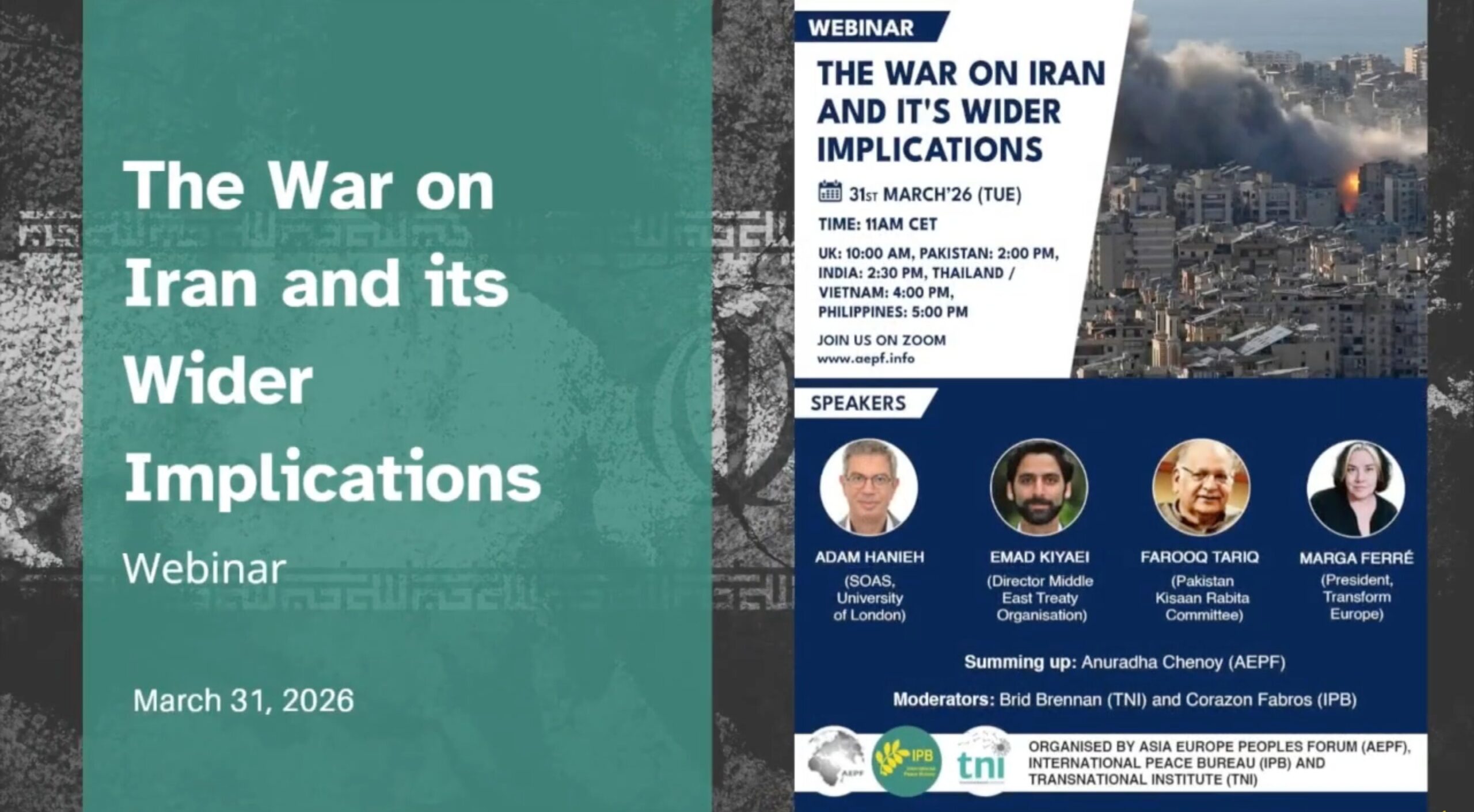
Webinar: The War on Iran and its Wider Implications

Watch the Webinar

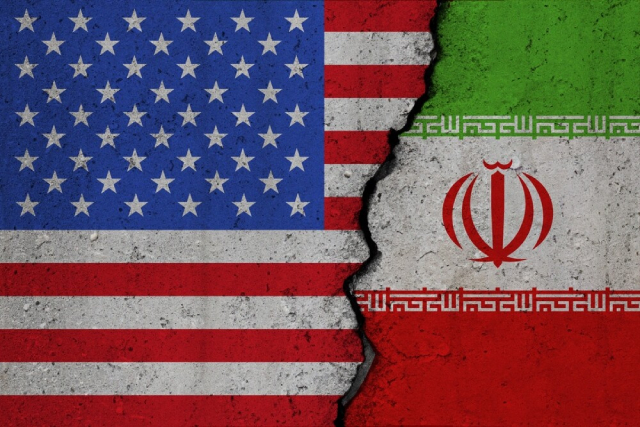
The recent war of aggression by the United States and Israel on Iran marks a dangerous escalation in an already volatile region. It is widely seen as an extension of the ongoing violence in Gaza and reflective of a broader geopolitical agenda aligned with both Zionist expansionism and US imperial interests.

This is the second major escalation in a short span of time—following the June 2025 12-day war—during which Iran was targeted even as it was engaged in negotiations with the United States over uranium enrichment. The attacks reportedly resulted in the killing of Iran’s supreme leader, several political figures, more than 160 schoolgirls, and over a thousand civilians. Despite the scale of destruction, the anticipated regime change did not materialize. Instead, Iran responded by targeting American bases across the Gulf Cooperation Council (GCC) region and disrupting key global energy routes, including the Strait of Hormuz—a critical passage for oil supplies to Asia.

The conflict has since expanded regionally, with far-reaching consequences. It poses serious risks to global energy security, threatens sharp oil price fluctuations, and raises concerns over fertiliser and food supply chains across West Asia and beyond. Smaller states in the region face the additional burden of inflationary pressures and disruptions to everyday life.

Simultaneously, Israel has intensified military operations in South Lebanon, displacing over a million people. These actions are viewed by many as part of a broader effort to reshape regional dynamics and consolidate strategic dominance. The wider objective appears to include control over critical oil and gas reserves, as well as weakening Iran’s regional influence—particularly its support for Palestinian resistance movements such as Hamas. Meanwhile, violence against Palestinians continues in both Gaza and the West Bank.

International responses have remained deeply divided. During a press conference on March 9, EU foreign policy chief Kaja Kallas stopped short of condemning the US-Israeli strikes as violations of international law. Similarly, European Commission President Ursula von der Leyen emphasized the need to address “the world as it is,” a stance critics interpret as tacit acceptance of ongoing military actions. While most EU member states have avoided explicit condemnation, Spain has taken a clearer position. Meanwhile, countries like Britain, France, and Germany have framed their responses around “national interests,” leaving open the possibility of further military involvement, including deployment to the Strait of Hormuz.

In this context, the webinar seeks to unpack the broader implications of the war—not just for Iran, but for Palestine, Lebanon, West Asia, Europe, and the Global South at large. It will explore the political and economic consequences of escalating conflict, particularly in relation to fossil fuel dependency, regional stability, and global inflationary trends. Importantly, it will also examine forms of resistance emerging against war and imperialism.

Speakers: 

  • Adam Hanieh (SOAS, University of London)
  • Farooq Tariq (Global Council Fight Inequality Alliance)
  • Emad Kiyaei, (Director Middle East Treaty Organisation)
  • Marga Ferre (President, Transform! Europe)

    Summing up:
    Anuradha Chenoy (AEPF))
    Moderators: Brid Brennan (TNI) and Corazon Fabros (IPB)
    Organizers:
    Asia Europe Peoples Forum (AEPF), International Peace Bureau (IPB), Transnational Institute (TNI) and Fight Inequality Alliance (FIA)
Read More

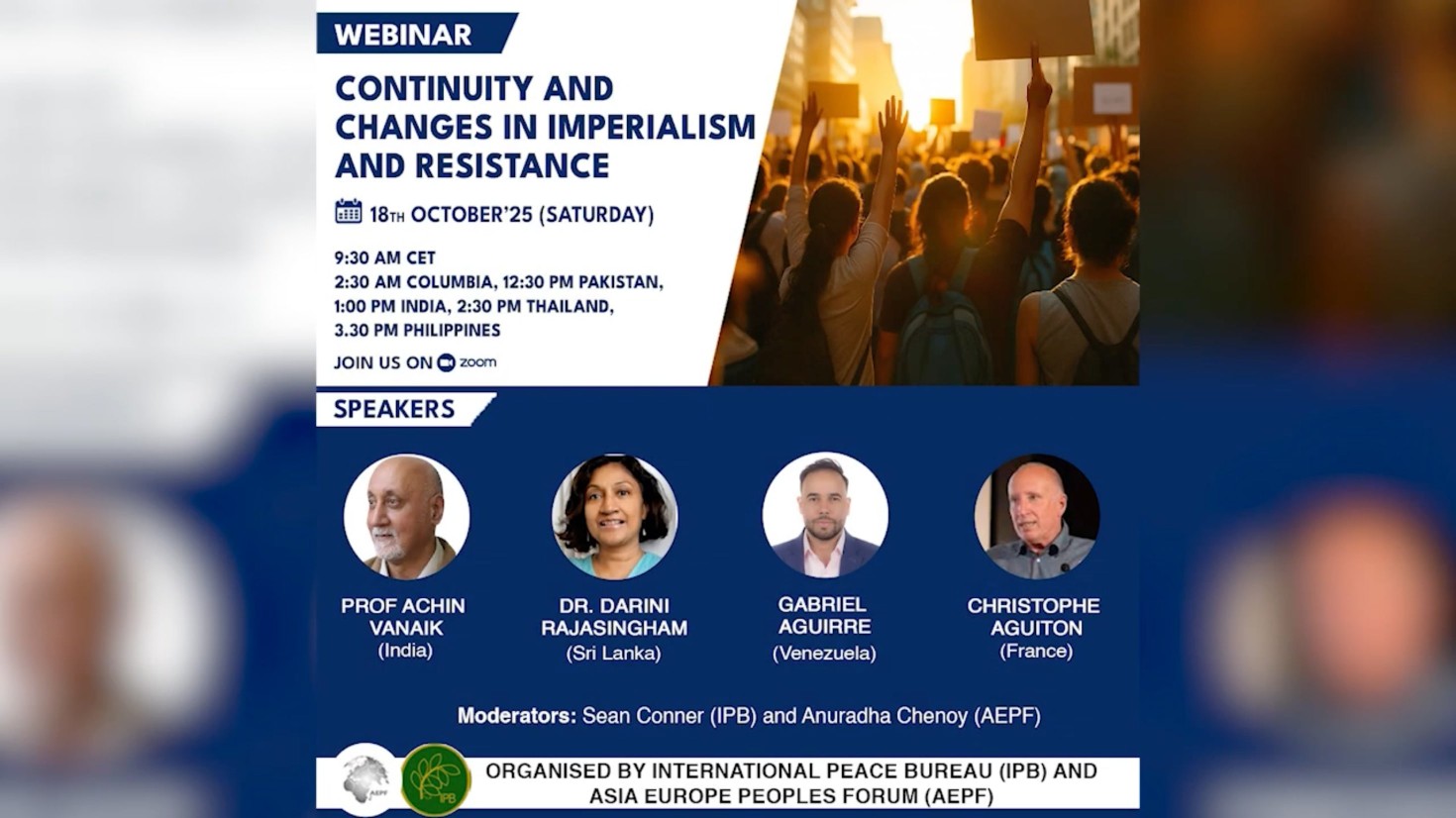
Webinar: Continuity and Changes in Imperialism and Resistance

Webinar: Continuity and Changes in Imperialism and Resistance

The global system is shifting as the US-led West faces rising powers like China and other Asian states. Regional alliances such as BRICS, SCO, and ASEAN offer non-militarist alternatives to NATO, while the US and its allies pursue militarism in Gaza and seek to reshape West Asia. Amid deepening inequality, climate crises, and global instability, peoples’ movements continue to stand with Palestine and resist imperial dominance. This webinar unpacks and connects these global and regional dynamics shaping today’s world order.

Watch the Webinar

Read More

Laos: After 13 years, renewed international action needed to ensure justice in Sombath Somphone’s enforced disappearance

Laos: After 13 years, renewed international action needed to ensure justice in Sombath Somphone’s enforced disappearance

15 December 2025

On the 13-year anniversary of the enforced disappearance of Lao civil society leader Sombath Somphone, we, the undersigned civil society organizations and individuals worldwide, urge once again United Nations (UN) member states and Laos’ development and international cooperation partners to demand the Lao government promptly resolve Sombath’s enforced disappearance and deliver justice and an effective remedy and reparations to him and his family.

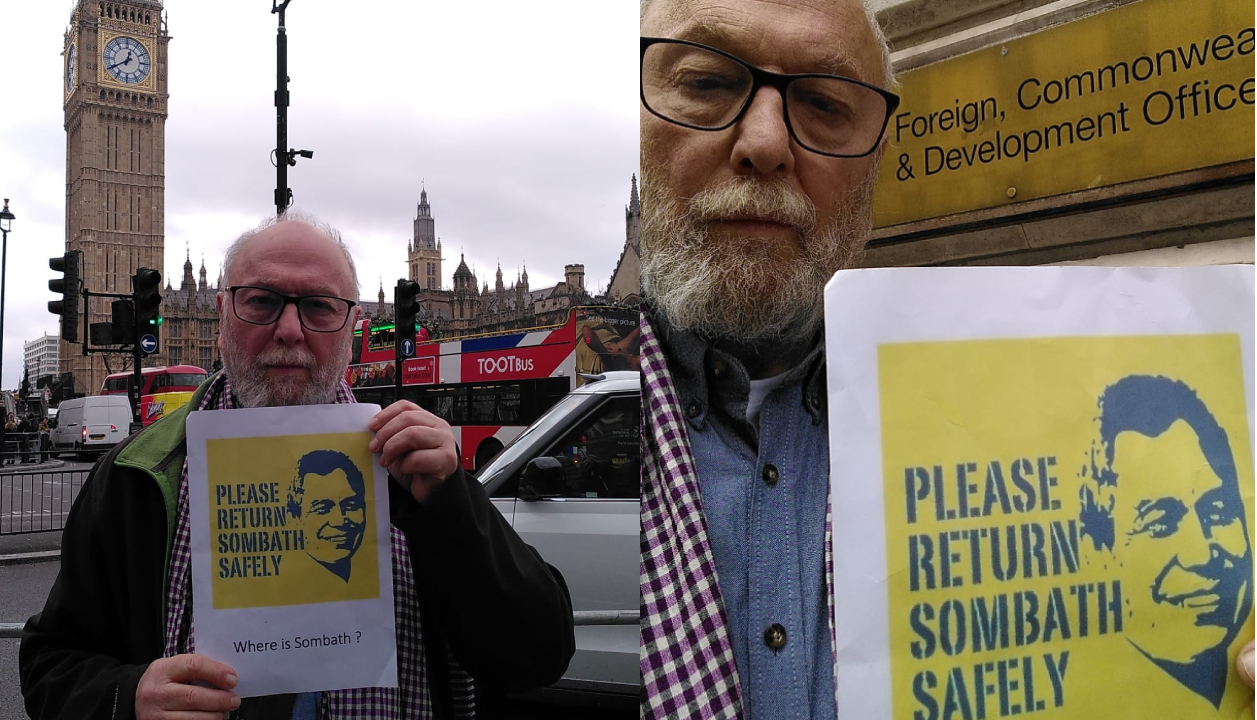
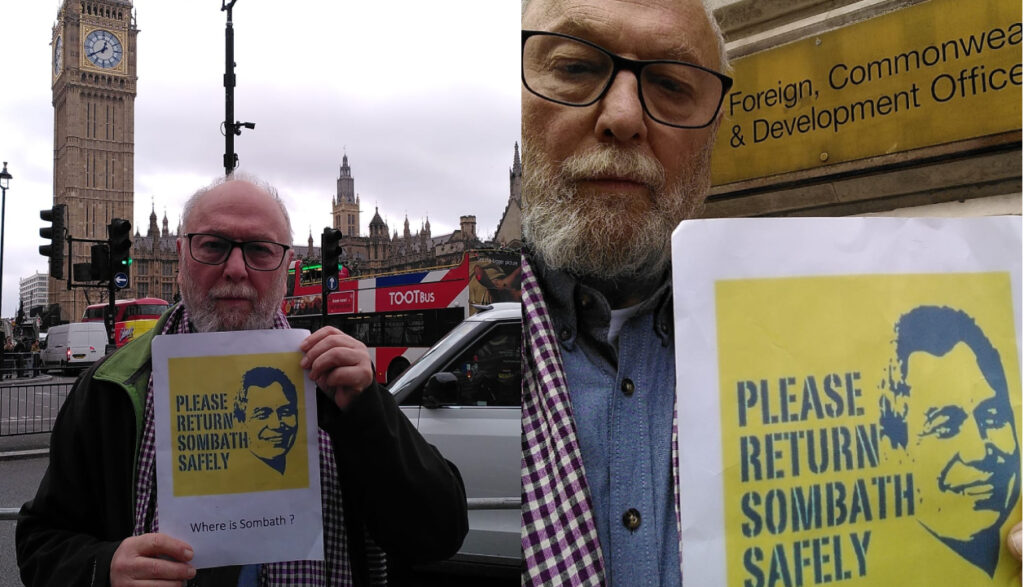
Meeting with the UK Foreign Office on the 13th anniversary of Sombath’s Enforced Disappearance.
Presented a comprehensive letter with core demands.

Despite calls by civil society organizations for states to use the fourth Universal Periodic Review (UPR) of Laos in April 2025 to express their concern over the Lao government’s protracted failure to determine Sombath’s fate or whereabouts, only one — Canada — recommended the Lao government conduct a credible investigation into Sombath’s enforced disappearance.

We deplore this silence over Sombath’s enforced disappearance, as it is likely to continue to facilitate the Lao authorities in their determination to shield the perpetrators of such a serious crime from accountability.

We note that various individuals who occupied high-ranking positions in the government when Sombath disappeared retain important official roles in the country’s political sphere today. These individuals could and should play a proactive role in clarifying Sombath’s fate and achieving truth and justice.

For example, Thongloun Sisoulith, who served as Foreign Minister and Deputy Prime Minister of Laos at the time of Sombath’s enforced disappearance, is now the country’s President and the General Secretary of the Lao People’s Revolutionary Party – effectively, the supreme leader of Laos. Chaleun Yiapaoher, then-Minister of Justice, is now one of the National Assembly’s Vice-Presidents. Thongsing Thammavong, then-Prime Minister, is currently a National Assembly member. These and other influential individuals hold the key to resolve Sombath’s enforced disappearance – a case that has been described by the International Commission of Jurists as “eminently solvable.”

UN member states and Laos’ development and international cooperation partners should press the government to establish the fate or whereabouts of Sombath and all other victims of enforced disappearances in the country, identify the suspected perpetrators of such serious crimes, and provide victims with an effective remedy and full reparations. To date, no case of enforced disappearance in Laos has been resolved and no perpetrators have been identified or brought to justice.

In its September 2025 report, the UN Working Group on Enforced or Involuntary Disappearances emphasized that the disappearance of community leaders such as Sombath resulted in a collective impact on the groups to which they belonged, including by weakening community ties, depriving them of leadership, and increasing their vulnerability to “cultural erosion and environmental exploitation.” The Working Group further stated that Sombath’s disappearance created a chilling effect on public participation, noting reports of “serious risks and fear” of retaliation when his name is mentioned.

We urge the Lao government to promptly ratify, without reservations, the International Convention for the Protection of All Persons from Enforced Disappearance, which it signed in September 2008, and fully implement it into national law, policies, and practices.

We continue to stand in solidarity with Sombath and his family and urge UN member states to support our calls for truth, justice, and accountability for all cases of victims of enforced disappearance in Laos.

Even if 13 years have passed, the Lao government is obligated to answer the question we and many others have been asking since 15 December 2012: “Where is Sombath”?

Background

Sombath Somphone, a pioneer in community-based development and youth empowerment, was last seen at a police checkpoint on a busy street in Vientiane, the capital of Laos, on the evening of 15 December 2012. Footage from a traffic CCTV camera showed that police stopped Sombath’s vehicle at the checkpoint and that, within minutes, unknown individuals forced him into another vehicle and drove him away in the presence of police officers. CCTV footage also showed an unknown individual arriving and driving Sombath’s vehicle away from the city center. In December 2015, Sombath’s family obtained new CCTV footage from the same area and made it public. The video shows Sombath’s car being driven back towards the city by an unknown individual.

For further information, please visit: https://www.sombath.org/

Organizations:

  1. Alternative ASEAN Network on Burma (ALTSEAN-Burma)
  2. Amnesty International
  3. Asia Democracy Network
  4. Asia Human Rights & Labour Advocates (AHRLA)
  5. Asian Federation Against Involuntary Disappearances (AFAD)
  6. Asian Forum for Human Rights and Development (FORUM-ASIA)
  7. Cambodian League for the Promotion and Defense of Human Rights (LICADHO)
  8. Center for Prisoners’ Rights
  9. Commission for Disappeared and Victims of Violence (KontraS)
  10. Day of the Endangered Lawyer
  11. Defence of Human Rights
  12. Families of Victims of Involuntary Disappearance (FIND)
  13. Focus on the Global South
  14. Fortify Rights
  15. Fresh Eyes, UK
  16. Human Rights Watch
  17. International Coalition Against Enforced Disappearances (ICAED)
  18. International Commission of Jurists (ICJ)
  19. International Federation for human Rights (FIDH), within the framework of the Observatory for the Protection of Human Rights Defenders
  20. International Organising Committee of the Asia Europe People’s Forum
  21. Lao Movement for Human Rights
  22. League for the Defence of Human Rights in Iran (LDDHI)
  23. MADPET (Malaysians Against Death Penalty and Torture)
  24. Maldivian Democracy Network
  25. Manushya Foundation
  26. Mekong Watch
  27. People’s Watch
  28. Thai Lawyers for Human Rights
  29. Transitional Justice Working Group
  30. Vietnam Committee on Human Rights
  31. WH4C (Workers Hub For Change)
  32. World Organisation against Torture (OMCT), within the framework of the Observatory for the Protection of Human Rights Defenders

Individuals:

  1. Shui Meng and Sombath Somphone’s family
  2. Andy Rutherford
  3. Anne Sophie Gindroz
  4. Barbara Williams
  5. David JH Blake
  6. Kasit Piromya
  7. Keith Barney
  8. Lara Patriarca
  9. Libby Blake
  10. Linda Gehman Peachey
  11. Murray Hiebert
  12. Philip Alston
  13. Randall Arnst
  14. Rini Astuti
  15. Rishabh Ghotge
  16. S.Y. Chin
  17. San Yuenwah
  18. Sibilla Patriarca
  19. Sriprapha Petcharamesree
  20. Titus Peachey
  21. Vitit Muntarbhorn
  22. Walden Bello
Read More

Swept Away by Floods and Promises: Report of the SAHR Fact Finding Mission to Sindh, Pakistan

Swept Away by Floods and Promises: Report of the SAHR Fact Finding Mission to Sindh, Pakistan

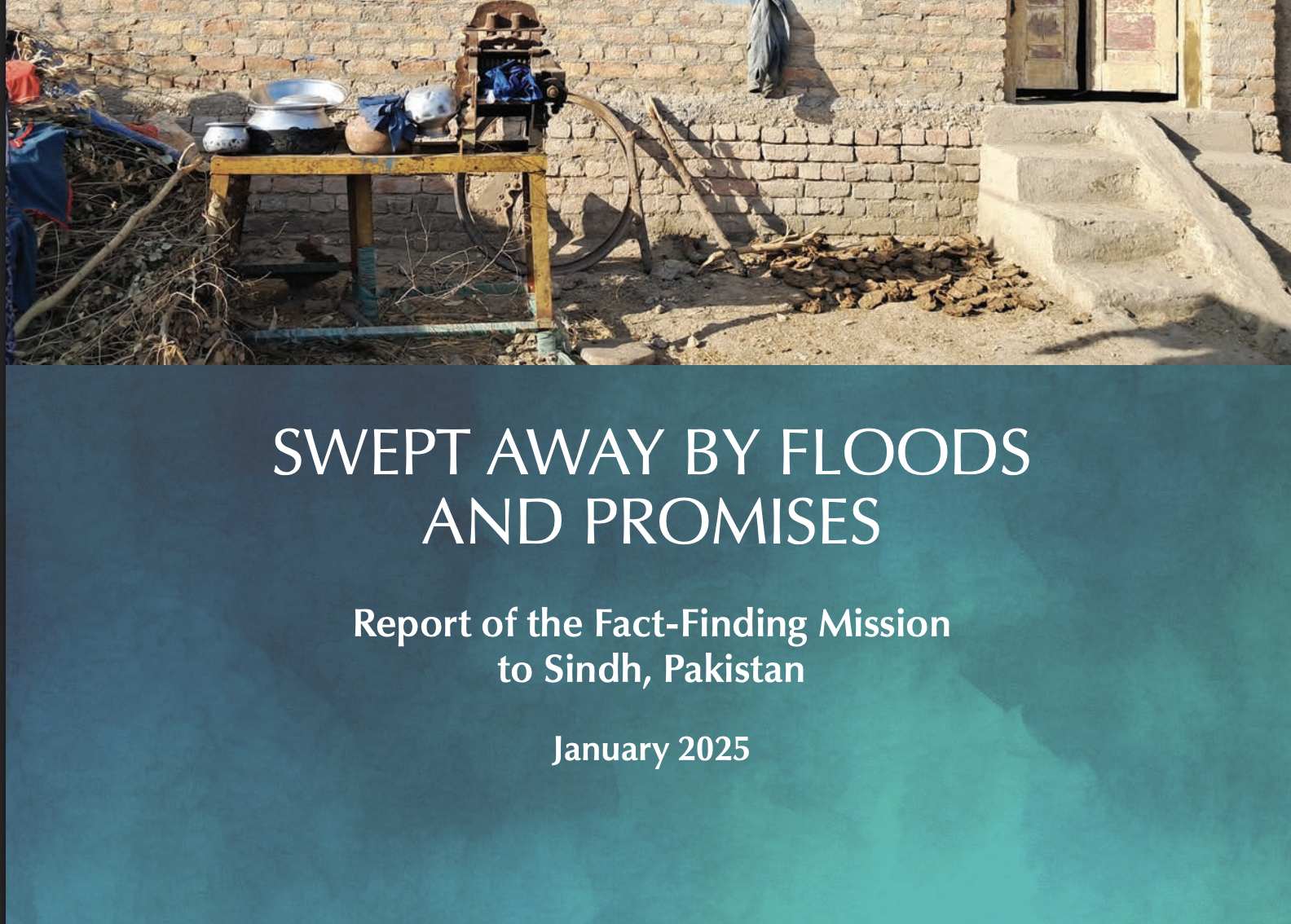
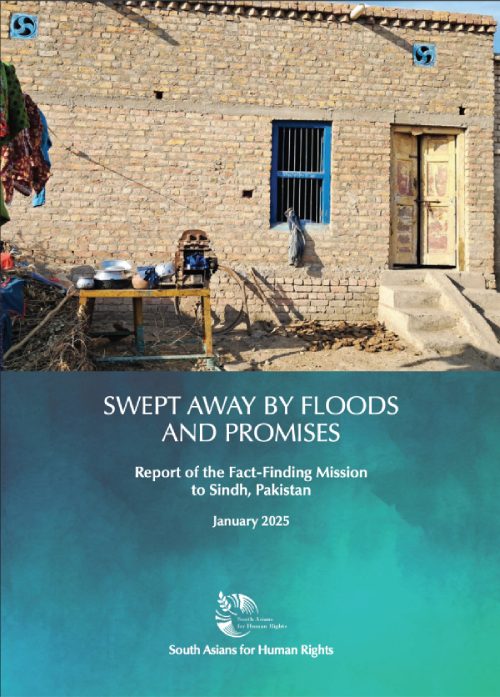
Nearly three years after the floods in 2022, South Asians for Human Rights (SAHR) conducted this fact-finding
mission in the Sindh province. The mission’s objective was to investigate whether the flood-affected population’s rights were respected, protected and fulfilled during the recovery process. However, the findings revealed that the flood response failed to meet the basic human rights standards established in Pakistan’s Constitution and the international commitments of
the State.

The 2022 floods represent a critical moment. The choices made now in relation to Sindh’s ongoing recovery will determine whether future climate disasters continue to subvert people’s rights or become opportunities to implement climate justice in both letter and spirit. This report identifies both the urgent necessity and potential pathways for positive change – recommending systems where recovery enhances the capabilities
of those facing the greatest climate impacts while fulfilling their fundamental rights to dignity, security and participation.

Download the Report

Read More

IPB Statement on Thailand- Cambodia Border Clashes

IPB Statement on Thailand-
Cambodia Border Clashes

Statement by the International Peace Bureau (IPB)

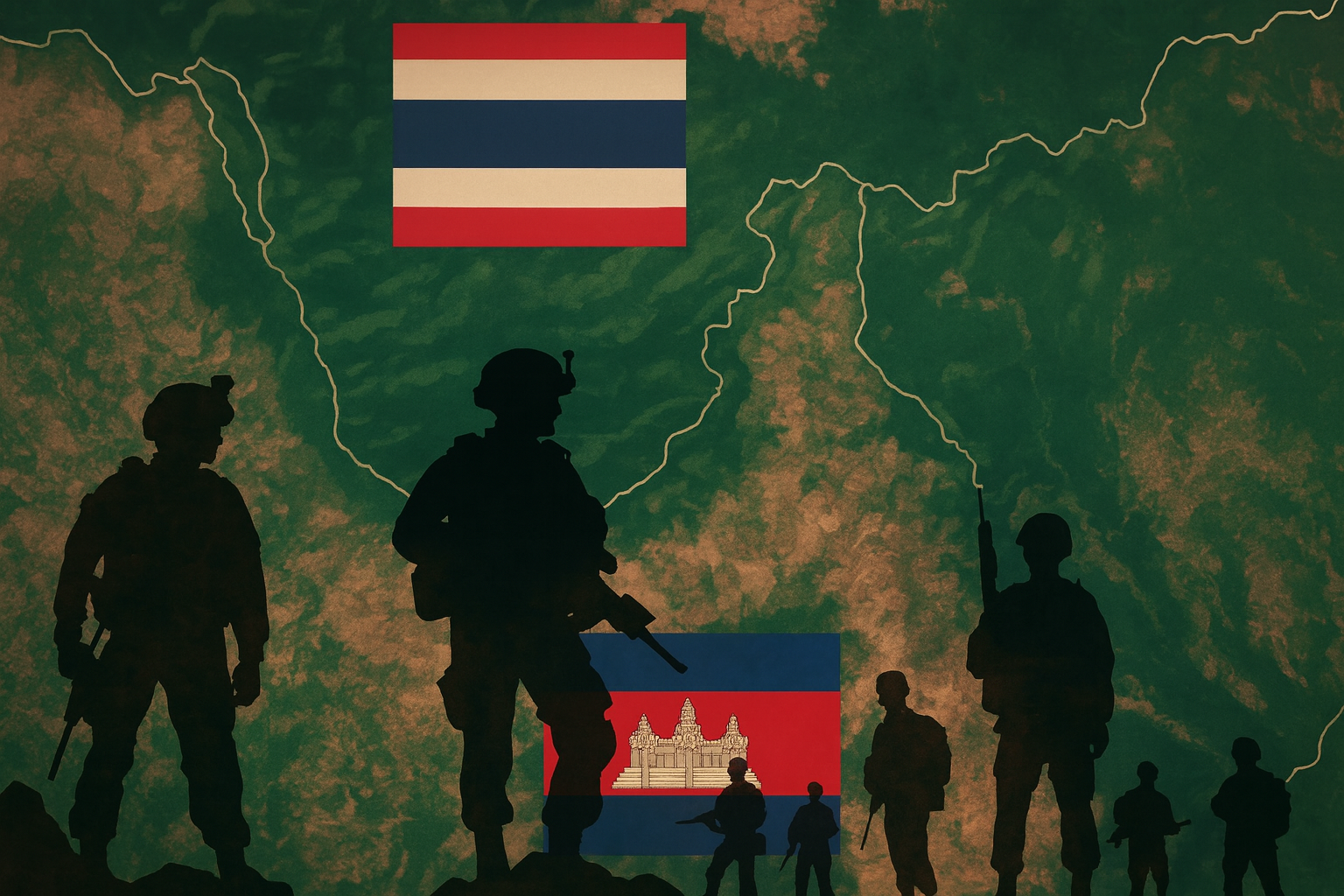
The International Peace Bureau (IPB) expresses deep concern over the rising military clashes and political tensions between Thailand and Cambodia, which have resulted in the death of at least 15 civilians and the mass displacement of civilians from border areas. The escalation of long-standing tensions over the border risks further exacerbating civilian suffering and displacement.

The IPB calls for an immediate ceasefire and a return to diplomatic negotiations and conflict resolution as the only tools that can solve the crisis. Nationalist and militaristic rhetoric must be replaced by dialogue and common security.

Moreover, IPB calls on ASEAN, particularly neighbour states in the region and those with military ties to either party, to encourage de-escalation and peaceful resolution.

Download the Statement

Read More

Webinar: Wars, Genocide and Resistance in West Asia

Webinar: Wars, Genocide and Resistance in West Asia

Watch the Webinar

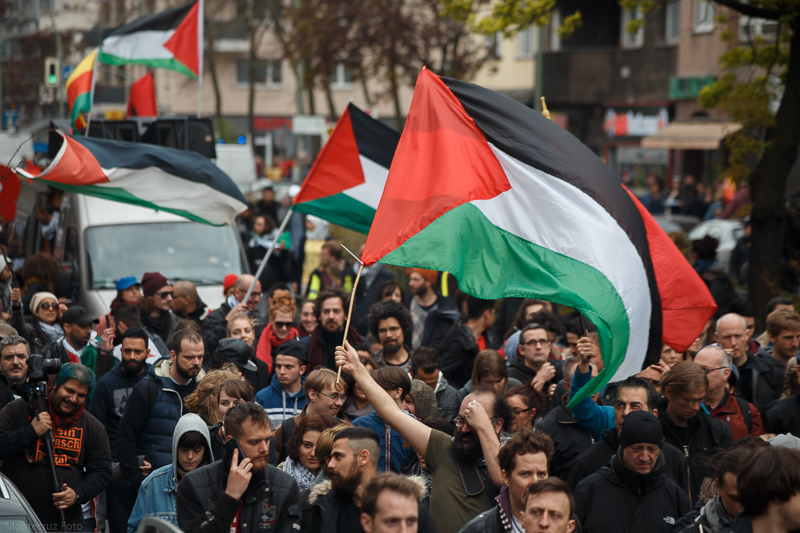
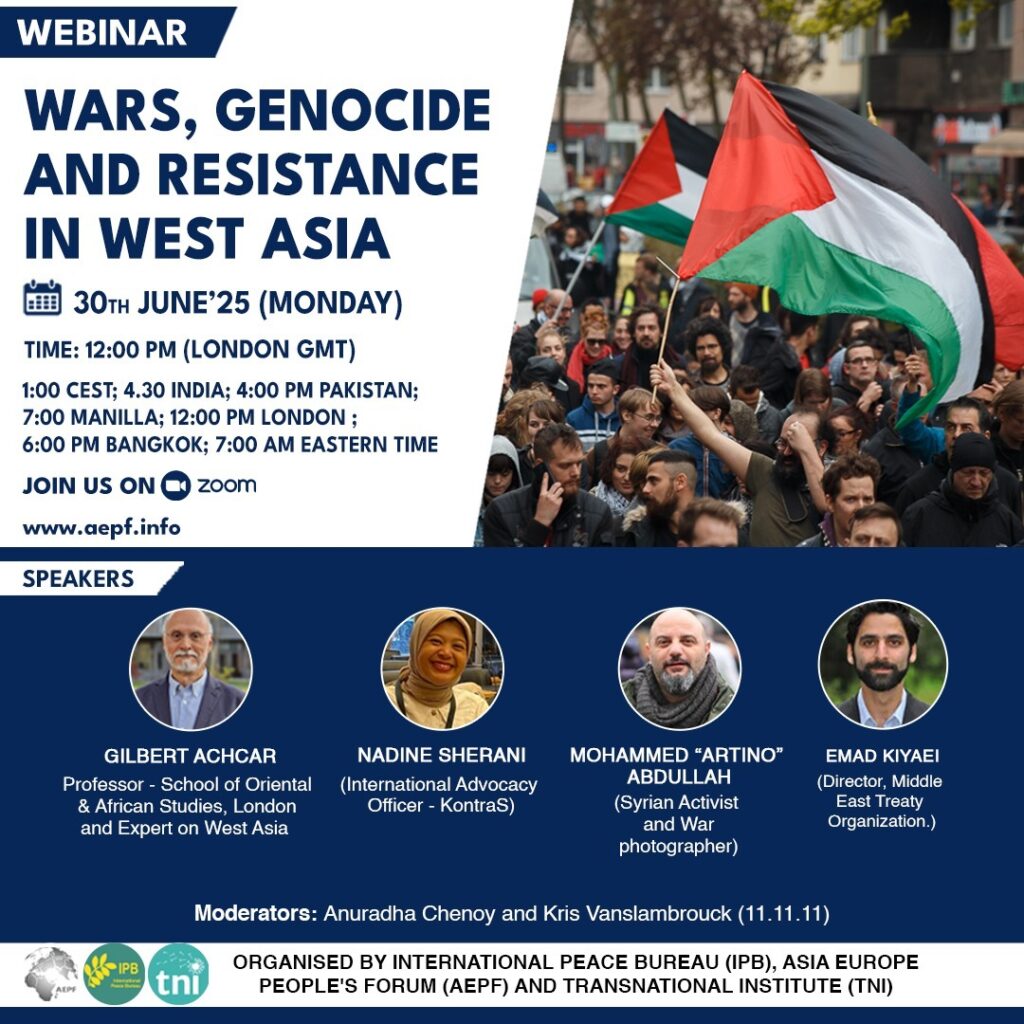
Israel’s colonial settler, continuous expansionism policies centred in the current phase of genocide in Gaza, ethnic cleansing of Palestinians and annihilating any resistance have led to another war this time with Iran. These policies backed and funded by the US follow the wars and destruction in Lebanon, Yemen, regime changes in Syria and Iraq. The reasons for these endless wars, annihilations and war crimes include the control of oil as central to US-Israel hegemony in this region in addition to Israel’s urge to capture and control all of Israel and physically exterminate or remove the Palestinian people. The backing Israel receives has led to curbing dissent and peace movements across the world, including the liberal West.

This webinar seeks to join the dots to analyse the state of this region but also importantly look at the resistance to chalk out the next steps of resistance.

Organisers: IPB, Asia Europe Peoples Forum, TNI


Read More

Webinar: Wars, Genocide and Resistance in West Asia

Webinar: Wars, Genocide and Resistance in West Asia

Israel’s colonial settler, continuous expansionism policies centred in the current phase of genocide in Gaza, ethnic cleansing of Palestinians and annihilating any resistance have led to another war this time with Iran. These policies backed and funded by the US follow the wars and destruction in Lebanon, Yemen, regime changes in Syria and Iraq. The reasons for these endless wars, annihilations and war crimes include the control of oil as central to US-Israel hegemony in this region in addition to Israel’s urge to capture and control all of Israel and physically exterminate or remove the Palestinian people. The backing Israel receives has led to curbing dissent and peace movements across the world, including the liberal West.

This webinar seeks to join the dots to analyse the state of this region but also importantly look at the resistance to chalk out the next steps of resistance.

Register Now 

Read More

INTERNATIONAL PEACE BUREAU STATEMENT: IPB Condemns U.S. Strikes on Iranian Nuclear Sites

INTERNATIONAL PEACE BUREAU STATEMENT - IPB Condemns U.S. Strikes on Iranian Nuclear Sites: An Illegal Escalation

INTERNATIONAL PEACE BUREAU STATEMENT: 
(ipb. org)
June 22, 2025

IPB Condemns U.S. Strikes on Iranian Nuclear Sites: An Illegal Escalation

The International Peace Bureau (IPB) strongly condemns the United States’ recent military strikes on Iranian nuclear facilities at Fordow, Natanz, and Isfahan. Carried out in coordination with Israel, these attacks are a dangerous escalation that violates both international law and the U.S. Constitution—and brings the region closer to a devastating war.

Under international humanitarian law, nuclear facilities are protected due to the catastrophic risks they pose to civilians and the environment. Targeting them is inhuman and illegal. There is no credible evidence that Iran is currently pursuing nuclear weapons—U.S. intelligence has confirmed this repeatedly. Military action under these circumstances has no legal justification.

Domestically, the strikes also violate the U.S. Constitution, which grants Congress—not the President—the authority to declare war. Launching attacks without Congressional approval contradicts both the War Powers Resolution and the principles of democratic oversight.

This is more than a legal issue—it is a matter of global security. Attacking nuclear infrastructure risks the release of radioactive materials, retaliatory strikes, and rapid regional escalation. The consequences could be catastrophic—not just for Iran and the Middle East, but for the world.

NATO members must not follow a U.S. president who acts unlawfully, even within his own constitutional system. They have a responsibility to uphold international law and prevent escalation—not enable it. Silence or complicity only deepens the crisis.

There is no military solution to this crisis. IPB calls for an immediate end to all military operations, respect international law, and return to diplomacy. Peace and common security can only be achieved through cooperation, not weapons.

Corazon Valdez Fabros
Co-President
International Peace Bureau (IPB)]

Read More

Statement: Calling for De-escalation and Peace Between India-Pakistan

Statement: Calling for De-escalation and Peace Between India-Pakistan

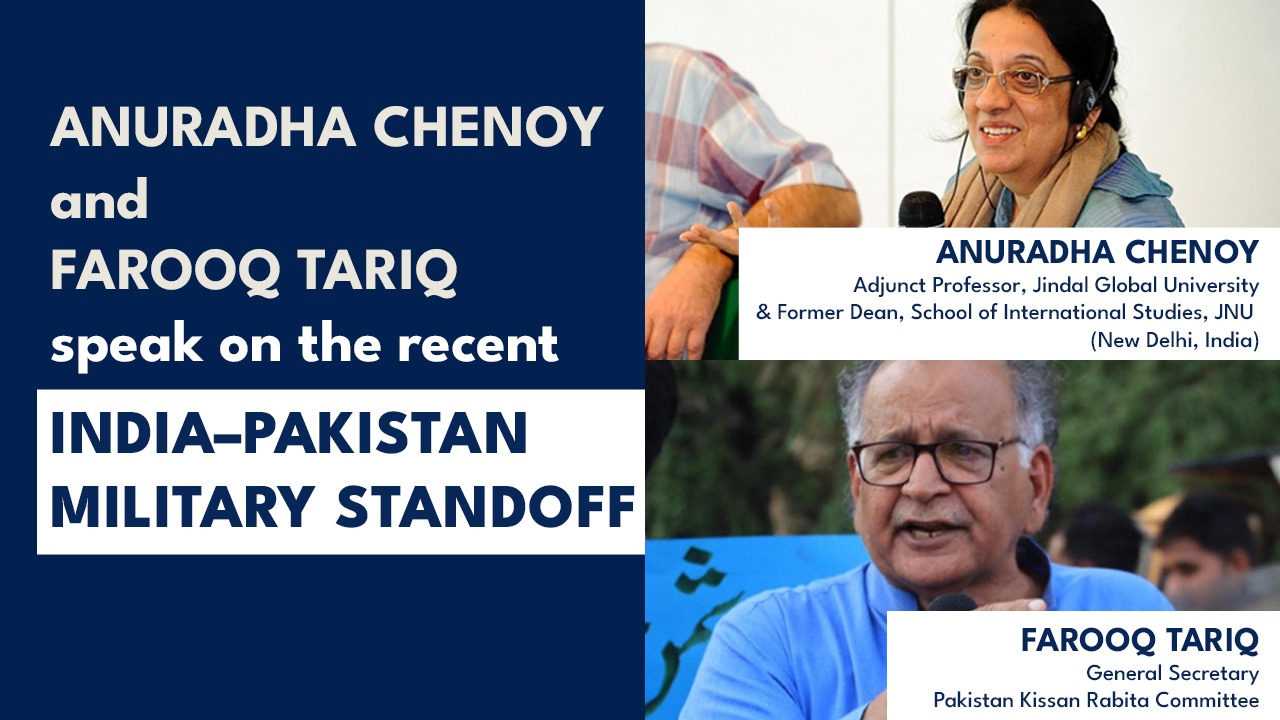
The AEPF strongly condemns the terror attacks in Pahalgam-Kashmir on April 22, 2025. We condole with the families of the 26 civilian victims of this heinous crime. We call for credible investigation into this crime whereby all involved be brought to book. Terrorism in all forms is a criminal activity and has no place in any society and we believe the international community needs to address this issue collectively.

We are witnessing an escalation of war like situation in the Sub-Continent and raised militarist rhetoric as both sides have taken steps to curtail all diplomatic engagements and hurt each other. We believe that wars have serious long term impact on ordinary people and unknown consequences. The AEPF appeals that the Governments of India and Pakistan dial back from these tensions and that all stakeholders assist to de-escalate the atmosphere of war and tensions.

We in AEPF appeal the Governments of India and Pakistan to exercise restraint in this tense atmosphere. We believe that ‘This is not the age for war’ and that all governments take steps to practice this important dictum.

Read More