AEPF Study and Strategy Meeting on Climate and Energy

AEPF Study and Strategy Meeting on Climate and Energy

Around COP23 in Katowice, Poland 30 November to December 2, 2018

The meeting on Climate and Energy built on the outcomes of the Cluster’s previous activities, the Seminar in Bangkok in September 2018 during the COP Intersessional, focusing on Financing of Fossil Fuels, and the Custer’s sessions during the AEPF12 Conference in Gent at the end of September 2018, which discussed various experiences from campaigns against Fossil Fuels.

During the workshop, unities were built along these campaigns on Climate and Energy. Various strategies were developed to strengthen our campaigns against public subsidies of fossil fuel project, such as targeting the G20 countries and using the G20 summit in 2019 as a key political moment. It was an opportunity to learn from specific oil and gas campaigns. The latter is quite new for Asian civil society organisations. We welcomed the presence of Gastivists to share their campaign ideas. We also got more information from geo-engineering and recent developments in the climate and energy topics.

Download: AEPF Study and Strategy Meeting on Climate and Energy

Read More

Charles Santiago (MP, Malaysia) at AEPF, Barcelona, 8-10 June, 2018

Charles Santiago (MP, Malaysia) at AEPF, Barcelona, 8-10 June, 2018

November 30, 2018

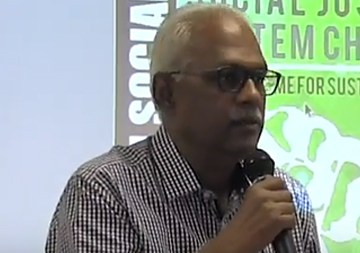
Charles Santiago (Member of Parliament, Malaysia) speaks on the situation in ASEAN Countries and tells how his party won the elections by increasing programs on social justice and through inclusive policies at “Social Commons, Social Justice, Systems Change: A Programme for Sustainability”, AEPF, Barcelona, 8-10 June, 2018

Read More

Democracy not for sale

Democracy not for sale

November 29, 2018 | Report

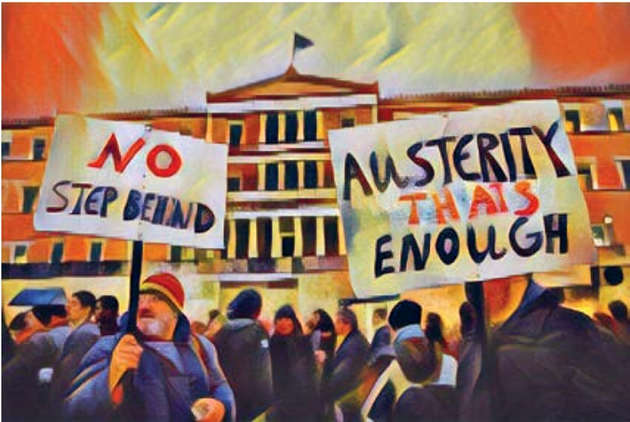
Democracy is Not for Sale: The struggle for food sovereignity at the time of austerity

Report from The Trans National Institute (TNI) with FIAN and Agroecopolis.

This Report shows that, thanks to EU austerity measures:

Austerity measures led to increased rural poverty and food insecurity in Greece and violated her people’s human right to food. How did this happen and who is responsible?

Executive summary

This Report examines the impacts of austerity in Greece on the right to food. It concludes that the Greek State and the Eurozone Member States violated the Greek people’s right to food as a result of the austerity measures required by three Memorandums of Understanding (2010, 2012 and 2015). In other words, the austerity packages imposed on Greece contravened international human rights law.

In August 2018, the European Council celebrated the end of the third Memorandum of Understanding (MOU), praising the Greek’s efforts and European solidarity. Yet, as this Report shows, there is little to celebrate. Not only did austerity measures increase poverty and food insecurity, it further consolidated an agri-food business regime that will perpetuate inequalities in access to and control over food.

The Report examines the impacts of austerity on food producers and consumer/cooperative initiatives as well as social impacts on the Greek population in general. By focusing on the human right to food, the Report highlights the impact of the Greek economic crisis that has touched every aspect of people’s lives. The focus on food producers and rural areas also draws attention to an overlooked aspect of Greece’s crisis as these sectors and regions often lack voice and recognition in national politics and decision-making.

The findings are based on direct interviews and original fieldwork, supplemented by interviews (including with high-level State officials) as well as macro-economic data analysis and literature reviews of key texts.

The findings of the Report are startling.

1. Austerity measures increased rural poverty and food insecurity

  • An estimated 38.9 % of rural citizens in Greece in 2017 are at risk of poverty * .
  • Rural unemployment soared from 7% in 2008 to 25% in 2013 while rural income per capita dropped by 23.5% during the crisis years (2008–2013)
  • Food insecurity across Greece has also increased – with food prices increasing at faster rates than prices in the Eurozone during the crisis, despite the sharp fall in domestic incomes and labour costs. This led to a drop in food expenditure in total terms but an increase in food expenditure as a share of total monthly expenditure from 16.4% in 2008 to 20.7% in 2016

– The proportion of households that cannot afford a meal with meat, chicken, fish (or vegetarian equivalent) every second day, for example, doubled during the crisis from approximately 7% in 2008 to more than 14% in 2016.

– The share of households with children unable to afford a protein-based meal on a daily basis doubled from 4.7% in 2009 to 8.9% in 2014. EU statistics estimate that 40.5% of children in 2016 faced material and social deprivation.

– Overall the crisis prompted a noticeable change in consumption patterns with the substitution of higher cost food items with more inexpensive foods.

* The EU defines this as someone severely materially deprived, below the poverty line after social transfers, or living in households where adults are employed less than 20% of the time.

2. Austerity measures impacted particularly severely on small-scale food producers and traders

The adverse measures on farmers included:

  • Higher taxes and increased costs of production due to the replacement of a separate income tax regime for farmers with a standardised income tax system, higher VAT rates on agricultural inputs including on fertilizer, pesticide, feed and seed, and diesel; and the introduction of a new tax on farmland. Taxes as a proportion of agricultural net value added soared from 4% between 1993 and 2010 to 15.4% in 2016.
  • The abolition of the specialised Agricultural Insurance Organisation (OGA) and its merging with a generalised system of social security has led to higher contributions for many farmers.

As well as direct impacts, a number of structural reforms significantly tipped the balance in favour of larger food retailers and private traders to the detriment of small-scale producers. These reforms included:

  • Retail trade liberalisation, such as the lifting of restrictions on particular goods sold in supermarkets, flexibilisation of labour laws, and a move towards Sunday trading.
  • Wholesale trade liberalisation, specifically the privatisation of the formerly publicly administered and profitable Central Markets and Fishery Organisation, the country’s prime wholesale food operator, responsible for the country’s 2 major food markets and 11 fish markets.
  • Privatisations, including the privatisations of the Agricultural Bank of Greece (ATE) and the major dairy cooperative AGNO. The results have been increased costs for farmers less access to rural credit, specialised financial services, and agronomic advice.

3. The austerity measures hit an already weakened rural food sector made vulnerable by long-term trends

Agriculture in Greece remains a significant part of the economy, making up nearly 4% of the country’s GDP (more than double the EU average) and providing 12% of the country’s jobs in 2016, but it has been in a state of decline since the early 1980s. Greece’s entrance into the European Economic Community in 1981 and later the EU – and the Common Agricultural Policy – opened up Greece’s small-scale farmers to greater competition. This led to a number of vulnerabilities in the Greek agri-food system prior to the crisis including:

  • A steady fall in domestic agricultural production and an increasing reliance on food imports that led to a negative food trade balance. Between the late 1980s and the beginning of the crisis in 2008, the food trade deficit frequently exceeded 1% of the country’s gross domestic product (GDP) while in the period 2005–2011, imports accounted for nearly 40% of domestic consumption.
  • Increasing reliance on food subsidies with subsidies rising as a share of net value added in agriculture from 23% in 1993 to 81% in 2008.
  • A growing supermarket sector that intensified monopolistic conditions in relation to producers and consumers alike.

These trends have undermined Greece’s food sovereignty, turning Greece from a net food exporter to a net food importer. Yet rather than remedying these vulnerabilities, the three MOUs (2010, 2012 and 2015) accelerated these trends. Examining the structural requirements of the memorandums suggests a deliberate ideological project of transforming the State and restructuring the Greek economy in favour of certain sectors of capital such as large (trans)national supermarket chains. The crisis provided a means to implement it.

4. The Greek government’s social safety net was insufficient to prevent food insecurity and poverty

The Greek government enacted a number of social programmes seeking to provide a safety net against the fallout from austerity and to address urgent food insecurity concerns. These included the passing of a humanitarian assistance law that provided food, rent and electricity subsidies for low-income individuals and families. This was later replaced by a Social Solidarity Scheme which provides low-income households with a monthly allowance.

While addressing the most basic needs, the Scheme’s support has been limited in scope, providing only €30 to €200 per household per month, with an additional €100 for every adult and €50 euros per child. The strict eligibility criteria limits support to the most severe cases of material deprivation, while the means testing requirements exclude many who would be entitled due to its restrictive and bureaucratic stipulations. Coverage in rural areas has also been limited.

As a result, private foundations, charities, NGOs, and the Greek Church have had to fill some of these gaps – offering among others free school meals, food banks and soup kitchens, and ‘social grocery’ stores that provide food, clothing, cleaning materials, and other basic goods for low- income individuals and families.

While some of these programmes receive support from local municipalities, and in the case of the school meals programme also central government backing, they are little more than sticking plasters. Human rights-based responses, such as supporting jobs and just wages, that would deal with the root causes of hunger and food insecurity need to be much more centrally foregrounded.

5. Community-led popular responses provide real solutions and point to the emergence of a new food politics

In the face of Troika-enforced government policies undermining food sovereignty – and a failure to adequately ameliorate its impacts – a range of grassroots community initiatives have emerged to help secure people’s access to food.

These reflect different political tendencies, vary in terms of infrastructure and engage differently with States and markets. They include solidarity kitchens, food cooperatives, ‘No intermediaries’ markets, food self-sufficiency collectives and networks, Community-supported agriculture (CSA) schemes, as well as a range of other agricultural cooperatives, alternative farm models, and producers’ ventures.

The call for a ‘solidarity economy’ has become a key framework within which many grassroots responses have articulated their demands and aspirations. This Social Solidarity Economy (SSE) has grown massively during the years of the crisis: in 2013, 372 social enterprises were registered while in the years 2014, 2015 and 2016 these rose to 585, 714 and 907 respectively.

In building up such counter-power from below based on innovative practices, social experimentation and people-controlled infrastructures, this movement is paving the way not only for a popular resistance to austerity, but also a new, transformative, just food system. This extends beyond demands for affordable food prices and farmer protection towards genuinely challenging the structural power of the corporate agribusiness sector and advancing popular alternatives.

6. The right to food has been violated in Greece

The right to adequate food is strongly enshrined in international human rights law and its normative content notes several elements (availability, accessibility, adequacy, sustainability) that need to be safeguarded. The right to adequate food also correlates closely with other economic, social and cultural rights (ESCR), meaning that the violation of one right often leads to the violation of other rights. The right to health, life, water and adequate housing are underlying determinants of the right to food.

Several austerity measures – including changes to agricultural taxes and social security regimes and the drive towards privatization and trade liberalization – contributed directly to undermining the right to food in Greece. Other measures such as minimum wage reductions and pension cuts also affected this fundamental human right and contravened other economic, social and cultural rights, such as the right to work, housing and health.

States have the obligation to realize human rights. This obligation includes the progressive realization of socio-economic rights with the maximum available resources, which prima facie prohibits retrogressive* measures that would limit or reduce existing levels of enjoyment of enshrined rights. Retrogressive measures can only be taken under very limited circumstances and based on key conditions – such as careful monitoring and evaluation, consideration of all rights, ensuring no disproportionate impact on the most vulnerable – none of which was applied by the Greek government. The wide array of retrogressive measures taken, combined with the increasing cost of living, are sufficient proof that the right to food was violated in Greece.

* Retrogressive measures means any measure that implies a step back in the level of human rights protection due to the intentional decision by a State.

7. Accountability for violations of the right to food rests both with the Greek government and the Eurozone Member States, with the latter arguably taking a greater share of the responsibility

When a human right is violated, it means there has been a breach in the obligation to respect, protect and fulfill this human right. Many actors were involved in the negotiations leading to the three MoUs. Human rights obligations exist territorially and, under certain circumstances, extraterritorially.

As a result of the austerity measures, Greece has violated the human right to food of people living in Greece. Yet, Eurozone Member States, as direct lenders are also responsible as they signed the MoUs and likely pressured the Greek government to do so. Eurozone Member States – as States Parties to the International Covenant on Economic, Social, and Cultural Rights and other international human rights instruments – have therefore breached their extraterritorial obligations to respect the human right to food in Greece. Not only should Eurozone States have refrained from requiring measures that affected the right to food, they should have also conducted human rights impacts assessments of the Memorandums. These HRIAs are required prior to, during, and after the passing of MoUs, but were never done.

Furthermore, all European States have failed to comply with their human rights obligations when acting and taking decisions in Intergovernmental Organisations and International Financial Institutions, such as in the International Monetary Fund. As part of the UN system, the latter is obliged to comply with the UN Charter which includes a commitment to the progressive realization of human rights. It certainly should not take any action that would constitute a human rights violation.

Troika members claim that the sole responsibility for the impacts of the MoUs lies with the Greek State. This argument is false because they, with Greece, were joint signatures of the three MoUs. Therefore, the responsibility for violations of the right to food is a shared one too. Indeed it can be argued that the responsibility of the Eurozone Member States is much bigger, given the evidence of direct interference or even coercion by the Member States of the Troika on Greece to sign the MoUs.

The focus of this Report is on Greece, but its findings are relevant internationally. Greece is not an exception. Many other countries, in and outside of Europe, find themselves in similar situations, forced to implement austerity-driven, technocratic policies which lead to violations of economic, social and cultural rights including the fundamental right to food. Greece’s experience also shows that the violations of these fundamental rights are not only issues of the global South. They are happening in the global ‘North’. Hunger, food insecurity, poverty and material deprivation are European issues. Human rights are universal, which means all governments have obligations to fulfill them. It is time now for the EU to act in accordance with these obligations and put human rights above the needs of financial markets.

Download:

Democracy not for sale: the struggle for food sovereignty in the age of austerity in Greece(pdf, 3.41 MB)
Average time to read: 90 minutes

Executive Summary – Democracy not for sale: the struggle for food sovereignty in the age of austerity in Greece(pdf, 708.03 KB)
Average time to read: 5 minutes

Executive Summary – Democracy not for sale – in Greek ?(pdf, 1.01 MB)
Average time to read: 5 minutes


Read More

Sushovan Dhar on Global Social Protection Charter

Sushovan Dhar on Global Social Protection Charter

November 29, 2018

Sushovan Dhar, of the Committee for the Abolition of Illegitimate Debt, endorses the Social Justice Charter, and speaks of the needs and ways to end debt and close the inequality gap.

Read More

Statement of the Advocacy Team for Economic Justice in the Post-Court Verdict concerning the International Treaty Law

Statement of the Advocacy Team for Economic Justice in the Post-Court Verdict concerning the International Treaty Law

November 25, 2018

Jakarta, 25 November 2018. On 22 November 2018, the Constitutional Court issued a verdict of the case No.13 / PUU-XVI / 2018 concerning the testing of Law No.24 of 2000 on International Agreement of the 1945 Constitution. This case was filled by the Advocacy Team for Economic Justice on February 14, 2018 to the Constitutional Court.

There are at least 4 reasons as the background of why the International Treaty Law was sued to the Constitutional Court, namely: First, international agreements (specifically trade, investment and debt) have a broad impact on people’s lives; Second , the loss of democracy; Third, the power of the Government is too large (absolute power); and fourth, to restore people’s sovereignty.

Several articles were tested on the International Treaty Law, namely Article 2, Article 9, Articles 10 and 11. The four articles were tested because they were thought to have caused legal uncertainty for the people as a result of losing control and involvement of the people in the process of negotiating international agreements.

In fact, the seemingly confidential negotiation process with the closed participation and public access to information and the text draft of the agreement in the negotiations on free trade agreements and international investment has threatened democracy and the protection of human rights. Moreover, this free trade and international investment agreement was ratified without requiring the approval of the Republic of Indonesia Parliament so that the loss of function of the people’s control over the Governments’ power.

New Legal Norms in the Judge Verdict of the Constitutional Court

The Constitutional Court has presented new legal norms in the international agreements. In reading the verdict, the Constitutional Court ruled that Article 10 of the International Treaty Law was contrary to the 1945 Constitution, specifically Article 11 paragraph (2) and Article 28 D paragraph (1). Although, the Constitutional Court only granted part of all the requests, but for the advocacy team of economic justice, article 10 is the heart of the lawsuit. This is because this verdict has become a breakthrough for the renewal of the national legal system, especially in relation to the International Agreement with the changing dynamics of the global community that needs to be adjusted.

The core issue in this lawsuit is related to the distribution of international agreements that require the approval of the house of representative/DPR and which are not. These provisions are regulated in articles 10 and 11 of the UUPI. This is a gray area in the practice of policy making, which if not carefully decided will have a fatal consequences for the national interests.

Article 10 of the UUPI regulates the category of International Agreements that require the approval of the DPR RI, which is related to the problem: (1) political issues, peace, defense and state security; (2) changes in territory or territory determination of the Republic of Indonesia; (3) sovereignty or sovereign rights of the state; (4) human rights and the environment; (5) the establishment of new legal rules; (6) loans and / or foreign grants.

At the same time, Article 11 of the UUPI regulates the category of international agreements that do not require the approval of the DPR RI, namely those relating to material that is tend to be procedural and requires implementation in a short time without affecting national legislation, including the main agreement concerning cooperation in the fields of science and technology, economics , engineering, trade , culture, commercial shipping, double tax evasion, and investment protection cooperation , as well as agreements that are tend to be more technical “;

The advocacy team considers that the international treaty division in Article 10 and Article 11 is contrary to Article 11 paragraph (2) of the 1945 Constitution, because in practice there are international agreements that have a broad impact on the lives of the people but not through the DPR RI approval process so that checks and balances by the DPR RI unable to be done. An example is the trade agreement and investment protection agreement (Bilateral Investment Treaty / BIT) in the dynamics of global development today, it turns out to have a broad impact on the lives of the people but in the process of ratification does not require the approval of the DPR RI. Therefore, these two agreements can no longer only be called international agreements that regulate technical and procedural matters.

In fact, there are also practices that are out of sync with the implementation of Article 10 and Article 11 of the UUPI, when the Government of Indonesia ratifies the Agreement of AIIB- Asian Infrastructure Investment Bank (debt) not with the approval of the DPR. This certainly causes the consequences of legal uncertainty for the people as stipulated in Article 28D paragraph (1).

Therefore, the approval of the DPR RI which is a representation of the people’s voice is very important to international agreements that have a broad impact on the lives of the people, including those that have an impact on state finances and cause changes and / or forming legislation. Article 11 paragraph (2) of the 1945 Constitution of the Republic of Indonesia which states: “The President in making other international agreement which have a broad and fundamental consequences for the lives of the people related to the burden of state finances, and / or require changes or the formation of laws must be approved by the House of Representatives”.

On that matter, the Constitutional Justice Board in its consideration stated that the DPR’s Approval was needed for an International Agreement which was deemed important only. Agreements that are considered important, in accordance with those stipulated in the Constitution.

In general, in consideration of the judge, the criteria for the important agreement were mentioned: the Agreement with political dimension that has is relevant with state sovereignty such as an agreement influencing state borders, which affect federation relations with other states, which affect the burden of state finance that must be borne by the people, which affects the balance or division of the king’s power with parliament, which has a broad impact so that new laws are needed. And it can increase according to the needs or considerations of each country.

Regarding in what way or in the circumstances of how an international treaty material causes broad and fundamental consequences related to the financial burden of the state and / or requires changes or the formation of laws, the panel of judges considers that it cannot limitatively determined but must be assessed casuistry based on consideration and developments in legal needs nationally and internationally.

Previously Article 10 of the International Treaty Law limited only six categorizations of international agreements that had a broad impact on people’s lives. Of course, the enthusiasm in Article 10 of the International Treaty Law has made exhaustive criteria or qualifications limited to the six aspects in question, while Article 11 paragraph (2) of the 1945 Constitution makes an open criteria. Article 11 paragraph (2) of the Constitution states: “The President in making other international agreement which have a broad and fundamental consequences for the lives of the people related to the burden of state finances, and / or require changes or the formation of laws must be approved by the House of Representatives”.

Therefore, the Constitutional Court through its verdict to expand the categorization of international agreements that has a broad impact on people’s lives that is not only contained in Article 10 of International agreement Act. So, the issue of trade, economy, investment, double taxation, and even foreign debt can be part of a broad-based international agreement that requires people’s approval, in this case through the DPR RI.

Legal consequences on the verdict of Constitutional Court Judge

One important point in the consideration of the Constitutional Court Judge that the involvement of the state in international treaties under the pretext of world order should not conflict with the principles of independence, peace and social justice. Before the Constitutional Court’s verdict, there were very many bilateral, regional and multilateral agreements that were far from social justice and adopted the spirit of people’s interests. In fact, when the agreement is ratified in national law, it will have an impact on all elements of society. Of course, after this Constitutional Court ruling, actions that harm the interests of the people and injure social justice over the implementation of the international agreement are not allowed to be returned.

The advocacy team for economic justice sees that there are a number of things that have legal consequences to look at:

1. Whereas in the previous practice there was a potential where international agreements that were ratified without the approval of the DPR RI that could have a broad impact on the lives of the people, which could later harm social justice. For this reason, the advocacy team encouraged them to do the process of reviewing all international agreements, especially against trade, investment and foreign debt agreements to fulfill the elements of social justice and in harmony with the mandate of the Constitution.

2. That for the International Agreement to be ratified, it must comply with this Constitutional Court’s verdict. Particularly related to free trade agreements and investments, there are some that have been discussed and will enter the ratification stage such as Indonesia-Australia CEPA, Indonesia-Europe FTA (IEFTA), and Indonesia-Singapore Bilateral Investment Treaty (BIT). Therefore, the agreements to be ratified must be examined as agreements that are “important” so that they require the approval of the DPR.

3. Because the constitutional panel of judges has accepted the constitutional loss of the Petitioners who have never been involved in the decision-making process of international agreements, especially trade, investment and foreign debt, then in the case of international agreements that have a broad and fundamental impact on people’s lives, then The Government and Parliament of the DPR RI must open and involve the public at large in the process of public consultation to get the views on the impact that will result from the agreement on the state’s financial burden weighing on the public and on the formation of the new legislation.

4. Specifically on the Trade Law No.7 of 2014 concerning Trade, the Advocacy Team considers that Article 84 paragraph (3) and (4) of the Trade Law have contradicted the verdict of the Constitutional Court No.13 / PUU-XVI / 2018. This is because, the time limit for The DPR RI to determine an international agreement whether it needs the approval of the DPR RI or not as stipulated in Article 84 paragraph (3) and (4) has not been in accordance with the Constitutional Courts’ verdict. In its verdict, the Constitutional Court judges argued that to assess an international agreement that was important or not important, it must be carried out by the DPR RI. Therefore, related to the takeover of 6 trade agreements that were being discussed by the DPR some time ago by the Government and unilaterally stating that the agreements were deemed not to require the approval of the DPR RI, it is fitting to say that the actions of the Government were contrary to the mandate of Article 11 paragraph (2) of the 1945 Constitution which has been decided by the Constitutional Court in Case 13 / PUU-XVI / 2018. That the evaluation of an international agreement is important and has a broad impact must be carried out carefully and based on the meaning of the mandate Constitution.

5. Specifically related to trade and investment agreements, in determining the agreement including agreements that are important and have a broad and fundamental impact on people’s lives in accordance with the Constitutional Courts’ Verdict, it is necessary to conduct a comprehensive impact assessment by the DPR before giving an approval for a trade investment agreement. Impact assessments can be made on their impact on the economy, social, environment and human rights. The results of this impact assessment must be the basis arguments for the DPR RI and the Government to determine whether that International Agreement is important or not.

6. This Constitutional Court Verdict must be immediately responded by the DPR RI where the Act No.24 of 2000 concerning the International Agreement is no longer appropriate, and it is necessary to immediately make changes to the law. The Constitutional Court’s verdict must be a reference for the DPR RI and the Government in the process of change. And specifically, the formulation of a consultation process that must involve wider public participation must be carried out because international agreements have a broad impact on people’s lives, in economic, trade, debt, double taxation, investment and other issues. And legal consequences must be included if an international agreement is passed without involving the public in it.

Advocacy Team for Economic Justice:

Indonesia for Global Justice (IGJ), IHCS, Indonesian Peasants Union (SPI), FIELD Indonesia, KIARA, Bina Desa, Indonesian Peasants Alliance, Women Solidarity , Palm Oil Farmers Union, and 5 Salt Farmers (Amin Abdulah, Mukmin, Fauziah, Baiq Farihun, Budiman).

Contact the Advocacy Team:

Henry Oliver David Sitorus (Coordinator of the Lawyer Team): 0813-17066828
Rachmi Hertanti (Alliance Coordinator for Advocacy Team / IGJ Director): 0817-4985180

Read More

THE CHALLENGES OF THE PEACE MOVEMENTS IN THE COMING YEARS

The Challenges Of The Peace Movements In The Coming Years

November 6, 2018 | Kalle Sysikaski

Kalle Sysikaski
The PEACE Union of Finland

Probably we all agree our main purpose is to press for an end to the over-funding of military establishments and for the creation of new funds to tackle human insecurity and common threats to the planet. We have to support all efforts to limit and eliminate weapons that impact negatively on communities in conflict zones.

Impacts of military preparations and weapons include deaths, contamination and loss of agricultural lands, loss of employment after attacks , increased health costs for communities affected by war, costs of reconstruction building, infrastructure and so on.

In order to achieve disarmament for sustainable development we need from day to day to build international civil society alliances bringing together not only disarmament and peace movements but also anti-poverty, environmental and development aid organisations working for disarmament and development.

Unfortunately if we watch the mainstream media in Europe today we are spoon fed more and more propaganda and fear of the unknown and we are encouraged to think that our governments are keeping us safe from the unknown.

In Europe the threat by Russia to all-European security is over-estimated because it is in the interest of the arms industry, its loyal politicians and their inability to find new ways of thinking. But Russia is dangerous in the first place to its own citizens and some nearby countries which were part of Soviet Union like we can see today for example in Ukraine. But the very serious problems there are not black and white. Russian elites are behind the war yes, but there are many Ukrainian forces too who want to keep up the violent conflicts, enemy pictures and who economically benefit from the war.

For Russian leaders it is easier to strengthen their authoritarian system if Western Europe wants just to strengthen the enemy picture instead of making persistent proposals for disarmament and peaceful co-operation. Less the Russian leaders can say the West is a threat to Russian national security, more there will be space for Russian progressive civil society. Today this civil society has to face a hostile environment and this cannot be in the interests of anyone who wants to build peace and democracy. That is why we have to strengthen our co-operation with Russian independent peace movements and we have to urge our governments to support that co-operation instead of increasing military spending and with the Ukrainian peace movements.

The refugee and migration crises do not exist in isolation. Those are symptoms of broader problems like conflicts, militarism, extreme nationalism distorted religious beliefs, the failure of governance, the gross inequalities in opportunities in economic and social wellbeing and the failure to accommodate different kinds of diversities. Many of these problems can be solved if the international community and the states fulfil their commitments to achieve the 17 SDGs. This is a very important reason why the peace movement needs to build alliances. When the Trump administration is pushing the US military allies to increase their military spending we have to increase strong alliances to demand redirection of annual military expenditures for better and serious implementation for the SDGs.

In many European countries there are many, many progressive-minded people who say they are tired of protesting everything in an anti-spirit. That is why we have to keep in minds the many achievements of the international peace movement and to get wider attention to those.

The creation of the United Nations was initiated, campaigned and lobbied for by the peace movement in the first place. The NPT treaty and the new UN treaty on banning the nuclear weapons were initiated by the peace movements. The land-mine treaty and the arms trade treaty were achievements of the peace movement. Peace movement or movements have had an important role in ending wars or supporting their ending. Like the Vietnam war, the war in Northern Ireland, the implementation of The UN resolutions in East Timor and many others.

Our Asian friends are bravely supporting the local communities and peace efforts in many conflict zones. And in both, Asia and Europe the level of militarisation and securitisation of security would be even more costly and more restrictive without the peace movements.

In Europe we have developed more new ways of protesting in order not to stick only to the traditional anti demonstrations. It is important in order to keep the peace movement alive and visible; especially the younger generations have been successful in finding new ways.

Read More

Asia and Europe in Changing Geopolitics, Rising Powers, Peoples’ Security

Asia and Europe in Changing Geopolitics, Rising Powers, Peoples’ Security

November 5, 2018 | Achin Vanaik and Anuradha M. Chenoy

peaceandsecurity3

( Achin Vanaik, former professor, University of Delhi and Anuradha Chenoy, former professor JNU, Delhi)

Major trends of changing geopolitics impact Asia and Europe and provide space for positive interventions from peace movements for people’s security. Even as the rise of Asia is seen as impacting international geopolitics the current reality in the Asian Continent is as follows:

  1. Most riven by nationalist tensions of various kinds, religious, ethnic or otherwise.
  2. Uncertain implications of China’s general rise even as no other country has so many neighbours (14) although border demarcations with most (12) have been agreed upon.
  3. Four of the five most significant world powers (as evaluated by population size/total GDP/military strength) operate here – Russia, China, India, Japan – plus two other emerging powers of Turkey and Indonesia.

Geopolitically, Domination of Eurasia is the Key to Greater Global Pre-eminence

The one and only power that has, since the end of World War II, sought to establish such military-political dominance is the US which militarily operates on both maritime flanks (from West Europe to East Asia) as well as on the Eurasian landmass through:

  • an unmatched structure of foreign military bases (Over 800);
  • external emplacement of nuclear weapons and delivery systems in other countries;
  • the widest network of political and military alliances from NATO expanding eastwards to the ‘near abroad’ of Russia, as well as in alliances in East/Southeast Asia to contain China;

seeks to stabilize and maximise its control of the Middle East and North Africa (MENA) because

(i) geopolitically it is at the heart of Eurasia as well as being the site of most popular political upheaval and resistance to US control; and
(ii) because control of its hydrocarbon wealth, provides leverage over Europe, India, China, Japan (who will for some considerable time be reliant on this) while also enabling the persistence of a ‘petro-dollar’ economy.

Developments and Challenges: Geo-economic and Geopolitical to the US

1. Belt Road Initiative (BRI/OBOR)

China’s reasons for pushing this massive infrastructure and communications plan is that: -it is of great economic benefits for itself, domestically and geo-economically. Its links China’s internal regions to the globalized economy. ( China is one of the greatest supporters of globalization, followed by India).

— is a geopolitical strategy to counter US containment efforts.

— makes China a new economic hegemon. China is leveraging this for its geopolitical interests with strategic alliances with Russia, Pakistan and others.

However, for other countries that have joined the BRI, taken loans, made investments there are on the one hand, progressive possibilities, economic and political; but on the other hand there are the dangers of enduring and deepening indebtedness to China that are real and probably stronger. Recent cases of Sri Lanka and Djibouti’s indebtedness to China are real and have enhanced threat perceptions (Malaysia, Myanmar and Indonesia, stepped back from several projects with China; Pakistan is seeking an IMF loan bailout and more aid from China).

2. There is a minor trend of a ‘De-dollarization’ process. Countries that face US sanctions like Russia, Iran, Venezuela, China have successfully traded in national currencies and are willing to accept China’s currency as a medium of payment. There is a fillip to intra-Asian trade/investment with the rise of other currencies especially of the Renminbi possibly backed by gold. This kind of trade had been practised earlier between the Soviet Union and some Developing Countries like India (Rupee-Rouble trade). There are small attempts to encourage this trend by the Asian Infrastructure Investment Bank (AIIB), the New Development Bank (NDB) and proposals to put in place its own SWIFT banking exchange system.

3.Expanding BRICS and SCO?

Regarding BRICS, this body has not proved to be a serious counter to Northern exploitation. Economically, politically and militarily, Brazil, India and South Africa are closer to the West than to each other or to BRICS. Indeed, India is ‘balancing’ whereby it can be part of the US containment strategy vis-a-vis China while at the same time it is dependent for oil from Iran and defence imports from Russia (Russia, India, Iran have planned a North-South trade and transport Corridor, the INSTC linking Indian Ocean to the Persian Gulf via Iran. Within Iran it overlaps with the BRI). Even while BRICS has developed several institutions like New Development Bank (NDB), its capital base and operational principles are not any challenge to the IMF/WB/WTO which still lay down the principles and rules ensuring that global economic activity is governed along neoliberal lines.

The Shanghai Cooperation Organization (SCO) designed by China, Russia and the Central Asian Republics for regional security organization has grown to include new members and mandates. However contradictions between Iran, Pakistan and India, and the paradoxical nature of Russia-China relations have made it more declaratory forum as opposed to an active regional structure. Of interest were the steps taken to merge the Russian led Eurasian Economic Union with China’s Belt and Roadway Initiative in 2015, and the recent Free Trade Agreement between Russia and China. The Russian narrative on the strategic partnership between Russia and China includes the narrative that US led sanctions are the driver for this uneven partnership. Russia has discomfort of China’s increasing influence in Central Asia and economic domination. SCO does not have the enabling structures of other regional organizations.

Other regional organizations have been unable to push ahead because of disputes, security and economic differences. The South Asia Association for Regional Cooperation is mired in the India –Pakistan disputes. ASEAN, despite 50 years of attempting economic integration, has been unable to manage its diversity or address common issues of security and people’s concerns like labour migration, rights, and climate change.

New Dilemmas in the international system

  1. Iniquity of United Nations Convention on the Law of the Seas (UNCLOS).
  2. Migration and Human rights.
  3. Climate Change.
  4. Dangers of Nuclear Arms Race and War.

While the dilemmas listed as 2/3/4 are widely recognized, much less is known about UNCLOS.

UNCLOS is the accepted major international legal framework governing the open seas/oceans, but it is double-edged. Before this Convention came into existence in 1982, maritime countries only had sovereignty over 12 nautical miles from their coastlines. UNCLOS, in true neoliberal fashion, extended the privatisation of global waters through the establishment of ‘exclusive economic zones’ (EEZs) that extended maritime sovereignty to 200 nautical miles which means that some 40% of the world’s waters are now privatized when these global waters should be defended as the ‘common heritage of humankind’. The result is threefold.

  • Disputes now arise where EEZs overlap.
  • Since uninhabited islands (not rocks) also have associated EEZs, five countries – in order the US, France, Australia, Russia, UK along with New Zealand — altogether control 54 million square kilometres based on their mainland and their overseas possessions. Without in any way defending Chinese claims over the seas, it should be noted that New Zealand with less than 5 million people has double the sq. kms of China with a 1.4 billion population.
  • Promotion of this privatized exploitation of marine resources will greatly worsen the global eco-system, reinforce economic injustices as well as creating avoidable political-military rivalries and conflicts.

Alternative Perspectives
On the Economic and Ecological Front

1. Regarding BRI/OBOR negotiations – To secure benefits for countries other than China the Southeast Asian countries should try and collectively bargain so as to get much better terms than China would otherwise give. In the absence of this, China’s economic control (and therefore political influence) can grow to a damaging extent and therefore there is a strong case to be made for Southeast Asian countries to consider not going along with China’s BRI plans.

2. Establish an Asian Clearing Union along the lines of Keynes ‘Bancor’ scheme. This Asian ‘Bancor’ is not an alternative currency for trading but a common unit of account for all intra-Asian trading in a Clearing Union holding accounts for all member countries and which through this monitors the trade balances and the movement of compensating capital flows for the countries. This Union sets limits to the size of deficits and surpluses that are allowed and has rules and penalties for ensuring that these imbalances in trade and capital flows are not permanent but are corrected in favour of deficit countries and poorer nations.

3. De-privatization of atmosphere and seas/oceans

— declare them the ‘common heritage of humankind’.

— end carbon trading and EEZs.

— regional cooperative mechanisms to set limits to fishing and NO to seabed mining.

Reject the Neoliberal model of economic growth in favour of equitable and ecologically sustainable development.

On the Political and Military Front

  • The Indian Ocean and South China Seas – declare these as ‘Zones of Peace’ with no foreign military bases.
  • Oppose US sanctions against North Korea, Iran and other countries.
  • BDS against Israel.
  • Regarding the Paris Agreement on carbon emission reductions:
    – Intended Nationally Determined Contributions or INDCs to be seen as a ‘floor’ not as a ‘ceiling’.
    — move to a treaty with legally binding commitments and penalties.
  • Humane and sympathetic treatment of all ‘distress’ migrants everywhere.

Regarding Nuclear Weapons:

  1. Call on all countries of Europe and Asia to sign and ratify the TPNW.
  2. Reject the Proliferation Security Initiative (PSI) under which the US selectively, hypocritically and self-servingly, forcibly boards merchant ships it suspects of having materials related to the production of weapons of mass destruction.
  3. Oppose Ballistic Missile Defences (BMDs) and Theatre Missile Defences (TMDs).
  4. Call on US to normalise political relations and arrange a peace treaty with N. Korea without demanding that this be preceded by full denuclearization of North Korea.
  5. India and China should host an international conference with Non-Nuclear Weapons States (NNWSs) to call for other NWSs to declare a No first use (NFU) policy.
  6. Call on India and Pakistan to accept Kashmir on both sides of the border as a Nuclear Weapons Free Zone (NWFZ).

The momentum towards fair and equitable cooperation, economically and politically, will be enhanced by a) practical successes on both fronts; b) stronger moves towards institutionalising sub-regional cooperation for specific purposes at e.g. South Asian level; c) pursuit of strategic autonomy and engagement, not alliances directed implicitly or otherwise against others.

A combination of social, climate, fair trade and peace movements should adopt these principles as their common goal for a just, ecologically sustainable and more equal world order.

Read More

Towards and Binding Treaty on Transnational Corporations which respects human rights

Towards and Binding Treaty on Transnational Corporations which respects human rights

Week of People’s Mobilisation, Geneva, October 2018

Activities towards and Binding Treaty on Transnational Corporations which respects human rights as part of the Week of Mobilisations in Geneva in October 2018

We share the training and engagement in advocacy work for Asia and  Europe based civil society organisations who engaged with government and state actor representatives during the historic opening negotiations on an international legally binding instrument (UN Binding Treaty) on Transnational Corporations and Other Business Enterprises with respect to human rights.

Please also read an important background document:
https://www.stopcorporateimpunity.org/declaration-of-the-global-campaign-for-the-closing-of-the-4th-session-of-the-oeiwg-on-transnational-corporations-and-human-rights/ 

And please look at a film of some of the activities:  
https://www.stopcorporateimpunity.org/video-documentations-of-the-side-events-on-the-week-of-peoples-mobilisation-13-20-october-2018-geneva/

Download:
Training & Engagement in Advocacy work – Asia & Europe CSO Representatives during the historic Opening Negotiations  on a Binding Treaty with respect to Human Rights

Read More

LESS MILITARY SPENDING FOR MORE SECURITY

LESS MILITARY SPENDING FOR MORE SECURITY

October 24, 2018 | Jordi Calvo Rufanges

peaceandsecurity5

Global Campaign on Military Spending

(Centre Delàs – International Peace Bureau and Vice President International Peace Bureau.)

Military spending in the world

We have reached a new maximum on military budgets in the world. SIPRI estimates that global military spending was 1,739 billion dollars in 2017. Year after year the main five military budgets are from USA, China, Saudi Arabia Russia, India, followed mainly by Western Europe (UK, Germany, France). Japan and South Korea close to the top ten list.

We also have to pay attention to military spending of other NATO countries such as Turkey, Italy, Spain, and Canada, which make possible that NATO members are responsible for more than half of military spending in the world. EU becomes the second largest military spender in the world, just after USA. By regions, military spending increases in Eastern Europe, Central and South Asia and East Asia.

Military spending creates insecurity and intensifies mistrust

In opposition to the old idea of deterrence and security doctrines based on an increase of military capabilities as a way to get more security, militarization and armamentism are creating an arms race in the world.

Higher and growing military arsenals and the strength of military capabilities in more countries are promoting mistrust and suspicion among the entire international Community, moving International Relations towards old paradigms that were already outdated, based on anarchist (Realism) relations among countries, conceptualized on competition and balance of power.

Military budgets militarize relations between countries. More militarization means bigger armies, easier to mobilize, to be sent anywhere in the world. High rates of military spending makes more likely the use of military instead of diplomacy. As a result, cooperation, multilateralism and preventive diplomacy are in risk of being totally ineffective.

Militaries are useless to respond to real security threats

A recent and conclusive example of how military responses are not the best response to fight against security threats is the Global War On Terror. Among all threats identified by most national security and defence doctrines world over, terrorism is perhaps the main threat to security.

Nobody doubts about the need of an answer after the 2011 attacks in USA and hundreds of terrorist attacks of the same nature in Europe, Asia, Africa and Middle East. The main military power worldwide, United States, drive the so-called Global War On Terror, that meant that at the end, the military occupation of Afghanistan and Iraq by US Army and its allies, or direct and indirect military interventions in Libya, Syria, Mali or Yemen, among others. It’s crystal clear that terrorist threats are much higher nowadays than when the Global War On Terror started, in 2011.

Who’s creating terror, then? Civilian casualties and humanitarian personnel bombed by militaries, victims of drone attacks, and all innocent people running away, forcefully displaced from all mentioned wars, know very well what the terror is about.

We need to question with conviction that military security doesn’t create security, but the opposite. Almost all threats to our security identified even by militaries are related to the term Human Security developed by the UNDP in 1994, but sadly forgotten by most of the leading political leaders in the world.

Governments don’t work on the Human Security framework because the security they prioritize is the security of States, meaning in most of the cases not to question political, social or economical status quo, and elites refusing the possibility of loosing privileges.

Military and Defence Economics

Military spending serves mainly to militarize societies and politics but also economics. Public military budgets are the only relevant source of incomes for military industry. Thus, arms businessmen need to keep the military security approach in governments to assure their activity and future profits.

Military industrial complex production is difficult to calculate in an accurate way. Nevertheless we have data for 2016 from SIPRI about the main 100 arms companies in the world. Regarding their origin, it happens that the same as with military budgets. Main military companies are from the biggest and main military spenders. The biggest come from USA, Western Europe and Russia, but there are also from China, India, Japan, Israel ,South Korea, Turkey,… And only these have sales every year close to 400 billion dollars. Another indicator also given by SIPRI of arms business is related to the worldwide amount of arms exports, that reaches around 30 billion dollars of arms exports every year.

Despite doubts of efficiency of military response to security threats, military companies are able to get from governments public contracts, grants for military research, and support from foreign affairs services of a country, from Ministry of Defence, and even from Heads of States. This is achieved because of the influence and lobby of the so-called military-industrial complex. Which includes not only arms businessmen, middlemen, but also militaries and politicians. It’s possible, thanks to a phenomenon known as “revolving doors” which allows an easy transition of key people from arms business to government high responsibilities in Defence and even militaries that become CEOs of military industries.

In addition military companies have a complete network of think tanks and management organizations physically based close to the main centers of political decision-making. As an example we can mention hundreds of military lobbyists in Brussels, that “help”, “give support” and “help to reflect” on security matters European parliamentarians, members of the European Commission and civil servants, through publications, reports, conferences, congresses and recommendations about defense and security in Europe.

We can explain one of the main successes of this lobby, which is related to securitization of refugees and all kinds of migrants’ arrivals to Europe. What should have been a humanitarian crisis that needs a humanitarian response, has become a security problem for Europe, and the reaction has been to increasing miltarisation of the Union that includes a new and costly military budget to help military companies to develop new weapons and military equipment to manage migrants movements.

Securitization is not done only in relation to migration policies, but also to some of the main challenges for humanity, like climate change. If everything is placed under a securitization perspective, military responses will be more likely. Securitization, or what is the same, considers all social, human or environmental aspects as military threats and militarized solutions, which is definitely the best marketing for the arms industry.

Global Campaign on Military Spending

The International Peace Bureau (IPB) has worked for a long time to demilitarize politics, societies, economies and international relations. Its Global Campaign on Military Spending (GCOMS) works every year to promote national and international actions to reduce military budgets. The main action of the year is the Global Day About Military Spending (GDAMS), coinciding with the release of annual Military Expenditure data done by SIPRI. Last year, in 2017, this event took place with 134 actions in 26 countries and a common press release in Sydney, Tokyo, Helsinki, Berlin and Barcelona.

GCOMS motivates national campaigning on military spending creating dissemination materials such as infographics, selfie campaign for social networks, a handbook on campaigning about military spending, among other actions of coordination. GCOMS has a 25 members International Steering Commitee, and 118 partners and collaborators from all continents that has made possible and global this campaign.

The growing militarisation of international relations in the last few years are characteristic of an armed peace, which together with the rise of populist nationalisms all around the world is creating a dangerous prewar scenario.

Changing this trend is a common responsibility. Regarding military and security, it seems we cannot rely in our governments; changes are not likely to come from the top.

A strong social movement against Military Spending is needed to reduce militarization and armamentism worldwide. A strong movement is needed to avoid war and its preparation.

Read More