China-EU negotiations on investment

China-EU negotiations on investment

July 17, 2014

An opportunity to set a new standard

China and the EU are preparing to launch negotiations for a bilateral investment agreement at the next EU-China Summit this November. The proposed agreement would replace existing bilateral investment treaties between EU member states and China. This is the moment to develop a more balanced international investment framework that would protect the sovereign power of both parties.

The current international framework for investment protection is increasingly perceived as a threat to national sovereignty and the protection of the rights and values of citizens. The risks associated with the dispute settlement clauses commonly included in these agreements are sparking an ever more urgent debate on a need for alternatives.

Dispute settlement in investment agreements typically enables foreign investors to unilaterally sue host governments behind closed doors before a triumvirate of arbitrators. ISDS allows foreign investors to challenge the laws and regulations enacted by sovereign governments by bypassing national courts. ISDS provides foreign investors with an option to go straight to an international arbitration process that carries an inherent bias in favour of the investors. The arbitrators are generally commercial lawyers or academics who make money out of these arbitrations, which can only be brought by foreign investors.

At the same time, the broad phrasing of the protections in investment agreements allow foreign investors to challenge almost any government measure that might impinge negatively on their projected profits. The clause guaranteeing the foreign investor a ‘fair and equitable’ treatment is particularly controversial because it can be stretched by the investor and the arbitrators to cover almost anything. Investment agreements also stipulate that foreign investors must be compensated for any kind of expropriation. Investment tribunals on various occasions have interpreted general public interest measures as indirect expropriations warranting compensation to the investor. Investors can challenge regulations from public authorities at all levels if they feel these may negatively affect their profitability.

Through the investor-state dispute settlement (ISDS) mechanisms, investment agreements can have a serious impact on policy space. Awards for damages can easily run into hundreds of millions of dollars, payable out of public budgets. And even if the state wins a dispute case, this is still a costly affair due to the costs of the arbitration and legal representation.

The Chinese audience may be aware of the investment dispute initiated by Chinese insurer Ping An initiated against the state of Belgium to claim compensation over damages arising from Belgium´s nationalization of Fortis Bank. It may thus look upon ISDS as a convenient tool to protect the interest of Chinese investors abroad. But if, as the EU wants, market access is included in the proposed investment agreement, China can also expect much more incoming investment from Europe, with European investors able to invoke the protections of the agreement and initiating cases against China if their investments are threatened.

International law firms, who discovered the opportunities of ISDS in the 1990s and are making big money out of dispute settlement cases, are actively raising awareness of the possibilities of investment arbitration with international investors and pushing them to file claims. The number of known investment cases has increased exponentially to arrive at a staggering 514 in 2012 – a number which probably only symbolizes the tip of an iceberg, as there is no obligation to publicly register an investment case, except for those brought before ICSID, the dispute settlement body of the World Bank.

China has already been at the receiving end of a number of WTO complaints, including over its raw materials policy. Without question, policies to boost domestic industries and reserve raw materials for domestic producers would also be challenged under an investment agreement, potentially leading to substantial and deep-cutting damages awards. ‘National treatment’ clauses typically included in investment agreements do not allow for this kind of ‘discrimination’ of foreign investors. An investment agreement would likely impact on other areas of policy-making as well. For example, environmental pollution is emerging as a major problem in China. But should China wish to introduce stricter environmental regulation, an EU-China investment deal would enable European investors to claim compensation if those new rules impinge in any way on their profit expectations.

Similarly, China’s ambition to build up a social welfare system will take time and require reregulation – which may be challenged by foreign investors. Multi-billion dollar compensation suits can be powerful lever to persuade governments to amend or abandon proposed legislation. Foreign investors can use ISDS to change regulations in the way that they want, instead of in the way the public interest, now and in the future, may require. And as investment treaties generally have a life span of decades, there are few exit options once an agreement is ratified.

A growing number of countries around the world feel the current framework for investment protection as a straightjacket, which is increasingly constraining their sovereign power to regulate. And resistance is mounting. Ecuador has recently announced an audit of its bilateral investment agreements because of their bias favouring multinational corporations, Australia has decided to no longer include ISDS in future investment agreements and countries like Canada are seeking to tighten up the legal phrasing of investment protection agreements to avoid overly wide interpretation of their protections by investment tribunals. Faced with a growing number of claims, India has decided to revisit its BITs, while Brazil has always categorically refused to implement any BITs.

South Africa, in a recent review of its BITs, concluded that their added value in attracting foreign investment was at best ambiguous, while their undermining effect on decision-making was significant. South Africa also expressed its concerns about standard BIT clauses on the free and unrestricted transfer of funds, as the current global economic crisis has highlighted the potentially destabilising effects of unrestricted capital movements.

In response to the growing critique, UNCTAD released an Investment Policy Framework for Sustainable Development (IPFSD), aimed at helping policy makers to connect the investment policy framework to domestic development policies and to ensure that investment supports sustainable development and inclusiveness objectives. Another alternative framework aimed at balancing investor rights with investor responsibilities is the Model International Agreement on Investment for Sustainable Development of the International Institute for Sustainable Development.

China would be wise to take note of proposals to reform the current investment protection framework by tightening up the legal phrasing and excluding ISDS before entering negotiations to liberalise its investment policy with the EU. China, as a key economic player, might set its ambition beyond merely seeking integration into existing investment protection standards. As civil society organisations, we call on both parties to seek out avenues to advance a new model that addresses the substantial problems associated with the current system for investment protection.

TNI is a member of the S2B network, which includes development, environment, human rights, women and farmers organisations, trade unions, social movements as well as research institutes form all over Europe.

Photo of Chinese money by Kevin Dooley

Read More

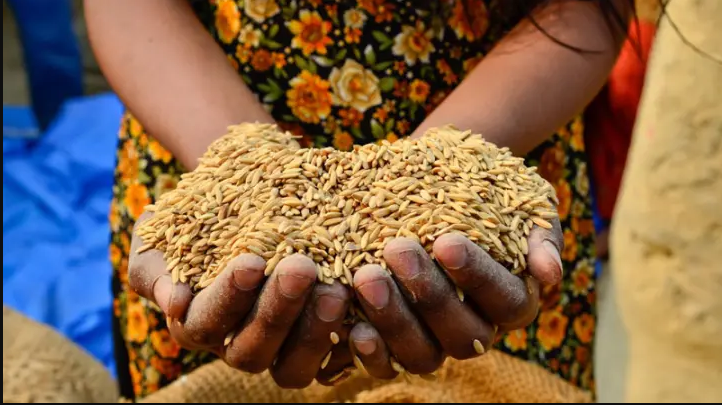
Indian Farmers’ Organizations Urge Government to Stand Firm on Food Security at the WTO

Indian Farmers' Organizations Urge Government to Stand Firm on Food Security at the WTO

July 23, 2014

New Delhi, 23 July 2014 — In a statement released ahead of the WTO General Council meeting tomorrow, farmers’ organizations in India called upon the Indian Government to stand firm on linking the Food Security proposal with the Trade Facilitation Agreement in WTO. Farmers’ leaders expressed shock over the Chair’s summary of the G 20 trade ministers meeting which was held on July 19 at Sydney. The Chair’s summary was fully silent over the food security proposal of the Bali Declaration, while it referred specifically to the Trade Facilitation Agreement. Thus “the G20 is increasingly turning to fixing the interest of developed countries by ignoring paramount concerns for people in developing countries and in least developed countries”, the farmers’ groups claimed.

Yudhvir Singh, leader of Bharatiya Kisan Union (BKU), one of the largest farmers organizations in India, said that, “in the backdrop of rising costs and extremely volatile global market prices, to fulfil the constitutional obligation of food security to its people, and also to ensure the livelihood security of producers, the Government of India needs to sustain and increase domestic agricultural production through price support, procurement and other measures to achieve self-sufficiency in food production, across different food grains. This is all the more important in the context of hundreds of thousands of farmers committing suicides in desperation”.

Kavitha Kuruganti, of Alliance for Sustainable & Holistic Agriculture (ASHA) said, “the Government of India lost a historical opportunity in correcting deep-seated WTO wrongs in the Bali Ministerial. At least now, they need to stand firm on our sovereign policy space related to food and livelihood security, and sustainable development pathways. Indian government at that time settled for a temporary solution with so called ‘peace clause’. Lack of progress towards a ‘permanent solution’ vindicates our apprehensions. At this point of time, the government should not buckle under any international pressure. It should remain firm in its position”.

Naresh Sirohi of BJP Kisan Morcha added,”India has currently taken a position to block the ratification of the TFA unless other elements of the Bali Outcome including permanent solution on the food security proposal and the LDC package are advanced. However we are hearing conflicting reports of India being ‘fully committed to the (Bali) package’. This clearly gives an impression that India may agree to the finalization of protocol on trade facilitation without the finalization of Doha Round especially on the issue of food security, which is against the principle of the single undertaking”.

Vijoo Krishnan of All India Kisan Sabha (AIKS) said that, “we are alarmed over government’s recent policy to freeze agricultural subsidies and to reduce public – food stockholding that will endanger food security and push Indian farmers out of agriculture. The government has to reverse it at national level and protect its policy space at WTO to provide production support to its farmers”.

In the context of G-20 Chairs summary, Indian farmers statement;

  • Sought clarification from the Government of India whether it has moved away from its earlier stand.
  • Called upon the Government not to buckle down under the pressure from USA, the EU and other developed countries and not to dilute its position of linking trade facilitation with food and livelihood security and by pushing a permanent solution to the G-33 Food Security Proposal.
  • Called upon the Government of India to use current negotiations to correct fundamental WTO wrongs, to build up and lead a coalition /alliance of like-minded countries to collectively secure safeguards for sovereign development policy space, food security and the livelihood concerns of farmers and its people.
  • Urged the government to take a proactive role in building such alliances as India did in building G-20 and G-33.

For more information please contact Yudhvir Singh at 098-681-46405 or Naresh Sirohi at 098-996-00011.

The Government should Clarify its Stand on Food & Livelihood Security and Trade Facilitation at WTO Negotiations

In the context of the recent WTO negotiations, we the undersigned farmers’ organisations express our disappointment on the Chair’s Summary of the G-20 trade ministers meeting. The Chair’s summary refers specifically to the Trade Facilitation Agreement (TFA) of the Bali Outcome but does not refer to the food security proposal, which is of paramount importance for the people of India.

Further, the Chair’s summary is fully silent on the livelihood concerns of farmers and other affected people in developing countries. This clearly shows that G20 is increasingly turning to fixing the interest of developed countries and totally ignoring the livelihood concerns of people in the developing countries and least developed countries.

Agriculture is the backbone of the Indian economy. Food security in India rests heavily on the Public Distribution System (PDS) and the PDS itself cannot be operated unless farmers are given enough support so that they can continue to produce. In the context of rising costs and extremely volatile global market prices, and to fulfil the constitutional obligation of food security to its people, the Government of India needs to sustain and increase domestic agricultural production through price support, procurement and other measures to achieve self-sufficiency in food production, across different food grains at that. This is all the more important in the present context of deep agrarian crisis manifesting itself in hundreds of thousands of producers committing suicides in desperation.

At the Bali ministerial, the Indian government had sought to secure such subsidies to farmers through the G-33 Food Security Proposal. However due to bungled negotiations, the nation settled for a Peace Clause which allows such subsidies only for a temporary period while the developed countries pushed the TFA which is a permanent agreement. We also bound ourselves under too many conditions in “freeze clauses”. In fact, many of us clearly pointed out that India has chosen to miss a historical opportunity to correct deep-seated WTO wrongs. We were however promised by the Indian government that they will push for a permanent solution to the food security proposal.

India’s primary interest, both domestically and globally, has to be the protection of agricultural producers’ livelihoods and the domestic production of food in order to meet the right to food of its people. Unfortunately the recent policy stance by the government is raising alarm as agricultural subsidies are being frozen and public food-stockholding is being progressively reduced, both of which will endanger food security of the country and push farmers out of agriculture, that too at a time when other sectors are not able to provide employment for the displaced.

India has currently taken a position to block the ratification of the TFA unless other elements of the Bali Outcome including permanent solution on the food security proposal and the LDC package are advanced. In a statement at WTO, India’s Ambassador stated that, “till we have an assurance and visible outcomes which convince developing countries that Members will engage in negotiations with commitment to find a permanent solution on public stock holding and all other Bali deliverables, especially those for the LDCs, India will find it difficult to join the consensus on the Protocol of Amendment.”

However we are hearing conflicting reports of India being “fully committed to the (Bali) package”. This clearly gives an impression that India may agree to the finalization of protocol on trade facilitation without the finalization of Doha Round especially on the issue of food security, which is against the principle of the single undertaking.

In the context of the G-20 Chair’s summary and various conflicting newspaper reports;

  • We seek clarification from the Government of India whether it has moved away from its earlier stand.
  • We call on the Government of India not to buckle down under the pressure from USA, the EU and other developed countries and not to dilute its position of linking trade facilitation with food and livelihood security and by pushing a permanent solution to the G-33 Food Security Proposal.
  • We call upon the Government of India to use current negotiations to correct fundamental WTO wrongs, to build up and lead a coalition /alliance of like-minded countries to collectively secure safeguards for sovereign development policy space, food security and the livelihood concerns of farmers and its people. We urge the government to take a proactive role in building such alliances as India did in building G-20 and G-33.

Endorsed by:

Alliance for Sustainable & Holistic Agriculture (ASHA)
All India Kisan Sabha (AIKS)
Bhartiya Kisan Union (BKU), Delhi
Bhartiya Kisan Union, UP
Bhartiya Kisan Union, Haryana
Bhartiya Kisan Union, Punjab
Bhartiya Kisan Union, M.P.
Bhartiya Kisan Union, Himachal Pradesh
Bharatiya Krishak Samaj (BKS)
BJP Kisan Morchha
Desi Bihan Surakkhya Mach, Odisa
Green Brigade
Karnataka Rajya Ryotha Sanga (KRRS), Karnataka
Kerala Coconut Farmers Association (KCFA), Kerela
Maharashtra Shetkari Sangathan
Paschima Odisa Krisuk Sangathan Samanaya Samiti
Tamil Nadu Farmers Association, Tamil Nadu
Thalaanmai Uzhavar Iyakkam, Tamil Nadu
Thamizhaga Vivasayigal Sangam, Tamil Nadu

Read More

For a meaningful AEPF11

For a meaningful AEPF11

April 30, 2014

The AEPF Working Group of the Asienhaus drafted some general thoughts about „AEPF might look like“ and five texts elements (teaser) to initiate the debate, which are related to some of the thematic clusters of the Save the Date-Message. We do hope that this is useful for the further debate on the announcements of the Thematic Clusters.

Cheers, Uwe

Some thoughts about AEPF and how an AEPF11 might look like

People from Asia and Europe come together. There are activist from social movements, from civil society organizations, from people’s organizations and scientists, regardless of origin, age, gender, color or music taste. They discuss equally common issues, they agree on common struggles, they learn from each other and listen. In the end, they define common goals and make plans how to collaborate in the future. We think this is more or less what a perfect AEPF is about.

In the last AEPFs we discussed a lot, but the perspective to work on common issues was often missing. Only few new initiatives started at AEPF, the main focus was on sharing a status quo or a vision of a single person or organization. The main reason for this, in our opinion, is that most of the panels and workshops were presenting a “how it is”, a status quo, in the fields of trade, environmental, social or human rights issues. There were only few workshops intended to iniative “follow ups”. The result was, that many country cases were presented, but only a few workshops really worked out “how we will work together in the future on the issues”.

As a result, most of the workshops and panel discussions were quite similar to the panel discussions and workshops held already two years before. The issues were often the same, so were the organizations and presentations / lecturer. We missed to think about some important questions: What do we want from our partners in Asia / Europe? Which struggles are really common struggles in the hosting country, in Asia and in Europe?

The AEPF was more or less a showcase for organizations presenting the issues they are already working on. But how can we attract more social movements from Asia and Europe? In times of social networks and mailing-lists, the sharing of information is less important than twenty or even ten years ago. Panels and workshops focusing on the same issues and on the present situations are dispensable. Such panels and workshops are often “praying to the converted”, most of us know already that situations regarding social, environment and human rights issues are getting worse.

We think, we should change the setting up of the AEPF. We should focus on some new questions. One starting point could be to focus on how we are working and how we want to work together:

What are lessons learned in our struggles over the last years?

What are results of civil society engagement – positive AND negative?

What did we learn from our successes and failures?

What can others in Asia / Europe learn? For a common, future work, what do we need from our colleagues in Asia / Europe?

Where are common struggles?

Where are connections in our fights to Asia / Europe?

What might be a common vision?

For an AEPF11 that matters! Also in the time until AEPF12.

Read More

AEPF9 – Reflections and lesson learning

AEPF9 – Reflections and lesson learning

February 8, 2013

The 9th Asia Europe People’s Forum (AEPF9) took place from 16 to 19 October 2012 in Vientiane, Laos. The AEPF9 tackled four major themes, or People’s Visions, which represent AEPF’s hopes for citizens of the ASEM member countries and the communities they live in. These were:

  • Universal Social Protection and Access to Essential Services;
  • Food Sovereignty and Sustainable Land and Natural Resource Management;
  • Sustainable Energy Production and Use; and
  • Just Work and Sustainable Livelihoods.

Preceding the 9th Asia-Europe People’s Forum, three preparatory workshops in South and South-East Asia on the four themes were held. In Laos, 17 provincial level consultations were held, which contributed to the development of a Lao People’s Vision Statement. These brought together the reflections, aspirations and visions of the Lao people from a wide range of citizen groups, civil society and mass organizations across Lao society; a first in both AEPF and Lao PDR history. They are an important contribution to future dialogues for more equitable development and seen as part of Laos’ commitment to strengthening partnerships for development and increasing people’s participation.

For each Forum the AEPF International Organising Committee (IOC) works in partnership with a National Organising Committee (NOC) from the host country. The IOC and NOC co-organize the Forum, taking shared responsibility. In Laos, as a result of cooperation and development framework policies in the Lao PDR and its role in also overseeing the organization of pre-post AEPF events also hosted in Laos (e.g. ASEP; Business Forum and ASEM) the Institute of Foreign Affairs (IFA) was the assigned government agency charged with facilitating the co-organizing process in close partnership with, Non Profit Associations (NPAs), International Non-Governmental Organizations (iNGOs) and the Mass Organizations (MOs). The NOC created six sub-committees in which representatives of the four partners (NPAs, MOs, iNGOs and IFA) worked in partnership on all aspects of the Forum. The cooperation and transparency between the IOC and all NOC partners was positive in the preparations for and during AEPF9.

At the Asia-Europe People’s Forum 9, there was a focus on developing clear strategies and practical recommendations to elected state representatives and to ourselves as active citizens.

Following the AEPF9, organizers and participants when questioned characterized the AEPF9 as a success albeit with some concerns about whether some participants from Laos were able to participate as fully as wished. With 948 participants from 47 countries: 24 in Europe and 23 in Asia, including Laos – the hosting country, this event was without a doubt the largest civil society event ever organized in the Lao PDR.

The AEPF International Organising Committee has a taking stock process which looks at the legacy of each Forum, reflects on its achievements, successes, strengths and areas which could have been improved. It integrates this reflection and learning into its future plans and actions. We have been undertaking this process as part of our feedback to supporters and donors. This has fed into our reports on AEPF9. These reports were completed by mid-December.

AEPF9 – core activities and results

AEPF9 was a catalyst for more contacts and links between Asia and Europe based networks and organisations and has increased collaboration and joint activities. People have been able to see that they are not alone in their struggles and the type of challenges that they are facing.

AEPF9 consolidated campaign and advocacy networks that were able to evaluate, plan and renew their strategies on areas including:-

  • Just trade and campaigns against Asian Free Trade Agreements with the EU
  • Campaign for Universal/ Transformative Social Protection and Access to Essential Services
  • Campaign on Climate Justice and Food Sovereignty
  • Water Justice Network
  • Campaign for the Dismantling of Corporate Power
  • Migrant Networks in Asia and Europe
  • Peace and Security

The AEPF9 also enabled the establishment of new advocacy networks including an Asia-Europe anti-nuclear power network and the Asian and European Network on Debt.

The AEPF9

  • strengthened and consolidated cross regional networks of civil society organisations and social movements from Europe and Asia, with enhanced capacity to engage more effectively in Europe – Asia relations and within European institutions.
  • was a well-attended, dynamic, popular and influential and contributed to and influenced the ASEM process.
  • agreed a Final Declaration containing key alternative policy options on sustainable energy use and production, trade and investment, just work and social protection, food sovereignty and environmental justice was developed in a participatory way and adopted by participants. It was shared with ASEM9 delegates and with some national government bodies after the Summit.
  • enabled closer working relations between the AEPF and Trade Unions and, through this, a direct link with ASEM Labour Ministers Meeting
  • generated great interest with being part of the AEPF expressed in the significant number of registered workshops
  • strengthened and consolidated cross regional networks of civil society organisations and social movements from Europe and Asia, with enhanced capacity to engage more effectively in Europe – Asia relations and within European institutions.
  • enabled the involvement of a wide range of Lao civil society organisations and citizens in AEPF9.
  • enabled the first inclusion of Lao NPAs in the AEPF and wider inclusion of Burmese and Cambodian NGOs.
  • strengthened participation of European CSO actors from the new European social movements in the AEPF
  • was a catalyst for a strong dynamic process in various countries during the run up to the AEPF through the regional preparatory meetings in South and South-East Asia

Developments in Laos since the AEPF reflection – concerns and responses

The primary focus of each AEPF is to strengthen and consolidate cross regional networks of civil society organisations and social movements from Europe and Asia. However each Forum is also an opportunity for the host country and for civil society organisations and social movements in that country. There were specific commitments for AEPF9 that related to organisations in Laos which formed part of the agreed plans for AEPF9. These included:-

  • to provide a platform for Lao CSOs to engage on Asia-Europe relations and ASEM and to build relations with CSOs, especially Asian.
  • to enable a range of Lao and Laos based organisations to be able to participate in and contribute to the range of discussions, workshops and forums that will take place during the AEPF9
  • provide Lao civil society with opportunities to form tangible links with Asian civil society and parliamentarians.
  • joint collaboration and relationship building between CSOs – through working together, to develop common proposals and …to develop common platforms for future collaboration

Overall the AEPF9 was hoped to contribute to future dialogues for more equitable development and was seen as part of Laos’ commitment to strengthening partnerships for development and increasing people’s participation in them.

The 17 provincial level consultations which contributed to the development of a Lao People’s Vision Statement brought together Lao civil society organisations, mass organisations and provincial government representatives and provided a platform for stronger partnerships for development after AEPF9. There was also a broad involvement of members of a range of Lao organisations in the Forum itself. These achievements both contributed to our statement that AEPF9 had been a success, in this case from the perspective of Lao organisations and civil society.

This assessment was tempered by some concerns that in a number of workshops and events there had been excessive participation by representatives of the Lao Government which had limited the dialogue and restricted the space for some Lao participants to contribute to the workshops. This was linked to partial translation of presentations and discussions into Lao in some workshops. There was also concern about the harassment of some participants. There were also concerns that the final version of the excellent Lao People’s Vision was never finally agreed though fully supported and approved by Lao civil society organisations. Its distribution was also restricted by representatives of the Lao government during the AEPF9 itself. These concerns were shared in the joint evaluation meeting of the Lao and IOC organisers on the day after the conclusion of the Forum.

Post-AEPF9

Since the completion of our assessment at the beginning of December we have become aware of changes in Laos. These have directly related to people in Laos who had been co-organisers of AEPF9 and involved in the Lao National Organising Committee. These include:-

  • The ‘disappearance’ of Sombath Somphone on December 15th 2012. Sombath Somphone was the co-chair of the AEPF9 Lao National Organising Committee, a key note speaker during the Opening Day, one of the co-ordinators of the Lao People’s Vision and the Provincial Consultations. He also enabled the highly acclaimed ‘Happy Laos’ film which was shown at the closing of the AEPF9. Sombath is a highly respected member of Lao civil society– well known for his work promoting education and sustainable development. He was taken away in a truck by unknown persons after being stopped by police in the Lao capital, Vientiane on 15 December 2012. Nobody has seen or heard from him since.
  • The expulsion from Laos with 48 hours’ notice of Anne-Sophie Grindroz, the Country Director of Helvetas. Anne-Sophie Grindroz was an active member of the Lao National Organising Committee for the AEPF9 and her organisation was a Lao co-organiser of a number of workshops held during the Forum. She had also been involved in the Land Issues Working Group amongst many other sustainable development related activities.
  • An increasing perception that the ‘spaces’ for dialogue, discussion and debate on how to achieve more sustainable economic and social development in Laos are becoming constricted. The climate of positive and constructive dialogue that was a part of AEPF9 is felt to have dissipated.
  • There have also been an increasing number of reports of harassment at the local level of participants in the AEPF9 who have been taking forward initiatives to promote sustainable development. This is of great concern to us.

As a result, due to these Post-AEPF9 events in Laos, the IOC of the AEPF is compelled to state that the legacy of the AEPF9 in Laos is in great jeopardy. The lived reality for many people in Laos today is in sharp contrast to the rhetoric of the Vientiane Declaration on Strengthening Partnership for Peace and Development agreed at the end of ASEM9.

There does not appear to be a secure environment that encourages learning and reflection, or one that provides space for open, respectful, diverse and constructive debate.

This is of great concern to us and we sincerely urge that positive measures and actions are taken to ensure that the agreed and stated commitment of AEPF9, as widely shown on posters all around the AEPF9 venues,

“to enable a secure environment that encourages learning and reflection and provides space for open, respectful, diverse and constructive debate. We support harmony, compassion and understanding, whilst recognizing the strength of diversity and solidarity for peaceful and sustainable development.”

becomes a lived reality for people committed to People’s Solidarity against Poverty and for Sustainable Development in Laos.

The IOC of the AEPF calls on the Government of Laos to sincerely and accountably take forward their commitments to enable space for open, respectful, diverse and constructive debate including for organisations and individuals who participated in the AEPF9 and preparatory consultations. Until this happens the claims of the success of the AEPF9 with respect to civil society and progress towards sustainable development in Laos will not be possible and would be inappropriate.

Read More

Urgent Appeal of Parliamentarians across Asia and Europe for Mr. Sombath Somphone

Urgent Appeal of Parliamentarians across Asia and Europe for Mr. Sombath Somphone

February 5, 2013

February 5, 2013
His Excellency
Thongsing Thammavong
Prime Minister
People’s Democratic Republic of Laos

Dear Excellency,

Re: Request urgent investigation into the disappearance of Mr. Sombath Somphone

We, members of parliament across Asia and Europe, write to you deeply concerned about the safety and well-being of Mr. Sombath Somphone one of the most prominent Lao co-organizers of the Asia Europe People’s Forum 9, the founder and former Director of PADETC and one of the most respected and influential voices for sustainable people-centred and just economic and social development in Laos as well as in Asia.

Mr. Sombath Somphone has been missing since about 5 pm on Saturday December 15th 2012. His wife and colleagues last saw Mr. Sombath Somphone on December 15 at 5 pm when he left the PADETC office in Vientiane to go home. He left the office in his own car; his wife was in another car. He did not reach home and his family has had no news from or about him since then.

We are concerned about his safety, his state of health and his well-being.

We are aware that the International Organising Committee of the Asia Europe People’s Forum has worked intensively with Mr. Sombath Somphone over the last year. His contribution to the successful Asia Europe People’s Forum 9 in Vientiane on the 16-19 October was extremely significant, widely recognized and deeply respected. In addition he is a highly respected educationalist, inspiration for sustainable development and a recipient of the prestigious international Magsaysay Award for Community Leadership in 2005. He has dedicated his life to sustainable development and poverty reduction in the Lao PDR, and has contributed positively to numerous international processes, including the AEPF9. Mr. Sombath is an inspiration to development practitioners all over the world.

We are deeply concerned for Mr. Sombath’s safety and well-being and his disappearance is cause for great alarm.

We urge the Lao Government to immediately and urgently initiate an investigation into Mr. Sombath’s disappearance. And, we call on the government to undertake all actions necessary to ensure his immediate safe return to his family.

Yours sincerely,
SIGNATURES

AUSTRIA

  • Petra Bayr, Social Democratic Party
  • Efgani Dönmez , Green Party
  • Judith Schwentner, Green Party
  • Tanja Windbüchler-Souchil, Green Party
  • Wolfgang Zinggl, Green Party

AUSTRALIA

  • Lee Rhiannon, Australian Greens

BELGIUM

  • Céline Delforge (Parliament of the Brussel’s Region), Ecolo-Groen

CAMBODIA

  • Son Chay (Party Whip) Sam Rainsy Party

GERMANY

  • Thomas Gambke, Group Alliance 90/ The Greens
  • Annette Groth (Human Rights Spokesperson of the Parliamentary Group), Die Linke
  • Heike Hänsel (Spokesperson for Development Policy of the Parliamentary Group), Die Linke
  • Wolfgang Gehrke (Foreign Policy Speaker of the Parliamentary Group), Die Linke
  • Stefan Liebich, Die Linke
  • Frithjof Schmidt, Vice-Chair of the Parliamentary Group Alliance 90/ The Greens

INDONESIA

  • M. Hanif Dhakiri, Nation Awakening Party (PKB)
  • Budiman Sudjatmiko, Gedung DPR/MPR
  • Lily Chadidjah Wahid, Partai Kebangkitan Bangsa (PKB)

MALAYSIA

  • Chong Chieng Jen, Democratic Action Party
  • Tian Chua, Parti Keadilan Rakyat
  • Teo Nie Ching, Democratic Action Party
  • Ngeh Koo Ham, Democratic Action Party
  • M Manoraharan, Democratic Action Party
  • Tony Pua, Democratic Action Party
  • Charles Santiago, Democratic Action Party
  • Ramakrishan Suppiah, Democratic Action Party
  • Liew Chin Tong, Democratic Action Party

NETHERLANDS

  • Tuur Elzinga (Senator), Socialist Party

PHILIPPINES

  • Walden Bello, Akbayan
  • Teddy Brawner Baguilat, Liberal Party
  • Arlene Bag-ao, Akbayan
  • Jorge Banal, Liberal Party
  • Bernadette Herrera-Dy, Bagong Henerasyon
  • Lorenzo Tanada III, Liberal Party

SCOTLAND

  • Alasdair Allan, Scottish National Party

SPAIN

  • Laia Ortiz Castellví, G.P. La Izquierda Plural

SWEDEN

  • Jens Holm, Swedish Left Party

SWITZERLAND

  • Francine John-Calame, Green Party
  • Liliane Maury Pasquier, Social Democratic Party
  • Luc Recordon , Green Party
  • Maria Roth-Bernasconi, Social Democratic Party
  • Geraldine Savary , Social Democratic Party

THAILAND

  • Veeravit Gongsakdi, Senator
  • Prasarn Marukpitak, Senator
  • Sumol Sutaviyawat, Senator
  • Somchai Swangkarn, Senator
  • Rosana Tositrakul, Senator
  • Trungjai Buranasomphob, Senator

EUROPEAN PARLIAMENT

  • Lothar Bisky, MEP, GUE/NGL Group (Germany)
  • Nikolas Chountis, MEP, Member of the Bureau GUE/NGL Group (Greece)
  • Cornelia Ernst, MEP, Member of the Bureau GUE/NGL Group (Germany)
  • Mikael Gustafsson, MEP, Vice Chair GUE/NGL Group,
  • Chair Committee on Women’s Rights and Gender Equality (Sweden),
  • Thomas Händel, MEP, Member of the Bureau GUE/NGL Group (Germany)
  • Jürgen Klute, MEP, GUE/NGL Group (Germany)
  • Barbara Lochbihler, MEP, Group of the Greens/European Free Alliance
  • Chair of Subcommittee on Human Rights (Germany)
  • Sabina Lösing, MEP, GUE/NGL Group (Germany)
  • Marisa Matias, MEP, Member of the Bureau GUE/NGL Group (Portugal)
  • Willy Meyer, MEP, Member of the Bureau GUE/NGL Group (Spain)
  • Paul Murphy, MEP, Member of the Bureau GUE/NGL Group (Ireland)
  • Sirpa Pietikäinen, MEP, Group of the European People’s Party (Finland)
  • Niccolò Rinaldi, MEP, Vice Chair Group of the Alliance of Liberals and Democrats for Europe (Italy)
  • Helmut Scholz, MEP, GUE/NGL Group (Germany)
  • Søren Bo Søndergaard, MEP, Member of the Bureau GUE/NGL Group (Denmark)
  • Alda Sousa, MEP, GUE/NGL Group (Portugal)
  • Marie-Christine Vergiat, MEP, GUE/NGL Group (France)
  • Sabine Wils, MEP, GUE/NGL Group (Germany)
  • Tatjana Zdanoka, MEP, Group of the Greens/European Free Alliance (Latvia)
  • Gabriele Zimmer, MEP, Chair GUE/NGL Group (Germany)

COPY FURNISHED

  • Minister of the Prime Minister Office
  • Minister of Foreign Affairs, Lao PDR
  • Ministry of Public Security Lao PDR

Lao National Assembly VII, Members of the Standing Committee

  • Pany Yathotu, President
  • Saysomphone Phomvihan, Vice-President
  • SomphanhPhengkhammy, Vice-President
  • Douangdy Outhachak, Member of the Standing Committee, President of Ethnic Affairs Committee
  • Davone Vangvichit, Member of the Standing Committee, President of Law Committee
  • Koukeo Akkhamounty, Member of the Standing Committee, President of Foreign Affairs Committee
  • Souvanpheng Boupphanouvong, Member of the Standing Committee,
  • President of Economics Planning and Finance Committee
  • Phonethep Pholsena, Member of the Standing Committee, President of Cultural and Social Affairs Committee
  • Vilay Douangmany, Member of the Standing Committee, President of National Defence and Security Committee
  • Ounkeo Vouthirath, Member of the Standing Committee, chief of the Cabinet
  • ASEAN Secretary-General Le Luong Minh
  • Ambassador David Lipman, Head of Delegation of the European Union to Thailand, Cambodia, Laos and Myanmar, and EU Representative to the Ninth Asia Europe People’s Forum in Vientiane
Read More

Statement of Rep. Walden Bello, Member of the House of Representatives of the Republic of the Philippines

Statement of Rep. Walden Bello, Member of the House of Representatives of the Republic of the Philippines

January 15, 2013

We are members of a delegation of ASEAN parliamentarians that visited the Lao Peoples’ Democratic Republic to investigate the disappearance of Sombath Somphone, the prominent Lao leader of civil society from January 13 to 15. We went at the request of the Asia-Europe People’s Forum (AEPF)

The delegation was assembled in 10 days’ time owing to the urgency of the matter. Despite the short notice, high officials of the Lao PDR met with us, and we are very grateful for this. We had a very frank exchange of views in a cordial atmosphere.

We told the officials we met with that the disappearance of Sombath is an ASEAN concern because Sombath is an ASEAN figure whose work has touched the lives of many people in Laos and other countries in ASEAN. His work on rural development is a model emulated throughout the region. Moreover, at a time when ASEAN is coming together as a real community in the eyes of the world, his disappearance reflects badly not only on Laos but on the whole ASEAN community.

The officials we met acknowledged that the disappearance of Sombath is a blow to the reputation of the Lao PDR and that it could not have come at a worse time, coming on the heels of the country’s joining the World Trade Organization and hosting the Asia-Europe Leaders Meeting (ASEM). They also all acknowledged that Sombath is an important civil society leader who has contributed much to Laos’ development working alongside government, with many of them saying they knew him personally. They also noted the special responsibility of the government to solve Mr. Sombath’s disappearance since the Lao PDR has just signed the Convention on the Protection of All Persons from Enforced Disappearance, being the fourth country in Asia to do so.

One of the Lao leaders we met, Mr. Phoungsavath Boupha, President of the National Committee for Human Rights in the Office of the President, acknowledged that Sombath’s disappearance is not the first case of disappearance in Laos. He cited the case of the sister of the wife of the former ambassador of the Lao PDR to Indonesia who vanished five years ago and has not yet been found. We stressed to the officials we met that this case shows the importance of acting swiftly to find the disappeared, for the longer he or she is not located, the greater the chances that he will no longer surface.

We are very grateful for the meetings and the frank exchange of views, but we are from satisfied with the answers we got, and we told this to our hosts.

We were told that after a month of investigation, the only thing that has been established is that the police had nothing to do with the disappearance. We told them that this was not credible and that if we accepted this as fact as to the progress of the case, we would ourselves lose credibility.

We were told that Sombath was kidnapped, but we said if this was done by criminal elements, the family would by now have received a demand for ransom. No such note specifying an amount has been received. We received no satisfactory answer to this.

We noted discrepancies in our hosts’ accounts of the circumstances of the abduction. Most of the officials we met said that there was no evidence that Sombath got into the pickup truck that appeared in the CCTV footage after his jeep was stopped. Yet Mr. Sakayane Sisouvong, the Permanent Secretary of the Ministry of Foreign Affairs, said Sombath voluntarily boarded that vehicle.

Considering the experience of other countries in ASEAN where abductions have taken place, like the Philippines and Indonesia, we asked about the possibility that some section of the government or rogue elements in the government might have carried out an abduction that the rest of the government did not know about. This query did not elicit an answer from the officials we spoke to, except from Permanent Secretary Sisouvong, who said it was good suggestion. We expressed our hope to him that the authorities would indeed look into this angle.

We asked if Sombath’s disappearance might have something to do with the Asia Europe People’s Forum and the expulsion of Anne-Sophie Grindroz, the country director of the Swiss agency Helvetas. All we got in answer to this question was that Anne-Sophie was acting against Laos’ interests. There was a denial that Sombath’s disappearance was connected to her expulsion or the holding of the AEPF.

In short, our visit raised more questions than answers. It is indeed possible that the officials we met, high though they are in the government and National Assembly, do not know what happened to Sombath. Thus, it is all the more important that the highest state authorities direct the police, security, and intelligence agencies to focus their investigation on all possibilities, including the possibility that Mr. Sombath may have been abducted by elements, possibly rogue elements, within the government itself, a line of investigation that we strongly suggested and which was accepted as a good suggestion by the Permanent Secretary of Foreign Affairs.

In conclusion, we would like to thank the government and the National Assembly of the Lao PDR for meeting and having a frank exchange of views with us. We especially appreciate the fact that our visit was not taken as an intrusion into the sovereignty of the Lao PDR but as a legitimate expression of fraternal ASEAN concern, and that our suggestion that the objects of investigation include possible sections or rogue elements in the government was accepted as a viable course of action. Let me reiterate what both sides repeated throughout the talks: that the immediate surfacing of Mr. Sombath is in the interest of all parties, of Mr. Sombath and his family, of the Lao PDR, and of ASEAN.

Read More

Our Deep Concern over the Disappearance of Mr. Sombath Somphone

Our Deep Concern over the Disappearance of Mr. Sombath Somphone

December 19, 2012

Statement from The International Organising Committee of the Asia Europe People’s Forum

The International Organising Committee of the Asia Europe People’s Forum is compelled to share as widely, vocally and publicly as possible our deep concern for the safety and wellbeing of Mr. Sombath Somphone one of the most prominent Lao co-organizers of the Asia Europe People’s Forum 9 (AEPF9), the founder and former Director of PADETC and one of the most respected and influential voices for sustainable people-centred and just economic and social development in Laos.

Mr. Sombath Somphone has been missing since about 5 pm on Saturday December 15th 2012.

We urge the Lao Government to immediately and urgently initiate an investigation into Mr. Sombath’s disappearance.

His wife and colleagues last saw Mr. Sombath Somphone on December 15 at 5 pm when he left the PADETC office in Vientiane to go home. He left the office in his own car; his wife was in another car. He did not reach home and his family has had no news from or about him since then. His family checked all the hospitals later the same day and on Sunday December 16, but none of the hospitals had admitted him. His car—an open-top Jeep–has also not been found. His family has filed a report with the police. His family and friends have continued searching for Mr. Sombath Somphone, with no results. Where he is now, his safety, his state of health and his wellbeing are all unknown.

As members of the International Organising Committee of the Asia Europe People’s Forum we have worked intensively with Mr. Sombath Somphone over the last year as is the co-chair of the Lao National Organising Committee for AEPF9. His contribution to the successful Asia Europe People’s Forum 9 in Vientiane on the 16-19 October was extremely significant, widely recognized and deeply respected. The film he has inspired, ‘Happy Laos’, closed the forum. In addition he is a highly respected educationalist, inspiration for sustainable development and a recipient of the prestigious international Ramon Magsaysay Award for Community Leadership in 2005. He has dedicated his life to sustainable development and poverty reduction in the Lao PDR, and has contributed positively to numerous international processes, including the AEPF9. Mr. Sombath is an inspiration to development practitioners all over the world.

We are deeply concerned for Mr. Sombath’s safety and well-being and his disappearance is cause for great alarm.

We urge the Lao Government to use its extensive resources to conduct an immediate and thorough investigation into Mr. Sombath’s disappearance, and to make every effort to ensure his safety and freedom.

We are urging all relevant national and international institutions, Parliamentarians from ASEM member countries, people and organisations who have participated in and been part of the Asia Europe People’s Forums since 1996 to join us in urging the Lao Government to investigate Mr. Sombath’s disappearance, and to make every effort to ensure his safety and freedom.

The International Organising Committee of the Asia Europe People’s Forum,

  1. Christina Ebro, Institute for Popular Democracy, The Philippines cgebro@gmail.com;
  2. Maris dela Cruz, Institute for Popular Democracy, The Philippines, sirmallet@gmail.com;
  3. Charles Santiago, Member of Parliament, Malaysia, charlessantiago@gmail.com;
  4. Nguyen Van, nghoangvan@hotmail.com;
  5. Yap Swee Seng, Forum Asia, yap@forum-asia.org;
  6. Riza Damanik, Asia Europe People’s Forum Committee of Indonesia, riza.damanik@gmail.com;
  7. Dottie Guerrero, Focus on the Global South, Thailand, d.guerrero@focusweb.org;
  8. Willy D’Costa, Indian Social Action Forum, willyindia@gmail.com;
  9. Tove Selin, Finnish Asia Europe People’s Forum Committee, tove@xn.fi;
  10. Tom Kucharz, Ecologistas en Acción, Spain, agroecologia@ecologistasenaccion.org;
  11. Kalle Sysikaski, Finnish Asia Europe People’s Forum Committee sysikas@kaapeli.fi;
  12. Sally Rousset, French Asia Europe People’s Forum Committee, sally.rousset@wanadoo.fr;
  13. Klaus Fritsche, Asien Haus (German Asia Foundation, philippinenbüro, South-East Asia Information Center, Germany), klaus.fritsche@asienhaus.de;
  14. Pietje Vervest, Transnational Institute, pietje.vervest@tni.org;
  15. Andy Rutherford, Fresh Eyes – People to People Travel UK, andyfresheyes@gmail.com
Read More

A call for Action: toward a nuclear free world

A call for Action: toward a nuclear free world

November 6, 2012

Introduction:

The 9th Asia-Europe People’s Forum (AEPF9) Final Declaration calls the ASEM governments to build a nuclear free world. On “Sustainable Energy Production and Use”, the 5th “Key Recommendation” states: “Commit to progressing, with urgency, to a nuclear power free world. This will require decommissioning existing nuclear power stations, stopping the development of planned power stations and taking forward alternatives.”

During Vientiane AEPF9, an “AEPF No-Nuke Circle” was launched to act on this issue. Workshop participants came from nine Asian and European countries. Representatives of networks from other countries supported this initiative, even if they could not be present at the workshop because of simultaneously held meetings.

The following statement – the « Call for Action » – explains why we engage ourselves in the fight for a nuclear free word.

This statement can be endorsed by organizations, networks and individuals.

For endorsement, please write to: prousset68@gmail.com

At a time when the some of the advanced industrialized countries of North America, Europe and Japan have decided to phase out completely their nuclear energy programmes or reduce their dependence on nuclear energy for electricity production, the main markets for North American, European, Russian and Japanese suppliers of nuclear equipment are in Asia. China and India are the two countries with the most ambitious plans for expanding nuclear power generation. Many other countries are reconsidering or abandoning their plans to start nuclear power production. To bring about an end to nuclear energy programmes in Asia and Europe more than ever do we need a coordinated campaign among civil society activists and groups not only in the different countries of Asia but also similar alliances with civil society counterparts in Europe where popular disillusionment and opposition to nuclear energy has sometimes been successful in making governments change their nuclear power policies.

The AEPF therefore is an ideal venue for developing such a coordinated campaign. What follows is a statement of basic arguments for opposing nuclear energy in favour of environmentally appropriate use of renewable energy sources.

Our Stand

The promise’’ of nuclear energy in the 1950s which led to the development of civilian nuclear programmes for electricity generation in numerous countries around the world has been completely belied. Indeed, in the eyes of one expert Amory Lovins, the performance worldwide of civilian nuclear energy programmes has revealed it to be perhaps the single greatest failure of the industrial age! After over 60 years of experience the case against nuclear energy especially given its safety record is now overwhelming. The main arguments can be summed up under six basic categories – too little, too late, too secretive, too centralised, too expensive, too dangerous.

Too Little

Nuclear energy constitutes an ever declining proportion of world electricity generation whether measured in terms of capacity or output. It now accounts for less than 12% of world output. Of the world’s 430 odd existing reactors, even as some old reactors are having their life spans dangerously extended, considerably more reactors will be shut down over the next two decades than will be built. The proportion of electricity generated by nuclear power will go down even further. In 2009 the installed capacity in energy generation with “new” renewable sources (excluding large hydropower) worldwide surpassed nuclear power capacity for the first time. Since then the gap has got increasingly wider. Nuclear power is not the energy of the future! The claims made of a nuclear renaissance are false.

Too Late

The most recent and popular argument being made to promote the nuclear power industry is that it is a clean energy source and crucial for addressing the problem of global warming. However, nuclear power is not and cannot be clean given the long lasting and highly dangerous radioactive wastes it generates for which there is no long term safe storage process and for which short term storage processes cannot but carry some level of risk of unforeseeable and possible leakages due to circumstances/events/developments beyond control.

While it is true that nuclear reactors do not directly generate carbon emissions, the whole “nuclear fuel cycle”—from uranium mining to fuel fabrication to building, running and maintaining reactors, and managing and storing/reprocessing their wastes — produces a substantial amount of carbon dioxide. Therefore the eventual saving or carbon abatement from nuclear power is much less than from most renewable sources although it is more than from fossil fuel burning. However, even such a saving does not make it worthwhile to go in for nuclear power plants since the opportunity costs are so huge and the period of construction (usually 10 to 13 years) is so long that if the same amount of money was spent for establishing renewable energy sources, the amount of carbon emissions saved would not only be much greater but – and this is very important – the savings would take place much more quickly. Some expert studies conclude that for nuclear energy to make a significant dent in carbon emissions we would need to build close to one plant every fortnight for the next ten years!

Too Secretive

Given both its inherent dual-use character, i.e., its military potential in terms of generating fissile materials for bomb-making and the risks of leakages at various points in the construction and running of plants and in waste disposal, all civilian nuclear programmes are unavoidably far more secretive than is the case in other industries. All industries are subject to what organisation theorist Charles Perrow calls “normal accidents”. The nuclear industry is no exception. Full transparency about such events would undoubtedly raise great concerns and opposition among the population at large and be highly detrimental to the credibility of all those involved in preserving the nuclear programme – suppliers, operators, governments. The very nature of the industry demands that it must institutionalise deeply undemocratic mechanisms of non-transparency and non-accountability with respect to the wider public.

Too Centralised

Nuclear power only makes some sense if its role is connected to a highly centralised system of electricity generation and distribution and use which also means significant distribution and transmission losses, i.e accepted inefficiencies. For most developing and developed countries the only sensible approach is to develop a strongly decentralised system of energy production and use alongside existing grid systems since such a decentralised approach is both cheaper and far more compatible with the use of renewable energy sources and local surpluses in electricity generation can be fed into a network of local and regional grids and even into the national grid. Thus, renewable energies are creating many more jobs than nuclear.

Too Expensive

The full costs of nuclear power generation and distribution from the beginning of the fuel cycle to the end of waste disposal and storage are never properly calculated. Indeed, governments from France to Japan to others have always provided open or hidden subsidies of one kind or the other. Among the costs usually excluded in part or full from “levellised costs” or the cost per kilowatt hour produced by nuclear power plants, are the following: a) the cost of decommissioning the plant when its life span is over which is maybe one-third to one-half of the cost of construction itself. b) Not adding the costs, howsoever discounted over a prolonged period, of waste management and storage. c) The ‘real’ financing cost including interest payments made on borrowed capital and other charges associated with long construction periods. d) Costs are fast rising with new security requirements – and if they were not, it would mean that security is traded off against profits. c) The cost of insurance against accidents (including huge premium costs) if liability is absolute (as it should be) and of creating contingency funds for accidents causing economic, ecological and health damage.

Yet despite the partial or total exclusion of these elements, the costs stated by industry and publicised by the media are everywhere still higher than all other forms of energy production by fossil fuels and with most renewables. Even the most expensive of alternative energy sources today, namely solar energy, is already lower than the levellised costs of nuclear power in many scenarios and steady technical and scientific improvements are making solar energy progressively cheaper over time compared to nuclear power. The opportunity costs of nuclear energy are prohibitively uneconomical. This is the single most important reason why the private sector will not go in for nuclear power without assured subsidies and liability caps guaranteed by governments.

Too Dangerous

There are five kinds of dangers actual or potential.

  1. The release of ionising radiation and dangerous isotopes bound up with each step of the nuclear fuel cycle, endangering people in various countries from uranium mining to waste storage. These are invisible poisons, which produce cancers and genetic damage and against which there is no defence or cure.
  2. There is the insoluble problem of waste disposal. Present problems and dangers of waste disposal are partly rationalised by the pro-nuclear lobby as the other side of the coin of present benefits and services. But for future generations there are only the problems and dangers and no presumed benefits and services. Nuclear power is poisoning the earth.
  3. Accidents are normal in all industries. Consequences small or big always follow. But nuclear power is the sole mode of energy generation in the world, which is vulnerable to catastrophic accidents with enormous and unacceptable consequences. The health and environmental effects of nuclear accidents are of such a nature that they must be deemed unacceptable, although the scale of incidence can vary from small to big. Even if as claimed the probability of a major accident is low it is never zero and no one can give a precise measure of how low. But the consequences of a major accident are beyond measure and simply incalculable. Even absolute liability only means that the culprits behind the accidents will lose money while the actual victims of such accidents are innocent others who have to pay with their health and lives!
  4. Nuclear plants are potential targets for conventional assaults by state or non-state actors, and vulnerable to sabotage with huge consequences.
  5. The actual or potential military-related dual-use possibilities of civilian programmes means that if the world is serious about wanting to move towards complete disarmament of nuclear weapons then this must require the complete elimination of all civilian nuclear power programmes as well. As long as civilian nuclear power programmes exist, the threat of nuclear weapons proliferation exists.

The countries of Asia and Europe must give up on all or any civilian nuclear power programmes. Where such plants and fuel cycle activities exist, they should be phased out as quickly as possible never to be revived. Nuclear plants can be reconverted wherever possible into other environmentally friendly facilities for productive and employment generating activities.

AEPF initiative on nuclear industry will be articulated with ongoing campaigns for nuclear disarmament and for an overall socially and environmentally appropriate policy on energy.

AEPF “No-Nuke” Circle

For endorsement by organizations, networks and individuals, please write to: prousset68@gmail.com.

Read More

Final Declaration 9th Asia- Europe People’s Forum – Vientiane, Laos

Final Declaration 9th Asia- Europe People’s Forum – Vientiane, Laos

October 23, 2012

We, over 1,000 women and men, representing people’s organisations and citizens from Asia and Europe joined together from 16th to 19th October 2012 in Vientiane, Laos at the 9th Asia Europe People’s Forum under the title “People’s Solidarity against Poverty and for Sustainable Development: Challenging Unjust and Unequal Development, Building States of Citizens for Citizens”. The AEPF9 tackled four major themes, or People’s Visions, which represent AEPF’s hopes for citizens of the ASEM member countries and the communities they live in. These are:

  • Universal Social Protection and Access to Essential Services;
  • Food Sovereignty and Sustainable Land and Natural Resource Management
  • Sustainable Energy Production and Use; and
  • Just Work and Sustainable Livelihoods.

Preceding the 9th Asia-Europe People’s Forum we held three preparatory workshops in South and South-East Asia on our four themes. In Laos, 16 provincial level consultations were held which contributed to the development of a draft Lao People’s Vision Statement. These brought together the reflections, aspirations and visions of the Lao people from a wide range of mass and civil society organisations across Lao society. They are an important contribution to future dialogues for development and seen as part of the Laos’ commitment to strengthening partnerships for development.

At the Asia Europe People’s Forum 9 we focussed on developing strategies and recommendations to our elected representatives in our countries, and to ourselves, as active citizens.

We met at a time of major historical importance that has brought into sharp focus the drastic inequalities, injustices and poverty experienced by people across Asia and Europe. What is often presented as a ‘financial crisis’ is in reality part of a series of interlinked crises – food, energy, climate, human security and environmental degradation – that are already devastating the lives, and compounding the poverty and exclusion faced on a daily basis by millions of women, men and children across Asia and increasingly across Europe. The gap between the rich and the poor is widening, and access to resources, livelihood opportunities and basic services remain grossly unequal. The ASEM9 is an historic opportunity for ASEM governments to take the timely and decisive actions needed to address this.

There is a strong consensus among Asian and European citizens gathered at the AEPF9 that the dominant approach over the last decades – based around deregulation of markets, increasing power of multinational corporations, unaccountable multilateral institutions and trade liberalisation – has failed in its aims to meet the needs and rights of all citizens. We need to go beyond an analysis and response that focuses solely on short-term measures benefiting a few financial institutions and large corporations. There is a deep felt need and demand for change and for new people-centred policies and practices.

Despite the policy failures of trade liberalisation, market deregulation and privatisation, our governments continue to ignore the growing tangible consensus for fundamental policy change. Instead of fulfilling the needs of people and reinvigorating local economies, hundreds of billions of Euros have been mobilised to save the banks and financial system, while essential social services remain under-funded and are being dismantled in many parts of Europe.

Despite existing laws, regulations, standards and mechanisms, our governments have failed to prioritise human rights, environmental security and labour rights, over the profits of companies. The consequences of this corporate domination are experienced in the lives of millions of women, men and children across Asia and Europe. This has led to a hollowing out of democratic accountability as elites make decisions and implement policies with little or no scrutiny from citizens, creating the conditions for poverty, inequality, environmental devastation and growing social unrest.

Our governments and the citizens of Asia and Europe have the responsibility to transform our social, economic and political futures so that we can all live in peace, security and dignity. We all need to take responsibility to work together to create and implement the radical and creative solutions needed for people-centred recovery and change.

We therefore call upon the governments who are members of ASEM to implement people-centred responses to the current crises in an effective and responsible manner. Urgent need must be given to poor, excluded and marginalised people and governments must work with citizens to develop and implement policies that will lead to a just, equal and sustainable world, and more accountable and democratic institutions – based on respect for gender equality, our environment and our fundamental human rights.

The AEPF is a strategic civil society gathering of Asian and European social movements fighting poverty and inequality and working for social justice. The AEPF is grounded in the common desires of people’s organisations and social justice networks across Asia and Europe to open up new venues for dialogue, solidarity and action.

The following call to action is based on the recommendations from the many vibrant and exciting events that were held throughout these four days.

Call to Action – from the 9th Asia Europe People’s Forum
The 9th Asia Europe People’s Forum, representing citizens, people and social movements from Asia and Europe, urges ASEM and its member Governments to recognise the following issues, priorities and to take forward our recommendations:

A. Universal Social Protection and Access to Essential Services

Globally, only 20 percent of people have access to social protection- the coverage in nearly all Asian countries is even lower. In Europe, the welfare state and social contract have been systematically eroded by both national governments and European Union (EU) institutions in the name of market-driven policies and private profits.

Social protection and access to essential services are fundamental rights covering rights to work, adequate food, essential services and social security. States have the obligation to actively promote, protect and fulfil these rights. After 2015, following on from Millennium Development Goals, there is a new opportunity for governments to legislate for a comprehensive set of transformative social ‘indispensable to a life’ policies to promote universal social protection based on human and social rights.

A transformative social protection system is a broad package of commitments and services that includes social security, social assistance, labour rights and social services that covers the entire population in order to prevent and reduce poverty. It should protect individuals against risks of impoverishment in situations of sickness, disability, unemployment, old age, high healthcare costs, general poverty and social exclusion. It subscribes to principles of equality and non-discrimination, fosters organic solidarity, and contributes to human security and to the common good of humanity.

A transformative and universal social protection system must be implemented together with alternative national development strategies that restore the sovereign rights of states to chart a people-centred development that is just, democratic, and sustainable, reversing the neo-liberal policies of liberalisation, deregulation, and privatization.

Key Recommendations
We call on our governments to:

  1. Enact legislation and secure public finance for a social protection system that is rights-based and universal. This will enable basic social protection for all people including workers – informal and formal, paid and unpaid, women and men, including migrants. This social protection system covers fundamental rights vital to a life of dignity which include: The Right to Work (access to work guarantees, living wages and decent work according to ILO core standards, full employment with shorter working weeks), Food, Essential Services (access to universal and quality health and reproductive health care, education, water and sanitation, energy and affordable and decent public housing), Social Security (living pensions for the elderly and disabled, child subsidies), and insurance with guaranteed fair/living wage (against risks of unemployment, illness and agricultural calamities).
  2. Develop adequate fiscal policies that generate sufficient domestic funds for universal social protection. Appropriate tax regimes should effectively tax transnational corporations, rich individuals and large landowners rather than applying regressive taxation such as VAT. Our governments should introduce a Financial Transaction Tax, close tax havens and secret banking and cancel odious debts.
  3. Work through ASEAN to adopt a Social Agenda that will include the universalisation of social protection and the decommodification of all essential goods and services indispensable to life. Social protection should be under state authority and free for all people.
  4. Be parties to developing and agreeing a UN Charter on the Common Goods of Humankind that will establish the common ownership of resources, goods and services, which are essential to life; cooperative management by the international community must be adopted.
  5. Exclude TRIPS plus provisions in all bilateral/multilateral trade agreements especially provisions on data exclusivity and patent extension because of its direct impacts on public health and access to medicines. TRIPS plus provisions threaten and undermine governments’ authority to use the TRIPS flexibilities allowed them in favour of providing for affordable and accessible medicines for the majority. These flexibilities are even more important given the reality that out-of-pocket costs of medicines are increasing, with the poor in Asia often spending more than half of their income on medicines.
  6. Ratify and fully implement the UN Conventions on the Rights of Disabled People and mainstream disability concerns into local and national economic and social development; a focus should be placed on empowering people with disabilities and their organisations to ensure equal participation and full inclusion in all respects of life.
  7. Recognise the complex root causes of poverty and to ensure that all countries ensure that all citizens have the opportunity to have their voices heard, opinions respected and can participate in decision making that affects them, as well as in defining what it is those decisions need to be. This must include children and young people and it must go further than basic adherence to international legal instruments such as the Convention on Rights of the Child. It is critical that mechanisms are developed and implemented to provide opportunities for true participation at the local, national and global level to ensure that development is inclusive of all, including children, young people and the most vulnerable. These voices must be heard to ensure a move towards more just and people-centred services and development.
  8. Ensure and guarantee quality, basic education for all and fast track affirmative actions for marginalized children, youth and adults.
  9. Promote and support literacy and respect for local wisdom as the foundation for life-long learning. Finance fully-costed life long learning programmes that enable everyone regardless of age, sex and ethnicity to access opportunities throughout life through formal, non-formal and informal education.
  10. Ensure quality curricula in formal, non-formal and informal education that integrates participatory sustainable development, technical-vocational life, skills, self-determination and participation within the framework of Education for Sustainable Development (ESD). Learners should have a say on what quality learning means.
  11. Enhance positive cooperation between Civil Society Organisations, Governments and the private sector toward sustainable development.
  12. Support all citizens to take part in drafting and review of national development frameworks.
  13. Develop and promote adequate social protection mechanisms for indigenous peoples and ensure their access to essential services.
  14. Ensure a shift from corporate social responsibility to corporate social accountability that emphasizes diligence with its elements of prevention, protection, prosecution and reparation according to the Convention on the Elimination of All Forms of Discrimination Against Women (CEDAW) for human rights violations, including gender-based impacts and violence.
  15. Strengthen and implement safeguards policies and accountability mechanisms, including the dissemination of correct and complete information, free and prior informed consent, organization of meaningful community consultations, administer just compensation and actions that ensure the bodily integrity and social well-being of communities, especially marginalized groups such as women and minorities, to hold governments, corporations and international financial institutions accountable and ensure a development towards resilient, equitable, inclusive low carbon communities.
  16. Migrants must have the right to marriage, family, culture and political participation. This includes raising children according to their identity and culture. These rights ensure full participation in community life. One must also be able to keep one’s identity, unlike many migration policies, which promote assimilation.
  17. The Hague Convention on child custody must be recognized by all countries.

B. Food Sovereignty and Sustainable Land and Natural Resource Management

In response to the financial, economic, and ecological crises, a new wave of land, water and resource grabbing is occurring. Powerful international and domestic forces are pushing forward a new round of enclosures globally for both food and non-food purposes.

In Asia, land and resource grabbing is accelerating in the name of ‘development’. There is a growing body of evidence that these large-scale investments in agriculture and extractive industries are resulting in a cascade of negative impacts on rural livelihoods and ecologies, human rights, and local food security and food sovereignty.

In Europe, the Common Agricultural Policy (CAP), based on the international competitiveness of European agri-business, is forcing many farmers to exit agriculture. The EU’s bio-energy policies, most prominently the Renewable Energy Directive (RED), are diverting land used for food production for large-scale, monoculture, agro-fuel and agro-energy crop production. The EU’s trade policy, in particular the Everything But Arms initiative, has fuelled global land grabbing.

Banks, hedge funds and pension funds are betting on food prices in financial markets, causing drastic price swings in staple foods such as wheat, maize and soya. This speculation on food is driving up global food prices. Food speculation by banks and financial market traders must be regulated.

We are facing a global water crisis. Never has there been such pressure on water resources and such water scarcity. In many countries, the water crisis is manipulated by International Finance Institutions’ (World Bank and Asian Development Bank) drive to grab water and has resulted in the takeover of water resources and services by corporations and private companies. This situation encourages anti-poor policies, increasing the role for corporations in the water sector, and producing bigger pubic debts, which in the end do not necessarily ensure water provision, equitable access and efficiency.

Within the social movements, food sovereignty has prevailed as an alternative to the industrial agricultural model. Food sovereignty is based on the right of peoples to define their own food, agriculture, livestock and fishery systems, independent of international market forces. It is called for by farmers, peasants, pastoralists, fisher folk, indigenous peoples, women, rural youth and their allies all over the world.

Our common vision is therefore based on the principles of food and land sovereignty. Peasants, small-scale food producers, and rural populations should be able to decide their own development path.

Our health and the health of the earth and future generations depend on healthy soil, strong food communities and small-scale diversified farms. There are growing movements of young farmers and alternatives agriculture, which can provide solutions to many of the global challenges we are facing. To support these, we should promote local food systems and strengthen networks for farming with dignity, integrity and self-reliance.

Key Recommendations
We call on our governments to:

  1. Oppose land and resource grabbing and support the Human Right to Food. Implement the Voluntary Guidelines on Responsible Governance of Tenure of Land, Fisheries, and Forests. These Guidelines are an important first step in protecting the tenure rights of small-scale food producers and ensuring a more equitable governance of natural resources.
  2. Support the on-going process at the UN level of the recognition of the Rights of Peasants.
  3. Respect human rights in its trade, agricultural, energy, development, environmental, land and water policies. The EU should investigate the impact of its trade policies, such as the Everything But Arms agreement, which has evicted thousands of people from their land in some countries.
  4. Drop the agro-fuels targets under the Renewable Energy Directive.
  5. Support food sovereignty in Asia and Europe, including in the reform process of the EU’s Common Agricultural Policy.
  6. Invest in a coherent, progressive, publically funded rural development strategy. This investment should focus on the needs of small-scale food producers, rural women, and indigenous peoples. Local and national development plans must fully recognise the rights of local communities to sustainable livelihoods and food sovereignty. They should protect and respect people’s access to land, water and biodiversity. The Development Agenda must recognise that women traditionally have skills and knowledge for livelihoods that ensure food security for all.
  7. Respect the rights of indigenous peoples to their lands, territories and resources as the material, economic, social and cultural base for their collective survival and development. This includes the full and effective participation of indigenous peoples in decision-making processes relating to development including the requirement for free, prior and informed consent of indigenous peoples in development projects. Lastly, acknowledge the contribution of indigenous peoples in sustainable development through their simple and low carbon lifestyles, their traditional knowledge, indigenous techniques and innovative ways of production.
  8. Regulate food speculation by banks and financial market traders as a matter of urgency. By passing legislation to ensure that all futures contracts are cleared through regulated exchanges. Contracts need to be brought out into the open, in the same way that shares are traded on the stock exchange. There should also be strict limits on the amount that bankers can bet on food prices. Caps should be set on the amount of the market that can be held by the biggest traders, and on the amount of the market that can be held by financial speculators as a whole

C. Sustainable Energy Production and Use

The current development paradigm, characterised by overproduction and consumption without regard to the earth’s capacity, is incompatible with long-term solutions needed to save the economy and our planet. Governments should see the climate crisis as an opportunity to embark to a low carbon society and enable inclusive development by promoting renewable energy access and availability to the most disadvantaged and remote communities. To understand the cause of climate change and come up with sustainable solutions to the problems linked with the degradation of natural resources and increasing environmental insecurity and injustice, we need to see the connection between the climate crisis and the way societies are organised.

Access to energy is a fundamental right and not a privilege. People must have a say in energy governance. Justice and social transformation should be the measures for even energy distribution between countries and within societies. Many cases of hydropower dams still show the lack of consensus in viewing the causes of problems and the appropriate solutions needed to address energy poverty.

Market based instruments are emerging as a new development approach which brings environmental resources – the commons – into the current market system under the Green Economy. Payments for environmental services and offsetting are two main ideas behind the approach. However, they would undermine the shift to genuinely sustainable livelihoods and self-reliance of small-scale farmers and forest communities and on the other hand delay necessary transition to a low carbon society in industrialised nations. Other solutions proposed under the ‘Green Economy’ include those new technologies which are unproven and unsafe, including GMOs and synthetic biology, nano-technology, bio-fuels and geo-engineering (amongst others) which have a tendency to mainly benefit large corporations.

In particular the carbon market established through international climate policy has led to the promotion of projects, which do not deliver environmental and social benefits, some of them even being harmful to local communities. Moreover, international climate policy has generated a number of false solutions which are unproven, unsafe and unsustainable, such as monoculture plantations, GMOs, geo-engineering and massive bio-fuel exports / imports jeopardizing food security.

The UN has adopted the UN Declaration on the Rights of Indigenous Peoples (UNDRIPS) rather than insisting that the UN Collaborative Programme on Reducing Emissions from Deforestation and Forest Degradation (REDD) complies to UNDRIPs. There are remaining unresolved issues, which pose questions on the need for REDD. REDD projects also show a tendency towards militarisation in the implementation of projects. It is proving to become another way to pollute and negatively exploit forest resources. Indigenous peoples often do not want REDD, they want their rights to live in and manage forests to be upheld; REDD also fails to address climate change.

Lastly, waste generation is a result of negative resource use and waste production from individual and business activities, as well as inadequate governmental policies. Anything that cannot be re-used, recycled, or re-designed is pollution – a threat to human and planetary existence and a negative legacy to future generations. Thus it must be eliminated, prevented from being produced or banned from entering the market.

Key Recommendations
We call on our governments to:

  1. To fulfil their responsibility to mitigate climate change, pay its ecological debt to poor countries and realise fair sharing of development space, the EU should achieve a major transition to a sustainable energy system, based on renewable energies, energy efficiency and also sufficiency, and therefore speed up and intensify their efforts.
  2. Shift the system of production and consumption oriented on continuous expansion and appropriation of nature to a more sustainable and environment-friendly one, which fulfils the needs of people and not corporations.
  3. Ensure a political environment where people can confidently participate and discuss their ideas for alternative energy policies and create a participative processes of energy development and production that reflect the concerns and needs of affected communities.
  4. Develop and implement effective, socially fair and just policies and measures to promote renewable energy, in particular decentralised installations and systems, transformative solutions to end energy poverty, as well as improved energy efficiency (in both developing and developed countries).
  5. Commit to progressing, with urgency, to a nuclear power free world. This will require decommissioning existing nuclear power stations, stopping the development of planned power stations and taking forward alternatives.
  6. Take forward ambitious and serious thinking of how to enable and empower small and very small power producers and to develop policies that will realise up-scaling community based energy systems.
  7. Uphold a human rights approach to the governance of natural commons, especially in terms of allocation, distribution and resource management. Uphold the UN Resolution that states water is a human right and not private property, not a commodity, not a tradable economic good and not simply a factor of production. Water should not be transformed from a commons to a commodity.
  8. Legislate and implement a national waste plan that will reduce waste, phase out non-biodegradable plastics, build infrastructures and mechanisms to reduce, re-use, re-cycle and redesign waste. Companies and other actors that do not comply with effective and sustainable waste management policies must be held liable or sanctioned.
  9. Recognise the right of people and communities in forest areas and their capacity to sustainably use and manage forest resources in preference to global forest-carbon schemes and mechanisms before any development or conservation scheme is considered.

D. Just Work and Sustainable Livelihoods

Dramatic changes in the context of work and in the forms of labour and employment are happening across Asia and Europe. Despite the differences – in particular the debt crisis in Europe and the livelihood crisis in Asia caused by investments increasingly based on land and water grabbing – many common features can be identified. Migration in and between countries, with a risk of trafficking, is increasing in Asia as well as in Europe. The hopes for job and income security and sustainable livelihoods have not materialised. Where labour has been formalised, labour standards and workers’ rights are being eroded and Trade Unions and collective bargaining are being weakened. The power and profits of corporations are increasing. Free Trade Agreements are leading to further erosions of workers rights’ and the dismantling of social protection. Where growth occurs it is often jobless growth.

The precarious and unprotected forms of labour which are dominant in Asia, informal, casual, contract, and temporary employment have come to Europe. For the sake of competitiveness and in the interest of investors, the imperative of reducing labour costs is consolidating the trend towards low-waged and insecure employment. The race to the bottom is speeding up. Cutting costs in the public sector of many countries is leading to decreases in jobs and in essential social services. In Europe, the crisis is causing more unemployment, more precarious and vulnerable work, as well as cuts in wages and pensions. Even in countries less hit by the crisis, the feeling of the majority of the population is a growing insecurity in and of work and about social protection. At the same time, social inequalities and disparities in wages, income and well-being are growing with a mounting number of working poor and millionaires/’super-rich’.

This overall restructuring of labour and labour markets in different contexts makes it impossible to still draw clear lines between formal and informal, secure and insecure, paid and unpaid work. A concept of justice in work has to go beyond rules and regulations for waged labour and include all work outside of the market, balance the inequalities between women and men, care work and industrial work, and protect local communities and migrants’ rights. It is necessary to think much more outside of the box, search for new forms of organisation and for different economic paths which head towards an economy of solidarity, and socially, gender and environmentally just and sustainable livelihoods.

A few Transnational Corporations (TNCs) control 40 per cent of the global economy. Bilateral investment treaties and investment chapters in the Free Trade Agreements (FTAs) are part of an architecture of impunity for transnational corporations (TNCs) and as such undermine the sovereignty of both developed and developing countries, democratic governance and peoples’ interests. They allow corporations to challenge national laws that go against TNCs interests. TNCs have overturned laws and national policies including regulations to protect public services, the environment, working conditions, labour standards and health.

Tourism is a huge industry and a key driver of globalisation. With the growth of tourism, the social, economic, political and cultural rights of local communities are often neglected and violated, particularly those of poor and vulnerable communities. They see their land and resources being appropriated by the tourism industry, while they often do not have any say in the development affecting their lives.

We recognise that Trade Unions, community organisations, social movements and NGOs can join together to develop new alliances, which can join different issues and link across sectors and between countries. Social movements and workers’ organisations have to work with governments to develop a people centres ASEAN social charter that can enable just work, sustainable livelihoods and universal social protection.

Key Recommendations
We call on our governments to:

  1. Ratify, if not yet ratifies, the ILO Conventions on Domestic Workers, on Migrant Workers, on the right to organize, and right to collective bargaining , the Core Labour Standards (CLS), and ensure that appropriate and consistent national legislation is passed and becomes a reality.
  2. Recognise that all workers, irrespective of their nationality or legal status, shall have the right to labour rights, including a right to form and/or join trade unions and collective bargaining, consistent with the international Core Labour Standards.
  3. Fully implement their commitments made at the Potsdam ASEM Labour Ministerial (September 2006) including ILO Core Labour Standards, especially in the context of continuing erosion of formal labour rights, collective bargaining and Trade Union rights in some countries.
  4. Implement more redistributive policies, including minimum wages, and a progressive tax regime which implies an income ceiling and can decrease inequality in the context of growing inequalities in wages, income and social security in all Asian and European countries.
  5. Address the imbalance between production and social reproduction. Policies for gender equality have to cover both the labour market and the unpaid care economy. We call on European governments to reaffirm their commitments to affordable and accessible public services. We condemn the on-going privatisation of social services and call for a reversal. Paid and unpaid care and social reproductive work should be recognised as productive and valuable work.
  6. Put the interests of people before corporate profit and greed. We demand the immediate halt of negotiations for new investment agreements (BITs and FTAs), and the termination of existing ones. We recommend governments that do not have the chance to terminate the agreements, at the very least, to re-negotiate them and exclude investor-state dispute settlement mechanism. We demand governments to end corporate impunity and impose binding obligations on corporations that prioritize human, economic, environmental, labour and social rights.
  7. Work with social movements and workers’ organisations to develop a people-centred ASEAN social charter that can enable just work, sustainable livelihoods and universal social protection.
  8. To recognise there are human rights abuses related to tourism, commercial, trade and industrial activities, to strengthen solidarity with affected communities and to build alliances to advocate for change. Governments must ensure that human rights are respected and that people can participate in decision-making processes affecting their lives. No development must lead to evictions or displacement of people from their land, natural resources and livelihoods, violating their human rights. Governments must enforce adequate regulations to protect their population against all kinds of human rights violations.
  9. Ratify the UN Convention on the Protection of Rights and Well Being of Migrant Workers and members of their families and other relevant conventions as a minimum requirement for protecting the rights, decent work and well being of migrant workers. Recognise and protect the rights of migrant domestic workers and provide for the protection of their labour and human rights – in consultation with civil society and trade unions.
  10. Standardize the human rights of migrant workers in regional bodies in a way that adheres to and adds value to international human rights standards such as Convention on the Rights of Migrant Workers and their Families, International Labour Organization, and Convention on the Elimination of All Forms of Discrimination against Women. This includes a standardization of procedures and process for labour migration to prevent discrimination based on gender, health, civil status and nationality.
  11. Articulate progressive policies on sexual and reproductive health and rights of migrants and migrant workers, especially women, ensuring individual self-determination of body, sexuality and mobility in the whole process of migration.
  12. Ensure the right of marriage migrants to marriage, citizenship, family, culture and political participation. This includes raising children according one’s identity and culture, instead of being imposed an assimilation policy.
  13. Recognize, respect and protect diaspora communities by establishing and institutionalizing policies and programmes, (with regular and adequate budgets), including complaint mechanisms and inter-country cooperation, and gender-sensitive services that can protect migrants including marriage migrants from abuse and exploitation.
  14. End the criminalisation of migrants and refugees. Implement human rights in dealing with: children, asylum seekers, pregnant women, the elderly, people with disabilities, people with special medical needs, or victims of trafficking. Authorities of migrants’ countries of origin shall provide consular assistance and other appropriate support when it is requested by its nationals. Authorities of the countries of origin shall pressure detaining countries to treat detained migrants humanely and lawfully
  15. To set up an Asia Europe Tripartite Mechanism for the preparation and development of the Asia Europe Instrument on Migrant Workers as well as other labour related instruments and policies.
  16. Abolish short-term or fixed duration employment contracts, and if still needed in exceptional situation should be limited in their use.
  17. Abolish manpower/labour outsourcing and all forms of triangular employment arrangements.
  18. Recognise that human rights defenders, including CSR/TNC compliance monitoring bodies, should issue alerts, lobby companies and governments, raise awareness among the general population and support workers who want to advocate for their rights.
  19. Recognise that trade unions and CSR/TNC monitoring bodies should be encouraged to lobby governments to ensure that trade agreements include guarantees for labour conditions and rights of workers. Ensure mechanisms which are mandatory, accountable and transparent, which can complement existing law or enhance them. Develop a collaborative mechanism between all sectors and actors.
  20. When government and/or ASEAN have discussions and engagements with investors, trade unions must always be part of the process.

The AEPF9’s participants also noted that the peace, security and people’s solidarity are the preconditions for Poverty Reduction and Sustainable Development.

Key Recommendations
We call on our governments to:

  1. Develop long term solutions to promote peace, human security and sustainable development by addressing the root causes of violent conflicts e.g. non-respect of minorities that prioritise non-violent means of conflict resolution, people-to-people interactions, use of international laws and regional co-operation.
  2. Recognise and address security threats both multilaterally and multi-dimensionally through the United Nations, and adhere to principles of international law.
  3. Establish an inter-regional conflict resolution mechanism to develop common visions on foreign policy and security, based on respect for national sovereignty and human rights.
  4. Fully implement UNSC Resolution 1325 that recognises women are both disproportionately affected by conflict and key actors in promoting peace, reconstruction and reconciliation.
  5. In tackling religious extremism, give special emphasis to the role of education and inter- and intra-convictional/faith dialogues at all levels. Ensure full freedom of expression and information to enable rational debate and understanding.
  6. Enact national legislation to guarantee full and public disclosure of government defence, arms exports and security budgets.
  7. Cut military expenditure that is being funded at the expense of health and education programmes.
  8. Use the Non-Proliferation Treaty as the basis of regional co-operation and take steps to denuclearise Europe and Asia while striving for a nuclear free world.
  9. Take primary responsibility to control the trade and proliferation of arms. Develop and agree transparent and binding mechanisms, overseen by the UN, to control arms imports and exports.
  10. Support of the implementation Cluster Munitions Convention. Support the clearance Unexploded Ordinance (UXO) and the rehabilitation of affected women, men, children and communities.
  11. Introduce legislation to make the European Code of Conduct on Arms Exports legally binding (with respect to European Union member states) and take steps to negotiate a Code of Conduct (with respect to states in Asia).
  12. Support and protect survivors of the use and effects of weapons of mass destruction. Hold companies responsible for the production of weapons of mass destruction and toxic chemicals to account so that victims are compensated.
  13. Develop and support mechanisms for trauma healing and social reconciliation as part of post-conflict reconstruction.
Read More

Crisis and Alternatives

Crisis and Alternatives

June 28, 2012

By Achin Vanaik

[This paper was presented at the Sub-regional Conference of the ASIA-EUROPE PEOPLE’S FORUM in Jakarta last 28-29 June 2012, co-organized by a Joint Committee composed of IGJ, SPI, API, PRP, Inkrispena, KIARA, WUSKI and KPRI.]

Achin Vanaik retired as Professor of International Relations and Global Politics at the University of Delhi. He is a Fellow of the Transnational Institute, Amsterdam and is a founding member of the Coalition for Nuclear Disarmament and Peace (CNDP), India.]

Crisis for whom? Why after all this is it business more or less as usual? Because those who benefit think they can get away with it. Where there is greater ground level resistance – for example in Greece, significant political forces have put forward specific alternatives of a fundamentally anti-austerity kind – debt renegotiation, partial cancellation, progressive taxation and redistribution, employment generating policies, reversal of privatization, moving towards public control of finance. What the elites of Europe fear is that this kind of upsurge from below can spread from Greece to other European countries hence their support to the conservative parties. The crucial lesson – whether at the national or at the transnational regional level is that it is politics, i.e., the changes in the political relationship of forces or, if you like, in the balance of class forces that will decide what kind of alternative economic and social policies will emerge. Why is it that in Europe there are greater prospects of a series of struggles from below erupting in different European countries and seeking to solidarise with each other but that this is largely missing when it comes to the countries of South, Southeast and East Asia? This is something to be taken up later but for now I wish to take up another matter of great import, namely that capitalism by its very nature necessarily causes crises.

Its fundamental propulsive force, the source of its world transforming dynamic of ever expanding capital accumulation, is competition between capitals. This capitalist accumulation process is always uneven and combined guaranteeing that there will be geographical and social divergences as well as convergences, and that there will be social, political and cultural hybridities (combinations of the old and new) of all kinds in the paths taken towards capitalist modernity by different countries and in different parts of the world. But capitalist functioning cannot be stable or cumulative unless there is also the operation of a principle that is not intrinsic to it but must be supplied from outside the accumulation process itself – that is to say, the principle of regulation /coordination. Only this can hope to ensure that a competition between capitals that does also translate in various ways into a competition between states, and therefore becomes all the more potentially dangerous and de-stabilizing, is not allowed to get so out of hand as to seriously threaten the overall capitalist system itself. It is, of course, states that provide at the national level the absolutely vital legal, regulatory, institutional, fiduciary and infrastructural frameworks. It is states that police capital-labour relations in favour of the former. They manage the macro-economy. They are the medium (especially if they are electoral democracies) that provide the popular legitimacy for elite rule. At the international level it is in turn the system of states, above all the sub-set of the most powerful states, that must similarly somehow provide the necessary stabilizing mechanisms. This is precisely what is meant by the requirement that there must be the striving to establish a hegemonic stability for the system as a whole if it is to properly function. But who will stabilize the stabilizing mechanism – the system of states?

In this neoliberal phase of capitalist globalization which has existed now for some 30 odd years, and which is marked as never before by the domination of finance capital, the most important stabilizing mechanism has been the US. For all its relative (but not necessarily absolute) decline economically, it continues to be the consumer of first and last resort for the world economy; the world’s banker with the dollar playing an indispensable role as the global currency which fact, to the annoyance of a number of emerging powers like China, gives distinct advantages to the US; and of course the US plays the role of the world’s sheriff usually getting various deputies to help it whenever it undertakes its global policing actions. The simple point is this: if we are to create a more just world order than this one, we will have to oppose the role of the US as the global hegemon. This is the necessary but not sufficient condition for creating a more humane and just world order.

This will not be easy. For the first time ever capitalism bestrides the globe and has created a scale and depth of inequalities never before seen. These are inequalities of income, wealth and therefore of power which has eroded the substantive character of democracy everywhere even as in its procedural form it has spread. These very inequalities have created a global elite of different nationalities whose absolute and relative weight is greater than ever before and which have a strong common vested interest in maintaining the existing neoliberal order conceding at best that it should be somewhat humanized to placate the masses, as it were. This current order is incapable of bringing to a halt let alone of forcing the dismount of what can be called the four horsemen of the apocalypse. These are (i) the scale and persistence of poverty globally as well as the accelerated growth and spread of the inequalities of income and wealth and therefore of power between both social classes and nations. (ii) The issue of ecological imbalances of various types. (iii) The rise and spread of the politics of cultural exclusivisms of all kinds in all parts of the world. These have generally been connected to the rise of ethnic hatreds, religious intolerances, nationalist irredentisms. (iv) The spread of militarism and nuclearism. Over the last 30 odd years – the era of neoliberalism — these four horsemen have been galloping at a faster pace and covering more and newer ground.

More than ever then do we need to have a vision of a new kind of world order and some kind of a roadmap to show us the broad direction we must take even if the location of that final destination point cannot yet be precisely charted. That is as it should be. It is in the course of the journey itself that we will discover new problems, new resources and capacities to deal with them, newer pathways to take. The main thing is to embark on that journey and for that we need to a) have some idea of the kind of society we want as our long term goal; b) an agenda of more immediate demands and policy perspectives whose achievements will create an ever stronger momentum towards reaching the longer term goals; c) to develop and unify a range of progressive political and social forces that can push states to pursue the desired policy alternatives and even themselves achieve state power, for let us not fool ourselves the ultimate terrain at which there will be resolution of social and class struggles is the state, just as collectively dealing with global problems will require us to operate through states as well as across, beyond and besides them.

So what alternatives, shorter-term and longer-term are we talking about? Let me make my own position clear. In the longer term we have to transcend capitalism. It cannot ensure a decent livelihood for all – this is the incontrovertible evidence of the last 30 years and more. Its existence is not compatible with preserving necessary ecological balances, a task that goes beyond simply the issue of preventing global warming. There cannot be a stationary state capitalism. Its driving force is the never-ending search for profits which in turn demands the never-ending pursuit of growth. Kenneth Boulding, one of the earliest ecologically sensitive economists put it neatly – to believe that you can have unlimited growth in a finite world you have to be either a fool or an economist! Moreover, enduring ecological sustainability does not simply require energy generation based overwhelming on renewable sources, it requires a fundamental change in economic goals – a shift everywhere but particularly in the North from the pursuit of growth to that of equity. But such a change is inconceivable without a profound transformation in the nature of political and social life within and across nations.

There is, in fact, an already rich existing literature about such possible ‘structural reforms’ or measures that can and should be adopted. There are the more theoretical discussions pivoted around three possible post-capitalist economic organizational models – market socialism; an electronic socialism using modern information technology to carry out ex ante coordination of production and distribution; participatory planning with prior coordination of the scale and pattern of major investments including inter-industry linkages through a negotiated process involving social owners at all levels. Market exchanges would then take care of other economic transactions. All three approaches would have a range of forms of social and public ownership. Then there are the more empirically grounded studies based on actual experiences the world over from the stunted promise and potential of former Yugoslavia’s self-management workers’ councils to the insights gained by Cuba’s organically based urban farming experiments to the lessons learnt in participatory democracy from participatory budgeting in Brazil, communities of peace in Colombia, panchayat-based resource planning in Kerala, India, the tradition of democratic unionism and base-level organizations forged in the struggle against apartheid in South Africa. There are further lessons to be garnered from the rich and diverse history of various efforts to establish industrial and workplace democracy, the opening up and complete transparency of employer’s books and accounts, of the experiences, successful and failed, of worker and peasant cooperatives and the creative activities of radicalised local government bodies such as the once upon a time ‘municipal socialisms’ of Manchester and London, the historical experiences in institutionalizing direct forms of democracy alongside traditional forms of indirect representative democracy.

At the extra-national level, the existing Constitutional order of neoliberal capitalist globalization must be replaced by agencies motivated by the same socialist values and thus deeply committed to equitable and sustainable distribution of wealth. There could be a Global Asset and Investment Agency, a Fair Trade Organization, an International Clearing Union with its own international currency along the lines first envisioned by Keynes and then further developed by other experts deeply concerned about matters of global justice. Of course, there would also be the cancellation of debt of poor countries and the elimination of tax havens. The problem then is not that we lack ideas or reasonably worked out models of institutional alternatives for constructing a more just world order. Of course we realize that how workable these are or how much more we would have to rework and modify them to make them stable and effective, would depend on their actual practice and our experiences of their functioning. We cannot anticipate all or even most of the answers and solutions. It is in the process of pursuing our goal that we will get many answers as to what and what is not workable. What this means is that though we need an inspiring vision of a possible future to generate support for our quest, our most important challenge is a strategic-political one – to recognize, confront and politically overcome our opponents. These are those social layers who have most to lose from the collapse of the American Empire and thereby the great weakening of the powerful pillar it provides to supporting the current edifice of a neoliberal capitalist world order.

For this purpose we also need immediate demands and short term policy perspectives capable of attracting the support of the large majority of peoples everywhere. Here we need to start out with basic social democratic demands and needs whose fulfillment the peoples of Europe once took for granted and those in Asia continue to aspire to – food security, free universal public provision of quality health care and education up to and even including tertiary levels, cheap and efficient mass transport systems, low cost and decent public housing on a massive scale, assured pensions, full employment through shorter working weeks, assured pensions, clean environment, etc. In our times given the primacy of finance capital the demand for nationalizing banks and making them a public utility is crucial. By doing this a) you take away the institutional ballast of the most powerful section of capitalist classes in this neoliberal phase of global capitalism causing thereby a shift in the balance of social forces towards the large majority of working people. b) You can renegotiate debt, even cancel much of it, and transform the uses of finance by redirecting it away from speculation and the obsession with money making money from money as quickly as possible for the few, to promoting investment, production, employment and demand in the real economy and to do this in a much more green way. c) You can establish capital controls not just at the border but within the country as the precondition for moving towards a truly democratic and participative form of reorganization of the economy through developing new forms of social ownership and democratic decision-making at different spatial levels for production, consumption and investment.

What about the efforts to forge stronger coalitions of progressive forces to pursue such actions? Do not underestimate the importance of defensive struggles which at the moment are the kind of struggles most of us are engaging in given the existing unfavourable relationship of forces between the rich and the poor, the included and the excluded, the oppressed and the oppressors. There is always a dialectic that exists between defensive and offensive struggles. If there is one lesson from Latin America in particular, it is that if there is a broad enough coalition of forces engaged in even a defensive struggle e.g. Cochabamba, then victory on that front can very rapidly create the momentum for going on to the offensive to give a much more holistic political challenge to dominant classes and groups. The key is not so much the particular issue fought over as in the enthusiasm, energy and self-confidence that is created in that collective agent of change as it grows and unites and struggles.

To come finally to the question of why struggles in civil societies in South, Southeast and East Asia have not reached the same levels as yet as in Europe. One important reason is that for all the travails of the EU today it is not vitiated to anywhere near the same degree by various nationalist tensions and hostilities as is the case in different parts of Asia and which therefore allow the US in particular to insert itself as a geopolitical balancer against for example the presumed threats of a Chinese expansionism even as the economies of East and Southeast Asia including those of China and Japan are getting ever more closely integrated in the same way as in the case of the member countries of the EU itself. The fear of a much more unlikely future possibility of Chinese hegemonism in the region becomes the justification for accepting the reality of US dominance in the present with every indication of it continuing well into the future as well.

Is it possible to put forward certain perspectives that are also compatible with the drive of contemporary governments to enhance their strategic autonomy from the West and which would also promote greater pan-Asian cooperation of a modest yet progressive kind? Three issues come to mind.

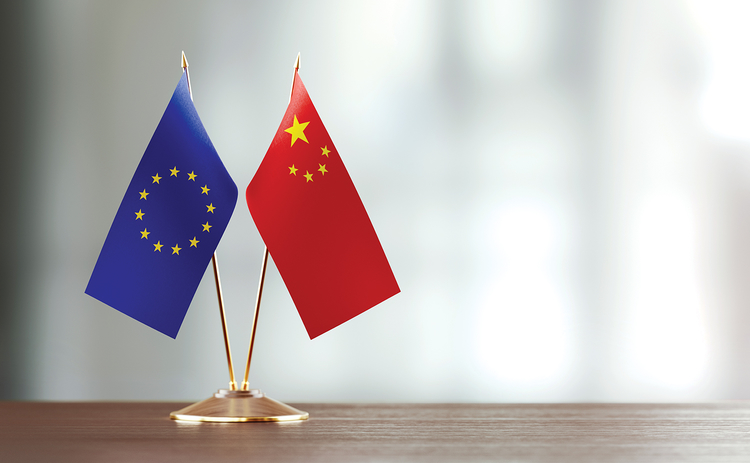
  1. We need to oppose US attempts to set up, in effect, an Asian NATO aimed at containing China based on its string of military bases and various forms of military-naval cooperation. Here the key nodes are the US, India, Australia and Japan with supplementary roles being offered to Indonesia, Singapore, Malaysia, Thailand, the Philippines and Vietnam. Alongside sustained campaigning in opposition to this US strategy there can also be new thinking on what a more cooperative and peace promoting alternative security architecture involving Asian powers themselves to the exclusion of the US could look like.
  2. Even as we pursue the promotion of renewable energy sources over the next several decades, there will nonetheless continue to be reliance on oil and gas (the latter is a much cleaner energy source) and here the idea of building an Asian Collective Energy Security Grid with oil and gas pipelines running horizontally and vertically across Asia from Iran via Central Asia across Russia and Siberia to the eastern coast of China is an idea whose time as come. Not only would such a network once built be much more beneficial cost wise to both producers and consumers, it would necessarily transform the geopolitics of the region in the very process of its construction. It would deny the US the leverage it enjoys currently over India, Southeast Asian countries, China, Japan and even Europe by its control over the Middle East (and its efforts to do the same in Central Asia) and over the key sea routes for tanker transportation. As for land routes, the US currently wants to help construct and control oil and gas pipelines from Central Asia that will bypass Iran and Russia via Afghanistan, Pakistan and Turkey and run to ports in allied countries.
  3. The time has also come to push for an Asian Monetary Fund run much more democratically by its member governments to replace the role of the dollar and current neoliberal institutions like the IMF and WB in this part of the world. Such a body could become a regional clearing house with its own regional currency (in addition to existing national currencies) whose purpose would be to smooth out trade imbalances in ways that would ensure that there are no permanent debtor and creditor nations, thereby creating a much more powerful foundation for permanent cooperation among Asian countries of a kind that would also be greatly conducive to resolving conflicts and tensions of a more political-territorial kind.

Situations of crises are invariably also situations where opportunities of various kinds present themselves. The question is do we have the political will and can we generate the political momentum to take advantage of such opportunities? The task then for us and coming generations of progressives is to help generate that political will and momentum. There is a world to fight for.

Read More