Statement from interface between Asian and European Parliamentarians and civil society representatives in Petaling Jaya (Malaysia) on 24th July 2019
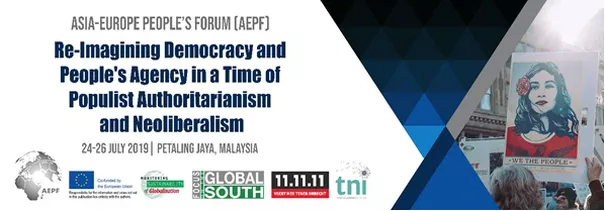
Statement from interface between Asian and European Parliamentarians and civil society representatives in Petaling Jaya (Malaysia) on 24th July 2019

Petaling Jaya (Malaysia) Declaration

In this interface between Asian and European Parliamentarians and civil society representatives we declare the following:

Even while about 53% of people globally live under authoritarian regimes, democracy in many countries of Asia and Europe is being weakened. Several governments in collaboration with big corporations are using authoritarian methods to control institutions and curb people’s rights.

We the MPs from seven countries and civil society members from over 20 countries be-lieve in people centered democracy. Participatory democracies have the capacity to pro-vide sustainable development, provide welfare and lift people out of poverty. However with neoliberal globalization, the dominance of oligarchs, trans-national corporations, military industrial complexes and foreign capital has increased. These have disproportionate influence on social, economic, political and cultural policies. This trend is detrimental to democratic processes.

All our societies are diverse and plural in nature. But, religious fundamentalism marked by chauvinist identity politics, exclusive nationalism and selective violence is being used to curb all relevant forms of dissent and target rights.

There are ongoing crimes against humanity which are being normalised. (For example, the genocide of the Rohingya community in Myanmar and the siege on refugees in the Mediterranean). Migrants and refugees are being criminalized. People and organisations who express solidarity with victims of oppression are harassed in multiple ways.

People have lost trust in the system as they believe that democracy has not delivered basic needs. People, especially the youth are therefore turning to right wing movements. Decades of neo-liberal globalisation has increased inequality and about 1.5 billion people are malnourished while basic needs ( education, health social security, etc) are unmet. There is continuous devastation of the global environment, including climate change and loss of bio diversity. This anxiety is leading to a rise in hate speech against the ‘other’.

We Parliamentarians and civil society movements are committed to reclaim democracy and humane politics for people and make some recommendations:

Governments at all levels must become more transparent and accountable to people, and new forms of decentralisation of power and right to information should be institutionalised.

We commit to enhance our struggle against neoliberalism and corporate power. This is because the rise of big finance capital goes against the welfare of people and social jus-tice. It leads to varieties of corrupt power.

We support universal and quality social protection and call for an end to commercialisation in social sectors like education, health, water and energy. We support solidarity economies. For example, community and collective control over local resources, public-public partnerships, re-municipalisation, etc.

Young people have lost faith in the system. We should encourage their participation in progressive movements and in activities they wish to be part of without fear. The monopoly and use of social media by corporations and right wing forces is challenging social relations and democracy. We call for greater norms to prevent hate speech, fake news, trolling, etc.

We have decided to take initiatives to support in the UN the proposed Binding Treaty on Corporations, that makes corporates more accountable.

We call upon Governments to sign, ratify and implement the (1990) Convention on mi-grants and their families and withdraw threats against so-called refugees, many of whom are citizens.

Many of our fellow Parliamentarians have been jailed because of political vendetta. We call for a release of all political prisoners.

We recommend that Parliamentarians and public policy makers engage with civil society in a continuous and accountable way. We believe that governments have the responsibility to make democracy accessible by putting people in the center of policy making and implementation.

Charles Santiago (Chairperson of ASEAN Parliamentarians for Human Rights (APHR); MP, Malaysia); Mercy Chriesty Barends (MP, Indonesia); Deepak Bhatt (MP, Nepal); Tian Chua (Former MP, Malaysia); Aida Kasymalieva (Vice Speaker, MP, Kyrgyzstan); Hassan Murtaza (Member of the Punjab Assembly of Pakistan); Eulàlia Reguant (Former MP, Cat-alonia); Mylvaganam Thilakarajah (MP, Sri Lanka)

Resource Persons from Civil Society: Tur-Od Lkhagvajav (Mongolia); Tina Ebro (Philip-pines); Dr. Geo-Sung Kim (South Korea); Brid Brennan (Ireland and Holland); Kamal Mitra Chenoy (India); Farooq Tariq (Pakistan); Achin Vanaik (India).
Read More

AEPF Media Statement From Petaling Jaya, Malaysia

AEPF Media Statement From Petaling Jaya, Malaysia

July 25, 2019

An Interface between Asian and European Parliamentarians from seven countries and civil society representatives from about 20 countries was held in Petaling Jaya on the 24th July.

The issue under discussion were the reasons as to why people are losing faith in democracy and why Governments are failing to deliver their promises to people and especially to young people.

It was shown that even though about 53% of people globally live under authoritarian regimes, democracy remains the best option for people if it is participatory in nature. However, democracy in many countries of Asia and Europe is being weakened. Several governments in collaboration with big corporations are using authoritarian methods to control institutions and curb people’s rights.

The MPs and civil society members stated, they are committed to deepening and reclaiming people centred democracy. Participatory democracies have the capacity to provide sustainable development, provide welfare and lift people out of poverty. However there was consensus in the discussions that with neoliberal globalisation the dominance of oligarchs, trans-national corporations, military industrial complexes and foreign capital has increased. These have disproportionate influence on social, economic, political and cultural policies. This trend is detrimental to democratic processes.

All MPs and civil society activists argued that all our societies are diverse and plural in nature. But, religious fundamentalism marked by chauvinist identity politics, exclusive nationalism and selective violence is being used to curb all relevant forms of dissent and target rights.

Many experts showed that there are ongoing, crimes against humanity which are being normalised. There is a criminalisation of migrants and solidarity with victims of oppression is targeted. (For example the genocide of the Rohingya community in Myanmar and siege on refugees in the Mediterranean).

MPs were particularly concerned that people have lost trust in their democracies as they believe that democracy has not delivered basic needs. People, especially the young people are therefore turning to right wing movements. Decades of neo-liberal globalisation have increased inequality and about 1.5 billion people are malnourished while basic needs (education, health social security are unmet. There is continuous devastation of the global environment, including climate change and loss of bio diversity. This anxiety is leading to a rise in hate speech against the ‘other’.

The Parliamentarians and civil society movements that were present said they are committed to reclaim democracy for people and some recommendations were made for Asian and European governments.

It was affirmed that Governments at all levels must become more transparent and accountable to people, while new forms of decentralisation of power and authority be institutionalised.

All those present are committed to enhance struggles against neoliberalism and corporate power. This is because the rise of big finance capital goes against welfare of people and social justice. It leads to different types of corrupt power.

The MPs and AEPF gave unequivocal support to universal and quality social protection and call for an end to commercialisation in social sectors like education, health, water and energy. The MPs as well as AEPF activists and others, spoke about the critical importance of ‘solidarity economies’. For example, community and collective control over local resources, public public partnerships, re-municipalisation, etc.

It was felt that young people have lost faith in the system. The MPs and activists said that young people should be encouraged to participate in progressive movements and in issues they hold dear. The participants in this interface were particularly concerned by the monopoly and use of social media by authoritarian forces, that are challenging social relations and democracy. They gave a call for greater norms to prevent hate speech and fake news etc.

The MPs decided to take initiatives to support a binding treaty on corporations in the UN.

There was an urgent call to Governments to sign, ratify and implement the (1990) Convention on migrants and their families and withdraw threats against so called refugees, many of whom are citizens.

Charles Santiago stated: “Many of our fellow Parliamentarians have been jailed because of political vendetta. We call for a release of all political prisoners”, the MPs of all seven countries emphasised this.

The MPs interface with civil society concluded by making a recommendation that Parliamentarians and public policy makers engage with civil society in a continuous and accountable way. They argued that governments have the responsibility to make democracy accessible by enabling people to be at the centre of policy making and implementation.

Read More

Asia Europe People’s Forum Statement on Christchurch Attacks

Asia Europe People's Forum Statement on Christchurch Attacks

March 17, 2019

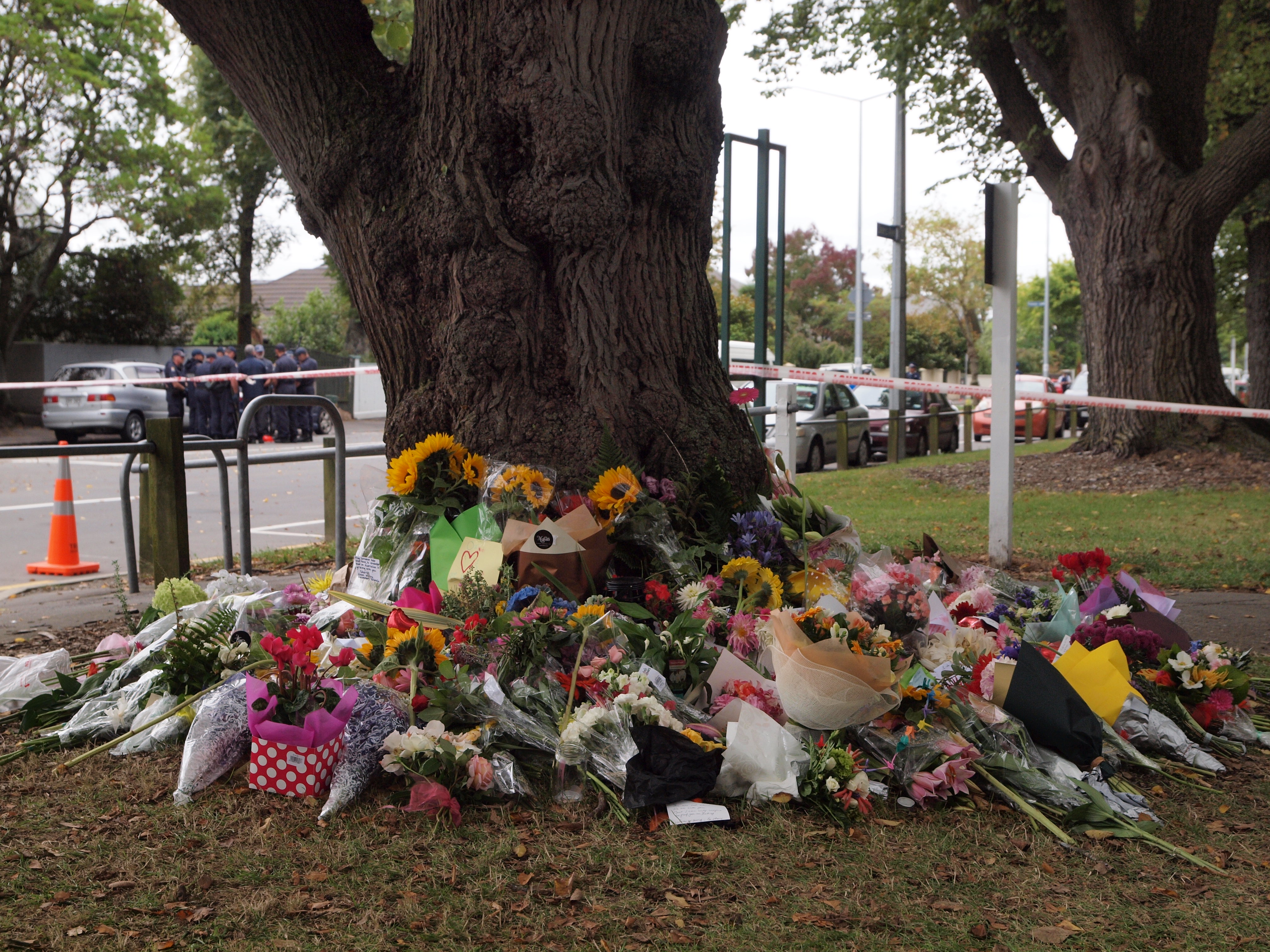
The AEPF strongly condemns the terror attack on Muslims at a mosque in Christchurch, New Zealand, where innocent worshipers were targeted on account of their identity.

It is evident that this attack is the outcome of the Islamaphobia and rising racism that is sweeping across many countries. Even as there are widespread condemnations and the victims and their families receive support, it is time for the leadership and people of all countries to take concrete steps to stop such incidents.

Although New Zealand has no history of violent culture, this incident is an indication how things can change overnight. We are surrounded by the politics of fear which is inherent to the growing inequality that accompanies neoliberalism. These policies need to be replaced with the politics of solidarity. As the Prime Minister of New Zealand said after the massacre about the victims: ‘they are us’.

Countries must make strict gun laws to curb the availability of weapons. Governments, communities and institutions must take firm steps to stop the increasing radicalisation of young people across cultures and communities. The fear of others and the different that is fanned by all forms of media and leaders from the community up to political classes for the sake of political gain must be stopped.

The culture of violence and retribution needs to be stopped as it shifts from the public to private actions, destroys states, families and individuals. The culture of violence threatens all social and economic relations, breaking apart the fabric of our societies, democracy, and nationalism. Governments have to take the lead in educating and inculcating tolerance, pluralism and acceptance in all institutions from schools to judiciary. There should be zero tolerance for any group that propagates the use of force to achieve their objective.

AEPF calls on all states to take these immediate steps in view of the possible recurrence of such terror.

Read More

AEPF Statement on India-Pakistan Conflict Escalation

AEPF Statement on India-Pakistan Conflict Escalation

February 27, 2019

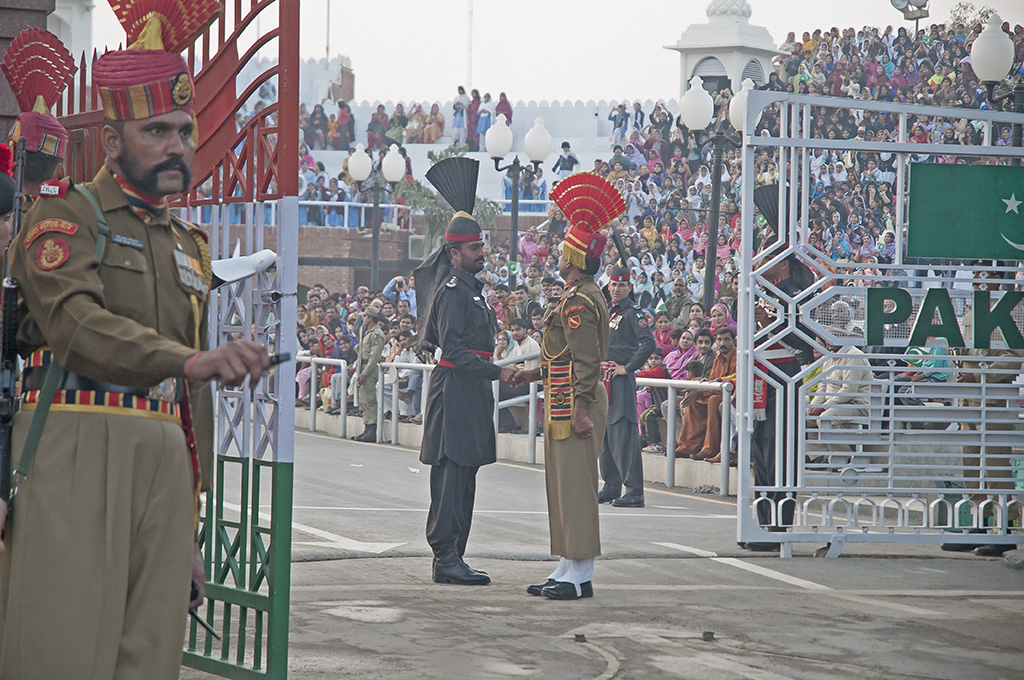
The AEPF appeals to India and Pakistan to immediately and simultaneously de-escalate the current military tensions between them, that can escalate into a war between two heavily armed nuclear powers.
AEPF appeals to both countries to announce a mutually acceptable peace and initiate a political dialogue.

There have been difficulties in the relationship between India and Pakistan on account of long unresolved conflicts and terrorism where people have suffered. In a situation where a terror attack on Indian paramilitary forces prompted retaliation by India, is leading to a spiral of militarized retributions. The situation is alarming and despite India’s claim that it was non-military measures, most experts think that with roughly 6000 pounds of bombs dropped, the situation remains precarious.

Both these countries have large sections of their people in poverty and struggling for livelihoods and education. In these circumstances, to divert funds to military strife and violent terror is unlikely to help matters. It is ordinary people that suffer on account of war and militarism and it is on this basis that civil societies groups from both these countries have for long years tried to build people to people friendship. The suddenness with which the current armed episode occurred shows that a lot remains to be done.

It is imperative that the two neighbouring countries move towards political negotiations, with the help of facilitators acceptable to both, and concentrate on peace building. We appeal to a process of de-militarisation on both sides of Kashmir and an end to terror tactics. A number of neighbouring countries including China have called for peace. We believe other countries in the region, including SAARC should make a concerted appeal for regional peace.

The AEPF appeals to both India and Pakistan that there should be no escalation between the two heavily armed nuclear powers, but it is necessary to de-escalate tensions and move towards a strong peace process. Any war between the two would be a threat to humanity itself.

Read More

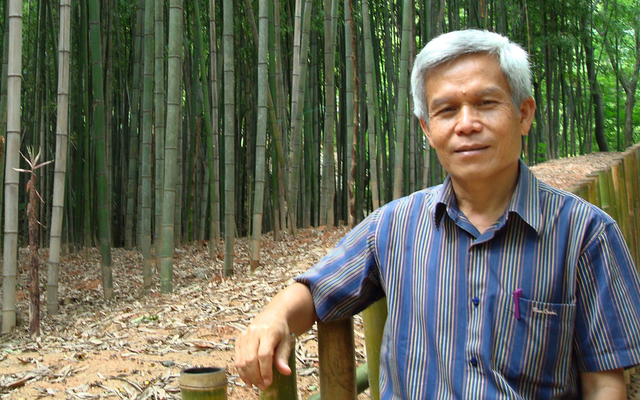
Laos: Six Years On, Civil Society Worldwide Demands Answers to the Enforced Disappearance of Sombath Somphone

Laos: Six Years On, Civil Society Worldwide Demands Answers to the Enforced Disappearance of Sombath Somphone

December 14, 2018

On the eve of the sixth anniversary of the enforced disappearance of Lao civil society leader Sombath Somphone, we, the undersigned organizations, reiterate our calls for the Lao government to conduct an independent, impartial and effective investigation to reveal his fate and whereabouts.

Sombath was last seen at a police checkpoint on a busy street of the Lao capital, Vientiane, on the evening of 15 December 2012. Footage from a CCTV camera showed that Sombath’s vehicle was stopped at the police checkpoint and, within minutes, individuals forced him into another vehicle and drove him away in the presence of police officers. CCTV footage also showed an unknown individual driving Sombath’s vehicle away from the city center. The fact that police officers were present at and witnessed Sombath’s abduction and failed to intervene strongly indicates state agents’ involvement in, or acquiescence to, human rights violations committed against Sombath, which include the crime of enforced disappearance. Later that evening, witnesses reportedly saw Sombath at a police holding facility in Vientiane yet to date officials have provided no information about what he was doing there and subsequently what happened to him.

For the last six years, the Lao government has failed to provide any credible answers with regard to the disappearance of Sombath Somphone. In its most recent pronouncements, made during the review of Laos’ initial report by the Human Rights Committee (CCPR) in July 2018, the Lao government said it had been “trying very hard” to investigate Sombath’s fate and whereabouts. However, this statement has been contradicted by the government’s refusal to accept international assistance in conducting the investigation and to provide any details about the progress of its investigation. Lao authorities have failed to disclose any new findings from their investigation of Sombath’s case to the public since 8 June 2013 and have met with his wife, Shui Meng Ng, only twice since January 2013.

Despite the government’s recent claim that police had the “capacity and techniques” to reveal Sombath’s fate and whereabouts, we remain extremely concerned by the lack of progress in the investigation by Lao authorities into his case and reiterate our call for Vientiane to allow international assistance towards conducting an independent, impartial and thorough investigation according to international law and standards.

The Lao authorities have international legal obligations to conduct such investigations and to bring persons responsible for serious violations to justice under treaties to which they are party, including the International Covenant on Civil and Political Rights and the Convention against Torture.

We also urge the Lao government to ratify the International Convention for the Protection of All Persons from Enforced Disappearance, which Laos signed in September 2008, to incorporate the Convention’s provisions into the country’s domestic legislation, and implement it in practice.

Until Sombath Somphone’s fate and whereabouts are revealed, we will not stop demanding that Sombath be safely returned to his family and we will continue to ask the Lao government: “Where is Sombath?”

  1. 11.11.11 Belgium
  2. Action from Ireland (Afri)
  3. Addison Road Community Centre Organisation (ARCCO)
  4. All India women Hawker Federation
  5. Alternative ASEAN Network on Burma (ALTSEAN-Burma)
  6. Amnesty International
  7. Armanshahr/OPEN ASIA
  8. ASEAN Parliamentarians for Human Rights (APHR)
  9. Asia Pacific Movement for Debt and Development (APMDD)
  10. Asian Federation Against Involuntary Disappearances (AFAD)
  11. Asian Forum for Human Rights and Development (Forum-Asia)
  12. Attac France
  13. Bangladesh Working Group on External Debt (BWGED)
  14. Bank Information Center
  15. Borneo Dayak Forum International
  16. Bukluran ng Manggagawang Pilipino – BMP (Workers Solidarity Philippines)
  17. Cambodian Center for Human Rights (CCHR)
  18. Cambodian Human Rights and Development Association (ADHOC)
  19. Cambodian League for the Promotion and Defense of Human Rights (LICADHO)
  20. CCFD-Terre Solidaire
  21. Centre for Environmental Justice
  22. China Labour Bulletin
  23. Christian Development Alternative (CDA)
  24. CLEAN (Coastal Livelihood and Environmental Action Network)
  25. CNCD-11.11.11
  26. Coalition against Trafficking in Women-Asia Pacific
  27. Commission for the Disappeared and Victims of Violence (KontraS)
  28. Community Action Network (CAN)
  29. Community Resource Centre Foundation (CRC)
  30. Corner House
  31. EarthRights International
  32. Ecologistas en Acción
  33. Environics Trust
  34. Equitable Cambodia
  35. Europe Solidaire Sans Frontières (ESSF)
  36. Families of Victims of Involuntary Disappearance (FIND)
  37. FIAN International
  38. FIDH – International Federation for Human Rights
  39. Finnish Asiatic Society
  40. Focus on the Global South
  41. Fresh Eyes — People to People Travel CIC
  42. Function 8
  43. Fundacion Solón
  44. Global Justice Now
  45. Human Rights Commission Pakistan (HRCP)
  46. Human Rights in China (HRIC)
  47. Human Rights Watch
  48. Indian Social Action Forum – INSAF
  49. International Coalition Against Enforced Disappearances (ICAED)
  50. International Commission of Jurists (ICJ)
  51. International Peace Bureau
  52. International Rivers
  53. Internet Law Reform Dialogue (iLaw)
  54. Jagaran Nepal
  55. KATARUNGAN (Kilusan para sa Repormang Agraryo at Katarungang Panlipunan)
  56. Kesatuan Nelayan Traditional (KNT)
  57. Keshav Gore Smarak Trust
  58. KRuHA – People’s Coalition for The Right To Water
  59. Labour Education Foundation
  60. Land Watch Thai
  61. League for the Defence of Human Rights in Iran (LDDHI)
  62. Legal Rights and Natural Resources Center–Kasama sa Kalikasan/Friends of the Earth
  63. LILAK (Purple Action for Indigenous Women’s Rights)
  64. Malaysians Against Death Penalty and Torture (MADPET)
  65. Maldivian Democracy Network
  66. Manushya Foundation
  67. MARUAH
  68. Migrant Forum in Asia
  69. National Hawker Federation
  70. Network for Transformative Social Protection
  71. New Trade Union Initiative
  72. NGO Forum on ADB
  73. Nomadic Livestock Keepers’ Development Public Fund (NLKDF)
  74. Nouveaux Cahiers du Socialism
  75. Odhikar
  76. Pakistan Bhatta Mazdoor Union
  77. Pakistan Kissan Rabita Committee
  78. Participatory Research Action Network- PRAN
  79. Peace Union of Finland
  80. People’s Health Movement
  81. People’s Solidarity for Participatory Democracy(PSPD)
  82. People’s Watch
  83. Progressive Labour Federation
  84. Progressive Voice
  85. Project SEVANA South-East Asia
  86. Project X
  87. Resonant Strategic
  88. Rural Poor Institute for Land and Human Rights Services, Inc. (RIGHTS, Inc.)
  89. Solidarité des Jeunes Lao
  90. South Asia Alliance for Poverty Eradication (SAAPE)
  91. Stiftung Asienhauses
  92. Suara Rakyat Malaysia (SUARAM)
  93. Sustainability and Participation through Education and Lifelong Learning (SPELL)
  94. Taiwan Association for Human Rights (TAHR)
  95. Tameer Nau Women Workers Association
  96. Thilak Kariyawasam, Sri Lanka Nature Group
  97. Think Centre
  98. Timor-Leste Institute for Development Monitoring and Analysis
  99. Transnational Institute
  100. Ulu Foundation
  101. Union Syndicale Solidaires
  102. Vietnam Committee on Human Rights (VCHR)
  103. Woman Health Philippines
  104. Women’s Legal and Human Rights Bureau (WLB)
  105. World Organisation Against Torture (OMCT)
  106. World Rainforest Movement
  107. York Psychotherapy Centre

Individuals

  1. Ajaya Kumar Singh, India
  2. Ame Trandem, The Netherlands
  3. Andrew Nette, Australia
  4. Anne-Sophie Gindroz, Switzerland.
  5. Anuradha Chenoy, India
  6. Chansophearet, Cambodia
  7. Charlie Thame, Thailand
  8. Chayan Vaddhanaphuti, Thailand
  9. Christophe Aguiton, France
  10. Colin Archer
  11. Corazon Valdez Fabros, Philippines
  12. Cristina Machado, Portugal
  13. David Bruer, Canada
  14. Edeliza P. Hernandez, Philippines.
  15. Elenita Daño, Philippines
  16. Glenn Hunt, Australia
  17. Jenina Joy Chavez, Philippines.
  18. Kamal Chenoy, India
  19. Kirsten Han, Singapore
  20. Maria Elena Grace D. Katigbak, Philippines
  21. Mary Ann Manahan, Philippines
  22. Mika Levesque
  23. Miriam Lang, Ecuador
  24. Mu Sochua, Cambodia
  25. Murray Hiebert, U.S.
  26. Nicolaas Bakker, Portugal
  27. Paul-Emile Dupret, Belgium
  28. Radhika Balakrishnan, USA
  29. Raffy Simbol, Philippines
  30. Rajeev Patel, USA.
  31. Randall Arnst, USA
  32. Rosanna Barbero, Australia
  33. Saturnino M. Borras Jr., The Netherlands
  34. Soren Sondergaard, Denmark
  35. Tony Salvador, Philippines
  36. Walden Bello, USA
  37. William H. Dangers, USA
Read More

Statement of the Advocacy Team for Economic Justice in the Post-Court Verdict concerning the International Treaty Law

Statement of the Advocacy Team for Economic Justice in the Post-Court Verdict concerning the International Treaty Law

November 25, 2018

Jakarta, 25 November 2018. On 22 November 2018, the Constitutional Court issued a verdict of the case No.13 / PUU-XVI / 2018 concerning the testing of Law No.24 of 2000 on International Agreement of the 1945 Constitution. This case was filled by the Advocacy Team for Economic Justice on February 14, 2018 to the Constitutional Court.

There are at least 4 reasons as the background of why the International Treaty Law was sued to the Constitutional Court, namely: First, international agreements (specifically trade, investment and debt) have a broad impact on people’s lives; Second , the loss of democracy; Third, the power of the Government is too large (absolute power); and fourth, to restore people’s sovereignty.

Several articles were tested on the International Treaty Law, namely Article 2, Article 9, Articles 10 and 11. The four articles were tested because they were thought to have caused legal uncertainty for the people as a result of losing control and involvement of the people in the process of negotiating international agreements.

In fact, the seemingly confidential negotiation process with the closed participation and public access to information and the text draft of the agreement in the negotiations on free trade agreements and international investment has threatened democracy and the protection of human rights. Moreover, this free trade and international investment agreement was ratified without requiring the approval of the Republic of Indonesia Parliament so that the loss of function of the people’s control over the Governments’ power.

New Legal Norms in the Judge Verdict of the Constitutional Court

The Constitutional Court has presented new legal norms in the international agreements. In reading the verdict, the Constitutional Court ruled that Article 10 of the International Treaty Law was contrary to the 1945 Constitution, specifically Article 11 paragraph (2) and Article 28 D paragraph (1). Although, the Constitutional Court only granted part of all the requests, but for the advocacy team of economic justice, article 10 is the heart of the lawsuit. This is because this verdict has become a breakthrough for the renewal of the national legal system, especially in relation to the International Agreement with the changing dynamics of the global community that needs to be adjusted.

The core issue in this lawsuit is related to the distribution of international agreements that require the approval of the house of representative/DPR and which are not. These provisions are regulated in articles 10 and 11 of the UUPI. This is a gray area in the practice of policy making, which if not carefully decided will have a fatal consequences for the national interests.

Article 10 of the UUPI regulates the category of International Agreements that require the approval of the DPR RI, which is related to the problem: (1) political issues, peace, defense and state security; (2) changes in territory or territory determination of the Republic of Indonesia; (3) sovereignty or sovereign rights of the state; (4) human rights and the environment; (5) the establishment of new legal rules; (6) loans and / or foreign grants.

At the same time, Article 11 of the UUPI regulates the category of international agreements that do not require the approval of the DPR RI, namely those relating to material that is tend to be procedural and requires implementation in a short time without affecting national legislation, including the main agreement concerning cooperation in the fields of science and technology, economics , engineering, trade , culture, commercial shipping, double tax evasion, and investment protection cooperation , as well as agreements that are tend to be more technical “;

The advocacy team considers that the international treaty division in Article 10 and Article 11 is contrary to Article 11 paragraph (2) of the 1945 Constitution, because in practice there are international agreements that have a broad impact on the lives of the people but not through the DPR RI approval process so that checks and balances by the DPR RI unable to be done. An example is the trade agreement and investment protection agreement (Bilateral Investment Treaty / BIT) in the dynamics of global development today, it turns out to have a broad impact on the lives of the people but in the process of ratification does not require the approval of the DPR RI. Therefore, these two agreements can no longer only be called international agreements that regulate technical and procedural matters.

In fact, there are also practices that are out of sync with the implementation of Article 10 and Article 11 of the UUPI, when the Government of Indonesia ratifies the Agreement of AIIB- Asian Infrastructure Investment Bank (debt) not with the approval of the DPR. This certainly causes the consequences of legal uncertainty for the people as stipulated in Article 28D paragraph (1).

Therefore, the approval of the DPR RI which is a representation of the people’s voice is very important to international agreements that have a broad impact on the lives of the people, including those that have an impact on state finances and cause changes and / or forming legislation. Article 11 paragraph (2) of the 1945 Constitution of the Republic of Indonesia which states: “The President in making other international agreement which have a broad and fundamental consequences for the lives of the people related to the burden of state finances, and / or require changes or the formation of laws must be approved by the House of Representatives”.

On that matter, the Constitutional Justice Board in its consideration stated that the DPR’s Approval was needed for an International Agreement which was deemed important only. Agreements that are considered important, in accordance with those stipulated in the Constitution.

In general, in consideration of the judge, the criteria for the important agreement were mentioned: the Agreement with political dimension that has is relevant with state sovereignty such as an agreement influencing state borders, which affect federation relations with other states, which affect the burden of state finance that must be borne by the people, which affects the balance or division of the king’s power with parliament, which has a broad impact so that new laws are needed. And it can increase according to the needs or considerations of each country.

Regarding in what way or in the circumstances of how an international treaty material causes broad and fundamental consequences related to the financial burden of the state and / or requires changes or the formation of laws, the panel of judges considers that it cannot limitatively determined but must be assessed casuistry based on consideration and developments in legal needs nationally and internationally.

Previously Article 10 of the International Treaty Law limited only six categorizations of international agreements that had a broad impact on people’s lives. Of course, the enthusiasm in Article 10 of the International Treaty Law has made exhaustive criteria or qualifications limited to the six aspects in question, while Article 11 paragraph (2) of the 1945 Constitution makes an open criteria. Article 11 paragraph (2) of the Constitution states: “The President in making other international agreement which have a broad and fundamental consequences for the lives of the people related to the burden of state finances, and / or require changes or the formation of laws must be approved by the House of Representatives”.

Therefore, the Constitutional Court through its verdict to expand the categorization of international agreements that has a broad impact on people’s lives that is not only contained in Article 10 of International agreement Act. So, the issue of trade, economy, investment, double taxation, and even foreign debt can be part of a broad-based international agreement that requires people’s approval, in this case through the DPR RI.

Legal consequences on the verdict of Constitutional Court Judge

One important point in the consideration of the Constitutional Court Judge that the involvement of the state in international treaties under the pretext of world order should not conflict with the principles of independence, peace and social justice. Before the Constitutional Court’s verdict, there were very many bilateral, regional and multilateral agreements that were far from social justice and adopted the spirit of people’s interests. In fact, when the agreement is ratified in national law, it will have an impact on all elements of society. Of course, after this Constitutional Court ruling, actions that harm the interests of the people and injure social justice over the implementation of the international agreement are not allowed to be returned.

The advocacy team for economic justice sees that there are a number of things that have legal consequences to look at:

1. Whereas in the previous practice there was a potential where international agreements that were ratified without the approval of the DPR RI that could have a broad impact on the lives of the people, which could later harm social justice. For this reason, the advocacy team encouraged them to do the process of reviewing all international agreements, especially against trade, investment and foreign debt agreements to fulfill the elements of social justice and in harmony with the mandate of the Constitution.

2. That for the International Agreement to be ratified, it must comply with this Constitutional Court’s verdict. Particularly related to free trade agreements and investments, there are some that have been discussed and will enter the ratification stage such as Indonesia-Australia CEPA, Indonesia-Europe FTA (IEFTA), and Indonesia-Singapore Bilateral Investment Treaty (BIT). Therefore, the agreements to be ratified must be examined as agreements that are “important” so that they require the approval of the DPR.

3. Because the constitutional panel of judges has accepted the constitutional loss of the Petitioners who have never been involved in the decision-making process of international agreements, especially trade, investment and foreign debt, then in the case of international agreements that have a broad and fundamental impact on people’s lives, then The Government and Parliament of the DPR RI must open and involve the public at large in the process of public consultation to get the views on the impact that will result from the agreement on the state’s financial burden weighing on the public and on the formation of the new legislation.

4. Specifically on the Trade Law No.7 of 2014 concerning Trade, the Advocacy Team considers that Article 84 paragraph (3) and (4) of the Trade Law have contradicted the verdict of the Constitutional Court No.13 / PUU-XVI / 2018. This is because, the time limit for The DPR RI to determine an international agreement whether it needs the approval of the DPR RI or not as stipulated in Article 84 paragraph (3) and (4) has not been in accordance with the Constitutional Courts’ verdict. In its verdict, the Constitutional Court judges argued that to assess an international agreement that was important or not important, it must be carried out by the DPR RI. Therefore, related to the takeover of 6 trade agreements that were being discussed by the DPR some time ago by the Government and unilaterally stating that the agreements were deemed not to require the approval of the DPR RI, it is fitting to say that the actions of the Government were contrary to the mandate of Article 11 paragraph (2) of the 1945 Constitution which has been decided by the Constitutional Court in Case 13 / PUU-XVI / 2018. That the evaluation of an international agreement is important and has a broad impact must be carried out carefully and based on the meaning of the mandate Constitution.

5. Specifically related to trade and investment agreements, in determining the agreement including agreements that are important and have a broad and fundamental impact on people’s lives in accordance with the Constitutional Courts’ Verdict, it is necessary to conduct a comprehensive impact assessment by the DPR before giving an approval for a trade investment agreement. Impact assessments can be made on their impact on the economy, social, environment and human rights. The results of this impact assessment must be the basis arguments for the DPR RI and the Government to determine whether that International Agreement is important or not.

6. This Constitutional Court Verdict must be immediately responded by the DPR RI where the Act No.24 of 2000 concerning the International Agreement is no longer appropriate, and it is necessary to immediately make changes to the law. The Constitutional Court’s verdict must be a reference for the DPR RI and the Government in the process of change. And specifically, the formulation of a consultation process that must involve wider public participation must be carried out because international agreements have a broad impact on people’s lives, in economic, trade, debt, double taxation, investment and other issues. And legal consequences must be included if an international agreement is passed without involving the public in it.

Advocacy Team for Economic Justice:

Indonesia for Global Justice (IGJ), IHCS, Indonesian Peasants Union (SPI), FIELD Indonesia, KIARA, Bina Desa, Indonesian Peasants Alliance, Women Solidarity , Palm Oil Farmers Union, and 5 Salt Farmers (Amin Abdulah, Mukmin, Fauziah, Baiq Farihun, Budiman).

Contact the Advocacy Team:

Henry Oliver David Sitorus (Coordinator of the Lawyer Team): 0813-17066828
Rachmi Hertanti (Alliance Coordinator for Advocacy Team / IGJ Director): 0817-4985180

Read More

Statement on the 13th ASEM Finance Ministers’ Meeting

Statement on the 13th ASEM Finance Ministers’ Meeting

April 24, 2018 | ASIA-EUROPE PEOPLES’ FORUM

The 13th Asia Europe Finance Ministers’ Meeting convenes anew on 26 April in Bulgaria to discuss, among others, the all too real possibility of another global financial crisis. This time, it is feared, developing countries will experience greater difficulties than before, with their increasing integration in the global economy and greater vulnerability to economic crisis and downturns.

But there are more fundamental factors. The crisis will find peoples in Asia caught in ever-deepening poverty, deprivation and inequality, and facing intensifying climate events. As a tiny handful of elites and multinational corporations continue to amass immense wealth, around 1.2 billion people remain without the most basic necessities for a decent life. From food, water and electricity to shelter, health and education, significant gaps persist and widen as they remain largely unmet.

Developing countries’ increased risk to external shocks also comes from the huge loss of domestic financial resources in proportion to their GDP. More dependable than debt or aid, taxation ought to provide a predictable, sustained source of revenues for public, affordable, adequate provision of basic social services, which help strengthen peoples’ capacities to survive. Yet billions of dollars are relinquished and/or spirited away through various means, and with the impunity that can only come from the power to influence the highest levels of decision-making, circumvent the law or emplace loophole-ridden regulations, and evade public inquiry and accountability.

The UN Conference on Trade and Development estimated tax abusive behavior by multinational companies costs developing countries $100 billion a year in lost corporate income tax. IMF research pegged estimates even higher, at $213 billion/year lost to tax avoidance. Studies further indicate that what developing countries receive in foreign aid, they lose three to ten-fold in tax evasion. These are more than enough to bridge UNESCO’s calculation of $39 billion/year total domestic financing gap to ensure universal pre-primary to secondary education in low and lower-middle income countries and the $32 billion needed for basic healthcare to save the lives of 6 million children worldwide each year.

Tax dodging of such massive proportions cannot occur without channels that guarantee little/zero tax, and secrecy, to shield against scrutiny by tax authorities and citizens. Many of these are in Europe, such as the Netherlands, Switzerland, Luxembourg, Cyprus, Ireland, the UK and its crown dependencies, but Asia’s tax havens are also growing to include Indonesia, Taiwan, South Korea and Malaysia in addition to Hong Kong, Singapore, Macau and other long-standing financial secrecy jurisdictions. Not surprisingly, the OECD names and shames more non-member countries than the very large tax havens in its own backyard.

Furthermore, neither could corporate profits be so easily shifted, untaxed, from developing countries without governments themselves conceding a significant part of the sovereign authority granted them by citizens, such as by providing preferential tax treatment for foreign investors and failing to amend legal infirmities. Asian developing countries offer wide-ranging tax incentives in the unproven belief that these will attract investments for their development. In so doing, they lose the very wherewithal to make the public investments required for citizens to enjoy rights. Social service provision is opened instead to profit-driven private sector investment, which constricts access especially of the poor to water, healthcare, education, decent habitats and other needs. Consumption taxes are levied to recover forgone revenue, resulting in even greater financial burdens for those already barely surviving on low wages and insecure conditions of work, many of whom are women.

It is claimed that over the years millions of people have been taken out of poverty, but tragically, millions are also being pulled back into deprivation and impoverishment by inaction and inequitable policies. We urge finance officials in Asia and Europe alike to be guided by what they should already know – that public finance is a key instrument in fulfilling human rights, democratizing access to resources, advancing efforts to end poverty in all its dimensions and in building vibrant, resilient and sustainable economies and societies.

Read More

Statement on Syria

Statement on Syria

April 15, 2018

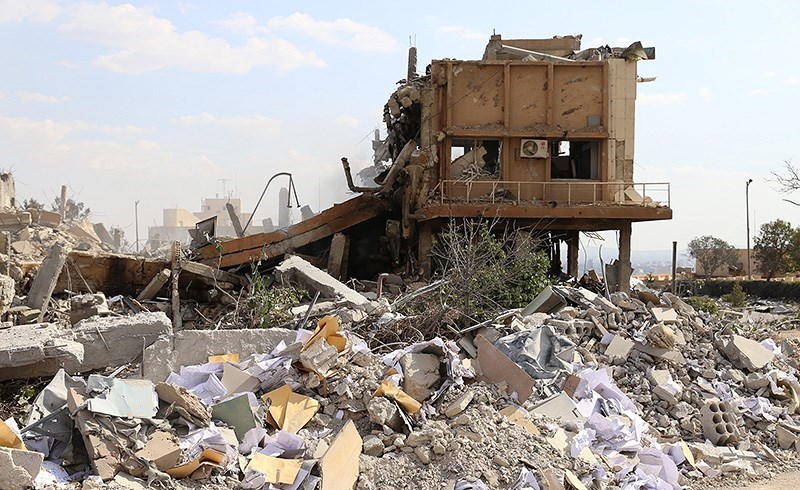
The Asia-Europe People’s Forum (AEPF) condemns the April 14 US-led missile strike on Syria’s territory.

The US-France-UK attack, targeting Syria’s Homs province, which the US and their allies claimed was in response to the Syrian Army’s use of chemical weapons, not only heightens tensions in the region but also threatens people’s lives and livelihood.

The situation in the so-called chemical weapon zone is murky and UN chemical weapons inspectors should visit the area and ascertain if chemical weapons were used. They should be given all necessary facilities by the Assad Government to ensure a thorough and unbiased investigation.

It is also important to highlight the Turkish aggression in the Northern Syrian region of Afrin where the Kurdish minority is facing an armored attack by Turkey.

We urge the US, its allies and the Russian Federation, as well as all parties to immediately stop using or threatening to use force and violence in all settings, contexts, and circumstances and start an inclusive dialogue.

The AEPF expresses its solidarity with and support for all Syrian people working for a just peace and peaceful, negotiated end to the conflicts in Syria and those who are victims, internally displaced and refugees from the conflicts. AEPF calls on all peace-loving movements to urge an end to hostilities enabling conditions for a peaceful resolution of hostilities. We ask for an immediate cease-fire monitored by the UN to ensure peace throughout this region.

Read More

List of Speakers (AEPF in Manila)

List of Speakers (AEPF in Manila)

February 12, 2018

Assuring affordable, accessible and quality Public Services for all: Tool for leveling inequality, mobilizing for transformative change!
Manila, 13-15 February 2018

Vittorio Agnoletto (Italy)

A former member of the European Parliament and part of the International Council of the World Social Forum, he is a Professor in “Globalization and Health Policies” at the University of Milan.

Alghiffari Aqsa (Indonesia)

Director of Jakarta Legal Aid Institute and member of Global Network for Public Interest Lawyers, he helped with several strategic and people-centric litigations like the Citizens Law Suit on the Right to Water that enabled the Indonesian Supreme Court to order the termination of water privatization in Jakarta and to uphold people’s fundamental right to water.

Sören Becker (Germany)

At the University of Bonn and Humboldt University, he teaches and researches on new forms of organization in energy transitions and on energy remunicipalisation that promotes democratic participation and control, and environmental sustainability.

Mae Buenaventura (Philippines)

Former director of Women’s Legal and Human Rights Bureau, she is Vice President of the Freedom from Debt Coalition and Deputy Coordinator of the Asian Peoples’ Movement on Debt and Development (APMDD), a regional alliance that led in forming the Tax and Fiscal Justice Asia.

Barry Coates (New Zealand)

The former head of Global Justice Now, Chair of the UK Trade Justice Movement and Co-Chair of the Global Campaign for Climate Action, he serves as the Green Party Member of Parliament in New Zealand.

Mladen Domazet (Croatia)

He is Research Director at the Institute for Political Ecology in Croatia which is engaged in advocacy research for the democratization, transparency, and efficiency of public services and state enterprises.

Tina Ebro (Philippines/Netherlands)

An educator and organizer since the 70s, she founded human rights platforms in the Philippines and serves as head of the Focal Point in Asia of the Asia-Europe People’s Forum.

David Hall (United Kingdom)

He is Professor in the UK and was Director of the Public Services International Research Unit that carried out for three decades the strategic Public Services and Privatization Research, globally.

Satoko Kishimoto (Japan/Belgium)

Activist researcher on water and public services at the Transnational Institute, she is editor of the following books: Our Public Water Future, and Reclaiming Public Services: How cities and citizens are turning back privatization.

Meena Menon (India)

An educator and writer, and former coordinator with Focus on the Global South in India, she founded the Urban Action School and the Citizens Rights Collective (CiRiC) which are key policy groups supporting informal labor.

Francine Mestrum (Belgium)

Founder of Global Social Justice, member of the International Council of the World Social Forum, author of books on development, poverty and social commons, she is the Link Person of the AEPF Thematic Cluster on Social Justice.

Lidy Nacpil (Philippines)

She is Coordinator of the Asian People’s Movement on Debt and Development, Co-coordinator of the Global Campaign to Demand Climate Justice, and Vice President of the Freedom from Debt Coalition.

Sharad Onta (Nepal)

Professor of Community Medicine and Public Health and author of papers on public health policies, he was Nepali Health Ministry Advisor when essential health services for all were declared free.

Miriam Planas (Spain)

She works with Engineering without Borders that seeks to guarantee universal access to basic services, and Spanish Public Water Network and European Water Movement that advocates for democratic and non-commercial water management.

Charles Santiago (Malaysia)

A Malaysian Member of Parliament who Chairs the ASEAN Parliamentarians for Human Rights (APHR), he is co-convenor of AEPF and serves as an International Organising Committee member.

Peter Ronald de Souza (India)

Currently, he is Professor at the Centre for the Study of Developing Societies (CSDS), former Director of the Indian Institute of Advanced Study, and was Interim Director of International Centre for Human Development, and part of Senior Expert group to prepare the report ‘Rethinking Education: Towards a global common good’ for UNESCO.

Read More

AEPF Manila Event Schedule

AEPF Manila Event Schedule

February 11, 2018

PROGRAMME

DAY 1

8:30-9:00 REGISTRATION

9:00-9:30 Welcome/Preliminaries/ Introduction

9:30-10:20 PLENARY 1 Public Services & Social/Economic Dev’t

David Hall (United Kingdom)
Rene Ofreneo (Philippines)

10:20-10:30 Coffee Break

10:30-11:20 PLENARY 2 Beyond States: Global/Regional Actors & FTAS

Barry Coates (New Zealand)

Illusion of PPPs
David Hall (United Kingdom)

11:20-12:30 OPEN FORUM

12.30-14:00 LUNCH

14:00-15:30 PLENARY 3 Sectoral Issues & Struggles

On Health
Sharad Onta (Nepal)
Vittorio Agnoletto (Italy)

On Water
Miriam Planas (Spain)
Alghiffari Aqsa (Indonesia)

On Transport
Mladen Domazet (Croatia)

15:30-16:30 Break Out Groups Health, Water & Transport

16:30-18:30 Reporting

19.00 Solidarity Dinner

DAY 2

9:30-10:20 PLENARY 3 Our Alternatives to reclaim our Public Services

Remunicipalisation and Re-nationalisation
Satoko Kishimoto (Japan/Belgium)

Social Commons: Democratization and Participation
Francine Mestrum (Belgium)

10:20-10:30 BREAK

10:30-11:20 PLENARY 4 Organising our Public Services

Financing & Real Progressive Taxation
Mae Buenaventura (Philippines)

Public Services & Labor
David Boys (France)
Deputy General Secretary of Public Services International (PSI) and recognize water authority

11:20-12:30 Open Forum

12:30-14:00 Lunch

14:00-15:30 PLENARY 5 Sectoral Issues & Struggles

On Housing /Right to the City
Meena Menon (India)
Eric Villanueva (Philippines)

On Education
Peter Ronald deSouza (India)
Raquel Castillo (Philippines)

On Energy
Sören Becker (Germany)
Lidy Nacpil (Philippines)

15:30-16:30 Break Out Groups Housing, Education and Energy

16:30-18.30 PLENARY 6 Reporting and Discussion

17:00 Dinner

DAY 3

9:00-10:30 PLENARY 7 Panel Discussion: Sharing of Campaigns and Advocacy Strategies

World Solidarity Movement
Koen Detavernier (Belgium)

ASEAN Civil Society Conference
Ed Tadem (Philippines)

Network for Transformative Social Protection
Maris dela Cruz (Philippines)

Coalition of Services of the Elderly
Aura Sevilla (Philippines)

DIGNIDAD
Rene Ofreneo (Philippines)

Freedom from Debt Coalition

10.30-11.30 Finalization of Conference Statement
Francine Mestrum (Belgium)

Summary of Salient Points and Future Actions
Tina Ebro (Philippines/Netherlands)

11.30- 12.30 Concluding Remarks
Charles Santiago (Malaysia)

12:30 LUNCH

*** NOTE

At 2.00 to 4.30pm on February 15, a RoundTable Dialogue with Legislators will be held, and this will be covered by the Media. Academics and CSO Representatives will also participate.

On February 16, RoundTable Discussions on Advocacy Strategies with key Campaigners are being planned.

On Feb. 12 at 10:00 AM a Press Conference will be conducted regarding the event, the venue is at the Marina Seafood’s Restaurant, Mother Ignacia cor. Scout Reyes Street, Quezon City.

Feb.12, 2018 – 2 PM – visit to a community of informal settlers

Feb. 15, 2018 – 2:00-4:30 PM – Roundtable Dialogue with Parliamentarians and Academics (with media coverage, UP Center for Integrative and Development Studies, Bahay ng Alumni, UP Diliman, Quezon City

Feb.16 2018 – University Hotel Cafeteria, UP Diliman, Quezon City

Small Group Discussions on specific issues (water, housing, education, health and transport) with Resource Person:

  1. On Health (with Vittorio Agnole)
  2. Water (with Miriam Planas)FDC
  3. Housing (with Meena Menon) IPD and KM
  4. Transport (with Mladen Domazet)
  5. PPPs and Privatization (David Hall)
Read More