Laos: After 13 years, renewed international action needed to ensure justice in Sombath Somphone’s enforced disappearance

Laos: After 13 years, renewed international action needed to ensure justice in Sombath Somphone’s enforced disappearance

15 December 2025

On the 13-year anniversary of the enforced disappearance of Lao civil society leader Sombath Somphone, we, the undersigned civil society organizations and individuals worldwide, urge once again United Nations (UN) member states and Laos’ development and international cooperation partners to demand the Lao government promptly resolve Sombath’s enforced disappearance and deliver justice and an effective remedy and reparations to him and his family.
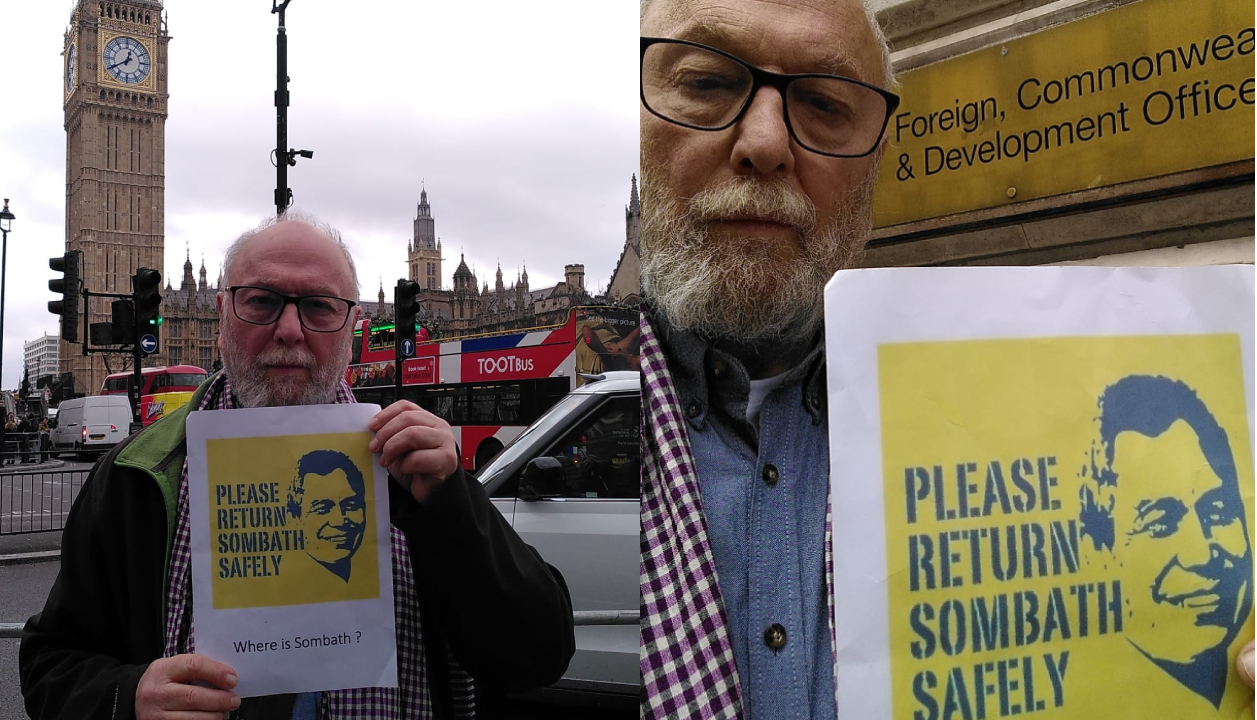
Meeting with the UK Foreign Office on the 13th anniversary of Sombath’s Enforced Disappearance.
Presented a comprehensive letter with core demands.

Despite calls by civil society organizations for states to use the fourth Universal Periodic Review (UPR) of Laos in April 2025 to express their concern over the Lao government’s protracted failure to determine Sombath’s fate or whereabouts, only one — Canada — recommended the Lao government conduct a credible investigation into Sombath’s enforced disappearance.

We deplore this silence over Sombath’s enforced disappearance, as it is likely to continue to facilitate the Lao authorities in their determination to shield the perpetrators of such a serious crime from accountability.

We note that various individuals who occupied high-ranking positions in the government when Sombath disappeared retain important official roles in the country’s political sphere today. These individuals could and should play a proactive role in clarifying Sombath’s fate and achieving truth and justice.

For example, Thongloun Sisoulith, who served as Foreign Minister and Deputy Prime Minister of Laos at the time of Sombath’s enforced disappearance, is now the country’s President and the General Secretary of the Lao People’s Revolutionary Party – effectively, the supreme leader of Laos. Chaleun Yiapaoher, then-Minister of Justice, is now one of the National Assembly’s Vice-Presidents. Thongsing Thammavong, then-Prime Minister, is currently a National Assembly member. These and other influential individuals hold the key to resolve Sombath’s enforced disappearance – a case that has been described by the International Commission of Jurists as “eminently solvable.”

UN member states and Laos’ development and international cooperation partners should press the government to establish the fate or whereabouts of Sombath and all other victims of enforced disappearances in the country, identify the suspected perpetrators of such serious crimes, and provide victims with an effective remedy and full reparations. To date, no case of enforced disappearance in Laos has been resolved and no perpetrators have been identified or brought to justice.

In its September 2025 report, the UN Working Group on Enforced or Involuntary Disappearances emphasized that the disappearance of community leaders such as Sombath resulted in a collective impact on the groups to which they belonged, including by weakening community ties, depriving them of leadership, and increasing their vulnerability to “cultural erosion and environmental exploitation.” The Working Group further stated that Sombath’s disappearance created a chilling effect on public participation, noting reports of “serious risks and fear” of retaliation when his name is mentioned.

We urge the Lao government to promptly ratify, without reservations, the International Convention for the Protection of All Persons from Enforced Disappearance, which it signed in September 2008, and fully implement it into national law, policies, and practices.

We continue to stand in solidarity with Sombath and his family and urge UN member states to support our calls for truth, justice, and accountability for all cases of victims of enforced disappearance in Laos.

Even if 13 years have passed, the Lao government is obligated to answer the question we and many others have been asking since 15 December 2012: “Where is Sombath”?

Background

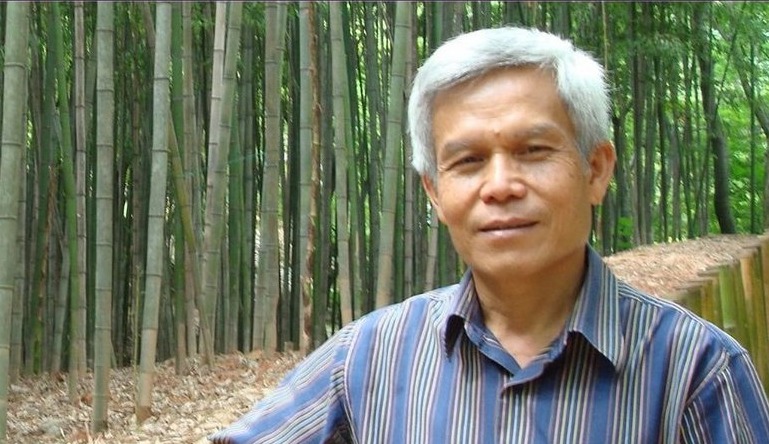
Sombath Somphone, a pioneer in community-based development and youth empowerment, was last seen at a police checkpoint on a busy street in Vientiane, the capital of Laos, on the evening of 15 December 2012. Footage from a traffic CCTV camera showed that police stopped Sombath’s vehicle at the checkpoint and that, within minutes, unknown individuals forced him into another vehicle and drove him away in the presence of police officers. CCTV footage also showed an unknown individual arriving and driving Sombath’s vehicle away from the city center. In December 2015, Sombath’s family obtained new CCTV footage from the same area and made it public. The video shows Sombath’s car being driven back towards the city by an unknown individual.

For further information, please visit: https://www.sombath.org/

Organizations:

  1. Alternative ASEAN Network on Burma (ALTSEAN-Burma)
  2. Amnesty International
  3. Asia Democracy Network
  4. Asia Human Rights & Labour Advocates (AHRLA)
  5. Asian Federation Against Involuntary Disappearances (AFAD)
  6. Asian Forum for Human Rights and Development (FORUM-ASIA)
  7. Cambodian League for the Promotion and Defense of Human Rights (LICADHO)
  8. Center for Prisoners’ Rights
  9. Commission for Disappeared and Victims of Violence (KontraS)
  10. Day of the Endangered Lawyer
  11. Defence of Human Rights
  12. Families of Victims of Involuntary Disappearance (FIND)
  13. Focus on the Global South
  14. Fortify Rights
  15. Fresh Eyes, UK
  16. Human Rights Watch
  17. International Coalition Against Enforced Disappearances (ICAED)
  18. International Commission of Jurists (ICJ)
  19. International Federation for human Rights (FIDH), within the framework of the Observatory for the Protection of Human Rights Defenders
  20. International Organising Committee of the Asia Europe People’s Forum
  21. Lao Movement for Human Rights
  22. League for the Defence of Human Rights in Iran (LDDHI)
  23. MADPET (Malaysians Against Death Penalty and Torture)
  24. Maldivian Democracy Network
  25. Manushya Foundation
  26. Mekong Watch
  27. People’s Watch
  28. Thai Lawyers for Human Rights
  29. Transitional Justice Working Group
  30. Vietnam Committee on Human Rights
  31. WH4C (Workers Hub For Change)
  32. World Organisation against Torture (OMCT), within the framework of the Observatory for the Protection of Human Rights Defenders

Individuals:

  1. Shui Meng and Sombath Somphone’s family
  2. Andy Rutherford
  3. Anne Sophie Gindroz
  4. Barbara Williams
  5. David JH Blake
  6. Kasit Piromya
  7. Keith Barney
  8. Lara Patriarca
  9. Libby Blake
  10. Linda Gehman Peachey
  11. Murray Hiebert
  12. Philip Alston
  13. Randall Arnst
  14. Rini Astuti
  15. Rishabh Ghotge
  16. S.Y. Chin
  17. San Yuenwah
  18. Sibilla Patriarca
  19. Sriprapha Petcharamesree
  20. Titus Peachey
  21. Vitit Muntarbhorn
  22. Walden Bello
Read More

IPB Statement on Thailand- Cambodia Border Clashes

IPB Statement on Thailand-
Cambodia Border Clashes

Statement by the International Peace Bureau (IPB)

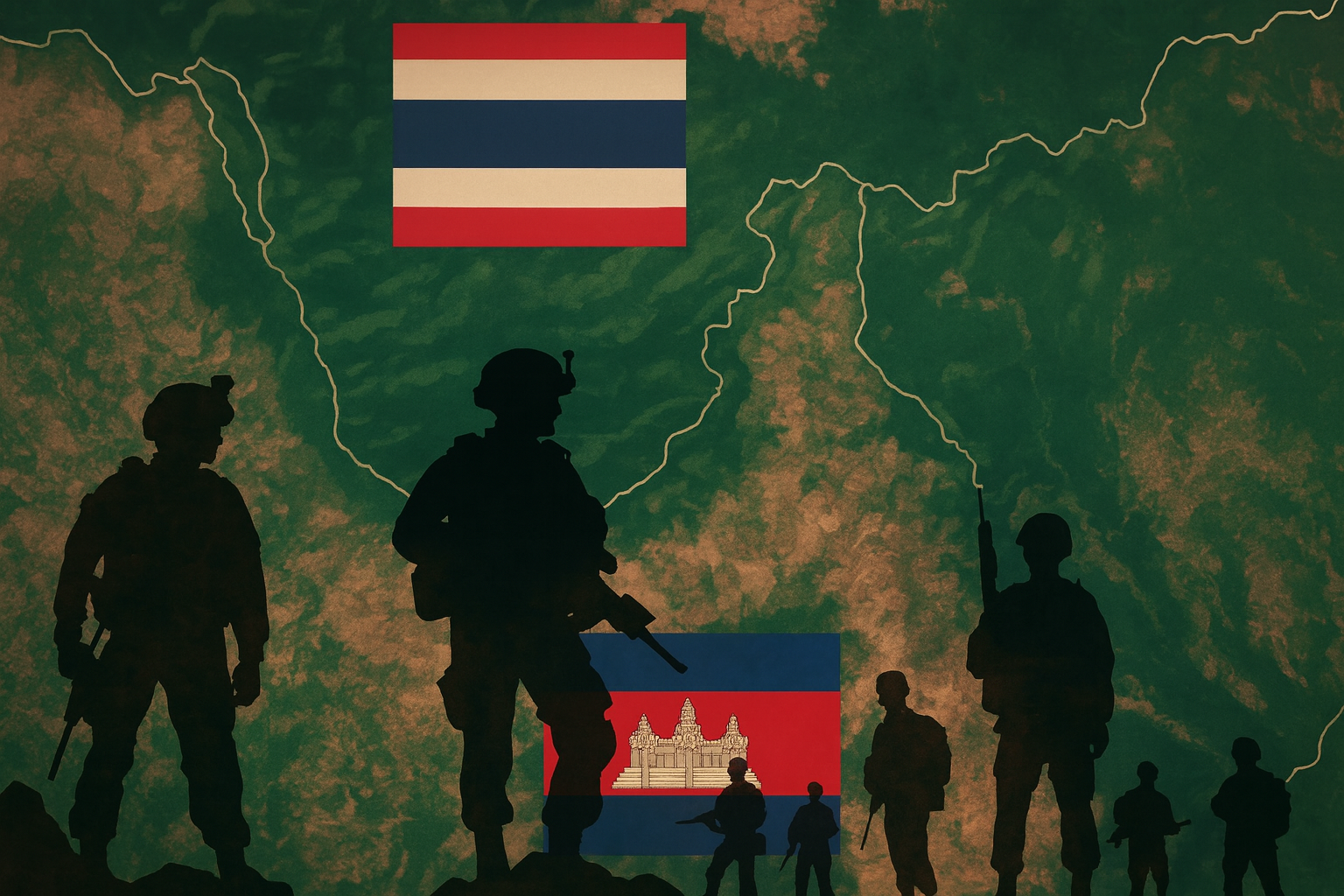
The International Peace Bureau (IPB) expresses deep concern over the rising military clashes and political tensions between Thailand and Cambodia, which have resulted in the death of at least 15 civilians and the mass displacement of civilians from border areas. The escalation of long-standing tensions over the border risks further exacerbating civilian suffering and displacement.

The IPB calls for an immediate ceasefire and a return to diplomatic negotiations and conflict resolution as the only tools that can solve the crisis. Nationalist and militaristic rhetoric must be replaced by dialogue and common security.

Moreover, IPB calls on ASEAN, particularly neighbour states in the region and those with military ties to either party, to encourage de-escalation and peaceful resolution.

Download the Statement

Read More

Statement: Calling for De-escalation and Peace Between India-Pakistan

Statement: Calling for De-escalation and Peace Between India-Pakistan

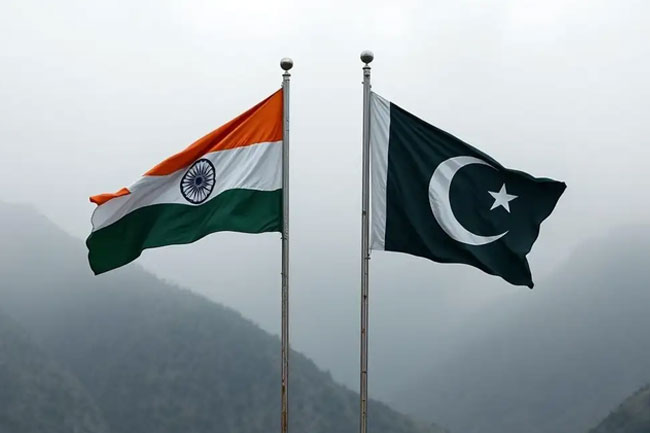
The AEPF strongly condemns the terror attacks in Pahalgam-Kashmir on April 22, 2025. We condole with the families of the 26 civilian victims of this heinous crime. We call for credible investigation into this crime whereby all involved be brought to book. Terrorism in all forms is a criminal activity and has no place in any society and we believe the international community needs to address this issue collectively.

We are witnessing an escalation of war like situation in the Sub-Continent and raised militarist rhetoric as both sides have taken steps to curtail all diplomatic engagements and hurt each other. We believe that wars have serious long term impact on ordinary people and unknown consequences. The AEPF appeals that the Governments of India and Pakistan dial back from these tensions and that all stakeholders assist to de-escalate the atmosphere of war and tensions.

We in AEPF appeal the Governments of India and Pakistan to exercise restraint in this tense atmosphere. We believe that ‘This is not the age for war’ and that all governments take steps to practice this important dictum.

Read More

Indo-Pak Joint Statement of Peace Activist: On and aftermath of Pahalgam tragedy

Indo-Pak Joint Statement of Peace Activist: On and aftermath of Pahalgam tragedy

Islamabad-New Delhi:

While condemning terrorists’ killing of innocent Indian citizens in Pahalgam, some of the leading journalists, intellectuals and peace activists from the subcontinent have called for fair and credible investigation to fix the responsibility and called for de-escalation of a dangerous war-like situation.

The joint statement issued by the peace activists as follows:

“We the concerned neighbouring citizens of the subcontinent unequivocally condemn terrorism against the innocent tourists in the Pahalgam valley, and at any place on whatever pretext.

We demand a thorough and fair investigation into Pahalgam terrorism to uncover the terrorists and the perpetrators of crime in order to bring culprits to justice.

We express our deepest concern over the aggravation of ongoing dangerous tension between India and Pakistan and call for cessation of hostilities and war mongering.

We are of the considered view that fanning war hysteria and perpetuating ongoing tension into any kind of military conflict would be extremely destructive for our countries and peace-loving people.

We are of the view that the current tension needs to be diffused to initiate negotiations for a peaceful resolution of inter-state disputes.

We appeal to the governments of India and Pakistan to save the situation from going out of their hands. The logic of dialogue must prevail over the madness of the weapons of destruction.”

The leading peace activists who issued the above call for De-escalation of tension and peaceful resolution of inter-state conflicts include:

Pakistan:

Imtiaz Alam, Secretary General SAFMA
Tariq Khsa, Former IG Police Punjab
Mujeeb ur Rehman Shami, Editor Pakistan
Hussain Naqi, Human Rights Commission of Pakistan (HRCP)
Afrasian Jhatak, National Democratic Movement, KP
Rashid Rehman, Senior Editor
Saleema Hashmi, leading artist
Khawar Mumtaz, Woman Action Forum
Farooq Tariq, President Haqooq I Khalq Party, Gen Sec Kissan Rabita Committee
Dr Abdul Maalik, President National Party
Ayub Malik, NP Punjab
Sheema Kirmani, Tehreek I Niswan
Khawar Mumtaz. Woman Action Forum
Mohammed Tehseen, Convener Pakistan India Peoples Forum for Peace and Democracy
Syed Akhtar Ali Shah, Former IGP KP
Tasneem Rizvi, architect
Imtiaz ul Haq, MKP
Beena Sarwar, peace activist, SAPAN
Khalid Farooqi, Editor Awaz (Jang Group)
Dr Jabbar Khattak, Editor Awani Awaz Sindh
Senator Buledi, National Party (Baluchistan)
Mahesh Kumar, Editor Daily Sindh
Kamran Chaudhary, peace activist
Allama Siddique Azhar, Anjuman Taraqi Pasand Musanafeen
(List is longer)

India:

O. P. Shah, leading peace activist
Tarun Basu, peace Activist
John Dayal, Senior journalist and peace activist
Satish Jacob, Gen Secretary Safma India
Kumar Ketkar, MP, leading editor
Satnam Singh Manak, Editor Ajeet, Hind-Pak Dosti Manch
Rumesh Yadev, Amritsar Lok Academy
Prof Anand Kumar, academic
Nizamuddin Bhat, peace activist
M Y Tarigami, political activist
Sunil wattal, peace activist
Anita Katyal, Senior Journalist, Safma India
Rita Manchanda, author, peace activist
Qurban Ali, peace activist
D Khajuria, peace activist
Rana Siddiqui Zaman, peace activist
(List is longer)

Issued By Central Secretariat of Safma, Lahore.
(Imtiaz Alam, Sec Gen SAFMA)

Read More

Laos: States should ask “Where is Sombath?” at upcoming review of human rights record

States should ask “Where is Sombath?” at upcoming review of human rights record

15 December 2024: On the 12-year anniversary of the unresolved enforced disappearance of Lao civil society leader Sombath Somphone, we, the undersigned civil society organizations and individuals worldwide, urge United Nations (UN) member states to express their concern over this continuing crime and to call for the prompt resolution of Sombath’s case at the upcoming review of the human rights record of Laos.


As UN member states prepare for the fourth Universal Periodic Review (UPR) of Laos, scheduled for April/May 2025 in Geneva, Switzerland, we call on them to reinforce civil society’s long-standing calls for truth and accountability regarding Sombath’s enforced disappearance.

During the second UPR of Laos in January 2015, Sombath Somphone was the subject of recommendations, expressions of concern, and advance questions by 16 UN member states.[1] During the third UPR of Laos in January 2020, seven UN member states formulated recommendations or advance questions on Sombath’s case.[2]

During both reviews, the Lao government claimed its investigation into Sombath’s enforced disappearance was ongoing. Such statements have been contradicted by the undisputable fact that, for 12 years, the Lao authorities have consistently failed to provide any concrete information on the steps they claim to have taken to effectively investigate Sombath’s disappearance. Instead, the government has engaged in a protracted campaign of misinformation, denials, slander, and cover-ups.[3]

At the upcoming UPR, UN member states should call on the Lao government to take throrough and effective measures to establish the fate or whereabouts of Sombath and all other victims of enforced disappearances in the country, identify the suspected perpetrators of such serious crimes, and provide victims with an effective remedy and full reparations. To date, no case of enforced disappearance in Laos has been resolved and no perpetrators have been identified or brought to justice.

UN member states should also recommend the Lao government promptly ratify, without reservations, the International Convention for the Protection of all Persons from Enforced Disappearance (ICPPED), which it signed in 2008, and fully implement it into national law, policies, and practices.

The Lao government’s failure to uphold its obligations under international human rights law and standards with respect to Sombath is reflective of the human rights violations constituting crimes under international law and related impunity that have plagued Laos for several decades. His enforced disappearance has also had a chilling effect on Lao civil society organizations and human rights defenders, and marked a significant escalation in the government’s silencing of independent voices.

Amid the serious constraints and repression faced by independent civil society organizations and human rights defenders in Laos, and the continued silence of donors, development agencies, and diplomats in the country, concerned international attention remains the primary hope for finding Sombath and delivering justice to him and his family.

We continue to stand in solidarity with Sombath and his family and urge UN member states to join us in asking the Lao government the same question we have been asking for the past 12 years: “Where is Sombath?”

Background

Sombath Somphone, a pioneer in community-based development and youth empowerment, was last seen at a police checkpoint on a busy street of Vientiane on the evening of 15 December 2012. Footage from a traffic CCTV camera showed that police stopped Sombath’s vehicle at the checkpoint and that, within minutes, unknown individuals forced him into another vehicle and drove him away in the presence of police officers. CCTV footage also showed an unknown individual arriving and driving Sombath’s vehicle away from the city center. In December 2015, Sombath’s family obtained new CCTV footage from the same area and made it public. The video shows Sombath’s car being driven back towards the city by an unknown individual.

For further information, please visit: https://www.sombath.org/

Organizations:

  1. Alternative ASEAN Network on Burma (ALTSEAN-Burma)
  2. Amnesty International
  3. Armanshahr|OPEN ASIA
  4. ARTICLE 19
  5. ASEAN Parliamentarians for Human Rights (APHR)
  6. Asia Democracy Network (ADN)
  7. Asia Human Rights and Labour Advocates (AHRLA)
  8. Asian Forum for Human Rights and Development (FORUM-ASIA)
  9. BALAOD Mindanaw
  10. Bangladesh Krishok Federation
  11. Bir Duino
  12. Bytes For All
  13. Cambodian Human Rights and Development Association (ADHOC)
  14. Cambodian League for the Promotion & Defense of Human Rights (LICADHO)
  15. Center for Prisoners’ Rights
  16. Centre for Civil and Political Rights
  17. Centre for Human Rights and Development (CHRD)
  18. China Labour Bulletin (CLB)
  19. CIVICUS: World Alliance for Citizen Participation
  20. Commission for the Disappeared and Victims of Violence (KontraS)
  21. Community Resource Centre (CRC)
  22. Covenants Watch
  23. Cross Cultural Foundation (CrCF)
  24. Defence of Human Rights (DHR)
  25. Equality Myanmar
  26. FIAN International
  27. FIDH – International Federation for Human Rights
  28. Focus on the Global South
  29. Fortify Rights
  30. Fresh Eyes
  31. Front Line Defenders
  32. Globe International
  33. Human Rights Alert
  34. Human Rights Commission of Pakistan (HRCP)
  35. Human Rights in China (HRIC)
  36. Human Rights Watch
  37. Indonesia Legal Aid Foundation
  38. Indonesian Legal Aid and Human Rights Association
  39. International Campaign for Tibet (ICT)
  40. International Commission of Jurists (ICJ)
  41. International Rivers
  42. Internet Law Reform Dialogue (iLaw)
  43. Justice for Peace Foundation
  44. Kazakhstan International Bureau for Human Rights and Rule of Law
  45. Lao Movement for Human Rights (LMHR)
  46. League for the Defence of Human Rights in Iran (LDDHI)
  47. London Mining Network
  48. Madaripur Legal Aid Association (MLAA)
  49. MADPET (Malaysians Against Death Penalty and Torture)
  50. Maldivian Democracy Network (MDN)
  51. Manushya Foundation
  52. National  Commission for Justice & Peace (NCJP)
  53. National Fisheries Solidarity Movement
  54. Odhikar
  55. Pakistan Fisherfolk Forum
  56. Peace Rights Foundation
  57. People’s Solidarity for Participatory Democracy (PSPD)
  58. People’s Watch
  59. Philippine Alliance of Human Rights Advocates (PAHRA)
  60. Psychological Responsiveness NGO
  61. Public Association “Dignity”
  62. Refugee and Migratory Movements Research Unit (RMMRU)
  63. Safety and Risk Mitigation Organization (SRMO)
  64. Stiftung Asienhaus
  65. Suara Rakyat Malaysia (SUARAM)
  66. Taiwan Association for Human Rights (TAHR)
  67. Task Force Detainees of the Philippines
  68. Thai Lawyers for Human Rights (TLHR)
  69. The Corner House
  70. Think Centre
  71. Transitional Justice Working Group (TJWG)
  72. Transnational Institute
  73. Union for Civil Liberty (UCL)
  74. Urgewald
  75. Vietnam Committee on Human Rights (VCHR)
  76. WH4C (Workers Hub For Change)
  77. Women’s Peace Network (WPN)
  78. World Organization against Torture (OMCT)

Individuals:

  1. Shui Meng and Sombath’s family, Vientiane
  2. Nico Bakker, Portugal
  3. Philip Hirsch, University of Sydney
  4. Rosanna Barbero
  5. Anne Sophie Gindroz
  6. Saeed Baloch
  7. Ame Trandem, The Hague, The Netherlands
  8. Nora Sausmikat, Germany
  9. Randall Arnst
  10. Larry Lohmann
  11. Sarah Sexton
  12. Nicholas Hildyard
  13. David JH Blake
  14. Angkhana Neelaphaijit

[1] Recommendations: Australia, Canada, Finland, Germany, Luxembourg, Poland, Portugal, Sweden, Switzerland, and United Kingdom; Expression of concern: Belgium, Netherlands, and Singapore. Advance questions: Slovenia, Spain, and United States.
[2] Recommendations: Australia, Canada, Germany, New Zealand, and United Kingdom. Advance questions: Belgium and United States.
[3] For example, see: BBC, Laos accused of lying over Sombath Somphone abduction, 28 August 2013; https://www.bbc.com/news/world-asia-23862691; Radio Free Asia, EU Parliament Dissatisfied with Lao Efforts to Locate Missing Activist, 28 October 2013, https://www.rfa.org/english/news/laos/eu-10282013191323.html; Human Rights Watch, Laos: End Cover-Up in Activist’s ‘Disappearance’, 14 June 2013, https://www.hrw.org/news/2013/06/14/laos-end-cover-activists-disappearance; APHR, Lao government’s deceptive game on Sombath investigation must end, 12 September, 2014, https://aseanmp.org/publications/post/lao-governments-deceptive-game-on-sombath-investigation-must-end/; FIDH, Government slanders Sombath Somphone, issues “blanket denials” on enforced disappearances during rights review, 18 July 2018, https://www.fidh.org/en/region/asia/laos/government-slanders-sombath-somphone-issues-blanket-denials-on; Human Rights Committee, Information received from the Lao People’s Democratic Republic on follow-up to the concluding observations on its initial report, 18 December 2023, https://shorturl.at/6ZOYe; Sombath.org, The investigation [last accessed on 29 November 2024], https://www.sombath.org/en/who-is-sombath/video/the-investigation/

Read More

AEPF Statement on the We-20 Civil Society Meeting in India

AEPF Statement on the We-20 Civil Society Meeting in India

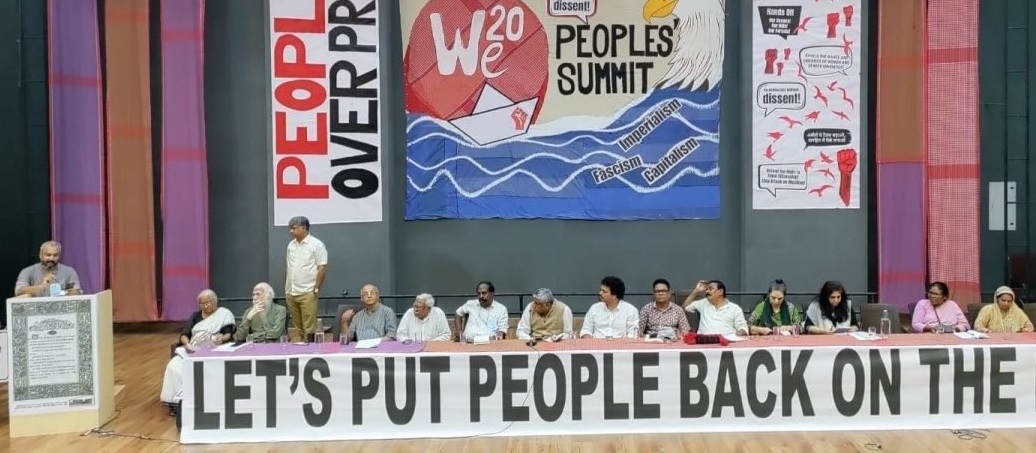
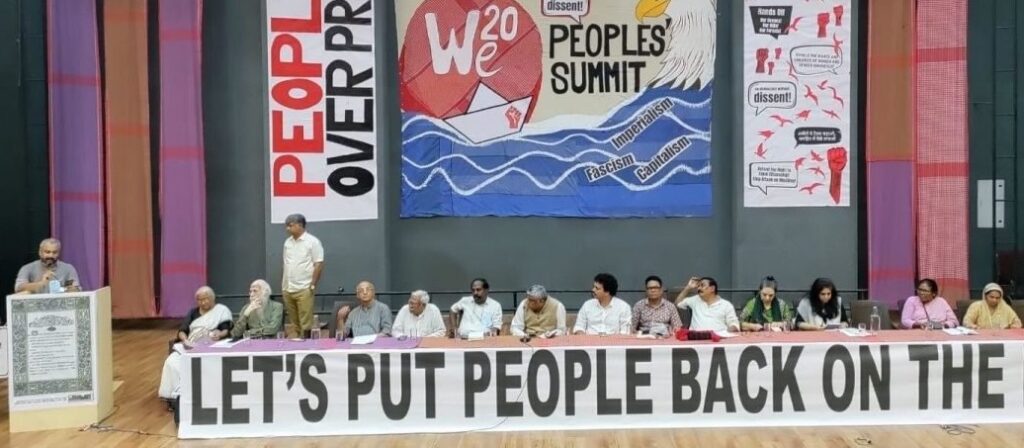
We are distressed to learn that a meeting of Indian civil society activists who gathered in the building belonging to an opposition party of India was disrupted by the Indian Police Department. What is even more disturbing to international civil society is that this meeting of Indian civil society was by the coalition of ‘We-20’ that was meeting to provide an input from civil society to the G-20 meeting that will be held in India shortly.

Image Credits: Subin Dennis (Twitter)

As is the international tradition, many civil society groups are encouraged to have forums and discussions on the areas and issues that are of concern to G-20. These discussions do not have to be confined only to officially designated formal and informal groups. So it disconcerting that an open discussion like this has been forcefully stopped.

We urge the Indian Government and all concerned to allow Indian civil society the space and freedom to engage in discussions in an atmosphere of democratic freedoms and absence of fear which is the arch of any democratic society.

www.aepf.info

Read More

Find and Punish Anousa’s Attackers; End Violence and Impunity!

Find and Punish Anousa’s Attackers; End Violence and Impunity!

Asia-Europe Peoples Forum.  May 4, 2023

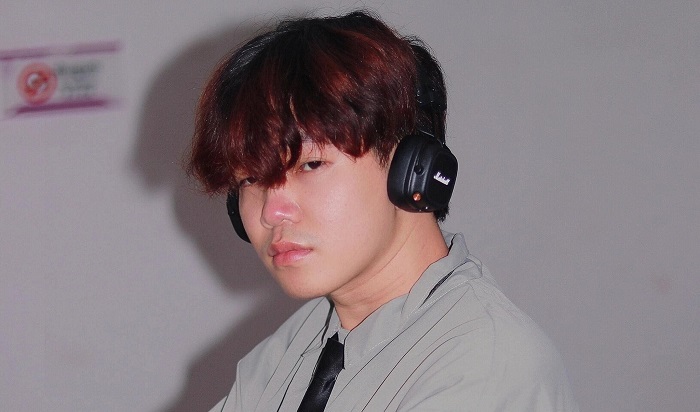
The Organising Committee of the Asia-Europe Peoples’ Forum (AEPF) expresses our shock and anger at the brazen attempted murder  of Anousa “Jack” Luangsouphom, a young Lao blogger, on Saturday, 29 April 2023.   Anousa was shot twice at point blank range by a person in plain clothes in the  After School Chocolate & Bar in Lao’s capital city Vientiane. He is currently in hospital and his family and friends are scared for his and their safety. The shooting was caught on the coffee shop’s security cameras and publicized by Laophattana Daily News (a state media outlet) as well as on Facebook and Twitter by numerous users.  However, Lao Authorities have yet to provide any updates about investigation into the attempted murder, nor have they acted to ensure the safety of Anousa and other witnesses of the attack.

Along with three colleagues, Anousa runs a public Facebook site, “Kab Kuan Duay Keyboard” (Driven By Keyboard) and a closed Facebook group “Laos Drama” on which, they post news and analyses about social, environmental, political, and human rights issues in the Lao PDR (Laos). Both sites have amassed a large following among young people, journalists, and civil society organisations both inside and outside the country. Anousa is a vocal advocate for human rights, press freedom, civil liberties, democratic pluralism and ending corruption.

Anousa’s attempted murder has sent shock waves among activists and social media users in Laos, many of whom believe that the murder was politically motivated to silence the growing movement – comprised largely of young people – for civil-political rights, freedom of expression and meaningful participation in the country’s governance. The brazenness of the attack indicates the shooter’s confidence of impunity, and has deepened fear of violent reprisals against those who speak out for sustainable development, justice, and accountability.

Judicial repression, extra-judicial violence and state reprisals are not new in Laos: in December 2012, eminent community leader Sombath Somphone was disappeared in full public view from a checkpoint manned by uniformed police and remains missing to this day.  In 2019, Od Sayavong, a member of the “Free Lao” group was disappeared in Bangkok after meeting with the UN Special Rapporteur on Extreme Poverty and Human Rights, just before his official visit to Laos. Numerous Lao people have been arrested for participating in peaceful demonstrations in Laos and Thailand, and for sharing news and views about issues considered ‘sensitive’ by the ruling regime. Lao Authorities remain silent on the whereabouts  of the disappeared and the conditions of those incarcerated, in contravention to the human rights conventions that the country is signatory to.

We join human rights organisations and civil society in condemning in the strongest possible terms the attack on Anousa and the use of brute force to silence critical and dissenting voices.     Like many young people in Laos, Anousa and his colleagues are exercising their rights to citizenship by sharing information and facilitating discussion about issues that are critical to the sustainable development of Laos and to their futures as Lao citizens. 

We call on the Lao Government to immediately launch an independent, impartial, and comprehensive investigation into Anousa’s attempted murder and ensure that the perpetrators are held accountable to the highest standards of law. Equally urgent is providing protection to and ensuring the safety of Anousa and other witnesses to the attack throughout the investigation and subsequent judicial processes.  

We ask Laos’ donors, who are pouring millions into the country as development aid, to urgently demand prompt, impartial and effective investigation and accountability, and an end to the pervasive culture of violence and impunity.  The European Union and other bilateral and multilateral donors who claim to be supporting human rights and civil society need to make an honest assessment as to whether their efforts are creating a false impression that human rights and civic space are actually improving in the country. Democracy can never flourish, or even take root in a social-political context of repression, violence, fear, and absence of public accountability.

Read More

The Civil Societies Urge the G20 to Stop the Discussion on Cross-Border Data Free Flow with Trust

The Civil Societies Urge the G20 to Stop the Discussion on Cross-Border Data Free Flow with Trust

18 November 2022

The G20 Bali Declaration is still pushing the commitment of all G20 members to continue the discussion on Data Free Flow with Trust (DFFT), while there is no agreement reached by the G20 members regarding to this agenda. 

We,  civil society organizations, urge the G20 Developing Countries to not continue the discussion on Data Free Flow with Trust (DFFT) to promote the free flow of Data at the G20 meeting, especially under the Presidency of India. The G20 is not an appropriate forum to discuss the issue of digital data governance where majority of G20 Developing Countries, like South Africa, India and Indonesia, in particular, are still refusing to buy into this new term. 

This is because their main issue with the original ‘free flow of data’ doctrine was not as much to do with privacy and security as it was about economic expropriation, given that data is the most valuable resource today. The new concept of DFFT did nothing to address this central concern of developing countries.

Developing countries’ main problem with cross-border free flow of data is related to expropriation of economic value of their data, leading to fears of digital colonization. While some jurisdictions have already created legal economic rights over data, others are actively considering them. Therefore, the adoption of Data Free Flow with Trust (DFFT) will not guarantee  economic growth for the developing countries. 

Data is a key resource in a digital society and economy. Most of the data value is extracted by one or two big techs superpowers who control most of the global digital platforms and infrastructure. The big problem is, today’s big techs companies are benefiting greatly from the expansion of economic digitization with controlling the data in the global world. The top of the list was the right to Control Data, and who controls data essentially can dominate the digital domain. And, so they wanted absolute rights to control the data generated in the business. 

The big tech companies have been lobbying  states to regulate the free flow of data so they can keep the data monopoly. Trade rules are being used to leverage this influence as a vehicle for expanding the big techs power and influence. We are increasingly seeing the incorporation of ‘digital chapters’ in trade agreements and negotiating E-commerce Agreements at the WTO. 

We support the call by the UNCTAD for developing a ‘global data governance framework’ that addresses both non-economic and economic aspects of data. The UNCTAD’s 2021 Digital Economy Report clearly states that as data and cross-border data flows become increasingly prominent in the global economy, there is an urgent need to properly regulate them at the international level. Thus, when addressing how to regulate cross-border data flows, the international community will need to go beyond trade and consider them in a holistic manner. 

Cross-border data flows should be based on a comprehensive rights-based approach that includes all three generations of human rights; civil/ political, social/economic, and the right to development. Economic data rights of individuals, communities and workers are important to ensure equity and justice, nationally and globally. It is important that cross-border data flows are based on social and economic justice, and observe principles like fairness and justice, transparency, lawfulness, and reciprocity in relation to data-related benefits. Therefore, we need to develop a just global digital and data governance framework with an independent representative. 

Therefore, we strongly demand that the G20 developing countries should take  concrete actions beyond the G20 Forum to develop a just global digital and data governance and framework based on south-south solidarity principles with an independent, representative multilateral mechanism, backed by an international treaty (or human rights treaty). And, ensure the global digital and data governance and framework would not be governed in any international trade rules (WTO or bilateral and regional FTAs). 

Signatories:

Asia-Europe Peoples Forum (AEPF)

Focus on the Global South

Seattle to Brussels (S2B) Network

Transnational Institute (TNI)

Global Justice Now (GJN)

IT for Change India

Indonesia for Global Justice (IGJ)

Sahita Institute (Hints)

Fresh Eyes (UK)

Pakistan Rabita Committee

Fian (Indonesia)

Indonesian Human Rights for Social Justice

Read More

The World Must Not Look Away as Pakistan Suffers Climate Dystopia

The World Must Not Look Away as Pakistan Suffers Climate Dystopia

Pakistan Needs Reparations to Address the Devastating Floods strongly linked to the Climate Crises

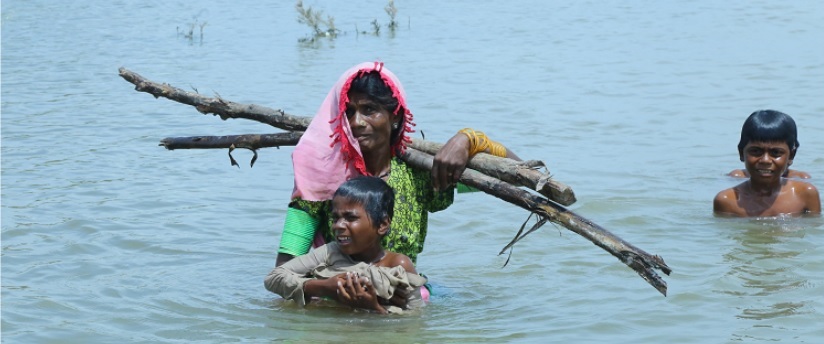
Over a month into the raging floods that have devastated people, land, livestock, livelihoods across over one third of Pakistan, it is profoundly disturbing that there appears insufficient international concern and response. 

With 1,500 people dead,  35 million displaced; hundreds of thousands of livestock swept away; fields, farmyards and homes destroyed; this nation cannot be left alone to cope with a continuous unfolding tragedy caused by climate change which has resulted from fossil fueled, carbon producing industrialization that characterizes historic and current international growth models. 

An already indebted Pakistan is losing an estimated US$ 10 billion on account of these floods. And tragedies continue. People face starvation, water borne diseases, and the possibility of devastating famine and food shortages in the coming months.  UN Secretary General Guterres has said that the moral responsibility lies on the wealthier nations because this climate caused dystopia is a direct result of the greenhouse emissions, 80% of which are currently released by G-20 countries. Pakistan on the other hand is responsible for less than 1% of these emissions. 

It is clear that recovery and rehabilitation will require billions of dollars and time. In the meantime, the people of Pakistan will continue to suffer. 

Standing by amidst such a stark and unfolding disaster is a global shame. 

AEPF demands:

  • Immediate and long term reparations to Pakistan, with dignity and not in the name of aid.
  • International commitments for enabling immediate and long term relief and rehabilitation.
  • Serious addressing of our climate and ecological crises.
  • Wealthier nations assist developing countries with climate justice and adaptation measures.  
  • Immediate suspension of Pakistan’s debt repatriation.

For the Pakistan Government, we ask:

  • Have all institutions and bodies address the plight of people.
  • Divert defence expenditures to social sector expenditure for the next five years.
  • Ensure growth and rehabilitation with equity, targeting the most marginalized, women and children. 

Download the Statement

Read More

Statement Against the Persecution of Dr. Walden Bello

Statement Against the Persecution of Dr. Walden Bello

Asia Europe People’s Forum
August 8, 2022

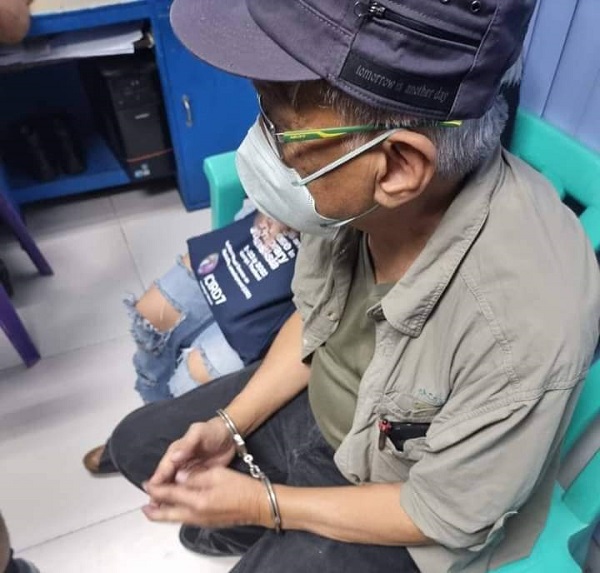
We are shocked at the charges of cyberlibel against Dr Walden Bello an internationally acknowledged professor and activist. We condemn the subsequent arrest and persecution that Prof. Walden is facing. We believe that the charges and the treatment being meted out to Prof Walden indicates that democracy and democratic rights that the Philippino people have struggled for over so many years is imperilled.

Charging and arresting Walden Bello- an internationally recognised dissident and thought leader who fought a legitimate mass campaign in the recent elections, shows that opposition voices are facing all kinds of harassment by state authorities.

We call for the immediate release of Dr Bello. We ask that all charges against him be dropped. We ask the Philippines government to deepen democracy, ensure the space for human rights and a culture of tolerance.

#FreeWaldenBello

Read More