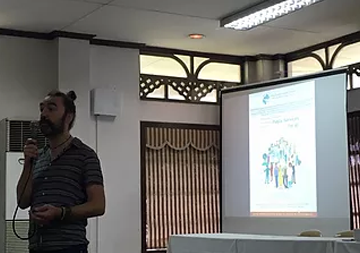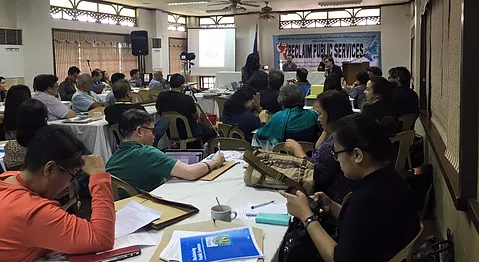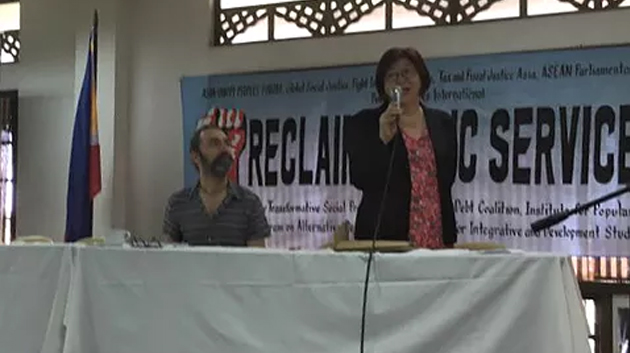
Assuring affordable, accessible, and quality Public Services for all!

Assuring affordable, accessible, and quality Public Services for all!

March 12, 2018 | Tina Ebro

Asia Europe People’s Forum
Social Justice Cluster
Manila Conference, 13 to 15 February 2018

SALIENT POINTS AND WAYS FORWARD

Amidst this gross and rising inequality of 62 people owning as much wealth as 3.6 billion of the poorest people in the world, amidst massive unemployment and work informalization which is becoming structural. Workers’ families have barely any access to affordable, accessible and quality public services – like universal health care, free education up to the college level, decent public housing, a living requirement of water and power, and reliable public transportation, among other public essentials

We need to answer the plea, can we achieve a dignified life for all? People, as human beings have the inalienable right to essential services. These are public goods and part of our social commons. They are vital to life, to the dignity and development of individuals and society as a whole. Their provisioning must therefore be guaranteed.

Yet, the World Bank and IMF continue to impose conditionalities that cut public spending and require privatization of public service financing and delivery. Inequitable trade agreements lock in privatization and expose our governments to the risk of costly arbitration in one-sided international tribunals. States continue to retreat from their obligation to guarantee and finance decent public services.

However, a movement to reclaim public services is sweeping Europe and gaining momentum in Asia. Inclusive people’s platforms and unions, academics, local officials, parliamentarians and policy-makers have taken up the challenge of reversing the privatization of public services and returning them to public ownership and democratic control. International campaigners and scholars have joined with Philippine counterparts in Manila to share insights and experiences.

Together, we have deepened our understanding of the mounting evidence that reveals the failed promises of privatization. We affirmed that effective and accountable public services are a powerful tool to promote greater equality, build social cohesion and improve living standards for all.

We shared documentation, including the 835 examples of municipalities that have benefited from replacing privatization by democratic and participative delivery of public services. We have been inspired by those and other alternatives.

This conference has been a great learning experience, and our exchanges have strengthened our advocacies through the sharing of best practice, strategies, tactics and lessons learned. We have identified new initiatives to build a more powerful movement to reclaim public services.

Our discussions have stressed the following:

  • We will continue our vigorous and -wide ranging campaigns that will enable us to generate the broadest public support and understanding of our agenda.
  • We will widely disseminate our messages and alternatives through the social and mainstream media, and seek to encourage campaigns are covered by in the media.
  • The Asia-Europe Peoples Forum will disseminate the Final Statement, papers and video clips through the social media and key outlets in mainstream media, and target relevant state agencies at the national, regional and global level.
  • We will continue our painstaking lobby work to grow more advocates among legislators and policy-makers, and unite all groups reclaiming public services through building broad coalitions at the national, regional and global level.

In our discussions, we were inspired by Jeremy Corbyn who urged the immediate social ownership and democratic control of public services, a vision which will require great change in societies and a major social struggle world-wide. Our effective cooperation at the regional, inter-regional and global level is more important than ever.

But the real battleground for reclaiming public services is in the streets, workplaces, communities and villages. In addition to our research, lobbying and movement-building, we will also need to act strongly and directly, through litigation and legal reform, civil disobedience and strikes, national consultations and massive protests, consumers’ actions and boycotts, pickets and marches, among others.

There will be change in national and global policies only when we have strong social movements that embrace the fight for social, economic and ecological justice across countries and across continents. So we will promote broader and stronger forms of organization and mobilizations that can create the compelling pressure from below to reclaim the state, and support our key goals to:

  • Introduce legislation, with constitutional underpinning if possible, to ensure that people’s rights to public services are institutionalized and insulated from market forces and political patronage;
  • Finance public services by building the political will to enforce real progressive taxation and abandoning unjust tax policies which allow the mega-rich to hide their wealth through tax havens and illegal money flows;
  • Abandon the policy of using PPPs, and use public finance to finance infrastructure and public services;
  • Establish public ownership and democratic management of public services, including mechanisms for people’s participation and oversight;
  • Foster public-poor-partnerships that enable impoverished communities to participate fully in the planning, implementation and oversight of projects.

Lastly, we recognize that rebuilding public services is not an isolated campaign. It is closely linked with struggles for decent work, land and food sovereignty, just trade and climate justice. It is part of the transformative change towards an alternative development paradigm for people and planet, within a more enlightened socio-economic system that, as Naomi Klein characterized, “closes deep inequalities, strengthens and transforms the public sphere, generates plentiful, dignified work and radically reins in corporate power.”
Read More

The right to health and access to therapies. Our fight against the privatisation of the health care services

The right to health and access to therapies. Our fight against the privatisation of the health care services

March 11, 2018 | Vittorio Agnoletto, MD, professor at University of Milan, Medicina Democratica association

Since 2013, the representatives of the most powerful states in the world have been discussing the TiSA (Trade in Services Agreement) agreement that will include education and health care. In 2014 such negotiations were revealed by WikiLeaks, the organization led by Julian Assange. The TiSA will be the largest trade agreement ever discussed, since services represent about 70% of the world’s GDP. On 4 February 2015 the AWP (Associated Whistleblowing Press agency) published a TiSA document which states the following: “There is enormous potential that is not yet exploited for the globalization of health services”. The health market is valued at several hundred billions. Yet potential gains may be even larger. “Being financed and provided by the State, or other welfare agencies, health systems are of no interest to foreign investors due to the absence of commercial purposes”.

The methods of meeting such an objective are quite easy: privatization, the opening of markets to large financial funds and international insurance companies, thus reducing the public responsibility for collective health. Governments all over the world, even those financing national healthcare services, keep reducing their budget expenses in health issues with the aim to privatize their health system and limit the right to universal, free of charge access to therapies.

THE SOCIAL DETERMINANTS OF HEALTH

According to the WHO, we deem health as “a state of complete physical, mental and social well-being and not just the absence of the state of illness.”

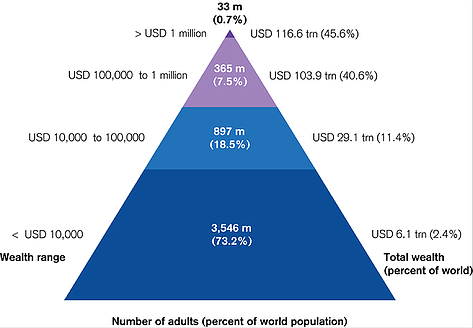
The Global Wealth Pyramid

This is the current social pyramid of the world where 8.2% of the population controls 86.2% of wealth, but above all where 73.2% of citizens have less than 2.5% of the wealth of the planet. The situation worsens yearly. Extreme poverty isn’t only in the southern hemisphere. Poverty, housing conditions, work rather than unemployment affect quality but also the duration of our lives, – in the USA the poorest die 14 years

Source: James Davies, Rodrigo Lluberas and Anthony Shorrocks, Credit Suisse Global Wealth Databook 2016 earlier than the richest.

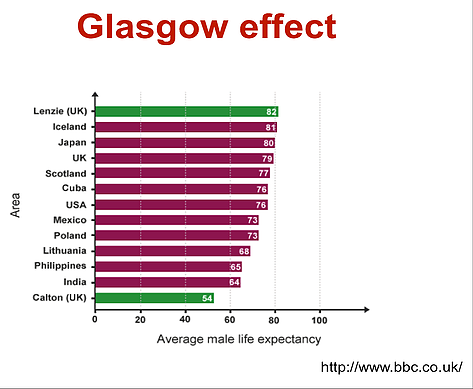
Look at this slide –

Lenzie and Calton are two areas of Glasgow, less than 10 miles apart, yet, among them, there is a difference in life expectancy of nearly thirty years; thirty years between those living in a poor neighborhood and those living in a residential area and we are not comparing a village in Bangladesh with a Norwegian city. Here’s what it means to evaluate the social determinants of health.

Often in medical conventions one remembers how in ancient China the doctors were rewarded and paid more if less citizens entrusted to their care got sick. Prevention was the main subject of those who approached medical science. Today prevention in the Western world has almost disappeared.

But prevention does not require the use of drugs, large hospitals, sophisticated technology; prevention does not produce big profits, and so this is not in the interest of the market.

Just to give an example: according to UNAIDS, 1.8 million people in the world became newly infected with HIV in 2016 and according to data from the World Health Organization (WHO), published in the World Malaria Report 2016, there were about 212 million cases of malaria estimated worldwide in 2015 and about 429 thousand deaths, 70% of which among children under the age of 5 years (of which 292 thousand in the African Region), followed by Southeast Asia (7%) and the Eastern Mediterranean. It should be noted that tobacco is one of the leading causes of death among non-communicable diseases, but British American Tobacco Company was one of the main contributors to various foundations and political figures.

THE PRIVATIZATION OF HEALTH SERVICES

Every year the financing of the National Health Services in EU grows less and less than it would be necessary even to recover the increase in prices of technologies and services estimated at an average around 2%, and to equalize inflation.

In Greece the effects have been devastating; even countries with efficient health systems and a long tradition behind them have had similar fate. In Spain in 2012 the universalistic system was replaced by an insurance company, in England, with a law that came into force in 2013, the National Health Service was destroyed and the production of services was privatized, in Italy, in Lombardy, the richest region, a recent right-wing government project, is trying to privatize healthcare of 3,350,000 citizens.

The privatization of health increases year by year everywhere, in the future only the rich ones will be able to cure themselves. It is not true that the privatization of health systems produces saving in spending: it simply transfers substantial expenses from the State to the individual citizen.

THE BUSINESS OF DRUGS

A market-oriented approach, as imposed by the multinationals managing the sector, rules the availability and the access to drugs. The aims and the needs of public health don’t count for anything. While multinationals foster the use of useless products, all possible means are provided to limit the access to economical, affordable drugs for millions of patients to whom the use of drugs is denied as these are too expensive. In such a framework, the commercialization of health enhanced by the financial system damages all human beings, in particular the most vulnerable and poor people. Innovative drugs prices are rising without any justification due to their production costs as the patent owners set their prices in a monopoly regime.

Such a situation might become even worse in case the international commercial agreements extend the patent duration, already granted for 20 years by the TRIPS agreements, and will impose more constraints on the concerned countries limiting their power in regulating the market.

If Big Pharma companies have not broken down in the face of $ 14 billion fines sentence in five years for bribery and bogus advertising, it’s because you willingly pay when the crime produces gains many times greater than the penalties!

We ask that States immediately apply the two clauses contained in the TRIPs agreements – the Agreement on Trade Related Aspects of Intellectual Property Rights- that allow a nation to directly produce drugs without respecting patents, when it is not able to guarantee the care of its citizens. I am speaking about parallel importing (art.6) and compulsory licenses (art.31). These clauses are only formal statements, but in their current version they are unusable.

We ask that our governments challenge the TRIPs within the World Trade Organization; it makes no sense to guarantee a production monopoly for twenty years, when in only one year companies can recover all expenses and investments. But this is not enough.

It is not possible to let the pharmaceutical industry be a monopoly of the private sector, it is important to fight to resurrect a public drug industry, even supranational, but public, which aims to cure and not to profit. We have spoken so far of diseases for which there are treatments but are increasingly unaffordable for an immense amount of people. A further issue concerns the so called “neglected diseases”, the forgotten diseases, for which no research is done because they affect poor populations out of the market and for which, in some cases, the drugs are there but are kept in the drawer because they would not produce profits.

CONCLUSION

All these elements represent a clear attack to people’s right to health: the neo-liberal policies supported by the most powerful countries in the world are fully responsible. Defending the right to health, to universal, national healthcare systems, and to the free access to therapies is a way to contain such policies. It is also a way to oppose without any ambiguity those who are part of this economic and financial system.

I believe there is not only a heavy attack on the health condition of human beings driven by the head of political, economic and financial powers, but also on the will to provide suggestions for a global agenda aimed at opposing the privatization of health care systems.

The privatization of health, the appropriation of the human body as a source of income proceeds hand in hand with the privatization of the Common Goods which are indispensable for the survival of mankind and other species, to begin with water and land.

What we are launching now is the challenge to build a long-lasting alliance between a part of the scientific world and social movements because health can have neither masters nor borders.

Ours is not a cry of despair, what we launch is a sign of hope for those who refuse to surrender, for those who do not take refuge in individual solutions, for all those who will be born tomorrow, so that they do not have to curse their existence, but they will still be able to fall in love with the world and the surprises that life will reserve for them.

The neo-liberal wave that was generated by Reagan’s and Thatcher’s policies at the beginning of the 80’s of the last century, did not spare healthcare systems, making them a privileged area for the interests of the market (decline of the public sector, privatization, etc). The World Bank played a crucial role in these processes which affected low and middle income countries at first and later on, in the wake of the 2008 financial crisis and the following austerity policies, the national health systems in rich countries.

*** Vittorio Agnotetto An occupational health medical practitioner, Vittorio Agnoletto is also professor of “Globalization and Health Policies” at the University of Milan, and author of several scientific publications on national and international reviews. He is part of the International Council of the World Social Forum. In November 2017, he was spokesperson of the International Forum for the Right to Health against the G7 Summit. He was a member of the European Parliament, working on human rights and free trade agreements, especially the EU-ACP FTA. In 2001, he was spokesperson of the global movement against G8 in Genoa in 2001. He is founder of the Italian League Against HIV (LILA) and a member of the HIV National and International Committees. He has managed a lot of research projects in Europe and Africa on public health, access to medicines, drug addiction, HIV, and compulsory license. He is also a member of Medicina Democratica (Democratic Medicine) and CostituzioneBeniComuni (Constitution and Common Wealth).

Read More

Assuring affordable, Accessible and Quality Public Services for All

Assuring affordable, accessible and quality public services for all

February 27, 2018

Asia Europe People’s Forum
Social Justice Cluster
Manila Conference, 13 to 15 February 2018

Political declaration

One very clear message came out of this conference: public services should be in the hands of public authorities and citizens and be fully and exclusively committed to serve the society as a whole. Some speakers put emphasis on the role of the state, others on municipalities and still others on citizens and their self-organisations. But they all agree public services must not be made into profit-making mechanisms, such as international institutions and too many governments now tend to do.

The privatisation efforts of the past decades have failed. Many essential services are not affordable for the majority of poor people, quality is substandard, employment and wages are undermined. Research shows that privatisation leads to excess profits for corporations and high costs for the public. Whether we speak of water, health care, education, public transport, energy, in each and every sector the same problems arise.

Moreover, transnational corporations, the drivers of privatisations, do not hesitate to push for free-trade agreements with private arbitration clauses, so that they can sue governments whenever laws or regulations are proposed in the interest of citizens but possibly affecting their profits.

As a consequence of failed privatisations, the conference shared many examples of reclaimed public services that resulted in significant public benefits, including lower costs. 835 examples of services taken back under municipal ownership and control have been documented, demonstrating that the title of the conference ‘Reclaiming public services’ is becoming an exciting reality.

Movements of citizens and residents are getting stronger to reclaim what is theirs: universal quality of fundamental infrastructures and services in the public interest. To make this possible, governments will have to seriously question, in a participatory process, their macro-economic framework and their tax and public spending policies, as well as their unjust laws, so as to make financial resources available. Public services will also have to contribute to the reduction of the disastrous inequalities and to the sustainability of the environment.

Whether these services are provided by States, municipalities or people’s organisations, the way they are conceptualized, regulated and monitored is crucial for their success. Real participatory democracy is therefore an essential and common characteristic of the public services this conference wants to promote, based on the successful best practices.

Public services go beyond public ownership to embrace dynamic forms of democratic participation and accountability. The conference gave examples of democratic planning of inclusive public services, such as for transport, renewable energy and housing.

It means that in this new era with a new awareness of what is necessary for a life in dignity for all, and with a better understanding of the fundamental differences between progressive policies and a neoliberal and conservative ideology, we can overcome the simple divisions between state and market, private and public.

This conference has been a major contribution to the alliance of all progressive forces, working in the framework of the commons, our collective ownership of our common nature and built infrastructure. We worked to re-define strategies, to renew its thinking on production, markets, nature and the State, to create a new narrative to better organize our resistance to neoliberal and conservative forces.

New forms of cooperation are required, between public authorities at different levels, trade unions and other social movements, academics and legal experts. In the same way as this conference was built, progressive forces can make real progress once they understand their common interest. Victory is possible.

Destroying public services is destroying the very society that makes us what we are, social relationships, solidarity and collective values. Preserving and promoting public services is promoting citizenship and the sovereignty of the people.

Read More

Assuring affordable, accessible and quality Public Services for all: Tool for leveling inequality, mobilizing for transformative change!

Assuring affordable, accessible and quality Public Services for all: Tool for leveling inequality, mobilizing for transformative change!

February 13, 2018

Balay Kalinaw, UP Diliman, Quezon City, 13-15 February 2018

BACKGROUND

The world is riven by social injustices marked by worsening social inequality, dispossession, exploitation and exclusion. Concretely, in Asia, despite a booming economy, close to one billion people face massive unemployment and work informalisation, with barely any access to social services and support for a life of dignity. In Europe, more than 115 million people are living on the poverty line, facing indebtedness, joblessness and insecurity. However, states respond with policies that cut social services and dismantle public utilities. Institutionalised welfare programs that have served as models of development have been undermined and eroded.

Austerity Measures

The dominant development paradigm’s market-centric policies have affected the lives and livelihoods of peoples in Asia and Europe, especially the vulnerable sectors. Both regions face austerity measures driven by international public institutions, notably the International Financing Institutions, and in Europe through the European Union which has given the Commission additional powers to slash and control national public spending plans.

Even the IMF now claims to recognize that current policies increase inequality and that this harms economic growth and stability. But the IMF and World Bank continue to worsen inequality by their conditionalities which require cuts in public spending, in spite of their formal priority for poverty reduction. They also promote cutting corporate tax rates and providing generous tax and fiscal incentives, which lead to losing and forgoing badly needed financial resources for social spending. Meanwhile, to recoup these losses, the IMF, in particular,pushes the adoption/increase of regressive consumption taxes such as Value Added Taxes which unjustly burden the poor and low-income groups. Women in great numbers are in lowly paid, insecure, informal work and are thus disproportionately impacted.

This internationalization undermines and weakens democratic processes and outcomes at the national level. Social movements thus face a challenge not only of winning public support and national level political support, but also defending the democratic processes against the institutions of globalization.

Public Financing of Services and Public-Private- Partnerships​​

Further, in terms of the SDGs and the Addis agenda for development, the WB and OECD governments insist on Public-Private Partnerships (PPP) as the way forward. Yet cumulative evidence demonstrates that these are more expensive (and thus constrain peoples’ access), more corrupt, less efficient and less sustainable than using public finance and public sector delivery. The focus of private companies on keeping profit as the primary motive goes against the very basis of public services and even what constitutes ‘public’ and the public good. No economy can be sustainable without a robust commitment to access of the people to affordable quality public services. These services are part of social commons to which all people have a right. People, simply as human beings, have the inalienable right to essential services.

Entering into trade agreements are also promoted by the International Financing Institutions on the assumptions that these will increase Foreign Direct Investment and hence, financing for public services. However, such agreements have proven damaging to countries’ revenue base and exploitative of human and natural resources. Investments have served to extract revenue from public services to boost the returns to transnational corporations and finance capital.

Public goods and equality​​

All over Asia and Europe, specific public services are experiencing a serious crisis, including housing, healthcare, education, water, energy and transport (roads, railways, and ports). These services are vital and indispensable to life, to the dignity and development of individuals and society as a whole. They are public goods or social commons, and their provisioning must, therefore,be guaranteed and financed by states, from the taxes they collect, through public employment, and subject to democratic control through the participation of citizens. Where governments and local authorities fail to provide such services, or mismanage the provision of these services through corruption or negligence or under-provision, states should support the autonomous activities of people’s organizations and local communities in provisioning for public services.

Because public services are proportionately more important for poorer groups in the population, poorer people are worse affected, while the rich and private corporations remain relatively unscathed even in times of austerity. The cutbacks invariably target public employment, which further exacerbates inequality. This is because the public sector provides greater opportunities for the employment of women and of disadvantaged ethnic and other groups; and because public sector pay is more equally distributed; and because the loss of jobs affects families which depend most on income derived from employment, rather than wealthy elites who benefit more from unearned income from profits or rent.

Political Dynamics​​

These dynamics have also led, especially in Europe, to the rise of great public anger against political elites which are more committed to neoliberal doctrines than to the welfare of their own people. This anger shows itself in the collapse of support for traditional parties, more particularly social democracy, and a growth in support for xenophobic and authoritarian politicians, as seen in European countries such as Hungary, the Czech Republic, Poland and Austria – and in the UK’s Brexit vote – as well as in Asian countries including India and the Philippines.

Social movements are playing a vital role in building new political movements, which recognize the real social and economic problems experienced by people, but reject the divisive politics of xenophobia, while challenging the unbridled power and impunity of corporations, and their capture of economies and states. These movements are already making an impact in major cities in both continents, including Barcelona and Delhi.

Campaigning for public services and social commons is, therefore, a daunting task for Asian and European social movements. Public services require renewed and strengthened capacity for local and central governments to deliver quality services and use public finance to do so. It also involves reclaiming the strong democratic and people-centric role of the state, so that it can support and implement key demands of the social movements:

  • Reverse the privatization of public goods or social commons
  • Abandon the policy of using PPPs; use public finance to finance infrastructure and public services
  • Advance the democratic control and management of public services, focusing on mechanisms for people’s participation and monitoring,
  • Introduce legislation, if possible with constitutional underpinning, to ensure that people’s rights to public services are institutionalized and insulated from market forces and political patronage,
  • Muster enough political will to abandon skewed tax policies which allow the mega-rich to hide their wealth via tax havens and illegal money flows, so that they can be taxed to finance decent public services
  • Develop ‘public-people’ partnerships to support non-profit groups like cooperatives and social enterprises which can achieve more people-centered and accountable modes of social service delivery.

The rebuilding of public services is not an isolated campaign. It is linked with struggles of other democratic and progressive institutions across many sectors – for land, food sovereignty, decent work and social rights, just trade and ecological/climate justice. It is a key part of a vigorous and wide-ranging movement for systemic change to an alternative development paradigm that will place people and planet first, and at the center of development.

AIMS​​

Social justice is at the center of all our concerns and all our efforts to work for another world. Democracy is not possible if people do not have the feeling they have equal worth, they can have their voices heard, they can take part in decision-making with the same capacities as others. Therefore, social justice remains at the heart of all civil society’s concerns and demands for a just and fair world, and for a just and fair relationship between Europe and Asia.

There are common concerns and demands in the EU and Asia. The level of development is very different in Europe and Asia, but also within Asia and within Europe. Nevertheless, at the level of social justice and more particularly social protection, labor law and public services, the recent developments are very similar and are dictated by the same neoliberal philosophy.

Social inequality and economic disparity are realities in Asia as well as Europe. In Europe, it has meant a groundswell against the burden of ‘austerity measures’ on the shoulders of those who are at the bottom of the pyramid. In Asia, internal disparities are covered up under the mainstream discourse of national interests in the context of international disparities.

Everywhere there is a threat to the existence of, and access to, public goods and services. Therefore the aim of the conference is :

  • To examine the impact of neo-liberal austerity policies on public services, and the global and regional trade negotiations
  • To look at the major service sectors now being restructured
  • To examine the different alternatives and on-going efforts to put back into public hands now being proposed by civil society.
  • To share and learn from outstanding de-privatization campaigns and strategies. To emphasize the importance of services accessible and affordable to all for social, economic and sustainable development

What we hope to achieve is :

  • A grounded understanding of the current rationale for liberalization, deregularisation andprivatization, as well as of the role of the global and national actors involved
  • A clear view of the alternatives especially on finance, operation, and democratic governance
  • A clear view of the challenges and opportunities that we are facing
  • An outline of the different strategies on reclaiming public services that can be put into place for making our campaigns and advocacies on alternatives that are doable and concrete
  • An awareness of the major elements that are important for the interlinkages with other sectors of social justice and with the other thematic clusters of AEPF.
  • Concretely our immediate plans are-
  • To enable the convergence and exchanges of major social movements and civil society networks, and progressive scholars and parliamentarians in Asia and Europe involved in reclaiming Public Services and related social justice concerns; and to develop an action plan for future cooperation and working together in 2018 and 2019.
  • To do communications and media advocacy through media briefings before and after the conference. Further, the AEPF Communications and Visibility Team will post the following in the AEPF web and various CSO links: the conference papers, Final Statement, press releases, video clips and interviews, and photos. These will also be widely circulated in the social media, and to target outlets in the Asian and European mainstream media.
  • To engage in lobby work by sharing the Final Statement and other papers to target states, regional bodies and multilateral institutions in Asia and Europe. Also holding dialogues with identified regional and national representatives and other officials.
  • To help develop the AEPF’s Agenda for Parliamentarians in the ASEM by proposing an Action Plan on how progressive legislators could advance the lobby work of civil society for effective Public Services and related social justice concerns with national and regional parliaments.

The economic and social crisis we are currently living in, is in the first place a crisis of social reproduction, in a world where employment increasingly fails to support subsistence. The privatization of public services can be seen as a new enclosure, where the livelihoods of people are taken out of their hands and are turned into profit-making mechanisms. We want to contribute to new policies in which people take back control.

Read More

I thought I could get away from Brexit in Outer Mongolia…. I was wrong

I thought I could get away from Brexit in Outer Mongolia…. I was wrong

August 4, 2016

by Alex Scrivener, Global Justice Now, 13 July 2016

Outer Mongolia has, like Timbuktu, always been one of those places well known (from an anglo-centric perspective) for being very far away from the UK. However, the Asia-Europe People’s Forum held in Ulaanbaatar wasn’t far enough away for the subject of Brexit not to be an ever-present shadow over discussions.

The Asia-Europe People’s Forum (AEPF) is held to coincide with ASEM, the high-level meeting of political leaders from Asia and Europe held once every two years. It brings together civil society from across both continents to, as the official byline of the conference states, ‘build new solidarities’.

Usually at these kinds of events, the main aim for people like me coming from the UK is to listen to voices from the global south that are insufficiently well heard in our own country. We try to play a humble role – seeking to coordinate with allies from the global south in ways that will strengthen our collective hand in battles with multinationals or our own governments. The intricacies of UK politics are rarely centrally important or even very relevant to the social movements and civil society organisations that frequent such gatherings. In other words, rightly or wrongly, as Brits we are used to be being givers rather than receivers of solidarity.

But there was a big difference this time. Brexit had thrust the UK uncomfortably into the limelight. It was us who now needed the solidarity and support from our Asian and European allies. People from all over Europe and Asia wanted to discuss what had happened and how this would impact upon the wider movement. A special meeting was held one evening to discuss Brexit at which those of us from the UK were called upon to explain what had happened.

Some of the contributions from Asia were amongst the most interesting. There were questions about the implications of Brexit on regional integration in other parts of the world. What are the implications going to be for bodies like ASEAN, the group of southeast Asian countries seeking integration on a model similar to that of the EU? Could trouble in the EU put a stop to integration in other parts of the world? There were also worries about the rising tide of anti-immigration feeling with anecdotal evidence that, since the referendum was called, Asian people are already being denied visitor visas in much larger numbers. From some of the Europeans, feelings of intense sorrow about Brexit came alongside the feeling that maybe, just maybe, with one of Europe’s most neoliberal states out of the way, it would now be possible to build a more progressive Europe without us.

But overall the attitude towards those of us from the UK was one of overwhelming solidarity. It felt incredibly good to be part of this extended civil society family at this time. And it left me with the strong feeling that we must ensure that we live up to our side of the bargain. Post-Brexit UK is very likely to fall back on even more exploitative trade relations with countries in Asia than has been the case until now. There is a huge risk of climate change targets being abandoned in the rush to secure growth at all costs. Already corporation tax is being lowered and financial regulation may be further liberalised as the UK positions itself to be a massive tax haven for multinationals and hedge funds. If we fail to fight this, the impact could be disastrous and will be felt hardest by those living in the global south. We have a responsibility to respond to the wave of solidarity from our friends across the world with action to fight the worst effects of Brexit.

Of course, having said all this, there was a lot more to the AEPF than discussions of Brexit. The meeting was a fascinating opportunity to talk to people and organisations I would never otherwise have had to opportunity to have met. It was also a brilliant opportunity to exchange ideas and test new approaches with a diverse and friendly group of people.

For example, at a migration event I was invited to speak at, I set out Global Justice Now’s position that the so called ‘migrant crisis’ in Europe is in fact a crisis of poverty and inequality and that we need free movement for people from the global south. I went in not knowing what to expect. But I needn’t have worried. There was broad agreement about what we needed to call for. I heard Indians talk about their struggle against the rising tide of racism set off by their nationalist BJP government. I heard a Berlin city councillor talk of how he had personally worked to set up accommodation for Syrian refugees. And I heard much criticism of southeast Asian governments’ refusal to take in Rohingya refugees from Burma who had been left floating in the Andaman Sea, much like their counterparts in the Mediterranean. This other refugee crisis, almost unreported in the West, is a strong reminder that this is a global struggle, not just a European one. And the fact the meeting was in Mongolia was quite an inspiration, considering its strong nomadic lifestyle that has free movement at its core.

At another event on trade deals and climate change, there was a fascinating discussion on strategies for combating extreme neoliberal deals like TTIP and their impact upon climate change. The most interesting debate centred around what sort of alternatives we should be pushing for. Is it enough for us to simply be resisting deals like TTIP and TPP? Should we start advocating for alternative, progressive multilateral frameworks on trade or does this agenda risk being co-opted by powerful interests?

And there were many contributions from Mongolians about the problems surrounding extractive industries polluting the environment in the country. Unfortunately, I didn’t get a lot of opportunity to venture far beyond the city of Ulaanbaatar, what little I did see did make me understand why extractivism is felt especially painfully by people in this society that prides itself on its relationship with its beautiful environment.

So while any personal hopes I may have harboured on my way to Mongolia of putting Brexit out of my mind were not fulfilled, for me, the AEPF did genuinely live up to its billing as a place to build new solidarities. If we are to get anywhere in this increasingly uncertain world, we are going to need as much of it as we can get.

Link: Global Justice Now

Read More

Descriptions of Workshops

Descriptions of Workshops

June 30, 2016

As an addition, to the updated programme for AEPF11 as of June 29th, 2016, descriptions of the workshops of the Thematic Clusters and of the workshops in Open Space are now available online. Please see the two attached pdf files.

Download Workshops and events: Thematic Clusters here.

Download Workshops and events: Open Space here.

Read More

Social Justice – Concept Note And Workshops

Social Justice - Concept Note And Workshops

May 31, 2016

Asia-Europe People’s Forum 11
Social Justice: social protection for all, decent work, essential services, tax justice, and other egalitarian alternatives to debt and austerity measures Ulaanbaatar, Mongolia, 4-6 July 2016

1. BACKGROUND

Social justice is based on the principle of keeping people rather than profit at the centre of policy-making. It seeks to stop and correct the major historical impacts of the dominant socio-economic geopolitical system: chronic poverty, and widening inequality and exclusion.​ Concretely, in Asia, despite a booming economy, workers’ rights are crushed amid massive joblessness, work informalisation, and poverty-level income; peasants are dispossessed of their land; and millions live in hovels with barely any access to necessities for a life of dignity. In Europe, economic and social rights are also under attack through severe austerity measures. Worldwide, megarich-skewed tax policies, tax havens, and illegal money flows result in foregone revenues that could finance social programmes.

The thematic events on social justice starts with naming the problem and finding ways to redistribute resources and giving equal access to income, opportunities, and services.

The “social” policies proposed by multilateral institutions International Monetary Fund, World Bank, Asian Development Bank, European Union, etc. complement neoliberal economic policies and are at their service. This means there can be no universal comprehensive social protection, but only targeted safety-net programmes for the poor with privatised social services through public-private-partnerships, ensuring monopolistic profits to big business.

While at different levels of development, Europe and Asia face the same challenges: to pursue social justice with a renewed and more meaningful role for the State and social movements.

Today, this task is particularly daunting as democracy is receding and an authoritarian form of neoliberalism is being imposed. The proposed thematic events aim to share knowledge and insights towards building common and deeper understanding among participants. We aim to strengthen solidarities and pursue collective strategies and actions towards claiming basic human rights to decent work, essential services, and social security, as well as towards democratic ownership and control of essential services and resources, including work, which are vital to life.

2. PHASE ONE: THE PROBLEM (GENERAL CONTEXT & ANALYSIS)

The overarching problem is an authoritarian neoliberal capitalism and its social paradigm. Social policies, which should be objectives in themselves, are instead oriented towards the economy, growth, and productivity. Progressive policies should thus tackle neoliberalism, including the dogma of free trade, and strive for genuine state-guaranteed social policies with people’s control, achieving all economic and social human rights.

3.PHASE TWO: LESSONS LEARNT (ALTERNATIVES, STRUGGLES, & PRACTICES)

What successful struggles have there been in the past years in North and South, Europe and Asia? What can we learn from them, particularly on vital common concerns like health, labour, water, social security, etc.? What alliances have been made (movements, trade unions, etc.) and how necessary or useful were these political outlets?

SESSION 1: BEST PRACTICES & CASES

A look into civil society, government, or joint initiatives that have been put into practice — their strengths and weaknesses.

SESSION 2: ALTERNATIVES BEING PURSUED IN ASIA & EUROPE

An enriched discussion on alternatives with inputs from Session 1, plus key recommendations on agenda content (for government and civil society), and campaigns civil society. How can these proposed or actualised changes be collectively effected, expanded, or replicated elsewhere?

4.PHASE THREE: STRATEGISING & PLANNING

Factoring in lessons learnt, what ways are already being done in Asia and Europe, North and South, can we adopt or improve on? What strategies and actions can be developed — across regional, inter-regional, and international levels — that contribute to the necessary systemic change? What alliances should be made/how can movements be perpetuated? What common actions can we take or common demands can we make? How do we link the anti-free trade movements and the campaigns for tax justice to the movements for social justice and climate justice? How can these contribute to the growing awareness of the need for fundamental change in the economic and social paradigms in order to realise genuine democracy, freedom, and human rights? What time frames and tasks, including internal and external communication?

NOTE: The Thematic cluster ‘Social Justice’ is being coordinated by Mongolia Trade Union (Mongolia), Network for Transformative Social Protection/Institute for Popular Democracy (Phulippines), Global Social Justice/ATTAC France, and 11.11.11 (Belgium)

Read More

Global Production Networks and Labour Solidarity between Europe and Asia

Global Production Networks and Labour Solidarity between Europe and Asia

April 30, 2016

By AEPF Working Group, Stiftung Asienhaus, May 2, 2016

The current situations of the labour movements in Asia and Europe are very different, but they are intimately connected. Over the last decades, capital has shifted production to Asia, creating new centres of production and large new working classes in China or Southeast Asia, whilst de-industrialising large parts of Europe.

In Asia, workers’ rights are often ignored by authoritarian regimes of various hues and activists can only organize in semi-legal conditions, giving rise to new forms of militant struggles. In Europe, de-investment and austerity regimes, precarisation and the rise of right wing movements and regimes place new challenges to the labour movement.

When government representatives meet at the ASEM meeting in Ulaan Baatar, their agenda will be shaped by business interests. In their vision of “development” centered on the free movement of capital, “free” trade, and growth, workers rights play a marginal role at best. Freely roaming capital and the shift of investment to low wage countries serve to shift the balance of power more firmly towards capital, while national governments facilitate and promote the flexibilisation and precarisation of work.

Meanwhile, global production networks mean that workers are connected in new and very direct ways between Europe and Asia. For the labour movement as a whole, successful struggles by the new proletariats in Asia are immensely important, as are strategies against austerity and for alternative development trajectories in Europe.

The AEPF meeting in Mongolia and the AEPF process in general is an opportunity for labour activists to learn from each other’s struggles and to develop ideas for labour solidarity between Europe and Asia. European activists have a lot to learn from semi-legal organizing strategies and militant wild cat strikes in Asia, or from organizing in the ‘informal’ sector, whilst Asian activists will be interested in recent experiences of generalizing labour struggles against austerity agendas, particularly in Southern Europe. Labour movements in both continents face similar challenges of precarious work, different forms of repression by capital and governments, the rise of nationalist movements etc. For the labour movement in Europe, successful struggles in the new industrial centers in Asia will be immensely important to stop the downward spiral in wages and social standards.

New forms of labour solidarity are needed. But labour is still trailing behind capital in forging concrete links between the two continents. In particular, transnational organizing along global production networks is still in its infancy. By connecting labour activists from Europe and Asia, we hope the AEPF process will contribute to creating concrete transnational solidarity networks that we need so much.

Read More

For a meaningful AEPF11

For a meaningful AEPF11

April 30, 2014

The AEPF Working Group of the Asienhaus drafted some general thoughts about „AEPF might look like“ and five texts elements (teaser) to initiate the debate, which are related to some of the thematic clusters of the Save the Date-Message. We do hope that this is useful for the further debate on the announcements of the Thematic Clusters.

Cheers, Uwe

Some thoughts about AEPF and how an AEPF11 might look like

People from Asia and Europe come together. There are activist from social movements, from civil society organizations, from people’s organizations and scientists, regardless of origin, age, gender, color or music taste. They discuss equally common issues, they agree on common struggles, they learn from each other and listen. In the end, they define common goals and make plans how to collaborate in the future. We think this is more or less what a perfect AEPF is about.

In the last AEPFs we discussed a lot, but the perspective to work on common issues was often missing. Only few new initiatives started at AEPF, the main focus was on sharing a status quo or a vision of a single person or organization. The main reason for this, in our opinion, is that most of the panels and workshops were presenting a “how it is”, a status quo, in the fields of trade, environmental, social or human rights issues. There were only few workshops intended to iniative “follow ups”. The result was, that many country cases were presented, but only a few workshops really worked out “how we will work together in the future on the issues”.

As a result, most of the workshops and panel discussions were quite similar to the panel discussions and workshops held already two years before. The issues were often the same, so were the organizations and presentations / lecturer. We missed to think about some important questions: What do we want from our partners in Asia / Europe? Which struggles are really common struggles in the hosting country, in Asia and in Europe?

The AEPF was more or less a showcase for organizations presenting the issues they are already working on. But how can we attract more social movements from Asia and Europe? In times of social networks and mailing-lists, the sharing of information is less important than twenty or even ten years ago. Panels and workshops focusing on the same issues and on the present situations are dispensable. Such panels and workshops are often “praying to the converted”, most of us know already that situations regarding social, environment and human rights issues are getting worse.

We think, we should change the setting up of the AEPF. We should focus on some new questions. One starting point could be to focus on how we are working and how we want to work together:

What are lessons learned in our struggles over the last years?

What are results of civil society engagement – positive AND negative?

What did we learn from our successes and failures?

What can others in Asia / Europe learn? For a common, future work, what do we need from our colleagues in Asia / Europe?

Where are common struggles?

Where are connections in our fights to Asia / Europe?

What might be a common vision?

For an AEPF11 that matters! Also in the time until AEPF12.

Read More

Position on Double Taxation

Position on Double Taxation

February 23, 2012

Position Paper of the EU-Asean FTA Network on the Double Taxation Agreements signed by the Philippine Government with the governments of Kuwait, Qatar, Sri Lanka and Turkey and submitted to the Senate for Ratification

The EU-Asean FTA Campaign Network-Philippines is network of NGOs and social movements monitoring negotiations for free trade agreements between the European Union and Asean Member States as well as global and regional trade and investment policies and their implications on the Philippines.

The network submits this position paper to the Senate Committee on Foreign Relations with regard to the ratification process of agreements/conventions on the Avoidance of Double Taxation and the Prevention of Fiscal Evasion with respect to Taxes on Income (double taxation treaties or DTTs) signed by the Philippine Government with the governments of Kuwait, Qatar, Sri Lanka and Turkey.

DTTs and FDI: Weighing the Pros and Cons

For resource constrained developing countries like the Philippines, the main premise as we understand it, for entering these double taxation treaties (DTT) is to attract foreign direct investments (FDI). This contention is based on the logic that prevention of double taxation, which really translates to an incentive in the form of tax relief for foreign investors, would facilitate the entry of more investments.

Furthermore as some academics have put it, like bilateral investment treaties or BITS, DTTs also provide parties a certain badge of “international economic respectability,”[i] which in turn would make countries with a network of such treaties more attractive for investors.

The effectiveness however of such tax treaties in inducing higher FDI, as one study pointed out, is still open to debate.[ii] While indeed there are studies that assert that these treaties “create positive environment for foreign investors” particularly on cross-border equity flows[iii], generally the empirical evidence pointing to positive effect of DTTs on FDI “remains inconclusive.”[iv]

According to a report of the International Monetary Fund (IMF), “foreign investors, which are the primary targets of most tax incentives, base their decisions to enter a country on a whole host of factors, of which tax incentives are frequently far from being the most important.”[v]

A United Nations (UN) report on Tax Incentives and FDI: A Global Survey (2000) concluded that “it is generally recognised that investment incentives have only moderate importance in attracting FDI.”[vi]

Furthermore, there are also some legal experts who assert that “ubiquitous treaties are not necessary for preventing double taxation”, and may in fact have “much more cynical consequences, particularly redistributing tax revenues from the poorer to the richer signatory countries.”[vii]

While there may be supposed benefits from these treaties, there are also a number of costs and negative effects associated with them. A 2009 study by Barthel, Busse, and Neumayer on the Impact of DTTS on FDI outlined these effects as:[viii]

Administrative cost of negotiating and ratifying the contract. Given the length and labor intensity of the negotiations process and the additional effort of matching versions in different languages, the costs can be substantial especially, but not only, for smaller or developing countries.

Curtailment of national fiscal sovereignty, if provisions in the treaty conflict with domestic tax laws, which have to be adapted as a consequence.

Potential loss of tax revenues. DTTS that use the model of the Organization for Economic Cooperation and Development (OECD) regularly favor residence over source taxation. Entering a DTT therefore often leads to a loss of tax revenue in developing countries that is why capital importing developing countries tend to favor more the UN model treaty, which allows source taxation of short-term business activities.[ix]

The study concludes that “alongside the favourable impact of DTTS on FDI stocks, the potential negative effects of DTTs also have to be considered. Likewise, depending on the final outcome of the negotiations on the DTT, host countries potentially face losses in tax revenues. For many developing countries, these losses are not offset by tax reductions for domestic investors abroad due to the prevailing asymmetry in FDI stocks. As a consequence, EACH COUNTRY SHOULD CAREFULLY PONDER THE PROS AND CONS OF NEGOTIATING DTT.”

Questions for the Philippine Government

To date, the Philippines has concluded around 35 (39 including the four treaties submitted to the Senate for ratification) such tax agreements with a diverse mix of countries.

We are in the dark however whether the Philippine government has an over-all framework for negotiating these agreements. What is the basis for example in having agreements with these 35 select countries? And what is the basis for the new agreements with Sri Lanka, Kuwait, Qatar and Turkey?

What DTT model was followed in the negotiations for these four new agreements? And what were the bases for preference over one model or aspects of one model to another?

While there are aspects of the four new agreements for instance that are akin to the UN model treaty particularly with regards to the duration test for determining permanent establishment (Article 5), some other aspects such as those pertaining to Dividends (Article 10), Interest (Article 11) and Royalties (Article 12) which states specific range of taxes allowed (from 10-15 % for the newer treaties with Kuwait, Qatar and Turkey concluded in 2009 and 15-25 % for the agreement with Sri Lanka concluded in 2000), are more in keeping with the OECD Model which is preferred by developed countries.

What role do DTTs play in the country’s foreign investment policy and how does this policy square with our over-all development goals?

Has the government undergone studies to look in to the effects of the 35 DTTs signed and in force on the country’s FDI stock? Are there studies on these four new agreements?

Does the government have an estimate how much revenues have been foregone as a result of these agreements?

These are some of the questions which we hope the representatives of the Executive branch through the concerned agencies would be able to shed light on in the course of these Senate deliberations on these four new agreements.

The answers would confirm whether or not the government exercised due diligence in entering into these agreements.

Broader Issues and Concerns

The discussions on DTTs and FDIs should also be situated in the context of broader issues and concerns that have a bearing on the Philippines long term development objectives.

The issue of illicit capital outflows and the hollowing out effect on the Philippine economy- A study by Global Finance Integrity on the tax revenue loss from trade mispricing (2010) listed the Philippines as among the top countries with largest tax revenue loss in percent of government revenues. According to the study, from the period 2002-2006 the Philippines loss an average of around US$4.2 billion in tax revenues, representing 30 % of government revenues.[x] A more recent study by GFI summed up the total revenue loss from 2000-2008 to US$109 billion.[xi]

Trends in investment regimes favouring more investor protection and the contentious issue of investor state dispute settlement mechanism. The EU for example has recently approved negotiating mandates for investment protection measures under proposed free trade agreements (FTAs) with India, Singapore, Canada which seeks higher standards of market access and investor protection including among others provisions for unqualified national treatment, free transfer of capital, umbrella clause, and investor to state dispute settlement mechanism.[xii] The Philippine government is eyeing a bilateral trade agreement with the EU, negotiations for which would most likely be launched this year. The enhanced investment chapter is likewise expected to be an integral part of the negotiating agenda.

The investor to state dispute settlement (ISDS) mechanism stands out as one of the most contentious issues in the global investments regime. ISDS affords “investors the right to bring claims to governments before a panel of arbitrators with hardly any public participation or accountability.”[xiii] In the case of the Philippines, at least three foreign companies have filed claims against the Philippine government under the International Centre for the Settlement of Investment Disputes (ICSID) demanding compensation amounting to hundreds of millions of dollars.

Lack of Information and the need for further discussion

Our network is likewise concerned with the lack of consultations and discussions on these agreements. We learned of these agreements only in the context of the hearings being conducted by the Senate Foreign Relations Committee. These agreements/conventions have been negotiated and signed by the Executive since 2000 in the case of the agreement with Sri Lanka, and 2009 for the agreements with Kuwait, Qatar and Turkey yet we have not heard of any public consultation conducted

In light of the above considerations, our network puts forward its position that international agreements such as these, which would have implications on national policies affecting particularly fiscal incentives and government revenues are matters of national interest and would necessitate broader public consultations, and a serious consideration of the pros and cons of entering these agreements. This more cautious and deliberate approach to negotiating DTTs and other such economic agreements is especially significant in light of the current context of a global investment regime that pushes investment liberalization and greater standards of investor protection on the one hand amidst the increasing resource constraints facing developing countries like the Philippines.

[i] Rosenbloom (1982) as cited in Barthel, Busse and Neumayer, The impact of DTTS on FDI: Evidence from Large Dyadic Panel Date. Western Economic Association International. 2009.

[ii] Barthel, Busse and Neumayer, The impact of DTTS on FDI: Evidence from Large Dyadic Panel Date. Western Economic Association International. 2009.

[iii] Parikh, B et al. The Impact of Double Taxation Treaties on Cross Border Equity Flows, Valuations and Cost of Capital. 2011.

[iv] Parikh, B et al. The Impact of Double Taxation Treaties on Cross Border Equity Flows, Valuations and Cost of Capital. 2011

[v] Tanzi, V and Zee, H (2001), Tax policy for developing countries. IMF Economic issue 27, Washington. See http://bit.ly/tcsR9

[vi] UNCTAD (2000), Tax incentives and foreign direct investment: a global survey. United Nations, New York/Geneva, 2000, p.11 See http://bit.ly/4tRWsA

[vii] Dagan, T. The Tax Treaties Myth. NYU Journal of International Law and Politics. 939 (2000)

[viii] Barthel, Busse and Neumayer, The impact of DTTS on FDI: Evidence from Large Dyadic Panel Date. Western Economic Association International. 2009.

[ix] Tax Justice Briefing on Source and Residence Taxation. September 2005.

[x] Hollingshead, A. The Implied Tax Revenue Loss from Trade Mispricing.Global Financial Integrity. February 2010.

[xi]Kar, D and Curcio Karly.Illicit Financial Flows from Developing Countries :2000-2009. Update with a Focus on Asia. Global Financial Integrity. January 2011.

[xii]Llge, B., and Singh, K. Protecting Investors Rights:An assessment of EU’s New Mandate on International Investments. Madhyam Briefing Paper. October 2011. Available at http://www.madhyam.org.in/admin/tender/Madhyam%20BP4.pdf. Last visited 21 February 2012.

[xiii] Llge, B., and Singh, K. Protecting Investors Rights: An Assessment of EU’s New Mandate on International Investments. Madhyam Briefing Paper. October 2011. Available at http://www.madhyam.org.in/admin/tender/Madhyam%20BP4.pdf. Last visited 21 February 2012.

To the Senate Committee on Foreign Relations
23 February 2012

Read More