What Security, Whose Security? Military Security is not Neutral

What Security, Whose Security? Military Security is not Neutral

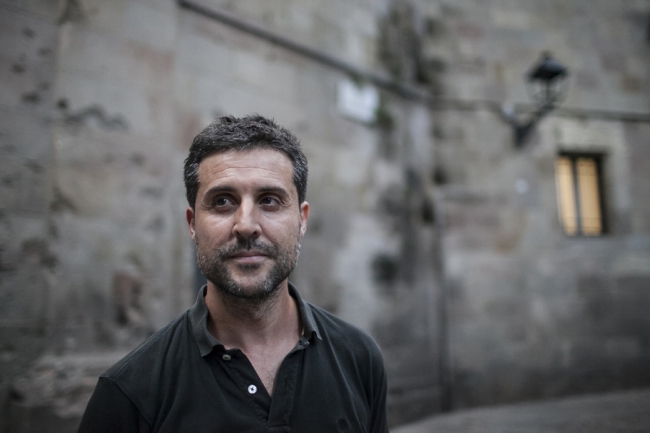
Jordi Calvo Rufanges*

(*International Peace Bureau Vice President, Global Campaign on Military Spending Coordinator, Centre Delàs for Peace Studies Coordinator and researcher.)

There is no doubt that we are facing a new, wide and deep process of militarization worldwide. Military budgets are increasing every year, arms exports show a constant growth, military industry keeps expanding and more countries are capable of producing weapons. Investing in arms is very profitable, public grants and loans for research and development of new weapons are increased now more than ever; military organizations such as NATO are proud of their legacy and push member states to dedicate 2% of their GDP to military budgets; migrations and borders are also more militarized than ever. In Europe alone there are 1,000 km of walls, even humanitarian aid is falling under military heads; all these fall within a process of general privatization, where security is not an exception, as the traditional arms industries now offer security products and services. Everything can become militarized when it becomes a security matter.

Military spending has reached the highest level since the end of the Cold War: 1,739 trillion USD is SIPRI’s estimation for 2017, representing 2,2% of global GDP and 230 USD per person per year. As usual, a few countries account for most of the Military Spending, spending 60% by the first 5 (USA, China, Saudi Arabia, Russia and India). By regions it is North America (40%) leading this ranking, followed by East Asia (18,6%) and Western Europe (14,1%). Europe and Asia together accounted for 45% of global military spending. Military budgets are mainly used to cover for the cost of the army’s human resources and their weapons and equipment – there are 16,5 million militaries and 11,9 million of paramilitaries in the world, but also to keep and maintain the military-economic sector.

Main arms producers export 30,000 millions USD of major weapons every year, according to SIPRI’s data. How does the arms export sector work? Most of the military companies are private and try to get contracts from any government that is willing to buy, but arms trade is not a free market, it is highly regulated by international and national norms and treaties. Military industries cannot sell weapons if their government doesn’t allow them to do so. Main regulations for arms trade are focused on criteria not to authorize arms exports licenses to countries in conflict, instability or where human rights are violated. In spite of that, every year arms are sold to countries engaged in conflicts and war and violate human rights, such as Saudi Arabia and UAE, members of the military coalition in the Yemen War, Turkey, Egypt, Iraq, Afghanistan, and many others far from being peaceful or an example of respecting human rights. Main importers of arms in 2018 in the world are Saudi Arabia, India, Egypt, Australia, Algeria, China, UAE, Iraq, South Korea, Vietnam, Pakistan and Indonesia.

Financing of arms is also an important issue of the military economic cycle. Military companies are financed by banks, insurance companies and investors through many of their products: loans, revolving credits, bonds issuance, shareholding, etc. We know from the International Armed Banks Database that financing of the main 40 arms companies in the world has reached 526,000 million USD in the period 2013-17, with the participation of more than 500 banks, from 30 countries.

There are thousands of arms companies in the entire world, but as in many other sectors, few of them dominate global military markets. The first 100 arms industries identified by SIPRI are producing arms worth about 400,000 million USD every year. Regarding their origin, main arms companies come from the main military expenditure and arms exporting countries: 57% are from USA, 9,5% from Russia, 22% from western Europe, but also from Japan, Israel, India and South Korea. As we can see main arms producers are NATO countries and other military allies. But there are new countries that are investing in a future national military industry, through imports that combine the acquisition of costly weapons systems with the transfer of technology and production of part of them in national territory. That is the case of Australia and what Saudi Arabia is attempting to do.

It’s a fact that among main arms companies there are some big trans-European companies like Airbus Military, and others from the main military industries in Europe: UK, Germany, Italy, France and Spain. It shouldn’t be a coincidence that the EU has been in the process of approving, in a hurry and out of public and political debate, few weeks before the EU elections of May 2019, the main change in history of the EU defence budget, that will include an extraordinary amount of resources for Research and Development of weapons, that expects to get about 50,000 millions € for 2021-27, including member states contributions of 35,000 million € that won’t count as deficit.

The final justification for the existence of military spending, military organizations and other institutions created for defense and security is that they are considered to be the best way of responding to the fears of a society and to the threats to its security. But what are these threats? Whose security is being discussed? What means should be used to ensure security? For the EU, NATO or US the main threats to security are terrorism and violent extremism, proliferation of weapons of mass destruction, cyber-security, energy security, organized crime, maritime security –and in the case of the US this extends to air and outer space–, climate change, irregular migratory flows –and in the case of the EU, the management of external borders– and economic crises –which NATO specifies as financial, and the US widens to economic slowdowns as security threats. Finally, all of them seem to have in common in the analysis of risks or threats armed conflict and the so-called weak or failed states.

The previous analysis of threats and risks to security places us in a scenario in which military response doesn’t seem to be the most useful option, indeed, it would seem a marginal resource of doubtful utility in terms of confronting all threats mentioned above. In fact, they are already faced with diplomacy, police, environmental measures, humanitarian action and social services, among others.

Military security is not the best response to the challenges faced by our modern, global, interdependent and diverse society. Theoretical foundations and practical approaches point toward the possibility and necessity of building a theory and practice of security based on different parameters that are an alternative to and even opposed to the hegemonic security state that encourages the military-economic cycle. Arms businessmen are the most interested in the promotion of securitization, as the best scenario to keep up their economic activity and profit.

Security is not a given, objective and unquestionable dimension, but rather it is susceptible to any number of interpretations, and as a result, analysis on the topic is not independent from a moral or political viewpoint. An epistemological approach is necessary, as security analysis is not neutral. Military industrial complex is not neutral, we need to reduce its power to influence security policies, through political work to reduce military spending in public budgets and by controlling and reducing arms exports, avoiding working with banks that are financing arms companies and withdrawing grants and public support to military industry, thus making more difficult arms production for the military industry. There is a need to build security based on human security, feminism, environmentalism and pacifism.

Read More

After the Post-Cold War Era: Geostrategic Dynamics of the Interregnum & A Vision for Eurasian Common Security Diplomacy

After the Post-Cold War Era: Geostrategic Dynamics of the Interregnum & A Vision for Eurasian Common Security Diplomacy

By Joseph Gerson
(Joseph Gerson, Vice President of the International Peace Bureau and well known American Peace activist)*

I want to thank Dong Huy Cuong, Cora Fabros, Reiner Braun and other Workshop organizers, for the opportunity to be joining this gathering.  As challenging as these times are, I trust that what I learn from you will prove helpful as with partners in Europe, the U.S., Russia and Asia we develop a 21st century call and network to advance common security. My recommendations at the end of my talk may seem too optimistic. But change is the constant of the universe, and as the proverb tells us, “A people without a vision will perish.”

The Uncertain and Dangerous Interregnum

It has become increasingly clear that the post-Cold War era is over. We are living in the interregnum between disorders, marked by uncertainties and dangers, as well as opportunities. Some see the confrontations of the moment as a new Cold War. Michael Klare has written that the U.S. and China are engaged in war by another name[i], while the U.S. government uses the term “strategic competition.” Richard Hass, the former head of Policy Planning at the State Department, and others see analogies to the period leading to World War I:  tensions between rising and declining powers, complex alliance structures, intense nationalism, territorial disputes, arms races with new technologies, economic integration and competition, autocracies and wild card actors.

The relative decline of U.S. imperial power and the emergence of a multi-polar disorder were evident during the Obama years, but they have been accelerated by Trump’s ignorance, authoritarianism, incompetence, arrogance, racism, dishonesty, trade wars, disregard and abrogation of treaties, and his humiliation of U.S. allies. Thinking of Mussolini and banana republics, I am continually amazed, and not a little frightened, by the power this pathetic tyrant wields over the U.S., the world, and our collective futures.

The novelist William Faulkner wrote that “The past isn’t dead. It isn’t even past.”  Trump, unfortunately, is an expression of the long U.S. history of racist know nothing political movements and the deluded American exceptionalist ideology.

Unlike Trump, and thinking geo-strategically, we do well to recall that the Cold war was multi-dimensional. The U.S. – Soviet competition for world dominance overlaid a world still largely defined by the legacies of 18th and 19th century imperialism, Russian as well as American and European.  Now, struggle for dominance has become still more complicated with China’s rise, relative U.S. and more serious Russian decline, the emergence of multi-polarity, and the proliferation of nuclear weapons and asymmetric technologies.

The Middle Kingdom’s spectacular rise has been disorienting in much of the West and Japan: six hundred million people lifted from poverty, advanced industrial and technological expertise, a hybrid form of state capitalism, new means of near-totalitarian social control, and an updated version of tributary empire that is extending its influence across Eurasia and the South China Sea. With the Belt and Road Initiative comes the potential of the deepening integration of Eurasian economies, cultures and political influence from Seoul to Sweden, with the U.S. on the geostrategic margins.

Recall Mackinder and Brzezinski. They argued that whoever controls Eurasia is the world’s dominant power. This helps to explain U.S. island power policies: efforts to contain China with its near-encirclement of the Middle Kingdom with alliances and military bases, the so-called “Freedom of Navigation” military exercises, the embrace of Modi’s Hindu authoritarianism, massive U.S. arms sales to Taiwan, Trump’s disastrous trade war with China, and the recent joint military exercises with ASEAN nations.

The Administration’s National Security Statement calls for “strategic competition” and preparations for a three-front “Long War” against China and Russia.[ii]

Not unrelated is Russia’s reassertion of its great, if economically weak, power capacities which are tacitly allied with China’s. Responding to NATO’s reckless expansion to its borders, Moscow is increasing its export of advanced weaponry, fossil fuels and other natural resources to China, while deepening its military collaborations and joint “exercises” with the PLA,

Elsewhere, Russia is renewing its influence in Europe and the Middle East, even checking the U.S. in Venezuela. Although it has reduced its military budget, it is compensating with asymmetric technological capabilities and by its efforts to upgrade its nuclear weapons and delivery systems. As we saw in August’s Archangel nuclear missile accident, we don’t have to wait for a war to be victimized by the new arms races.

Across Asia, the United States’ junior partner, Japan, is hedging its bets. It is collaborating with the U.S. in deepening a regional alliance structure including Taiwan, the Philippines (despite Duterte[iii],) Australia and India. Tokyo’s bet is that this alliance system might survive and serve Japan should the U.S. in time  pull back from the region under regional or domestic political pressures. Reinforcing this dynamic, Prime Minister Abe remains steadfast in his efforts to trash Article 9, the foundation of Japan’s peace constitution.  Further afield, intensifying Indian-Pakistani tensions and their nuclear arms race threaten both South Asian genocide and the survival of people across the northern hemisphere.

Add to this stew, the reality that nuclear weapons technologies are now nearly eighty years old, increasing the dangers of proliferation. North Korea’s nuclear arsenal, which is both dangerous and fuels right-wing nuclear ambitions in Japan and South Korea. Trump’s violation of the Iran nuclear deal may rekindle Teheran’s nuclear program. Saudi Arabia apparently has ambitions to join Israel as the second nuclear weapons state in Southwest Asia. And Bolsonaro in Brazil has his own nuclear ambitions

The nuclear danger didn’t end with the Nagasaki A-bombing. As Dan Ellsberg has long taught, during wars and international crises, every U.S. president has used nuclear weapons in the same way that an armed robber points his gun at his quarry’s head. Whether or not the trigger is pulled, the gun has been used. On more than 30 occasions, during international crises and wars, the U.S. has prepared and threatened to initiate nuclear war. With the history of U.S. first-strike nuclear threats against North Korea, it’s not hard to understand what has driven the DPRK’s nuclear program. Unfortunately, the U.S. is not alone in practicing nuclear brinksmanship and extortion. Every nuclear weapons state has threatened or prepared to initiate nuclear war on at least one occasion.

The Bulletin of the Atomic Scientists tells us that the time is two minutes to midnight. They cite the lack of coherent U.S. foreign and military policies, the U.S. first-strike doctrine, the nuclear powers increased reliance on their nuclear arsenals, which are being upgraded across the world. They also cited the return to Cold War rhetoric and the absence of arms control negotiations, which has since resulted in the collapse of the world’s arms control architecture.

Common Security

While China has reiterated its “no first use” doctrine, it is on track to “surpass France as the world’s third-largest nuclear armed state” and is reinforcing its second-strike arsenal in the face of the rising U.S. challenge.[iv]

Which brings me to the imperative of developing a vision and advocacy for common security diplomacy that can see us through this increasingly dangerous and uncertain time.

My understanding of Common Security is rooted in Swedish Prime Minister Olaf Palme’s Independent Commission on Disarmament and Security. At the height of the Cold War in 1981 & 82, Palme brought together heads of state, foreign ministers and political leaders from Europe, the Soviet Union, North America, Japan and the Global South to explore how to reverse the spiraling arms race that threatened human survival.

The commission’s conclusion was that “it is important to replace the doctrine of mutual deterrence,” and that the two great powers “must achieve security not against the adversary but together with him. International security” it warned “must rest on a commitment to joint survival rather than on a threat of mutual destruction.”  Its Common Security paradigm grew from the truism that neither individuals nor nations can be secure unless their rivals simultaneously enjoy security.

The Commission recognized that when nations develop and deploy new weapons and military doctrines to counter perceived threats, their actions are seen as escalating threats. That, in turn, leads the newly threatened rival to respond in kind, resulting in a spiraling arms race and to increased dangers of deadly miscalculations. This is today’s reality.

The Palme commission, spurred and reinforced by massive social movements and protests, identified six principles that contributed to the negotiation of the Intermediate Nuclear Forces Treaty, functionally ending the Cold War:

  • All nations have a legitimate right to security
  • Military force is not a legitimate instrument for resolving disputes between nations
  • Restraint is necessary in expressions of national policy
  • Security cannot be attained through military superiority
  • Reductions and qualitative limitations of armaments are necessary for common security
  • “Linkages” between arms negotiations and political events should be avoided.

Foundations for 21st Century Common Security

How might these principles apply to rising U.S.-Chinese military, economic and political tensions and to others in the Asia-Pacific region?

In the U.S., China is widely seen as a revisionist power, a “peer competitor” challenging U.S. global hegemony and the U.S. imposed liberal international economic order. Indeed, the rules of the post-World War II disorder were designed to benefit Western elites, not the Chinese elite or the Chinese and other peoples To overcome these inequities, we now have the AIIB competing with the IMF and the World Bank. We have the Belt and Road initiative, and we have China’s claims and neo-imperialist actions in the South China Sea.

Yet, in many ways, China’s rise mimics that of the U.S and other Western countries: exploitation of workers, protectionist tariff walls, industrial espionage and intellectual property theft, and the Marshall Plan and so-called foreign aid. China’s claims and bases in the South China Sea echo the Monroe Doctrine, the rationale for U.S. conquests and neo-colonialism across the Caribbean, Central and South America.

Michel Klare argues that technologically, economically, diplomatically and via the military buildups and provocative military “exercises”, the U.S. and China are already at war.  Elsewhere, Graham Allison has won acolytes for his contention that we face a classic Thucydides Trap, the inevitable tensions between rising and declining powers that often lead to disastrous wars.[v]

But even Allison concedes that a great power war is not inevitable, and Ho-fung Hung of John Hopkins University makes a powerful case that the China Boom is not “a subversive power within the U.S.-centered global neoliberal order.” China’s rise, he argues, has been dependent on the post-war order,  that the U.S. and Chinese economies remain mutually dependent, and that China seeks to revise the balance of power within the neoliberal system, not to overthrow it.[vi]

Contrary to Trump, sectors of the U.S. elite are urging coexistence, as well as competition, with China.[vii] Recall too that popular movements and diplomatic initiatives brought us U.S.-Soviet détente and an end to the Cold War despite deeper ideological differences, distrust, and vested – if different – interests, and existential threats.

If Trump is defeated in 2020 there may be a constituency for the pursuit of Common Security diplomacy with Beijing. We thus need to prepare for the medium and longer terms, clarifying our vision and policy recommendations, and putting our advocacy networks in place.

Negotiations need to seek and identify shared interests despite differences, addressing the legitimate national interests of the engaged states and their peoples.  At its core, such diplomacy needs to address the distrust and increasingly dangerous military and economic competition between the U.S. and China, as well as the tangle of six-party tensions across Northeast Asia. It must not simply seek a U.S.-Chinese grand bargain. Because means determine ends, the process must include inputs from the region’s nations and civil society. If it can be commenced, common security diplomacy will require political will, popular support, patience, and compromise, pursued via complementary bi-polar and multi-polar negotiations.

A decade ago, I asked Professor Shinhide Mushakoji, one of Japan’s most respected scholars, how war between the U.S. and China could be avoided. His answer: “Build the web of relations that make war unthinkable.” This, I think, is the most important and challenging common security task before us, and it also applies to U.S./NATO tensions with Russia. Even in the face of Trump’s trade war, growing political repression in China, and mutual U.S.-Russian suspicions, some of this web is already in place and can be preserved and built upon.

Our most important resources lie in U.S.-Chinese economic interdependence and the number of U.S. and Chinese scholars, students and business people who interact daily. The outrage voiced by U.S. farmers, financiers and industrialists in response to President Trump’s ill-conceived and unconstitutional order to stop doing business with China was so immediate and so powerful that it forced Trump to reverse course – at least rhetorically.[viii]

We also have the precedent of the semi-annual U.S.-China Strategic and Economic Dialogues that, if revitalized, they could serve as a forum in which to negotiate alternatives to Trump’s Trade War and dangerous U.S. and Chinese military confrontations. Creating systems for crisis management could later serve as a foundation for disarmament negotiations. Addressing the continuing nuclear tensions on the Korean Peninsula, calls for the creation of a Northeast Asian Nuclear Weapons Free Zone, and collaborating to stanch the climate crisis can also provide the occasion for U.S.-Chinese and Japanese-Korean-Chinese trust building and diplomatic cooperation.

Our peace movements have potential tactical allies such as Colin Powell’s former Chief of Staff Lawrence Wilkerson and the CATO Institute in the U.S. are also critical resources. They are urging the closure and withdrawal from the hundreds of U.S. military bases and installations that encircle China and the reduction of military spending.

Our movements need to challenge the gross human rights violations on both sides of the Pacific: concentration camps, family separations, record number of imprisoned people, and assaults on freedom of thought and speech on both shores of the Pacific. Yet, as with 1980s détente and Obama’s Iran diplomacy, our first imperative must be avoiding a catastrophic and potentially nuclear war.

Possible Elements of Asia-Pacific Common Security Diplomacy

Ending the U.S.-Chinese trade war is a first priority.  With face saving cover, the U.S. should suspend all tariffs in exchange for China committing to substantive negotiations to guarantee an end to intellectual property theft, enforced technology transfers and fair market access. More importantly, both sides should commit to substantive negotiations to address the structural economic imbalances:  domestic economic inequalities, wage suppression, near unlimited credit and deficit spending which are major drivers of global economic instability and the climate crisis.

Means must be found to reduce the military confrontations and systems in Asia and the Pacific. This could include:

  • Cancellation of all provocative military exercises and creation of crisis management systems – including increased military to military consultations
  • Concluding a code of conduct among nations with claims to the South China Sea, with a parallel process addressing other regional territorial disputes
  • Step by step negotiations for the denuclearization of the Korean Peninsula and for a Northeast Asia Nuclear Weapons Free Zone. A first step would be declaration of the end to the Korean War, commitments to negotiation of peace treaty to replace the Armistice, and an end to missile “tests”
  • Agreement not to unilaterally alter Taiwan’s status
  • Significant reduction of foreign military bases, including the South China Sea islands militarized by China and U.S. bases that ring China
  • Significant reduction of missile forces and so-called missile defenses
  • Resumption of arms reduction negotiations between U.S. and Russia and including China
  • Commitments to reduce military spending
  • The Japanese government and society must sincerely face and apologize for its brutal wars, occupations and abuses inflicted across East Asia. It should recognize the DPRK to better engage in negotiations and seek common ground with South Korea to resolve their territorial dispute over the Dokdo/Takeshima island.

Russia Must Be Engaged

Adding to the complexity of Common Security negotiations is the reality of Russia as a Eurasian and Pacific power.

As George Kennan predicted, U.S. violation of the Bush/Baker – Gorbachev agreement providing for German reunification on the condition that NATO not move an inch closer to Moscow has been a disaster. Russia’s history of suffering devastating invasions from the West helps to explain its military and nuclear modernizations, its intervention in Ukraine, its support for right-wing governments in Europe, its interventions in the 2016 U.S. election, and its joint military exercises with the PLA.

Common Security in relation to Russia, means abandoning the dream of NATO expansion to Georgia and Ukraine, the vision of a Fort Trump in Poland, and the increasing militarization of the Nordic nations.  It also means conceding that the shelf life of U.S. dominance over Europe as a western toehold on the geopolitically strategic Eurasian heartland has expired.

There are alternatives to NATO which can also provide models for Asia-Pacific Common Security negotiations, among them the Helsinki process and the Organization for Security and Cooperation in Europe.  Other elements must include:

  • Restoration of the INF Treaty and extension of the New START Treaty combined with efforts to bring China and other nuclear powers into these treaties.
  • A universal halt in deployment of new nuclear weapons and their delivery systems
  • Eliminating launch on warning systems and first strike nuclear doctrines
  • Credible steps toward fulfilling the Nuclear Nonproliferation Treaty’s obligation for good faith negotiations for the complete elimination of nuclear arsenals
  • Reaffirmation and updating the Conventional Forces in Europe Treaty
  • Multi-lateral negotiations to reduce the risks of attacks on computer technologies and networks, especially those of nuclear-armed states.
  • Fulfillment of the provisions of the Minsk II agreement

Finally, we cannot ignore India. Its annexation of much of Kashmir increases the  danger that miscalculations could lead to a devastating Indo-Pakistani war. Ways must be found to identify common interests and to negotiate a just solution to these deep wounds in the human fabric.

In concluding, let me say that I have no illusions about the pursuit and defense of imperial and autocratic power. That said, we know that we must struggle for human survival and justice, and that change – often unexpected – is the constant. Proverbs teaches us that “A people without a vision will perish.” And as Margaret Mead preached, we must “never doubt that a small group of thoughtful, committed citizens can change the world; indeed, it’s the only thing that ever has.”


[i] Michael T. Klare. “The United States is Already at War with China”, the Nation. February 19, 2019. https://www.thenation.com/article/the-us-is-already-at-war-with-china/

[ii] Michael T. Klare “Pentagon Plans for Three-Front ‘Long War’ Against China and Russia”, TomDispatch, April 3, 2018.

[iii] Jason Gutierrez. “U.S. Checks manila As China Extends Reach”, New York Times, July 17, 2019

[iv] Hans M. Kristensen & Mark Korda. “Chinese nuclear forces, 2019, Bulletin of the AtoSeemic Scientists, Volume 75,2019: https://www.tandfonline.com/doi/full/10.1080/00963402.2019.1628511

[v] Graham Allison. Destined for War: Can America and China Escape Thucydides’s Trap?. HMH Books. New York, 2017

[vi] Ho-fung Hung. The China Boom: Why China Will Not Rule the World, New York, Columbia University Press, 2016

[vii] See Odd Arne Westad, “The Sources of Chinese Conduct: Are Washington and Beijing Fighting a Nw Cold War?” and  Kurt M. Campbell and Jacke Sullivan, “Competition Without Catastrophe: How America Can Both Challenge and Coexist with China”, Foreign Affairs, September/October, 2019

[viii] “Trump Says China Badly Wants Deal, U.S. Open to Calm Negotiation”, Bloomberg News, August 25, 2019, https://www.bloomberg.com/news/articles/2019-08-26/china-firmly-opposes-u-s-trade-war-escalation-liu-says

*https://www.ipb.org/ipb-board-members/joseph-gerson-vice-president/


Disclaimer: The European Union co-funds the activities and work of the Asia Europe Peoples’ Forum (AEPF). Its contents are the sole responsibility of the speakers/ authors/ AEPF and its partners and do not necessarily reflect the views of the European Union.

Read More

Narayan Kaji Shreshta, Former Deputy Prime Minister and Spokesperson of the Nepal Communist Party speech, at International Conference on Universal Social Protection, Security and Peace, 04 April 2019, Kathmandu, Nepal

Narayan Kaji Shreshta, Former Deputy Prime Minister and Spokesperson of the Nepal Communist Party speech, at International Conference on Universal Social Protection, Security and Peace, 04 April 2019, Kathmandu, Nepal

04 April 2019, Kathmandu, Nepal

Chairs of the opening session Drs. Devkota and Francine,
Rt. Honourable Former Prime Minister and Chairperson of Nepal Communist Party Pushpa Kamal Dahal “Prachanda”

Distinguished Guest at Dais,
Panelists, Participants, Media persons,
Ladies and gentlemen!

It is my great pleasure welcoming you all, particularly the distinguished foreign delegates from Europe and Asia in this Conference on social protection, security and peace.

First of all , I  want to highlight the ‘Maoist people’s war and the peace process.’ The war started on February 13, 1996 and officially ended on November 21, 2006, by signing a peace accord between the warring parties –the then Maoist Party and the state. These had remained the pivotal events in the history of Nepal that paved the path for establishing republican federal Nepal and overthrow the monarchy. Although the ‘people’s war’ spearheaded by the Maoist Party was not the first armed struggle in Nepal, but it left distinct marks and reverberations in the history of armed struggles within and beyond the borders of Nepal given its nature, volume and impact on contemporary political landscapes. The struggle was started and developed by forming more organised military formations, creating a militia and earning a strong support base with an instrumental and sustainable war mechanism to challenge state power.

It is important to note that the characteristics of the Nepalese people’s war and compare those characteristics against the parameters of an actual war.  The restoration of multiparty democracy in 1990 brought about hopes to the Nepalese people that they would gain more economic, social and political change. However, the hope of the people turned into frustrations due to the continuation of the previous state mechanisms and processes that was unjust, discriminatory, coercive and oppressing. A wide gap between the rich and the poor, high rate of unemployment, and a slow, ineffective and corrupt politicians and bureaucracy were the main reasons behind the people’s dissatisfaction. The rising dissatisfaction and mistrust of the people were capitalised to some extent by the Communist Party of Nepal (Maoist), and a war against multiparty political system and abolition of the monarchy was declared. The war against state power became widespread, and the Maoists were able to gain the support of lower and middle classes mainly from the rural areas. Government forces were defeated on several fronts. The state mechanism became almost defunct. Finally, a peace accord was signed in November 2006 between the Maoists and the Government of Nepal which ceased the struggle.

In contrast to other wars in the world, the people’s war gained massive success in developing a war mechanism and abolishing the social absurdities to some extent. The presence of the state was nil in those areas controlled by the Maoists, resulting in the establishment of a Maoist state mechanism. The Maoist army comprised of different caste groups, ethnicity and economic classes.  The participation of women in the Peoples’ Liberation Army was up to 75%. People who were marginalised socially and economically had greater participation in the Maoist force.

The most noteworthy impact of the people’s war is the political empowerment of the lower economic class, including women and socially deprived groups. The involvement of these groups in the war trained them to be more proactive in politics. They now have greater participation not only at the local level but also in the federal parliament and governments (local, Provincial and Central). Social perversions such as consumption of alcohol, gambling, polygamy and social segregation were made punishable to some extent.

The war also brought about significant positive changes. Development responses reinforced many ‘good practices’ including transparency, accountability, localization, and more equitable distribution of benefits. The war also forced many issues, suppressed for centuries, to surface, including recognition and inclusion of diverse groups and their culture, religion and education. Conflict helped to create space for greater leadership amongst women and youth. The issues of systematized exclusion for so long and  hence utmost necessity for inclusion of diverse groups of Nepal like Dalits (oppressed class based on caste system), women, indigenous people; Madhesi (people living in the plains), etc. came to the fore. The rights of differently abled people and other minority groups including their social-cultural issues, and the issues of polygamy, domestic violence and gender based violence (GBV), child marriage, land rights, etc. are now being openly discussed and resolved positively. However, it is for sure that these are mostly related with the structures of our society, so may take some long to completely do away, I think.

Many other instances of conflict are rampant throughout the nation after a decade of signing Comprehensive Peace Accord (CPA) to peacefully settle the war and enter into a new political era leading to People’s Democracy, Constituent Assembly Election, declaration of Republic nation and a new constitution drafted by the directly elected representatives of people for the first time in national history.

Human rights are the inherent rights of a person. Recognized in international laws and fundamental laws (constitutions) of the countries, human rights are considered as the basic rights that all persons are entitled to. Being a democratic country, Nepal has expressed full commitment towards human rights, as Nepal is a state party to major international human rights laws. It has enacted new laws and amended existing laws to align them with accepted international human rights instruments.

The Constitution of Nepal (2015) has ensured basic human rights as fundamental rights under the part 3, articles 16 to 46. Right to live with dignity, Right to freedom, Right to equality, Right to communication, Right to justice, Right of victim of crime, Right against torture, Right against preventive detention, Right against untouchability and discrimination, Right to property, Right to religious freedom, Right to information, Right to privacy, Right against exploitation, Right regarding clean environment, Right to education, Right to language and culture, Right to employment, Right regarding labor, Right to health care, Right to food, Right to housing, Right of women, Right of children, Right of Dalits, Right of senior citizens, Right to social justice, Right to social security, Right of consumers, Right against exile and Right to constitutional remedy have been comprised as fundamental rights. Articles 133 and 144 have empowered the judiciary to exercise extraordinary jurisdiction to enforce the fundamental rights effectively. The Constitution of Nepal (2015) has made the Human Rights Commission as a constitutional body.

In my opinion, there is very strong bondage between the provisions of social protection and enjoyment of human rights. Social protection is mandatory for ensuring full enjoyment of the human rights by those people and their groups that are so far systematically excluded and marginalized, and/or otherwise (for example old age, disability, etc.,) unable to  afford for a dignified living.

I believe and fully agree that civil societies, social, labor, peasants, women and peace movements and struggles have made proposals and arguments for the need of universal social protection as a conditionality for peace, security, development and social justice. I hope, this conference will further debate, consolidate and reinforce different social movements and struggles in order to bring sustained peace and security in our societies based on the universally accepted principles of Social Justice. In the long run, we may need to work hard in the wider agenda of this conference and further strengthen cooperation among peoples and their movements across the globe.

In conclusion, you have designed many plenary and parallel and side sessions, and I believe you will have enough opportunities for brainstorming, presenting left philosophy mainly  the situation in Europe and Asia in relation to unemployment, poverty and inequality, migration and climate crisis, as well as its consequences for democracy with the emergence of right-wing populism; the (new) geopolitical actors at the national and global levels; for the future of work in an era of new technologies with their consequences on labour markets; the gender and care economy problems ; Global Charter and identification of the concrete possibilities the work of social movements on social justice and many more; We are looking forward for your Kathmandu Call for Actions and Declaration as well.

With this, I remain, Thanks for all!

Read More

AEPF and China’s Belt and Road Initiative

AEPF and China BRI

July 30, 2019

At AEPF12 in October 2018, activists and researchers began discussing the nature of China’s Belt and Road Initiative (BRI) and its impact across Asia and Europe.

Since then more countries have signed up to the initiative (152 countries and international organisations in total) and scrutiny towards the BRI has intensified with high profile BRI projects accused of causing debt distress and environmental damage, and exacerbating existing conflicts.

In June 2019 in Amsterdam, AEPF had another exchange on the BRI with activists and researchers working on the BRI. We continued to explore our understanding of the initiative including the drivers of the BRI from within China, situating the BRI within the current context of hyperglobalisation and mega infrastructure, and the controversies surrounding BRI projects in both Asia and Europe.

AEPF will continue developing our understanding of the BRI, its impacts and successful strategies to resist unwanted BRI projects through further research, analysis and discussion.

With the BRI impacting on all AEPF thematic clusters, it is hoped that people from all six clusters will be involved in this process.

If you want to be involved in this process, please let us know by e-mailing Stephanie Olinga Shannon (s.olingashannon@tni.org).

Read More

AEPF Media Statement From Petaling Jaya, Malaysia

AEPF Media Statement From Petaling Jaya, Malaysia

July 25, 2019

An Interface between Asian and European Parliamentarians from seven countries and civil society representatives from about 20 countries was held in Petaling Jaya on the 24th July.

The issue under discussion were the reasons as to why people are losing faith in democracy and why Governments are failing to deliver their promises to people and especially to young people.

It was shown that even though about 53% of people globally live under authoritarian regimes, democracy remains the best option for people if it is participatory in nature. However, democracy in many countries of Asia and Europe is being weakened. Several governments in collaboration with big corporations are using authoritarian methods to control institutions and curb people’s rights.

The MPs and civil society members stated, they are committed to deepening and reclaiming people centred democracy. Participatory democracies have the capacity to provide sustainable development, provide welfare and lift people out of poverty. However there was consensus in the discussions that with neoliberal globalisation the dominance of oligarchs, trans-national corporations, military industrial complexes and foreign capital has increased. These have disproportionate influence on social, economic, political and cultural policies. This trend is detrimental to democratic processes.

All MPs and civil society activists argued that all our societies are diverse and plural in nature. But, religious fundamentalism marked by chauvinist identity politics, exclusive nationalism and selective violence is being used to curb all relevant forms of dissent and target rights.

Many experts showed that there are ongoing, crimes against humanity which are being normalised. There is a criminalisation of migrants and solidarity with victims of oppression is targeted. (For example the genocide of the Rohingya community in Myanmar and siege on refugees in the Mediterranean).

MPs were particularly concerned that people have lost trust in their democracies as they believe that democracy has not delivered basic needs. People, especially the young people are therefore turning to right wing movements. Decades of neo-liberal globalisation have increased inequality and about 1.5 billion people are malnourished while basic needs (education, health social security are unmet. There is continuous devastation of the global environment, including climate change and loss of bio diversity. This anxiety is leading to a rise in hate speech against the ‘other’.

The Parliamentarians and civil society movements that were present said they are committed to reclaim democracy for people and some recommendations were made for Asian and European governments.

It was affirmed that Governments at all levels must become more transparent and accountable to people, while new forms of decentralisation of power and authority be institutionalised.

All those present are committed to enhance struggles against neoliberalism and corporate power. This is because the rise of big finance capital goes against welfare of people and social justice. It leads to different types of corrupt power.

The MPs and AEPF gave unequivocal support to universal and quality social protection and call for an end to commercialisation in social sectors like education, health, water and energy. The MPs as well as AEPF activists and others, spoke about the critical importance of ‘solidarity economies’. For example, community and collective control over local resources, public public partnerships, re-municipalisation, etc.

It was felt that young people have lost faith in the system. The MPs and activists said that young people should be encouraged to participate in progressive movements and in issues they hold dear. The participants in this interface were particularly concerned by the monopoly and use of social media by authoritarian forces, that are challenging social relations and democracy. They gave a call for greater norms to prevent hate speech and fake news etc.

The MPs decided to take initiatives to support a binding treaty on corporations in the UN.

There was an urgent call to Governments to sign, ratify and implement the (1990) Convention on migrants and their families and withdraw threats against so called refugees, many of whom are citizens.

Charles Santiago stated: “Many of our fellow Parliamentarians have been jailed because of political vendetta. We call for a release of all political prisoners”, the MPs of all seven countries emphasised this.

The MPs interface with civil society concluded by making a recommendation that Parliamentarians and public policy makers engage with civil society in a continuous and accountable way. They argued that governments have the responsibility to make democracy accessible by enabling people to be at the centre of policy making and implementation.

Read More

Re-imagining Democracy and Peoples’ Agency in a Time of Populist Authoritarianism and Neoliberalism

Re-imagining Democracy and Peoples’ Agency in a Time of Populist Authoritarianism and Neoliberalism

July 22, 2019

The Asia Europe Peoples Forum, supported by a number of civil society organizations from Asia and Europe, will be hosting a Conference on one of the most challenging issues of our times, “Re-imagining Democracy and Peoples’ Agency in a Time of Populist Authoritarianism and Neoliberalism”, on July 25th to 26th, 2019.

This conference will be attended by 50 delegates, including parliamentarians from seven countries, civil society activists, independent experts and public figures from several Asian and European countries.

On 24th July, there will be a strategic interface between Asian and European Parliamentarians and AEPF, where parliamentarians will share experiences of their region, their strategic tactics, parliamentary processes and ways of working in the very difficult situations that mark current times.

Download The Program
Read More

AEPF Peace and Security Conference Narrative Report – Kathmandu 2019

AEPF Peace and Security Conference Narrative Report - Kathmandu 2019

May 28, 2019

image3

The “Asia Europe Peoples Forum (AEPF) conference on Universal Social Protection, Labour, Security and Peace” was inaugurated on the 4th of April 2019. The conference held two-day parallel sessions of the ‘Social Justice Cluster’ and ‘Peace and Security Cluster’. The conference addressed concerns including 1) the major political shifts that are a consequence of the inequality and joblessness on account of the neo liberal agenda; 2) Backlash against progressive agendas, against women, minorities; (3) Anxiety about cultural invasion and disruption of traditional values; and (4) Resistances and challenges to fundamentalism and populisms.

Opening Plenary: The chief guest in the opening plenary was Rt. Honorable Pushpa Kamal Dahal “Prachanda”, former Prime Minister of Nepal, chairman of Nepal Communist Party (NCP). Addressing 130 Nepali delegates and 46 foreign delegates, Hon. Dahal shared his experience of political change, democratic transformation and people’s liberation in Nepal.

Narayankaji Shrestha, the spokesperson of NCP and former Deputy Prime Minister of Nepal highlighted the Maoist struggle against the monarchy and parliamentary government/system to make a sovereign federal secular country and to create social justice in the state. Guest speaker and Member of European Parliament Hon. Julie Ward, Dr. Rajan Bhattarai, Foreign Affairs Advisor to the PM of Nepal, Ms. Dagmar Walter, Prof. Anuradha Chenoy, Professor of Jawaharlal Nehru, Ms. Nimalka Fernando, Human Right Activist, Sri Lanka, and Hon. Daman Nath Dhungana also addressed the opening session.

Working Sessions: The four working sessions were about peace and security. The delegates discussed extensively on topics like “Populisms, Right Wing Populisms (RWP), Impact on Peace and Security”, “Different Fundamentalism and Institutions”, “Linkages and impacts of RWP and Fundamentalisms: Migration on Peace and Security”, “Future Programmes, Advocacy, Communications and Resolution”.

Closing Session: The closing session was chaired by Dr. Dinesh C. Devkota, Hon. Julie Ward. Ms. Meena Menon, Mr. Milan Dharel, Mr. Ronald Kulke, Dr. Sharad Onta and Mr. Amaar Ali Jan. The declarations from both clusters were read out and the conference was officially closed following the speeches by the chairs.

Read More

Right Wing Populisms, Fundamentalisms: Critical Thinking and Actions Nepal Declaration

Right Wing Populisms, Fundamentalisms: Critical Thinking and Actions Nepal Declaration

April 22, 2019

image3

Asia Europe Peoples Forum (AEPF)
Peace and Security Thematic Circle,
International Conference
Kathmandu, Nepal, April 4-6, 2019

Peace and security cluster of AEPF, met in Kathmandu on 4-6th April, 2019. The discussions analyzed how the rise of right wing populisms (RWP) is making a more insecure and less peaceful world, through the use of chauvinistic identity politics to get political support and mobilize people. In an increasing number of countries, governments are using authoritarian and fascistic methods to consolidate and expand their power. It’s especially worrying that right wing forces work by criminalization of migrants, suppressing social movements, denying gender equality and rejecting multilateralism.

The tactic of the RWP is to displace and reject the progressive and alternative discourse that arose in response to people’s demands after the 2008 global crisis that questions the former hegemonic neo-liberal globalization. AEPF expresses concerns about fundamentalisms, often linked to distorted ideas of religion which are then extended to violent extremism including attacks on civilians. We do not believe that any kind of extremist movement and violent actions can be a solution to any problem in the world.

We’ve identified military spending, arms proliferation, financing of arms companies and the military industrial complex as key actors that influence governments to make its business more profitable. The choice of militarization as a strategy for national security is a political decision to militarise security, to securitize every aspect of life that can be susceptible of being militarized.

Peace and security is not the patrimony of the military industry and conservative ideologies. There is a need for creating a progressive discourse about peace and security, critical of militarization. Another security is possible and necessary.

RWP use the following issues to mobilise people: They want to re-organise society and separate those they consider impure and outsiders. These can be migrants, LGBT, dissenters, women, drug dependents, religious minorities, Dalits, indigenous communities and civil society actors. They focus on Islamaphobia. All these are seen as threats and national risks.

The beneficiaries of RWP are state actors, oligarchs, ruling and military elites, who benefit from neo-liberalism. RWP use the narrative of corruption and aspirations, and that given structures are not working, so re-framing social justice. They want to create and rest on new inequality and conflict.

The Peace and Security Cluster puts forward a framework for a politics of peace and security to contest RWP:

There is a need to shift from a state fused national security concept and discourse to rights based human security based on ensuring the freedom from fear (civil and political rights) and freedom from want (social and economic rights)

We call for an immediate end to the genocide, repression and forced displacement of the Rohingya community in Myanmar. All states should support a safe, voluntary and dignified return of the Rohigya. As also a just resettlement of these forcefully displaced communities.

It is important to unite as many internal factions in each country to counter RWP. There is a need to incorporate different tendencies and movements at different levels to re-capture autonomous institutions.

It is critical to attract young activists to these platforms. And especially young women and men from excluded communities and activist.

The role of progressive education and information both from internal sources nationally, regionally and internationally is critical. Training and developing youth against RW mobilisation is integral to this process. There is an urgent need to foster a next generation youth advocates and campaigners for peace. We need informal spaces of education which can disseminate ideas of peace and tolerance by countering the exclusive and hate filled discourse of the far right.

Develop understanding, provide arguments, comparison between countries as resources against RWP. We need to map the connections between RWPs/and their discourse internationally.

We need to show the connections and root causes and reasons for migrations and in order to fight phobias. We cannot just frame migrants and others in a moral framework of human rights but also re-frame issues in material conditions, with internationalist perspectives, use of international law.

We have to continue building solidarities of South-South as well as North-South. And build links with progressive movements internationally. The representation in multilateral institutions must be improved as these remain exclusive.

There is a need to showcase best practices, specific strategies and pro- people programmes and build international guidelines for these.

It was felt that forces of the Left and liberals had abandoned the sphere of culture and religion, while the RW have framed themselves as upholders and interpreters of religion and culture. It is proposed that the Left liberals go beyond buzzwords like secularism and multiculturalism and include with these especially, the lived experiences and issues. Of how lives of people can be bettered and associated with local cultures, traditions and folklore. The everyday issues of people’s lives, from water, employment, equality and class struggles that RWP cannot deliver, should be part of the mass actions of people’s groups.

We condemn and critique the extremist and fundamentalists movements who reject human values of the ‘other’. We need to accept multi cultural thinking, migrants and refugees. In Europe the fundamentalist movement mainly consists of far right wing but in Asia religious extremist movements are the dominant form of RW movements.

We must recognise the role of mass media especially social media platforms to whip up xenophobia and legitimise racists discourse. We call for digital literacy programs to counter hate speech and promote an internet for the common good.

There are concrete policies that we need to critique like: Blasphemy Laws; discriminatory citizenship laws; criminalisation of migrants, and those who support migrants, dissenters. And the attempt to de-humanise them; government policies that support and are silent on vigilante violence.

We call on the Governments of Pakistan and India to start to continuous dialogue mechanism and process to resolve all bilateral issues and to support a energized South Asia.

Read More

AEPF Peace and Security Thematic Circle, Nepal, April 4-6, 2019

AEPF Peace and Security Thematic Circle, Nepal, April 4-6, 2019

March 22, 2019 | Dario Azzelini

image3

Concept Note

Two major challenges confront peoples and peace movements in contemporary times. One: All kinds of right wing populisms (RWP) and fundamentalisms (from religious, identity to market fundamentalisms). Two: The consequent rise of xenophobic nationalisms, centralized power, increased inequality, authoritarian governance. Country after country in Asia and Europe have elected right wing populist leaders, while xenophobic nationalist parties emerge stronger and more influential in the opposition. In most cases these RWPs have an under belly of vigilante groups that target different minorities and ‘others’. (Hungary, Italy, Turkey, South Asia, Philippines, US, Brazil, etc).

These ideologies and practices are based essentially on increasing inequality, opposing multiculturalism and see human rights, workers and civil society organizations as a threat.

They do not believe in climate change and are bent on increasing state power and authority over all institutions. These fundamentalisms and RWPs are a threat to the peace, security and social cohesion. They increase inter-state and intra-state conflicts; promote phobias about migrants or other religions. These damage democratization, universal progressive values and challenge social justice. It is important to understand the variations, and differences between these forces across Asia and Europe, so civil society, peoples and peace movements can effectively challenge them.

Peoples’ movements need to use the collective methodologies and experience to address concerns from these movements. They need to strategize how activism can challenge this dangerous discourse and practice.

Objectives of the Conference:

This conference will address concerns that include:

  • The major political shifts that are a consequence of the inequality and joblessness on account of the neo liberal agenda. In some countries, the consequences are victories of populisms.
  • Backlash against progressive agendas, against women, minorities.
  • Anxiety about cultural invasion and disruption of traditional values.
  • Resistances and challenges to fundamentalism and populisms.

Outputs

  • Enabling strengthened links between movements/networks across Asia and Europe reinforcing the EU CSOs participation and and the participation of a growing number of movements, networks, forums and organisations in different formulating peace and security strategies.
  • Generating ideas to promote the advocacy tasks of AEPF on through effective communications.

The Expected Results include:

AEPF Peace and Security Conference will enable an exchange of ideas and increase our networks in Nepal beyond. This will support in advocating the importance of peace and peoples security and its linkages with justice and democracy.

For any advocacy, we need clarity and vision. The issues of populism and fundamentalisms are linked to phobias and existential anxieties. This conference intends to produce and articulate the dangers of these issues to both civil society and to states.

We would develop an appeal to ASEM States to be vary of populism, authoritarianism and not to use religion in politics.

We would like to use communication methods to propagate the idea of secular and objective state institutions.

We would like to take the ideas of this conference further and request all participants to give us some form of written presentation (this can be sent to us after the discussion in the conference). We will advocate these on our website and social media.

The inputs of the conference will go into documents for parliamentarians, policy makers, students and all those interested.

Communications and Visibility

We will do brief 1-2 minutes video recordings of experts as part of ‘Peoples Voices’ and link these to our website and make them available widely including to policy makers and governments who wish to access them.

We will try and make a common document and statements that coincide with the AEPF goals on peace and security.

We will edit all written presentations and use these for advocacy on social media, website, etc.

Programme: Thursday, 4th, 5th 6th April

Day 1: COMMON PLENARY
Facilitators: Social Justice + Peace & Security

Opening Plenary and Joint session
Thursday, 4 April, 2-6 pm 1:30-2:00 pm: Registration
2:00 – 3:30 pm: The journey to peace, security and social justice: collective experiences, challenges, opportunities and way forward
Dr Sarba Khadka, IDS Nepal
Chief Guest/ High Representative, Nepal
Narayankaji Shrestha, Spokesperson of CPN and Former Deputy PM, Nepal (TBC) Xavier
Benito Ziluaga, MEP, GUE Podemos, Spain
Julie Ward, MEP, S & D Labour, U.K.
Pryanca Radhakrishnan, MP, Labour Party, New Zealand
Chairs/Facilitation: Dr Dinesh C. Devkota, Nepal and Dr Francine Mestrum, Belgium

Tea/Coffee Break

4:00 – 6:00 pm: ‘Universal and lasting peace can be established only if it is based upon social justice’ (ILO Constitution, Preamble)

Keynote speaker:
Dagmar Walter, ILO South Asia
Speakers:
Anuradha Chenoy (retired), Professor Jawaharlal Nehru University, India
Nimalka Fernando, Human Rights Activist, Sri Lanka
Daman Nath Dhungana, Former Speaker of House of Representatives, Nepal (TBC)
Dr. Rajan Bhattarai, Foreign Affairs Advisor to the PM of Nepal (TBC)
Chairs/Facilitation: Meena Menon, India and Dong Huy Cuong, Vietnam

DAY 2. April 5, PARALLEL SESSIONS

Morning
Session 1: 9:00 AM to 1:00 PM

Discussion on Populisms, Right Wing Populisms (RWP), impact on peace and Security:

Speakers:

  • Lisa Clarke (IPB, Italy) : The rise of European xenophobic and racist sentiments
  • Prof.Kamal Chenoy (India): The Challenge from Right wing populism
  • Amaar Ali Jan (Pakistan) on The Danger of Violent Fundamentalisms

Facilitators: Dorothy Guererro and Milan Dharel

Afternoon
Session 2: 2:00 to 6:00 PM

Discussion on different fundamentalisms and Institutions:

  • Jordi Calvo Rufanges (Barcelona): Militarisms and Defence Expenditures
  • Seema Mustafa (India): Role of the Media in Fundamentalism and RWP
  • Thomas Sommer-Houdevelle (France): Experiences and Practices from Europe
  • Marc Batac (Philippines): RWP in South East Asia
  • Advocate Hari Phuyal, Former Attorney General

Facilitators: Andy Rutherford and Tina Ebro

Afternoon
Session 4: 2:00 PM to 4:30 PM

Discussion on Future programmes, Discussion on advocacy and communications: Resolutions drafted and passed.

Corazon Fabros will facilitate;
Bui Lien Huong – Resolutions

4:30 to 6:00 PM

Closing Session Chaired/facilitated by Charles Santiago and Milan Dharel
Summary from Social Justice Cluster
Summary from Peace and Security Cluster

Press Release

Vote of thanks to organizers.

DAY 3. Saturday 6 April 2010

Morning
Session 3: 9:00 AM to 1:00 PM

Linkages and Impacts of RWP and fundamentalisms: Migration on peace and security

  • Kalle Sysikaski “Refugees & Migrations in Europe: Implications & Impact
  • Amabella Carumba: RWP and conflict Resolution
  • Tur-Od Lkhagvajav (Mongolia): Peace Movement & Sustainable Development
  • Hon. Sujita Shakya, Parliamentarian and Women Leader, Nepal
  • Facilitators:Kris Vanslambrouk and Amaar Ali Jan
Read More

THE CHALLENGES OF THE PEACE MOVEMENTS IN THE COMING YEARS

The Challenges Of The Peace Movements In The Coming Years

November 6, 2018 | Kalle Sysikaski

Kalle Sysikaski
The PEACE Union of Finland

Probably we all agree our main purpose is to press for an end to the over-funding of military establishments and for the creation of new funds to tackle human insecurity and common threats to the planet. We have to support all efforts to limit and eliminate weapons that impact negatively on communities in conflict zones.

Impacts of military preparations and weapons include deaths, contamination and loss of agricultural lands, loss of employment after attacks , increased health costs for communities affected by war, costs of reconstruction building, infrastructure and so on.

In order to achieve disarmament for sustainable development we need from day to day to build international civil society alliances bringing together not only disarmament and peace movements but also anti-poverty, environmental and development aid organisations working for disarmament and development.

Unfortunately if we watch the mainstream media in Europe today we are spoon fed more and more propaganda and fear of the unknown and we are encouraged to think that our governments are keeping us safe from the unknown.

In Europe the threat by Russia to all-European security is over-estimated because it is in the interest of the arms industry, its loyal politicians and their inability to find new ways of thinking. But Russia is dangerous in the first place to its own citizens and some nearby countries which were part of Soviet Union like we can see today for example in Ukraine. But the very serious problems there are not black and white. Russian elites are behind the war yes, but there are many Ukrainian forces too who want to keep up the violent conflicts, enemy pictures and who economically benefit from the war.

For Russian leaders it is easier to strengthen their authoritarian system if Western Europe wants just to strengthen the enemy picture instead of making persistent proposals for disarmament and peaceful co-operation. Less the Russian leaders can say the West is a threat to Russian national security, more there will be space for Russian progressive civil society. Today this civil society has to face a hostile environment and this cannot be in the interests of anyone who wants to build peace and democracy. That is why we have to strengthen our co-operation with Russian independent peace movements and we have to urge our governments to support that co-operation instead of increasing military spending and with the Ukrainian peace movements.

The refugee and migration crises do not exist in isolation. Those are symptoms of broader problems like conflicts, militarism, extreme nationalism distorted religious beliefs, the failure of governance, the gross inequalities in opportunities in economic and social wellbeing and the failure to accommodate different kinds of diversities. Many of these problems can be solved if the international community and the states fulfil their commitments to achieve the 17 SDGs. This is a very important reason why the peace movement needs to build alliances. When the Trump administration is pushing the US military allies to increase their military spending we have to increase strong alliances to demand redirection of annual military expenditures for better and serious implementation for the SDGs.

In many European countries there are many, many progressive-minded people who say they are tired of protesting everything in an anti-spirit. That is why we have to keep in minds the many achievements of the international peace movement and to get wider attention to those.

The creation of the United Nations was initiated, campaigned and lobbied for by the peace movement in the first place. The NPT treaty and the new UN treaty on banning the nuclear weapons were initiated by the peace movements. The land-mine treaty and the arms trade treaty were achievements of the peace movement. Peace movement or movements have had an important role in ending wars or supporting their ending. Like the Vietnam war, the war in Northern Ireland, the implementation of The UN resolutions in East Timor and many others.

Our Asian friends are bravely supporting the local communities and peace efforts in many conflict zones. And in both, Asia and Europe the level of militarisation and securitisation of security would be even more costly and more restrictive without the peace movements.

In Europe we have developed more new ways of protesting in order not to stick only to the traditional anti demonstrations. It is important in order to keep the peace movement alive and visible; especially the younger generations have been successful in finding new ways.

Read More