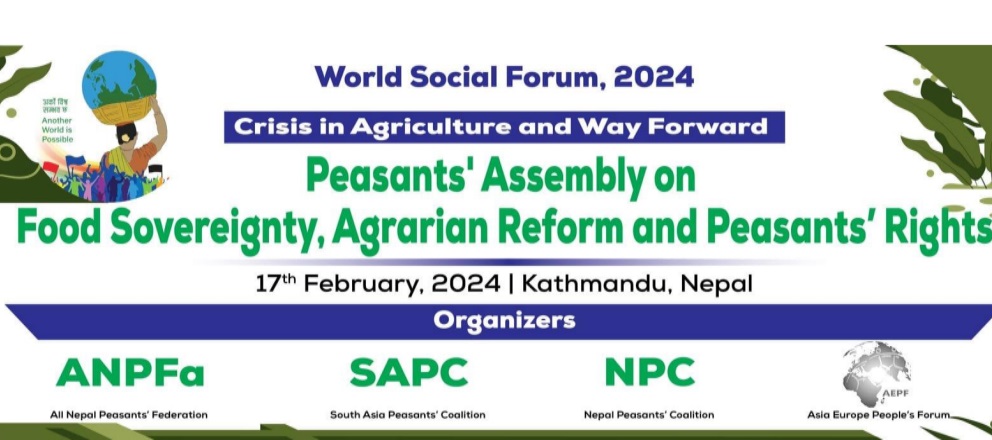
Declaration of the Peasant Assembly at the World Social Forum, Kathmandu Nepal 2024.

Declaration of the Peasant Assembly at the World Social Forum, Kathmandu Nepal 2024.

Download the Declaration

Square of Statement
Kathmandu Declaration
17th February 2024

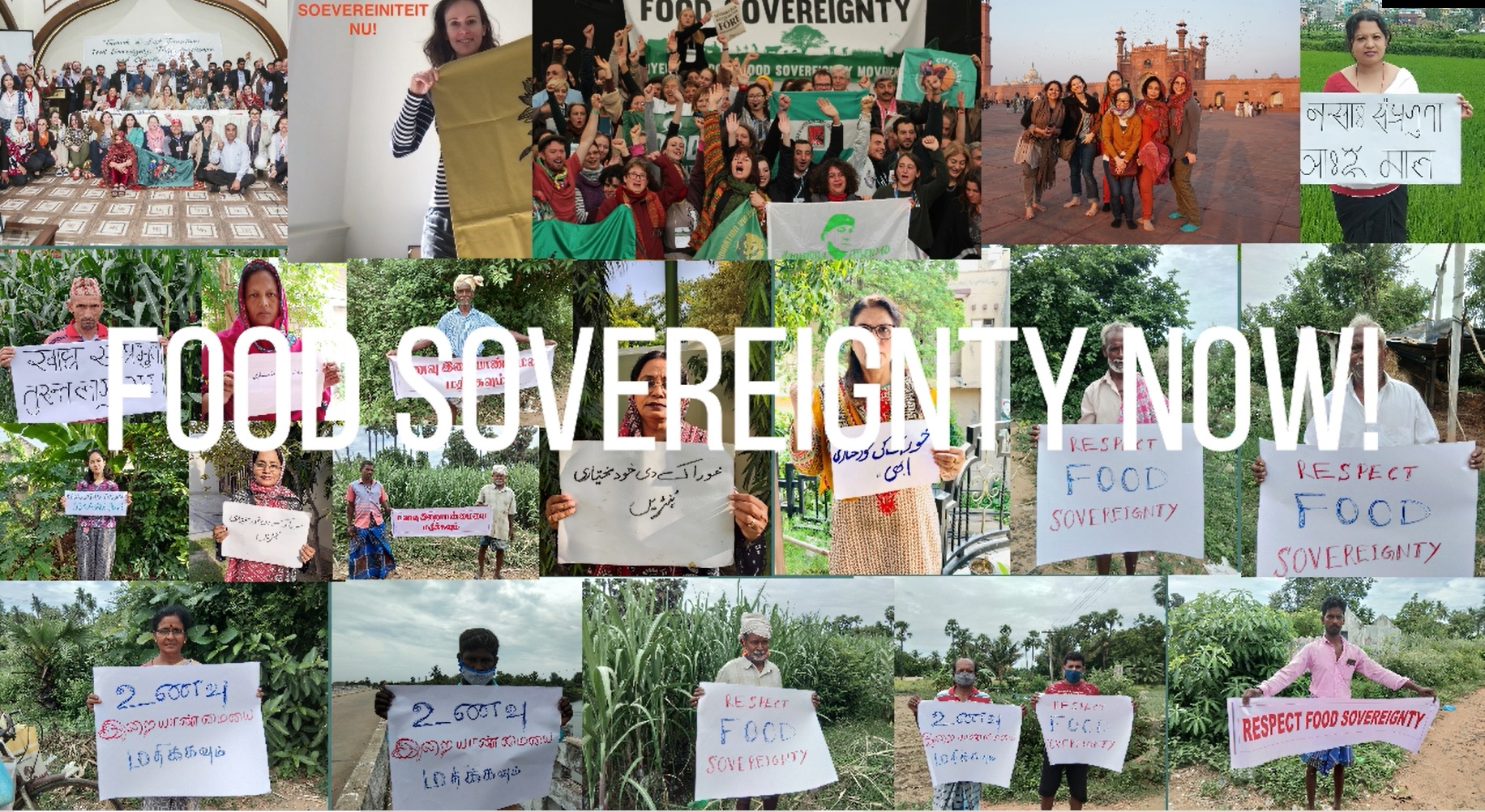
We, the representatives of All Nepal Peasants’ Federation (ANPFa), South Asia Peasants’ Coalition (SAPC), National Peasants’ Coalition (NPC) and Asia Europe Peoples’ Forum (AEPF), including different agricultural labor unions, plantation workers’ unions, peasants, women, Dalit, indigenous people, consumers, policy makers, media, workers, and fisher-folks have gathered here in Kathmandu, for 16th edition of the World Social Forum, to activate, extend support, and strengthen and consolidate worldwide solidarity and commitments to the peasantry movements in Nepal, South Asia region along with global level.

We, farmers worldwide, are marginalized by anti-peasant policies of the government and by the policies of International Financial Institutions (IFIs), including the World Bank and the International Monetary Fund (IMF), and multilateral trade institutions, such as the World Trade Organization (WTO). Policies of neo-liberalization, deregulation and privatization have adversely impacted lives and livelihoods of peasants. Most of the subsidies in agricultural inputs and minimum support pricing legislations have been made ineffective or withdrawn.

Over the decades, there has been rampant supply of Hybrids and GMO seeds from multinational companies and the traders make compulsion to buy and grow in the agricultural communities by virtue of which the indigenous seeds are disappearing. Increasing use of such seeds have made compulsion to use modern fertilizers and pesticides in commercial as well as home consumption cereal crops too. There are multiple reports over detrimental health effects due to residual chemical effects on pregnant women, children and elderly people’s health by over use of these chemicals.

Food sovereignty-based agriculture is only the key approach for agrarian development which incorporates diversified component of local resources contributing to equity and equality in addressing the need and necessity of marginalized people in Agriculture sector. Now this is
seriously threatened by government hegemony to peasants’ right through several bottlenecks on accessing to natural resources like cultivating land, native and climate resilient seeds, adaptive livestock breeds, potential irrigation sources, forest resources and local indigenous species. In the name of agrarian reform, the land lords and money transfer control number (MTCN’s) agents are monopolistically benefitting. Through liberalization, corporation, land grabbing, residential buildings and tourism, they have dispossessed farmers and fishermen, dismantling their social and cultural communities.

The national policies have failed to address the sufficient food and nutrition supply protocols to the poor peasants, women, factory workers and majority of the rural people. So, in all sectors there is grave violation of human right possessing to food insecurity, malnutrition, poverty and civic inertia.

There is an increasing control of imperialist forces, namely World Trade Organization (WTO), World Bank (WB), Asian Development Bank (ADB), and International Monetary Fund (IMF). The impacts of WTO-dictated policies of liberalization, deregulation and privatization, such as WTO’s Agreement on Agriculture (AoA) with its provisions of market access and reduction of farm export subsidies have proven detrimental to peasants. We continue to fight to keep WTO and Free Trade Agreements (FTAs) out of agriculture. We deeply condemn anti-peasant policies in the name of poverty reduction programmes by the IFIs and multilateral trade institutions, including micro-credits, which have devastated peasants’ lives, many a time causing them to commit suicide. We delight agriculture and food system as a basis of life to peasants and marginalized peoples not a marketed commodity.

All Nepal Peasants’ Federation (ANPFa), South Asia Peasants’ Coalition (SAPC), National Peasants’ Coalition (NPC) and Asia Europe Peoples’ Forum (AEPF) have collectively been advocating for food sovereignty, agrarian reforms, and peasants’ rights. The following demands are in response to the above-mentioned exploitation and marginalization experienced by peasants
in the region:

1. Ensure small-scale farmers’, fisherfolks’, and indigenous people’s control over the region’s food system. Keep multinational corporations out of agriculture and cultivable land.

2. We demand that local food systems be strengthened through the protection of indigenous food varieties, indigenous livestock breed, seed banks, and indigenous technical knowledge.

3. Peasant organizations have been demanding agrarian reforms that focus on increasing productivity, food security, and sustainability and ensuring Food sovereignty and Right to Food for all. Regional governments to enact policies that provide land tenure security, productions inputs, and other service supports to small farmers in appropriate point of time.

4. The right to land is a key demand of ours. We CSOs fight for labor rights, protection from evictions and land grabbing, and access to markets on fair terms. We call for comprehensive land reforms that take gender, caste, and ethnicity into account, and distribute land to the tillers. We aim to create a more equitable and food-secure future for peasants and their communities in a sustainable way.

5. The neo-liberalism designed by corporations and operated through markets that favor unjust profiteering over people’s sustainable development and deny peoples’ collective rights of commons to MTCN.

6. Ensure equal rights to and use of land for women for sustainable agriculture practices. Ensure justice and equality for women, which require the transformation of social and economic arrangements, including access to land, credit, education, social benefits and power through full decentralization to community governance.

7. Supply subsidized and cheap inputs to individual farmers and guarantee crop insurance. Ensure Minimum Support Prices for small farmers in the form of legislation such as Minimum Support Guarantee Act. Increase the State budget allocation in agriculture
parallel to GDP generation through agriculture and forestry sector.

8. Effective implementation of land use policy in each country ensuring protection of fertile farming land. We also demand to stop Foreign Direct Investment (FDI) in primary agricultural production sector and allied industries.

9. Many smallholder farmers in South Asia are burdened by debt due to high interest rates, lack of access to credit, and crop failures. The governments must provide relief and support to these farmers in participation with farmer’s organization.

10. National, Regional and local governments should introduce a comprehensive loan waiver scheme, at the time of crisis, for small and marginal farmers, who are the worst affected due to the agrarian crisis. Which could help these farmers to come out of the indebtedness
trap and revitalize their farming system.

11. We urged governments to recognize and value women’s care work contribution to agriculture through policies and programs. Government must conduct social mobilization in the communities to uplift women farmers in benefit sharing through implementing a women friendly agricultural system.

12. Women are often exposed to high levels of pesticides during agricultural work, which can have adverse health effects, including infertility and cancer. The governments must take measures to protect women from these hazards

13. We call the regional government for better land classification and land use policies to protect the interests of smallholder farmers in the region. This is urgent to achieve an ecological based agricultural system.

14. We need to ensure the farming rights and address the problems faced by peasants in the national parks, conservation areas and buffer zones through an integrated policy and ecology-based protocol.

15. The state must ensure that work is available round-the-year for agricultural workers with a justified wage and working hours.

16. We also call upon other peasants’ movements to join us to broaden and strengthen farmers’ movements.

17. The state should ensure social protection of peasants – health, insurance, and pension but also of peasants, farm workers, tenants, and sharecroppers

18. The state should develop Minimum Support Price guarantee Act at national level; the laws, by-laws and directives for implementation at regional, district and local level.

19. The state should be aware about Water management, flood control measures and other natural disasters dismantling the agriculture land.

Organizers:

1. All Nepal Peasants’ Federation (ANPFa)
https://wsf2024nepal.org/organization/activity/44
2. South Asia Peasants’ Coalition (SAPC)
3. National Peasants’ Coalition (NPC)
4. Asia Europe Peoples’ Forum (AEPF)
Read More

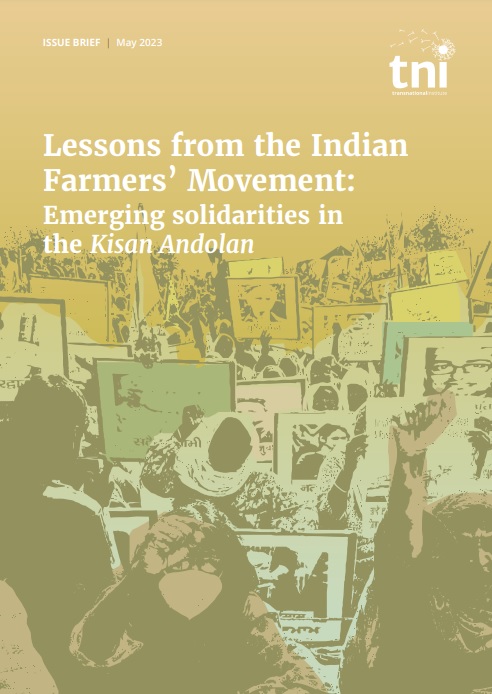
Lessons from the Indian Farmers’ Movement

Lessons from the Indian Farmers’ Movement

Emerging solidarities in the Kisan Andolan

The Indian farmer’s movement that was able to successfully pressurize the Government to withdraw anti-farmer laws provides lessons for social movements engaged in wider struggles for social justice. This issue brief explores the frameworks and processes of alliance formation that contributed to the remarkable success of the Kisan Andolan.

Download

Introduction

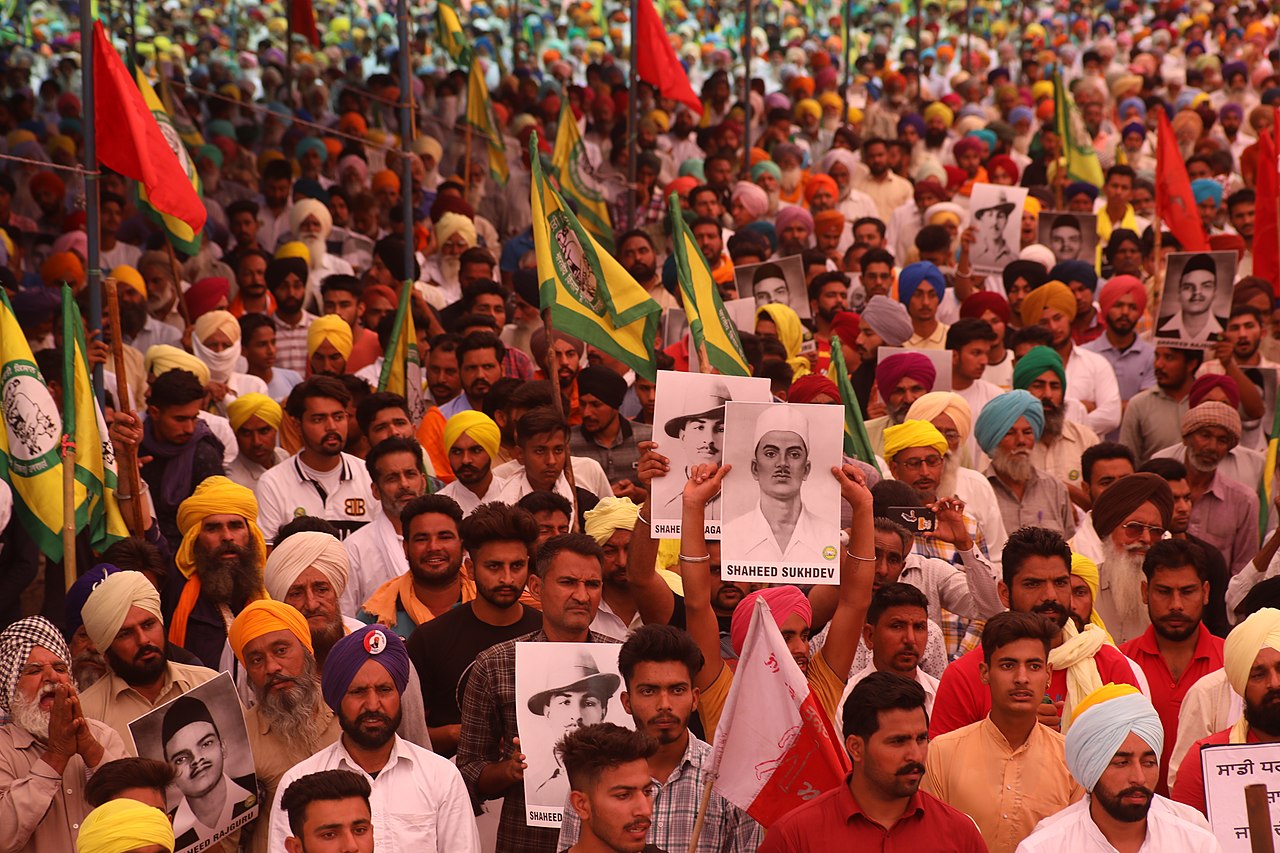
Large protests by Indian farmers in 2020 and 2021 marked an important political moment for social movements in the country. The immediate trigger was the hurried passage of three ‘farm laws’ by the Union government in September 2020. Their far-reaching implications, coupled with the lack of wider discussion or consultation, provoked a strong response from farmers’ unions and rural movements across the country. When protesting farmers were prevented from entering New Delhi, the national capital, in

November 2020, they established camps at the capital’s borders – at Singhu, Tikri and Ghazipur – for over a year. This sustained mobilisation ultimately forced the government to repeal the three laws in November 2021. By then, the Kisan Andolan (farmers agitation) had evolved into a wider movement demanding decisive state action to address India’s systemic agrarian crisis and protect rural livelihoods.

Alongside well-organised protests on the ground, the Kisan Andolan was able to effectively shape broader narratives around the movement. It responded to widespread disinformation in mainstream media outlets that were sympathetic to the government by building an active and engaged social media presence. Participants provided regular updates from the protest sites to urban audiences. This included sections of the large Indian diaspora and international supporters who organised solidarity protests around the world. The mobilisation was also extensively documented by supporters and allies. Prominent examples include a biweekly newspaper, Trolley Times, published online and in print in multiple languages, and Karti Dharti, a fortnightly publication by women volunteers.

The farmers’ protests were a crucial victory for social movements in India, and came as the government was using the pretext of the COVID-19 pandemic to push through a far-reaching liberalisation of the economy. The repeal of the laws also represented a significant capitulation by an authoritarian regime that has otherwise sought to crack down on public opposition to its majoritarian nationalist and neoliberal policies. The Kisan Andolan has thus demonstrated real possibilities for confronting the government’s now familiar playbook of discrediting social movements, censoring dissent, and direct repression. The broad-based solidarities — among rural producers and spanning the rural-urban spectrum — that began to emerge over the more than year-long protests generate new expectations for wider political struggles.

This note explores the frameworks and processes of alliance formation that contributed to the remarkable success of the Kisan Andolan. To be sure, the movement is grounded and embedded in the Indian context. But as progressive social movements around the world confront oppression, austerity, militarism, and the prospect of a new global food price crisis, there is much to be learned from the political dynamics of this victory.

Download

Read More

Webinar – DARE TO WIN: Lessons from Farmers Movement in India

Webinar - DARE TO WIN: Lessons from Farmers Movement in India

Watch the Webinar: 

The Farmers Movement in India has inspired millions around the world fighting for justice, democracy and solidarity. In the face of threats, intimidation and relentless propoganda, the farmers held their ground, and forced the Modi government to repeal the farm bills. This was one of the most spectacular victories of ordinary people against the combined assault of corporate power and the state, showing that determined struggle can defeat the mightiest of forces.

Given the historic victory of the Farmers Movement in India, AEPF’s Food Sovereignty and Resource Justice cluster and Collectif BreakFree Suisse are co-hosting the webinar, “DARE TO WIN: Lessons from Farmers Movement in India”. Join leaders of the movement in India in conversation with activists of La Via Campesina as well as activist-scholars from Asia and Europe to discuss the movement, its significance for pro-peoples’ movements in the struggles ahead.

Speakers: 

– Dr Darshan Pal Ji: President, Krantikari Kisan Union
– Dr Ashok Dhawale: National President, All India Kisan Sabha/ Member Samyukta Kisan Morcha
– Chukki Nanjundasamy: Managing Director of Amritabhoomi International Centre for Sustainable Farming and Development
– Morgan Ody: La Via Campesina’s General Coordinator / European Coordination of Via Campesina
– Hashim bin Rashid: SOAS researcher on farmer struggles in Pakistan/ Member Pakistan Kisan Rabita Committee

Moderators: Sandeep Chachra and Katie Sandwell

Read More

AEPF Congratulates the Indian Farmers on their historic victory

AEPF Congratulates the Indian Farmers on their historic victory

December 13, 2021

The AEPF congratulates the Indian farmers’ on their victory as the Government of India conceded to their demands after one year of non-stop protests. We pay homage to the over 700 lives martyred in the course of this struggle as the farmers braved a hostile environment and adverse weather conditions as they camped in the open on the borders of New Delhi.

The AEPF believes that this victory is shared by peoples’ movements world over as the farmers’ struggle goes beyond their own livelihood, to ensure that food prices remain affordable, that food growers retain dignity and the right to their labour and food sovereignty. The Indian farmers’ movement succeeded in halting laws that facilitate the corporatization of food production and distribution systems, and thereby dealt a blow to neoliberal reforms.

The AEPF lauds that women joined this movement in great numbers in their own right as cultivators and agriculturists. This movement collectively thwarted attempts to break its unity and demonise social movements. The Indian farmers movement has restored the majesty of non violent mass movements with a collective and responsible leadership that arose from within the struggle through discussions and negotiations across many political worldviews. This movement generated its own cultural symbols, songs, creative expressions, and expressed solidarity with other smaller movements and expressions of democracy like minority rights and accountable dissenters.In a word this movement has been a model of resistance that deepens democracy that has seen erosions in India as in many other parts of the world.

The leadership- Samyukt Kisan Morcha (SKM) has resolved to take forward the interests of the farmers and workers. The AEPF once again congratulates them and stands in solidarity with them.

Save the Date:
Dare to Win: Building on Lessons from the Indian Farmers Movement

Date: January 20, 2022
Time: 10 CET
Webinar

Read More

AEPF 13: Lessons of the Indian Farmer’s movement

Lessons of the Indian Farmer’s movement

Watch the Webinar: 

The current struggle of Indian farmers is the most important mass mobilisation in decades and represents the biggest challenge to the BJP government since it first came to power in 2014. The farmers are protesting against the three agricultural-reform laws forced through Parliament which the Indian government insists are necessary to overhaul an antiquated and obsolete system. The session looked at the dynamics of the ongoing farmers mobilisation in India and the various opportunities it presents.

Objectives:

  • To understand the deeper issues and the crises plaguing the Indian agriculture for the last three decades. Setting the agrarian situation in India, and locating farmers movement in that context.
  • An analysis and lessons from the strength of the movement and its capacity to unify and ally with a larger mass transforming the issue from sectoral demands to a bigger political question.
  • The wider context of the movement and the challenges.
  • Exploring the issue of the marginalised, Dalits, Adivasis, landless farmers, agricultural workers and others who are not at the forefront of the struggle. Their involvement in the movement and stakes in the new farm laws and ongoing agricultural reforms in general.
  • Caste, class divide within the movement and the way forward.
  • Possibilities, hope and defragmentation.
  • Ideas and lessons.

Speakers:

Manoj Jha: Member of Parliament, India; Professor, Delhi School of Social Work.
Yogendra Yadav: President, Swaraj India
Amarjit Kaur: General Secretary, All India Trade Union Congress
Kanimozhi Karunanidhi: Member of Parliament, India; Secretary, Women’s Wing, Dravida Munnetra Kazhagam
Praveen Jha: Professor, Jawaharlal Nehru University

Moderators: Sandeep Chachra & Kathy Bernaerts

Organisers: AEPF Cluster on Food Sovereignty & Resource Justice


Read More

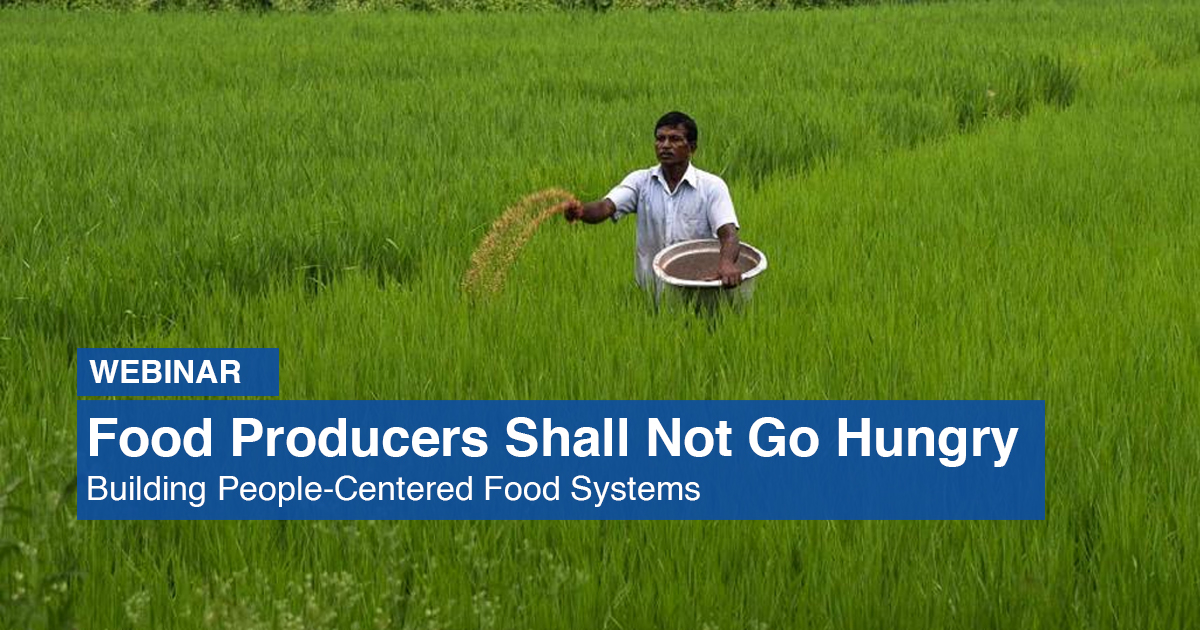
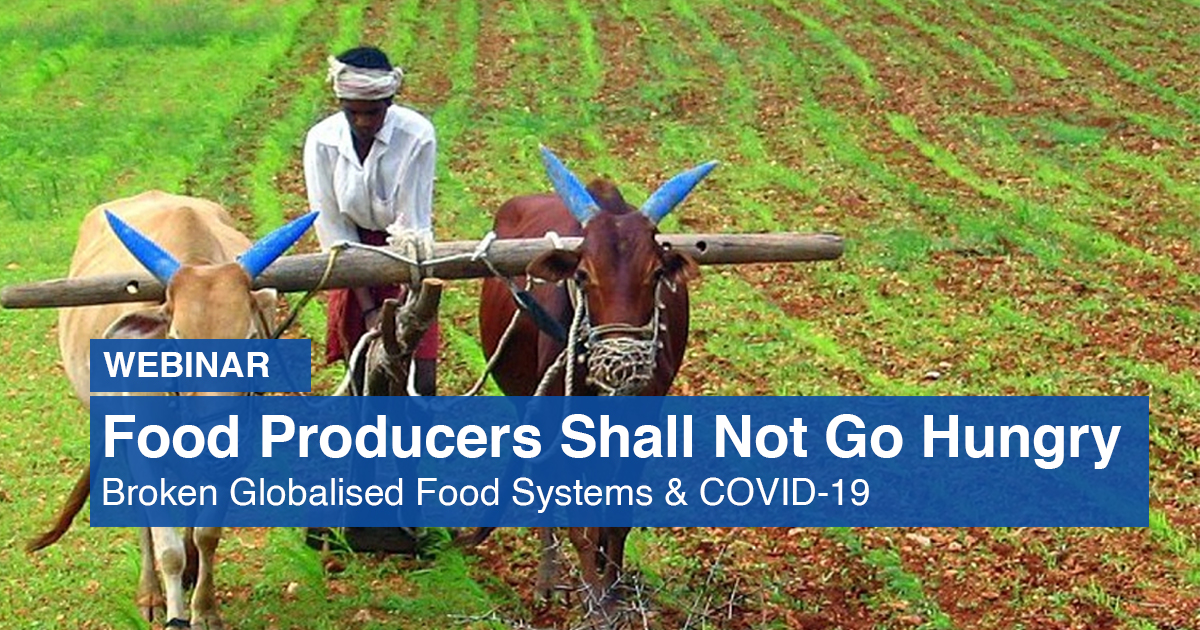
Webinar: Food Producers Shall Not Go Hungry – Building People-Centered Food Systems

Webinar: Food Producers Shall Not Go Hungry - Building People-Centered Food Systems

Watch the Complete Webinar:

This Webinar was also covered on Dawn: Pakistan’s oldest, leading and most widely read English-language newspaper.

Read the full coverage here

Webinar Report

“Strengthening solidarity among European and Asian farmers movements is key to survival of peasants hard hit by COVID-19. No one should go hungry, including food producers.” Paula Gioia, leader La Via Campesina – Europe

The Asia Europe People’s Forum, a network of progressive organisations across our regions, held its second webinar of a two-part series “Food Producers Shall Not Go Hungry”.

This all-female panel was comprised of peasant and rural workers speaking from The Philippines, India, Romania and Germany. The speakers included Filipino peasant organizer of PKKK, Amparo Miciano, organizer of Karnataka Rajya Raitha Sangha in India, India, Chukki Nanjundaswamy, worker of Ecoruralis in Romania, Ramona Duminicioiu and peasant organizer in Germany, Paula Gioia.

The insightful discussion covered the struggles of communities, particularly female food producers, for building people-centered food systems.

Paula Gioia from La Via Compisena Europe explained how the coronavirus pandemic proved that peasant agriculture can feed local populations with fresh, healthy food that doesn’t depend on long supply chains. In this context, much of society is realising the importance of localized, decentralised food systems, as well as of acknowledging the essential work of food producers. She said that strengthening solidarity among European and Asian farmers movements is key to the survival of peasants hard hit by COVID-19. “No one should go hungry, including food producers”, she said. She shared that more than 90 percent of farms in Europe are small, that the peasantry has been feeding people before, and that COVID19 lockdowns shortening supply chains led to local communities contributing labour, and farmers making direct sales through Community Supported Agriculture, direct sales, small shops and food boxes.

The pandemic showed the ugly face of the European food industry, deepening the historical exploitation of migrant seasonal workers, while at the same time turning supermarkets into Coronavirus transmission hotspots. Farmers markets and CSAs are simply much safer ways for people to get nutritious food. It is also important to understand that epidemics like COVID19 are direct products of the industrial agrifood systems.

Ramona Duminicioiu, a Romanian peasant of Ecoruralis, explained that as governments failed to coordinate with one another, there was a deepening fear by people that they would have to fend for themselves. Supermarkets that remained open did price gouging, while banks took advantage of poor countries unable to cope with the virus. She said that in Europe “governments haven’t responded to our demands. Everything migrant workers managed to do is due to themselves, their own hard work, and the solidarity of others… Yet our role in addressing the crisis became visible. Governments had to recognize our role as essential workers”. Ramona went on, “we produce food under very difficult conditions. Until now peasants and workers have received no support from governments. We survive because consumers recognise our contributions, but we still are forced to compete with powerful transnational companies for policy plus financial support.”

Amparo Miciano, a central organizer of PKKK, a rural women’s network in The Philippines, stressed, “We believe we have the capacity to feed ourselves, especially if we are guaranteed control over the resources and technology require to produce food. Hence, we continue to assert our rights for land and water resources, we assert agroecology as a suitable way in farming and protecting our environment.” Amparo  further argued that PKKK female food producers struggle to be recognised as farmers. Their work involves combining the crucial care work with food provision, where rural peoples barter with each other and fed people, which govts and corporations have failed to do.

According to Chukki Nanjundaswamy, from Karnataka Rajya Raitha Sangha in Karnakata, “Farmers are also getting organised and consumers also getting organised. We’re seeing initiatives. The 61 days of lockdown we saw in India was enough to show that the capitalist model is a failed model. Capitalist model just collapsed in our countries. What worked was a people to people initiative. What worked was solidarity between the people. These are the times of crisis and also the times of opportunities…. This situation taught the lesson that it’s better to grow diversified fruit for the local market. Those growing monocultures to sell at far away markets were hit the hardest. Those who did agroecological farming were able to build their own markets and sell directly.”

She said, “Lockdown period revealed to us that Capitalism is a failed system. A solidarity economy driven by people-to-people initiatives is what worked in this period”. The lockdown showed the capitalist model does not work for the majority, as many peasants died of malnutrition, poor health and debt-induced suicide during this time. It is people-to-people support that is helping the majority to survive the COVID19 crisis.

The viewers agreed that we must build solidarity with small scale food producers, organize against authoritarianism, resist transnational companies and industrial agriculture, amplify workers’ voices, elevate human rights for rural peoples, strengthen agroecological farming and organise for food sovereignty.

Viewers engaged in a question and answer session, facilitated by Farooq Tariq of the Pakistan Kissan Rabta Committee and Yinfang Tang from Fian International. This webinar was viewed by over 1300 people on Facebook in just the first few hours since the Livestream ‪on Friday afternoon‬, showing a great deal of interest about the question of food and peasants beyond the over 200 viewers who registered and participated in the  Zoom session from 33 different countries, with Live translations into Urdu and Bahasa. By the end of the weekend, the panel was viewed by approximately 2000 people.

Farooq Tariq
General Secretary Pakistan Kissan Rabita Committee
‪+92 03008411945

Read More

Webinar: Food Producers Shall Not Go Hungry – Broken Globalised Food Systems & COVID-19

Webinar: Food Producers Shall Not Go Hungry - Broken Globalised Food Systems & COVID-19

Asia Europe People’s Forum (AEPF) organised an international webinar titled “Food Producers Shall Not Go Hungry: The Broken Globalised Food System” in collaboration with Pakistan Kissan Rabita Committee. Over 600 viewers attended Live from different Asian and European countries, and hundreds more continue viewing the recording online.

The  webinar was moderated by Yifang Slot-Tang of Germany and Farooq Tariq from Pakistan. Speakers include Hashim Bin Rashid, a member of Pakistan Kissan Rabta Committee/La Via Campesina, Professor Felix Anderl from University of Cambridge UK and Asienhaus Germany, Arie Kurniawaty from Solidaritas Perempuan Indonesia and Ashlesha Khadse from LA Via Compesina South Asia, India.

The speakers explained that small farmers, landless peasantry, agriculture workers and the rural poor in Asia were badly affected by the COVID-19 pandemic. They spoke not only about the larger crisis in agriculture in the region, but also regarding agrarian visions in Asia of paths out of the current pandemic. The crisis is all due to uneven land distribution, ecological change, and the increased marketisation of agricultural markets, they argued.

The speakers shared that the COVID-19 lockdowns have resulted in food rotting in fields, leaving food producers, including peasants, farmers, and agricultural workers, to go hungry. The mass return of tens of millions of migrant workers, many walking hundreds of miles on foot, to their home villages has raised serious questions about the precarity of the lives of dispossessed and landless poor across rural and urban settings. The tragedy of many returning to their home villages is that they no longer have land to cultivate, nor subsistence crops to get through these difficult times.

They said that when the World Food Programme is warning of a ‘famine of biblical proportions,’ the situation in rural Asia is most worrying. The region has a long history of famines in the past. Small-scale food producers, including peasants and fisherfolk, have been particularly vulnerable to the external shock caused by the COVID-19 lockdown that has disrupted agricultural markets.

They said that this has exacerbated an already bleak situation for Asia’s peasants, small food producers and working poor. One of eight people in the world were facing malnutrition due to a lack of adequate and healthy food before the COVID19 pandemic. This global hunger is a product of landlessness, uneven social relations and capitalist imperatives underpinning relentless dispossession of people from land, as well as inadequate infrastructure and logistics of food provisioning. This has led to a global food system designed to fail to address the needs of the most hungry, instead increasingly supplying food grown in the global South to the global North and not the other way around.

The speakers explained that the policies that were promoted for growing cash crops on agricultural land, such as cotton and palm oil, have made agricultural producers particularly vulnerable in the face of the COVID-related economic crisis in the global North.

Outsourced factories in Asian countries, including Bangladesh, Vietnam, Pakistan, and Indonesia, which supply European markets have found themselves shut down in the face of canceled orders by fashion chains based in Europe. The dependence on European markets for exports of both food and finished products has continued to weaken the economies of many Asian countries.

Replying to a number of questions, the speakers explained why Asia is home to nearly half a billion people that go hungry every day. While UN bodies like the FAO, explain this ‘food insecurity’ through the causes of poverty, conflict, climatic and technological challenges, they say next to nothing about the colonial and neocolonial processes that dispossess peasants of their land.

This has created a situation where millions no longer earn enough to access adequate food, as food continues to be wasted to keep prices high. Moreover, this has meant that the poorest people must continue eating cheap, unhealthy food that leaves long-term health impacts, making them particularly vulnerable to infectious diseases such as the COVID-19 pandemic.

COVID-19 has exposed the authoritarian nature of the regimes in Asian countries. In Pakistan, several dozens of farmers were arrested this week who wanted to go to Islamabad to protest against growing electricity bills. The same pattern is seen in India, Philippines, Indonesia, Bangladesh and several other Asian countries. The regimes in Asia have continued with the old policies of neoliberalism, treating COVID-19 as an opportunity to exploit even more.

The COVID-19 pandemic has only deepened existing inequality and injustice in a food system that was already broken, panellists explained in response to viewer questions. Mass famine is a serious concern as the COVID-19 situation has been made worse by locust swarms, floods and cyclones in the region. Precarious migrant and agricultural workers, the fisherfolk, the landless and homeless, and women and youth engaged in care work are far more susceptible due to worsening conditions of hunger, disease and indebtedness, compared to national elites and their Western counterparts.

This webinar was Part I of a two part series. The following webinar will continue the conversation on July 10, particularly centring Asian voices on the active struggles for food, land, seeds and livelihoods within their own contexts.

At this critical time in human history, marked by the climate crisis, a global pandemic and rapidly increasing inequality, the utter failure of the industrial food system to meet nutritional requirements, particularly in the global South, makes understanding, linking and supporting these struggles all the more urgent.

The speakers said that our grassroots and local efforts in Europe and Asia are essential to invigorating our communities in crisis. The speakers stressed the need for land reforms in all South Asian countries as a first step to solve the agrarian crisis. The feudal call has become a real hurdle in the path of growth of agriculture production and access to food who produce then. They declared the aspiration to fight for the cause, “No food producer shall go hungry”.

The Asia Europe People’s Forum announced the next webinar on 10th of July at 3PM on the issue of presenting agrarian alternatives that would  help to end hunger and poverty among rural masses.
Read More

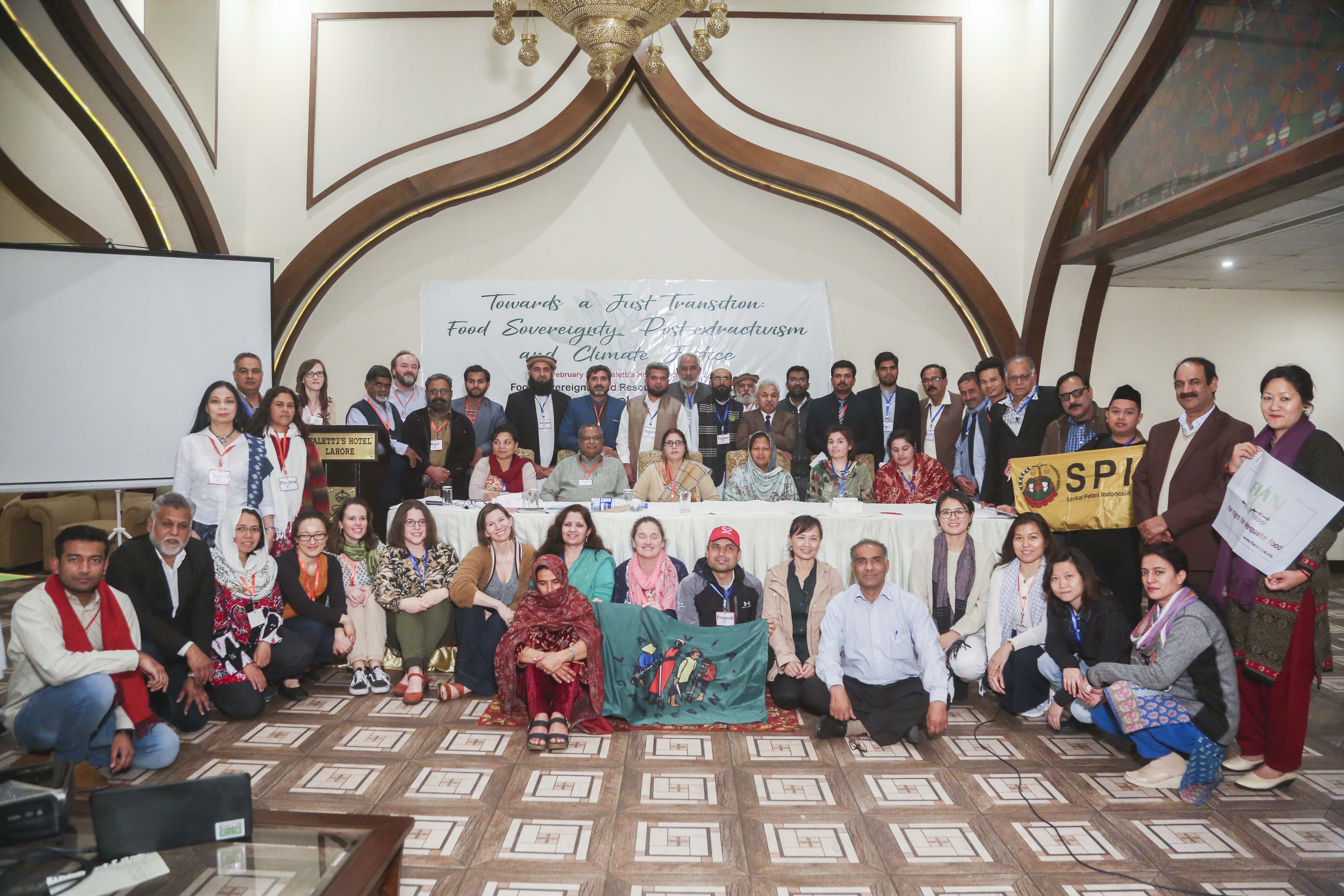
AEPF Lahore Report: Towards a Just Transition: Struggles for Food Sovereignty, Post-Extractivism and Climate Justice

AEPF Lahore Report - Towards a Just Transition: Struggles for Food Sovereignty, Post-Extractivism and Climate Justice

6-8 FEBRUARY 2020
LAHORE, PAKISTAN
CONFERENCE REPORT

Author: Tabitha Spence
Editor: Sylvia Kay, Transnational Institute

INTRODUCTION

The conference “Towards a Just Transition: Struggles for Food Sovereignty, Post-Extractivism, and Climate Justice” organised by the Food Sovereignty and Natural Resource Justice cluster of the AEPF brought together 62 participants from 13 different countries across Asia and Europe including from Bosnia Herzegovina, France, Germany, Indonesia, Malaysia, Myanmar, the Netherlands, Nepal, Norway, Pakistan, the Philippines, Sri Lanka and Thailand.

The aim was to consider in light of converging food, resource and climate crises what kind of social, ecological, economic and material transition is needed in different contexts and what would constitute a just transition as opposed to simply a technocratic response. A cornerstone of the clusters’ engagement with this question is the argument that food sovereignty, agroecology and postextractivism play a central role in bringing about this transition. These principles entail centering democratic approaches to decision-making regarding land, food, seeds and community resources, alongside acting in alignment with the scientific necessity to mitigate the climate and wider ecological
crises. While the corporate-controlled food system is one of the main drivers of global warming, peasant agroecology and food sovereignty offer massive potential for reducing emissions, by keeping fossil fuels underground, adapting to climatic changes and realizing social justice. Therefore, peasant agroecology and food sovereignty are social, political, and ecological visions that unite multiple
sectors within a single movement to challenge business-as-usual and create systems of shared control
over the requirements of life.

The following points sum up some of the challenges our cluster is taking on:

  • Given the bottom-up approach that agroecology implies, there is currently a disconnected structure for using, sharing and building upon resources already available. The spread of agroecology requires inclusive, community-oriented methods for peasant-to-peasant
    networks, horizontal training and pedagogies.
  • There is an aggressive promotion of big data and other technological approaches by agribusiness, supported to some extent also by various parts of the media and by public policies. The challenge is to change the discourse and prove the validity and innovations of peasant-led agroecology, while debunking the myth that agribusiness is innovative, efficient and successful for sustainable and fair food systems.
  • Industrialized agriculture and the corporate food system are at the center of the climatecrisis. Yet, rather than taking immediate and far-reaching action to make fundamental change, governments and corporations promote carbon markets, geoengineering and technological fixes they say are “triple wins” for sustainability, development and equity
  • There is a lack of political action to address the non-sustainability of industrial farming models and a lack of policies allowing peasants’ and other small-scale food producers’ access to natural resources and commons. There is a need to enhance the recognition among key decision makers of agroecology and its benefits, and to establish supportive policies.

Download the Full report 

Read More

Democracy not for sale

Democracy not for sale

November 29, 2018 | Report

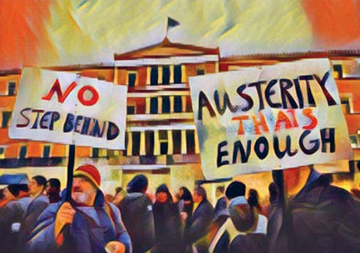
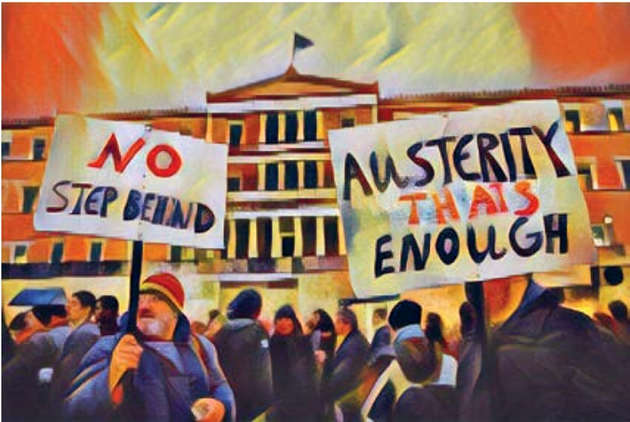
Democracy is Not for Sale: The struggle for food sovereignity at the time of austerity

Report from The Trans National Institute (TNI) with FIAN and Agroecopolis.

This Report shows that, thanks to EU austerity measures:

Austerity measures led to increased rural poverty and food insecurity in Greece and violated her people’s human right to food. How did this happen and who is responsible?

Executive summary

This Report examines the impacts of austerity in Greece on the right to food. It concludes that the Greek State and the Eurozone Member States violated the Greek people’s right to food as a result of the austerity measures required by three Memorandums of Understanding (2010, 2012 and 2015). In other words, the austerity packages imposed on Greece contravened international human rights law.

In August 2018, the European Council celebrated the end of the third Memorandum of Understanding (MOU), praising the Greek’s efforts and European solidarity. Yet, as this Report shows, there is little to celebrate. Not only did austerity measures increase poverty and food insecurity, it further consolidated an agri-food business regime that will perpetuate inequalities in access to and control over food.

The Report examines the impacts of austerity on food producers and consumer/cooperative initiatives as well as social impacts on the Greek population in general. By focusing on the human right to food, the Report highlights the impact of the Greek economic crisis that has touched every aspect of people’s lives. The focus on food producers and rural areas also draws attention to an overlooked aspect of Greece’s crisis as these sectors and regions often lack voice and recognition in national politics and decision-making.

The findings are based on direct interviews and original fieldwork, supplemented by interviews (including with high-level State officials) as well as macro-economic data analysis and literature reviews of key texts.

The findings of the Report are startling.

1. Austerity measures increased rural poverty and food insecurity

  • An estimated 38.9 % of rural citizens in Greece in 2017 are at risk of poverty * .
  • Rural unemployment soared from 7% in 2008 to 25% in 2013 while rural income per capita dropped by 23.5% during the crisis years (2008–2013)
  • Food insecurity across Greece has also increased – with food prices increasing at faster rates than prices in the Eurozone during the crisis, despite the sharp fall in domestic incomes and labour costs. This led to a drop in food expenditure in total terms but an increase in food expenditure as a share of total monthly expenditure from 16.4% in 2008 to 20.7% in 2016

– The proportion of households that cannot afford a meal with meat, chicken, fish (or vegetarian equivalent) every second day, for example, doubled during the crisis from approximately 7% in 2008 to more than 14% in 2016.

– The share of households with children unable to afford a protein-based meal on a daily basis doubled from 4.7% in 2009 to 8.9% in 2014. EU statistics estimate that 40.5% of children in 2016 faced material and social deprivation.

– Overall the crisis prompted a noticeable change in consumption patterns with the substitution of higher cost food items with more inexpensive foods.

* The EU defines this as someone severely materially deprived, below the poverty line after social transfers, or living in households where adults are employed less than 20% of the time.

2. Austerity measures impacted particularly severely on small-scale food producers and traders

The adverse measures on farmers included:

  • Higher taxes and increased costs of production due to the replacement of a separate income tax regime for farmers with a standardised income tax system, higher VAT rates on agricultural inputs including on fertilizer, pesticide, feed and seed, and diesel; and the introduction of a new tax on farmland. Taxes as a proportion of agricultural net value added soared from 4% between 1993 and 2010 to 15.4% in 2016.
  • The abolition of the specialised Agricultural Insurance Organisation (OGA) and its merging with a generalised system of social security has led to higher contributions for many farmers.

As well as direct impacts, a number of structural reforms significantly tipped the balance in favour of larger food retailers and private traders to the detriment of small-scale producers. These reforms included:

  • Retail trade liberalisation, such as the lifting of restrictions on particular goods sold in supermarkets, flexibilisation of labour laws, and a move towards Sunday trading.
  • Wholesale trade liberalisation, specifically the privatisation of the formerly publicly administered and profitable Central Markets and Fishery Organisation, the country’s prime wholesale food operator, responsible for the country’s 2 major food markets and 11 fish markets.
  • Privatisations, including the privatisations of the Agricultural Bank of Greece (ATE) and the major dairy cooperative AGNO. The results have been increased costs for farmers less access to rural credit, specialised financial services, and agronomic advice.

3. The austerity measures hit an already weakened rural food sector made vulnerable by long-term trends

Agriculture in Greece remains a significant part of the economy, making up nearly 4% of the country’s GDP (more than double the EU average) and providing 12% of the country’s jobs in 2016, but it has been in a state of decline since the early 1980s. Greece’s entrance into the European Economic Community in 1981 and later the EU – and the Common Agricultural Policy – opened up Greece’s small-scale farmers to greater competition. This led to a number of vulnerabilities in the Greek agri-food system prior to the crisis including:

  • A steady fall in domestic agricultural production and an increasing reliance on food imports that led to a negative food trade balance. Between the late 1980s and the beginning of the crisis in 2008, the food trade deficit frequently exceeded 1% of the country’s gross domestic product (GDP) while in the period 2005–2011, imports accounted for nearly 40% of domestic consumption.
  • Increasing reliance on food subsidies with subsidies rising as a share of net value added in agriculture from 23% in 1993 to 81% in 2008.
  • A growing supermarket sector that intensified monopolistic conditions in relation to producers and consumers alike.

These trends have undermined Greece’s food sovereignty, turning Greece from a net food exporter to a net food importer. Yet rather than remedying these vulnerabilities, the three MOUs (2010, 2012 and 2015) accelerated these trends. Examining the structural requirements of the memorandums suggests a deliberate ideological project of transforming the State and restructuring the Greek economy in favour of certain sectors of capital such as large (trans)national supermarket chains. The crisis provided a means to implement it.

4. The Greek government’s social safety net was insufficient to prevent food insecurity and poverty

The Greek government enacted a number of social programmes seeking to provide a safety net against the fallout from austerity and to address urgent food insecurity concerns. These included the passing of a humanitarian assistance law that provided food, rent and electricity subsidies for low-income individuals and families. This was later replaced by a Social Solidarity Scheme which provides low-income households with a monthly allowance.

While addressing the most basic needs, the Scheme’s support has been limited in scope, providing only €30 to €200 per household per month, with an additional €100 for every adult and €50 euros per child. The strict eligibility criteria limits support to the most severe cases of material deprivation, while the means testing requirements exclude many who would be entitled due to its restrictive and bureaucratic stipulations. Coverage in rural areas has also been limited.

As a result, private foundations, charities, NGOs, and the Greek Church have had to fill some of these gaps – offering among others free school meals, food banks and soup kitchens, and ‘social grocery’ stores that provide food, clothing, cleaning materials, and other basic goods for low- income individuals and families.

While some of these programmes receive support from local municipalities, and in the case of the school meals programme also central government backing, they are little more than sticking plasters. Human rights-based responses, such as supporting jobs and just wages, that would deal with the root causes of hunger and food insecurity need to be much more centrally foregrounded.

5. Community-led popular responses provide real solutions and point to the emergence of a new food politics

In the face of Troika-enforced government policies undermining food sovereignty – and a failure to adequately ameliorate its impacts – a range of grassroots community initiatives have emerged to help secure people’s access to food.

These reflect different political tendencies, vary in terms of infrastructure and engage differently with States and markets. They include solidarity kitchens, food cooperatives, ‘No intermediaries’ markets, food self-sufficiency collectives and networks, Community-supported agriculture (CSA) schemes, as well as a range of other agricultural cooperatives, alternative farm models, and producers’ ventures.

The call for a ‘solidarity economy’ has become a key framework within which many grassroots responses have articulated their demands and aspirations. This Social Solidarity Economy (SSE) has grown massively during the years of the crisis: in 2013, 372 social enterprises were registered while in the years 2014, 2015 and 2016 these rose to 585, 714 and 907 respectively.

In building up such counter-power from below based on innovative practices, social experimentation and people-controlled infrastructures, this movement is paving the way not only for a popular resistance to austerity, but also a new, transformative, just food system. This extends beyond demands for affordable food prices and farmer protection towards genuinely challenging the structural power of the corporate agribusiness sector and advancing popular alternatives.

6. The right to food has been violated in Greece

The right to adequate food is strongly enshrined in international human rights law and its normative content notes several elements (availability, accessibility, adequacy, sustainability) that need to be safeguarded. The right to adequate food also correlates closely with other economic, social and cultural rights (ESCR), meaning that the violation of one right often leads to the violation of other rights. The right to health, life, water and adequate housing are underlying determinants of the right to food.

Several austerity measures – including changes to agricultural taxes and social security regimes and the drive towards privatization and trade liberalization – contributed directly to undermining the right to food in Greece. Other measures such as minimum wage reductions and pension cuts also affected this fundamental human right and contravened other economic, social and cultural rights, such as the right to work, housing and health.

States have the obligation to realize human rights. This obligation includes the progressive realization of socio-economic rights with the maximum available resources, which prima facie prohibits retrogressive* measures that would limit or reduce existing levels of enjoyment of enshrined rights. Retrogressive measures can only be taken under very limited circumstances and based on key conditions – such as careful monitoring and evaluation, consideration of all rights, ensuring no disproportionate impact on the most vulnerable – none of which was applied by the Greek government. The wide array of retrogressive measures taken, combined with the increasing cost of living, are sufficient proof that the right to food was violated in Greece.

* Retrogressive measures means any measure that implies a step back in the level of human rights protection due to the intentional decision by a State.

7. Accountability for violations of the right to food rests both with the Greek government and the Eurozone Member States, with the latter arguably taking a greater share of the responsibility

When a human right is violated, it means there has been a breach in the obligation to respect, protect and fulfill this human right. Many actors were involved in the negotiations leading to the three MoUs. Human rights obligations exist territorially and, under certain circumstances, extraterritorially.

As a result of the austerity measures, Greece has violated the human right to food of people living in Greece. Yet, Eurozone Member States, as direct lenders are also responsible as they signed the MoUs and likely pressured the Greek government to do so. Eurozone Member States – as States Parties to the International Covenant on Economic, Social, and Cultural Rights and other international human rights instruments – have therefore breached their extraterritorial obligations to respect the human right to food in Greece. Not only should Eurozone States have refrained from requiring measures that affected the right to food, they should have also conducted human rights impacts assessments of the Memorandums. These HRIAs are required prior to, during, and after the passing of MoUs, but were never done.

Furthermore, all European States have failed to comply with their human rights obligations when acting and taking decisions in Intergovernmental Organisations and International Financial Institutions, such as in the International Monetary Fund. As part of the UN system, the latter is obliged to comply with the UN Charter which includes a commitment to the progressive realization of human rights. It certainly should not take any action that would constitute a human rights violation.

Troika members claim that the sole responsibility for the impacts of the MoUs lies with the Greek State. This argument is false because they, with Greece, were joint signatures of the three MoUs. Therefore, the responsibility for violations of the right to food is a shared one too. Indeed it can be argued that the responsibility of the Eurozone Member States is much bigger, given the evidence of direct interference or even coercion by the Member States of the Troika on Greece to sign the MoUs.

The focus of this Report is on Greece, but its findings are relevant internationally. Greece is not an exception. Many other countries, in and outside of Europe, find themselves in similar situations, forced to implement austerity-driven, technocratic policies which lead to violations of economic, social and cultural rights including the fundamental right to food. Greece’s experience also shows that the violations of these fundamental rights are not only issues of the global South. They are happening in the global ‘North’. Hunger, food insecurity, poverty and material deprivation are European issues. Human rights are universal, which means all governments have obligations to fulfill them. It is time now for the EU to act in accordance with these obligations and put human rights above the needs of financial markets.

Download:

Democracy not for sale: the struggle for food sovereignty in the age of austerity in Greece(pdf, 3.41 MB)
Average time to read: 90 minutes

Executive Summary – Democracy not for sale: the struggle for food sovereignty in the age of austerity in Greece(pdf, 708.03 KB)
Average time to read: 5 minutes

Executive Summary – Democracy not for sale – in Greek ?(pdf, 1.01 MB)
Average time to read: 5 minutes

Read More