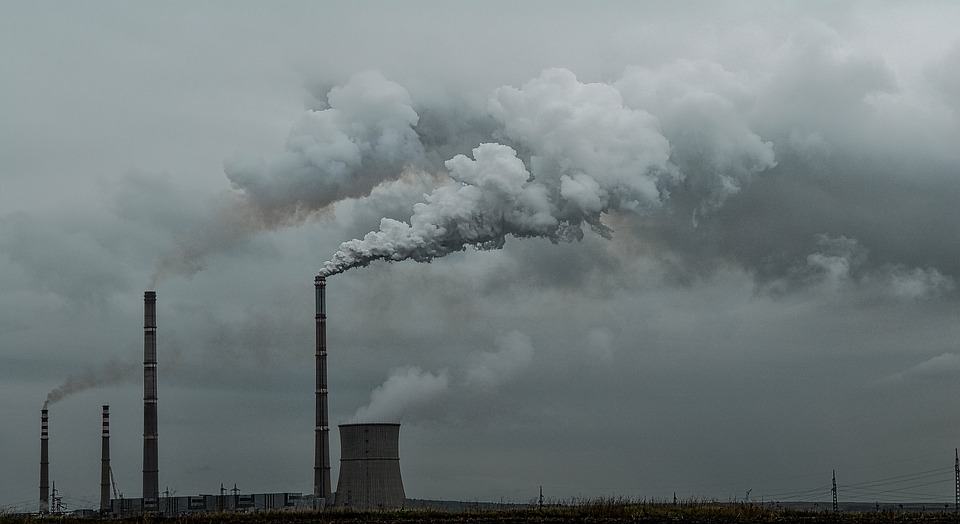
There will be no going back from climate chaos if we don’t halt polluting corporations and change the system

There will be no going back from climate chaos if we don’t halt polluting corporations and change the system

August 17, 2014

Climate change negotiations are being dominated by irresponsible states, polluters and corporations that only care about current operations and the furtherance of profits through more fossil fuel exploitation and in new carbon markets which are destroying forests, soil, wetlands, rivers, mangroves and oceans, and financializing and privatizing ecosystems and nature itself on which our lives depend.

This was more than evident in the last UNFCCC Conference of the Parties (COP) in Warsaw, Poland where parallel to the climate negotiations there was a summit of the coal industries shamelessly promoting the lie of “clean coal.” In Warsaw, the countries (past and present) most responsible for emissions did absolutely nothing to change the key socio-economic causes of climate crisis such as trade and investment, energy, transport or agriculture policies nor did they attempt to genuinely cut emissions at the source. The public funds pledged for adaptation and to the green climate fund were simply a joke compared to the funds allocated to subsidize dirty energy or to rescue banks and the financial system.

This situation led to the walk out of most of civil society organizations from the Warsaw climate talks to raise awareness and to shift the focus away from ‘inside’ negotiations to mobilizing people and frontline communities resisting polluting industries in order to send a clear message: People and communities around the world are already implementing climate-safe, local energy alternatives and governments should listen to them and stop implementing policies that favor polluting corporations and their market interests.

Six months have passed since Warsaw and the situation has worsened. The climate negotiations in Bonn, Germany (4-15 June) are not focused on how to reduce emissions to 38 Gt of CO2e by 2020 and to avoid burning the planet with emissions that will be approximately 57 Gt of CO2e by 2020. If we lose this decade, there will be no going back from climate chaos. No future agreement will be able to undo the damage of the emissions that are now being sent to the atmosphere. The time to act is now, there is absolutely no more time and energy to waste on false solutions that maintain business as usual.

Furthermore, Ban Ki Moon’s UN Climate Summit to take place New York in September, has been captured by corporations who will enjoy the precious access now expected of big business, including big polluters. This access deepens the illegitimate and dangerous corporate control of public policy spaces.

Climate change is not simply an environmental issue; it is the result of an unjust economic system that is in the business of pursuing endless growth, concentrating wealth in the hands of a few and over-exploiting nature to the point of collapse. To really address the climate crisis, overexploitation of nature and people – currently led by polluting corporations whose only priority is the maximization of their profits – should be immediately stopped. The proliferation of extractive and dirty industries, fracking and tar sands projects, privatization through natural disaster reconstruction projects and others are engendered by a capitalist system that needs to be changed. The climate crisis won’t be solved without addressing the root causes of climate change.

“System change not climate change” means among other measures to leave more than two thirds of fossil fuel reserves under the soil; ban all new exploration and exploitation of oil, tar sands, shale oil and shale gas, coal, uranium, and gas; end the dominance of export-based industrial forms of food production, and promote small-scale farming and an agriculture system that ensures food sovereignty; support the development of local sustainable economies, based on communities participation, equity and protection of natural resources; dismantle the war industry and military infrastructure; reduce working hours and create more employment to restore nature; and stop and revert corporate driven trade and investment agreements.[1]

“System change not climate change” is also the struggle against false solutions to climate change like public subsidies to “clean coal” and Carbon Capture and Storage projects, carbon markets, the privatization of forests and biodiversity (like REDD), “climate smart agriculture”, geoengineering, synthetic biology, industrial agrofuels, GMOs and others.

“System change not climate change” requires that the WTO and Free trade agreements framework, the global empire of transnational corporations and banks be dismantled. Only a society that has the type of democratic control over policies, resources, finance and the means of production which is based on a fair and equitable distribution of all work (including care work and migrant workers), indigenous and women’s rights and respects the sovereignty of the people will be able to guarantee economic, social and environmental justice. System Change requires an end of the patriarchal society in order to guarantee women’s rights in all aspects of life.

Many proposals already contain key elements needed to build new systemic alternatives like Buen Vivir, defending the commons, respecting Indigenous territories and community conserved areas, the rights of Mother Earth – rights of Nature, food sovereignty, prosperity without growth, de-globalization, the happiness index, the duties to and rights of future generations, the Peoples Agreement of Cochabamba and others.

The climate crisis is a great threat that can only be addressed by joining social, democratic and environmental movements and struggles. The struggles are all on fronts, both outside and inside the climate negotiations, but they all need to follow a common strategy and to be focused on the same goal: changing the system in order to arrest climate change. Whether inside or outside, efforts must be made to end business as usual and stop the corporate takeover of the planet and its resources. There will be no going back from the climate chaos if we do nothing to confront and challenge the inaction of our governments hijacked by polluting corporations. It is crucial for us to all strengthen our concrete struggles on the ground and focus our energies on changing the system.

The time is over for weak strategies, half-measures or empty promises designed to perpetuate polluters and their business as usual ways. If we are to reclaim our future, we must change the present – change the system and not the climate. For that, we will need everyone.

Signed by:
Alliance of Progressive Labor – SENTRO, Philippines
Alternatives International
ATTAC France
Ecologistas en AcciĂłn
Fairwatch, Italy
Focus on the Global South
Health of Mother Earth Foundation (HOMEF) Nigeria
Global Forest Coalition
Grassroots Global Justice Alliance
Migrants Rights International
OilWatch International
Polaris Institute
Transnational Institute

Read More

Roundtable debate on Asia European relations

Roundtable debate on Asia European relations

October 6, 2010

Walden Bello, Praful Bidwai
Nicola Bullard, Christa Wichterich, Marica Frangakis
Source: tni.org
October 2010

Debate between leading European and Asian analysts on the decline of European power, the economic rise of China and India, the likelihood of global recession, climate change and proposed alternatives to the current global economic model.

Audio File:

{mp3}http://www.tni.org/sites/www.tni.org/files/audio-files/rountable_lowest.mp3{/mp3}

Walden Bello

Senior analyst at Philippine think-tank Focus on the Global South, TNI fellow and Akbayan representative in the Filipino Congress.

Author of more than 14 books, Bello was awarded the Right Livelihood Award (also known as the Alternative Nobel Prize) in 2003 for “
 outstanding efforts in educating civil society about the effects of corporate globalisation, and how alternatives to it can be implemented.” Bello has been described by the Economist as the man “who popularised a new term: deglobalisation.”

Bello predicted the financial crisis several years prior to the current meltdown and is a globally respected figure within the alternative globalisation movement. Canadian author Naomi Klein called him the “world’s leading no-nonsense revolutionary.”

Praful Bidwai

Independent Journalist

TNI Fellow and former senior editor of The Times of India, Praful is a freelance journalist and insightful columnist for several leading newspapers in South Asia writing regularly on all aspects of Indian politics, economy, society and its international relations. He is an associate editor of Security Dialogue, published by PRIO, Oslo; a member of the International Network of Engineers and Scientists against Proliferation (INESAP) and co-founder of the Movement in India for Nuclear Disarmament (MIND).

Read More

Asia, Europe groups reject EU raw materials policy

Asia, Europe groups reject EU raw materials policy

October 6, 2010

BRUSSELS, Belgium—International working group on indigenous peoples, extractives and climate change hit the EU policy on accessing raw materials in a meeting of civil society organizations during the 8th Asia-Europe People’s Forum being hosted here.

They claimed that the policy, the Raw Materials Initiative which is embedded in the Global Europe Strategy, was impacting on the lives and livelihoods of indigenous peoples in developing countries, such as the Philippines and Indonesia, and effectively making them poorer.

The EU Raw Materials Initiative is an aggressive policy paper of the EU Commission on Trade. It defends European corporate interests to get access to international resources at cheap prices, to ensure European growth and jobs. The policy clearly called for “undistorted access of European companies to raw materials.” The groups claim that this policy fails to address important issues like climate justice, rights of indigenous peoples, and sustainable development.

Civil society organizations asserted that the aggressive push of Europe to ensure access to raw materials such as minerals and fossil fuels continue to impact on indigenous peoples who live in ancestral lands that are rich sources of minerals and coal. They cited the case of Borneo in Indonesia, where the coal mines are extracting 200 million tons every year. At least 10 percent of this coal is exported to Europe. Resulting to the dislocation of more than a hundred thousand Dayak people and local communities in the island, activists raised problems rooted from the mining operations including destruction of watershed areas, restrictions to access to lands, human rights abuses, and health problems.

“We are looking at the coal mine operations not only as dirty, but deadly as well,” said Siti Maemunah, board member of Jaringan Advokasi Tambang (Jatam), a national campaign group in Indonesia. “Europe must take a leadership role in changing the consumption patterns and lifestyle of the Global North, so that demands for minerals and coals from developing countries like Indonesia will be reduced,” she concluded.

In relation, campaigners from the Philippines raised similar concerns. Judy Pasimio, executive director of Legal Rights and Natural Resources Center/Friends of the Earth Philippines (LRC-FOE) based in Manila, described the EU policy as disturbing. “For us in the Philippines, particularly the indigenous communities who face the devastating impacts of mining and other extractive industries, such a blatant call is not only disturbing, but irresponsible as well,” Pasimio stated. “EU’s raw materials policy should be informed by the undistorted reality of the IP’s landlessness, hunger, vulnerability to disasters, and being victims of human rights abuses,” she concluded.

Meanwhile, German group Philippinenbuero asserted that there is inconsistency when EU provides development aid for IPs on one hand, and yet fails to raise standards among extractive industries regarding corporate accountability and deliver its commitments to pursue climate justice. Michael Reckordt, executive director of Philippinenbuero said that “instead of claiming a better access for the European industry to raw materials and pushing investor-friendly conditions, the EU should struggle for more transparency in investments into the mining and extractives sector. He also floated the proposal to make companies accountable through legally-binding mechanisms, in instances where extraction activities violate human rights and introduce environmental destruction in Asia and around the world.

Mario Maderazo, project officer from the Philippine Misereor Partnership (PMP) Anti-Mining Campaign in the Philippines, said that “the EU Raw Materials policy will only strengthen the grip of corporate interest over access to natural resources in developing countries like the Philippines and put the IPS at the losing end of the deal.” He argued that the EU must instead, push for a natural resources policy that will strengthen the property rights of indigenous peoples over their lands and resources.

Similarly, the group chided the EU for pushing the Raw Materials Initiative, as this policy will potentially worsen climate change. They said that the high demand for fossil fuel such as coal will continue to make high greenhouse gas emissions and deforestation resulting from mining will drastically reduce carbon sinks in Asia. “We are practically burning our future with these policy options,” said Kris Vanslambrouck, campaigner from 11.11.11.

The groups also demanded that EU policy must clearly move toward greater corporate accountability, especially in industries such as extractives that pose potentially serious negative impacts to affected communities. They asserted that a genuine corporate accountability includes a framework of placing the burden on corporations of proving that any access to natural resources of host countries will not cost negative environmental and social impacts.

The AEPF is an interregional network of progressive civil society organizations across Asia and Europe. It emerged in the 1996 from a common desire and need among organizations across the two continents to open up new venues for dialogue, cooperation and solidarity. It has assumed the unique function of fostering people’s solidarity across the two regions and has become a vehicle for advancing people’s voices within Asia-Europe relations. AEPF engages the Asia-Europe Meeting (ASEM) events both directly and indirectly through debates, policy proposals, lobbying, and creative actions.

Read More

International Campaign on Climate Refugees Rights (ICCR) launched at Copenhagen

International Campaign on Climate Refugees Rights (ICCR) launched at Copenhagen

December 11, 2009

Global civil society groups demanded a leagal institutional framework for climate refugees.

[Copenhagen, Friday 11 December 2009] While the countries split wide open on combating climate change, the civil soiceity groups have launched the “International Campaign on Climate Refugees Rights (ICCR)” at Copenhagen. The social movement groups from Asia, Africa and Latin/Central America joined hands together to demand the rights of millions of people being displaced by the climate change.

Opening the launching of the campaign, Ahmed Swapan Mahmud, convenor of the ICCR said, “global civil society groups should come forward to build a wider constituency to claim the justice and rights of the climate induced refugees”.

Mr Ahmed also demanded “a legal safeguard protocol should be in place to ensure the political, social, cultural and economic rights of the climate refugees by the international community presently meeting under the Conference of Parties (COP-15) here in Copenhagen, Denmark.

A collage of distinguished speakers spoke about the climate change and the human rights and justice during the launching of the international campaign with a strong audiences in the venue of Klimaforum.

The Goldman Prize Winner and the Executive Director of Bangladesh Environmental Lawyers Association (BELA) Rizwana Hasan said “we don’t want the causes that produce climate refugees. However we are confronting the causes of climate change.” She demanded to ensure climate justice for all and to take measurses for a legal institutional framework for the victims of climate change.

Dr Ahasan Uddin, one of the authors of Intergovernmental Panel on Climate Change (IPCC) from Bangladesh demanded to review Geneva Convention 1951 on Refugee on the light of climate refugees. He further reiterated to consider even a separate international institutional framework for the climate refugees which will provide complete dignity and respect.

Demanding the recognition of climate debt, Lidy Nacpil from Jublee South- Asia Pacific Movement on Debt and Development (APMDD) said “We are not asking assistance or aid but the reparations from the industrialised countries for the over extraction and consumption of natural resources”.

Demba Moussa Dembele, the Chair of the LDC Watch from Senegal, and a member of the international committee of the campaign said “we dont want climate change but system change”. He suggested, the need of the hour is a new type of relationship between the North and the South to combat the climate change and ensure rights and justice for the cliamte refugees.

Shahin Anam, Director of Manusher Jonno, a civil society foundation based in Dhaka, said, “most of the policies in the southern countries are anti-people”. She demanded pro-people policies to ensure the rights and justice for the climate refugees.

Maria Theresa Lauron from Asia Pacific Research Network (APRN) and also the coordinator of People Movement on Climate Change (PMCC) based in the Philippines strongly called for climate justice now. Ms Maria said false solutions are really aggravating the situation rather addressing the plight of the affected people due to capitalistic globalization.

“The large hydropower structures which are being pursued as clean energy by the governments and international financial institutions to mitigate the greenhouse gas emissions are displacing local communities in the South”, said senior Ashoka Fellow and also the member of the campaign Ravindranath.

While presenting the climate induced impacts on various communities in Asia, Senior Sri Lankan environmentalist and member of the international committee of the campaign and the Executive Director of Colombo based Centre for Environmental Justice (CEJ) Mr Hemantha Withanage strongly demanded that international responsibility on the climate induced migration should be clearly manifested in articles of globally agreed long term action plan. “The present negotiations on the Long Term Action Plan must accept and negotiate under the adaptation section 17 of this climate induced migration”, added Mr Withanage.

Dr Avilash Roul senior climate change expert strongly recommended that the government and international financial institutions must address climate induced displaced people immediately to avoid the future environmental conflict.

Geza Tessenyi, President of the Intercultural Communication and Leadership School and acclaimed international legal expert on the refugess suggested to building broader coalition among the various groups to review the legal regimes.

While the packed house open for discussion, many suggestions come from the audiences.

The International Campaign on Climate Refugees Rights (ICCR) is a global independent association aiming at asserting and realizing the rights and ensuring justice to the climate induced displaced victims climate refugees. Civil society groups from Asia, Africa and Latin/Central America consisiting of Bangladesh, India, Nepal, Sri Lanka, Pakistan, Indonesia, Senegal, Uganda, EL Salvador etc, are the members of this campaign while currently the secretariat is based in Dhaka, Bangladesh.

For further contact: Ahmed Swapan, Convenor, Email : iccr.secretariat@gmail.com, ahmed.swapan@gmail.com

Read More