Migration and Refugees – welcome culture and struggles

Migration and Refugees - welcome culture and struggles

May 2, 2016

By AEPF Working Group, Stiftung Asienhaus, May 2, 2016

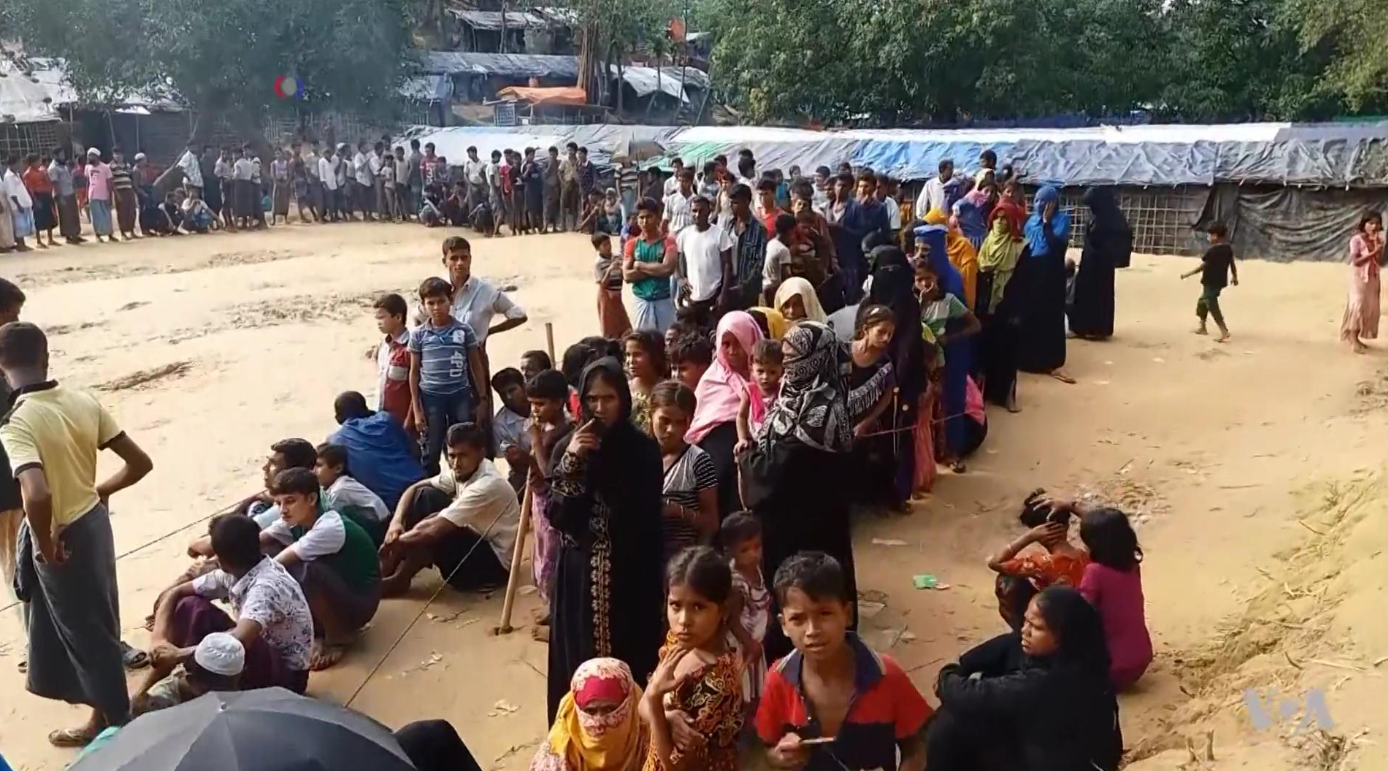
A large number of refugees and migrants are moving across countries and continents in search of a life in peace, dignity and economic security. Europe faces dramatic humanitarian situations, which have been known till recently only in the Global South. In the past years, thousands have lost their lives on their way, particularly in the Mediterranean. Hundreds of thousands of refugees are forced to move under inhumane conditions along the transit roads, live in inadequate camps or overcrowded initial reception centres waiting for registration.

Failing to address the root causes of migration, most European states respond in an increasingly authoritarian, uncoordinated and often inhuman way: fences are erected, new border regimes and policies of securisation enforced, military and police forces deployed, asylum rights are being curtailed. Organised right-wing groups in Germany set fire to refugee shelters, abuse and attack asylum seekers, right-wing populism, xenophobia, racism and antifeminism are on the rise across Europe calling aggressively for a strong state defending national identities and new border governance. Right-wing parties and governments demand to tighten legal and security measures, further deterring and criminalising refugees.

Many EU member states are unwilling to live up to values of democracy, human rights and social welfare in the state-level negotiations transforming Europe without borders (Schengen) as a political project and a social model. At the same time, civil society groups and a large number of individuals practice a “welcome culture”. Based on solidarity and voluntary work. They have set up support structures from language classes to “autonomous” schools, from medical treatment to legal advice. Although there is little formal organisation and often also no formalised spokespersons, struggles against deportation and around a right to stay, for freedom of movement and right to citizenship are popping up in many places.

A distinctive phenomenon is the merging of diverse struggles, for example those over precarious labour by migrants, and shelter, over the right to the city and against gentrification, for the commons and free access to social and public infrastructure. Protests are further characterised by the fact that refugee activists raise their voices without intermediaries and speak for themselves unfolding complex dynamics between institutional mechanisms of control and the struggles over migration. The AEPF could be a space for CSOs from Europe and Asia to deepen and broaden their understanding of xenophobia, structural racism, and border regime on the basis of an international exchange of views and experiences, including partners from migrant and refugee movements. Thus they can build momentum toward a constructive criticism and political action in specific contexts.

Read More

Social movements celebrate historic UN vote against impunity

Social movements celebrate historic UN vote against impunity

August 17, 2014

Twenty country members of the United Nations Human Rights Council, representing a population of 3.8 billion people, voted today in favour of a historic resolution to build a binding treaty against TNC human rights abuses.

Attached files: Stop Corporate Impunity Press Release on UNHRC vote

(June 26th, 2014, Geneva) – After weeks of negotiation and furious lobbying from Northern countries to avoid the creation of an intergovernmental working group to discuss binding human rights obligations for Transnational Corporations, the United Nations Human Rights Council voted on a resolution to initiate this process.

The tense debate surrounding the resolution that was introduced in September 2013 with by 85 countries mostly from the African group, the Arab group and Alba countries, came to an end today with 20 votes in favour, 14 against and 13 abstentions.

When the resolution was presented on Thursday morning, Ecuador, China, South Africa and India passionately called for it to move forward and create a binding treaty that could provide access to justice for the victims of human rights violations by Transnational Corporations.

Despite the strong and expressed opposition from the United States, who called for the vote, and from the EU, Japan and the UK, who strongly encouraged other Council members to oppose the resolution, it passed and was welcomed by a spontaneous applause from the floor, an unconventional and rare sign at UN meetings.

After observing the vote from the floor of the Palais de Nations in Geneva, Brazilian activist and TNI corporate power campaigner Diana Aguiar said that “threats from the EU mission that binding rules would impact investments by TNCs in countries of the South and from the US representative that corporations should be included in any discussion on business and human rights reveal how some governments are no longer able to differentiate the public good from the defence of private interest.”

She added that “the Northern States’ multi-stakeholder approach is a disguise for deep corporate capture of governments that puts investor interest above the rights of people.”

Before the vote, both Ecuador and South Africa emphasized the unprecedented support of hundreds of civil society organizations and social movements for the resolution. In the words of the Ecuadorean Ambassador, “we have to thank the more than 500 civil society organizations that formed a coalition to demand remedies for victims and to support our effort” adding that “without their work none of this would have been possible.”

The Global Campaign to Dismantle Corporate Power has been engaged in this process since September 2013 when Ecuador first announced its initiative to push for binding codes.

“One of the main demands of the Global Campaign to Campaign to Dismantle Corporate Power has been to build a binding treaty that would provide victims of systematic violations committed by TNCs with access to justice,” said Brid Brennan of the Transnational Institute.

“We welcome the adoption of this resolution and we are committed to ensuring that the process within the UNHRC will lead to a framework for human rights based on social and environmental justice. The vote split between northern and southern countries shows who is willing to defend the interests of transnational capital and who defends the rights of the victims of human rights violations.”
Ends

Photo credit: Victor Barro-Friends of the Earth International

Link : http://www.tni.org/events/crisis-gaza-discussion-context-and-history

Read More

How the government is smothering dissident NGOs

How the government is smothering dissident NGOs

July 17, 2014

Muzzling NGOs is unbecoming of a democracy. Self-confident democracies encourage, indeed applaud, the involvement of citizens’ associations, including NGOs, in social and political decision-making and development planning. Instead, our paranoid government bullies and terrorises them

A journalist isn’t generally expected to comment on news items in which s/he personally figures as an actor. But I’m compelled to do so in respect of a leaked report prepared by the Intelligence Bureau, which received wide coverage, and which names me as part of a conspiracy by ‘foreign-funded’ non-governmental organisations to ‘take down’ Indian development projects, set the country’s economy back, and halt this society’s forward march.

The report, submitted on June 3, has impelled the Prime Minister’s Office to write to all the ministries asking for the details of the NGOs working with them. The IB has since written one more report, based on which the home ministry has initiated action against Greenpeace-India. One can only hope that this isn’t a prelude to a campaign to discredit NGOs and then muzzle and immobilise them, in order to ram through projects with harmful environmental and human consequences.

The report is essentially a figment of the IB’s paranoid imagination, which levels serious, indeed grave, allegations against numerous NGOs and individuals. But it’s based on cock-and-bull stories, flimsy evidence and wild speculation about the ‘subversive links’ of foreign-funded NGOs, especially those opposed to nuclear and coal-based projects and genetically modified crops.

The report’s basic premise is that the hundreds of Indian NGOs and tens of thousands of activists who oppose these out of conviction and passion have no mind or agency of their own; they need to be instigated by ‘the foreign hand’ which doesn’t want India to prosper.

The premise is fundamentally wrong. Nuclear power has become deeply unpopular globally and in India, particularly after Fukushima. The Indian government, no less, admits that burning fossil fuels like coal is the greatest driver of climate change, itself the gravest threat to humanity’s survival. Opposing nuclear power and coal while demanding a shift to renewable energy and energy conservation is the most sensible and sustainable pathway to India’s prosperity.

Thus, ‘taking down’ projects which cause pollution, displacement, ill-health and environmental destruction would be eminently in the national interest! The report fantastically claims, without any supporting calculation, that NGO activities inflict a loss on the economy equivalent to two-three percent of India’s GDP, or a huge Rs 3 lakh crore.

However, a far more credible figure is available for the even greater loss wrought by environmental destruction and degradation. Even conservative sources like the World Bank estimate this at 5.7 percent of GDP. The Energy and Resources Institute, whose director R K Pachauri heads the UN-sponsored Intergovernmental Panel on Climate Change, estimates the loss at an even steeper seven to 10 percent of GDP, which is higher than India’s current growth rate!

So environmental NGOs perform a valuable public service by contributing to a reduction of this loss. Instead of recognising this, the IB report accuses them of forming ‘territorial networks’ in different states in league with ‘foreign-funded NGOs’; these in turn are controlled by ‘one superior network’ guided by international campaign groups like Greenpeace and ‘renowned activists’. It does not cite an iota of evidence in support of this convoluted conspiracy theory.

The report charges the People’s Movement Against Nuclear Energy, which has been campaigning against the Koodankulam nuclear power station, with illegally accepting foreign funding. But PMANE’s accounts were scrutinised by the income-tax authorities, who found no irregularities. Its convenor S P Udayakumar even put all its bank statements and other transactions on a website. These showed PMANE to be squeaky-clean.

The IB weaves another conspiracy theory. It says a German ‘contact’ (Hermann Rainer Sonntag) sent Udayakumar and four others an email with a map of India showing nuclear plant and uranium mining locations, and the contact details of 50 anti-nuclear activists, comprising ‘eminent persons including Praful Bidwai, Achin Vanaik, Admiral Ramdas (former navy chief), Medha Patkar…etc’.

Now, these maps are available on the websites of the Nuclear Power Corporation and Uranium Corporation of India. Udayakumar has known many of us well-established anti-nuclear activists for years and didn’t need to get our contact details from Sonntag, whom he denies is a ‘contact’ of his. Udayakumar also denies receiving the email in question. The IB gives no evidence that he’s wrong.

The Coalition for Nuclear Disarmament and Peace, with which many of us — me included — are associated, was set up as a campaign organisation in 2000. It accepts no foreign, corporate or government funding. Greenpeace-India too is registered here and gets 61 percent of its funds from three lakh Indian supporters. The rest is subject to strict official scrutiny.

The IB report similarly makes colourful, wild, but unsubstantiated allegations against a number of other NGOs and activists who oppose rampant expansion of coal mining and coal-based power generation, other extractive industries, promotion of GM crops, destructive projects like POSCO and Vedanta Aluminium, and hare-brained schemes like the interlinking of rivers and the Delhi-Mumbai Industrial Corridor.

Going by the information and dates it contains, the IB report was evidently commissioned by the Manmohan Singh government, which made no secret of its antipathy towards the opponents of the Koodankulam nuclear plant and GM crops. Indeed, not just V Narayanasamy, minister of state in the PMO, but Dr Singh himself, repeatedly accused them of acting at the behest of Western interests, in particular, Scandinavian and US-based NGOs — without providing a shred of evidence.

The Singh government summarily deported or refused visas to more than half-a-dozen foreign nationals, including Sonntag. But if it had evidence against Sonntag, it should have prosecuted him.

To please the new government, the IB sycophantically plagiarised a part of an anti-NGO speech that Narendra Modi made in 2006. For good measure, it also added the names of Gujarat-based NGOs protesting against Special Investment Regions and the Adani group’s power and port projects, and supporting groups working for the rights of Adivasis, cattle-herders and people who face submergence from canals.

Remarkably, the report fails to show that any of the NGOs named committed a single illegal act or breached norms applicable under the Foreign Contribution (Regulation) Act, 2010. FCRA’s origins lie in the Emergency (1975-77), imposed by Indira Gandhi partly out of her paranoid belief that ‘certain foreign powers’ were out to destabilise her by instigating domestic political groups. FCRA originally banned funding for political parties, election candidates, trade unions, the media, etc. All applicants for a permit to receive foreign funding would have to be registered for at least three years and would be closely screened by the IB, no less.

Getting an FCRA permit has never been easy. The process usually takes a couple of years, if not longer. Only 39,000 out of India’s two million-plus NGOs have such permits. The permits were originally granted for an indefinite period. But in 2010, FCRA was amended and new rules were introduced. These restricted permits to five years and debarred groups from ‘political actions’.

Under Rule 3(vi), the government arrogated to itself the power to define such ‘actions’ and punish any group that ‘habitually indulges in bandhs, hartals, rasta roko, rail roko, or jail bharo.’ These are all non-violent and democratic forms of protest, which emerged from India’s freedom struggle, and are recognised around the world as legitimate. Banning such activities is self-evidently discriminatory.

This rule can be used against almost any organisation which supports rights-based mobilisations of women, landless farmers, Adivasis, Dalits, students, religious minorities, or people affected by industrial, mining and irrigation projects. By contrast, profit-making activities, even shady ones like the Saradha scam, are encouraged.

Having failed to find any grounds for legal, procedurally well-defined action against NGOs under FCRA, the IB has now resorted to spinning fairy-tales based on innuendoes, guilt by association, and imagined conspiracies. The report was deliberately leaked to malign and discredit NGOs.

This is linked to the government’s declared intention to fast-track industrial projects and placate big business by subverting environmental regulations. This reveals blatant double standards: opposition to NGOs, but reliance on imported reactors and plans for 100-percent FDI in defence production.

Besides, millions of dollars have been allowed to be poured into Sangh Parivar coffers by organisations like India Development and Relief Fund (US) and Hindu Swayamsevak Sangh (UK).

Muzzling NGOs is unbecoming of a democracy. Self-confident democracies encourage, indeed applaud, the involvement of citizens’ associations, including NGOs, in social and political decision-making and development planning. Instead, our paranoid government bullies and terrorises them.

This raises serious issues about the IB’s status and role. It was set up in the colonial period to serve the imperial government, without a clear legal framework or a charter of duties. After Independence, it continued to maintain close links with its British parent, the MI5. Recently released documents show that the IB’s first director cooperated with the MI5 to spy on V K Krishna Menon, India’s High Commissioner to the UK.

The IB has been abused by successive Indian governments to further their narrow political agendas. This must end. The IB should be brought under parliamentary supervision in keeping with the practice in more accountable democracies. Its restructuring brooks no delay.

picture by Truthout.org on Flickr.

Link : http://www.tni.org/article/how-government-smothering-dissident-ngos

Read More

AEPF statement on xenophobic killings in Norway

AEPF statement on xenophobic killings in Norway

July 11, 2011

The Asia-Europe People’s Forum (AEPF) grieves and condoles with the families and friends of the people, many of them very young, who lost their lives in the horrific and senseless massacre in Norway last July 22. The anguish and sadness this atrocity has caused the people of Norway, Europe, and the world is difficult to put in words. Nevertheless, we need to analyse and look within ourselves and our societies if we do not want such barbarism repeated.

The Norway massacre by Anders Behring Breivik was no spontaneous act of a mentally deranged man. This bombing in the city of Oslo and shootings in the island of Utøya were, in Breivik’s own words, politically motivated planned attacks carried out by a right wing xenophobic ideologue on a people who are mostly known to value liberal secularism and multiculturalism.

Unfortunately the ideology that fed Breivik’s act of terror tried to use the Norway tragedy to justify hatred for a people associated with the Islamic faith. The knee-jerk reaction of some governments and global media was to blame Al-Queda and to link the act of terror to Islam. Breivik’s fundamentalist and chauvinist nationalism was spawned by right wing ideas.

These false — and dangerous — nationalist and right wing currents have been increasingly evident in the West and in many other parts of the world. The only way to counter these trends that lead to such senseless violence is by combating xenophobia and racist ideologies. A truly liberal secular multicultural tradition and political system and environment based on tolerance are the only counter-strategy.

In the face of the massacre, the people and government of Norway have vowed to continue to be an open, democratic, and inclusive society. We in the AEPF welcome this response even as we also challenge ourselves to continue to struggle against all forms of racism.
29 July 2011

Read More

Manifesto: Reclaim People’s Dignity

Manifesto: Reclaim People's Dignity

October 4, 2009

RECLAIM PEOPLE’S DIGNITY
Transformative Social Protection:
A Democratic and Human Rights Response to the Crisis

WHEREAS the current financial and economic crisis is the worst that could be experienced in systemic boom-and-bust cycles since the Great Depression of the 1930s, occurring alongside crises in food security, energy, and climate change, causing 230 million to lose their jobs by the end of the year (ILO estimates) and pushing millions of workers and peasants back to hunger, poverty, and deprivation;

WHEREAS this multiplicity of interlocking crises and its social costs are unfolding into a human rights crisis of global proportion;

Contrary to international laws, to which individual states have committed, millions of people are denied (not accorded) their rights to guaranteed jobs and livelihood, adequate food, and access to quality and affordable essential services like housing, education, health services, water, electricity, and even clean air—preconditions to living a life with dignity. With massive job losses created by these crises, these basic human rights are being violated in an enormous scale. Read More

WHEREAS the present corporate-driven socio-economic paradigm that puts profit and market over people, society, and nature violates these human rights, and caused these multiple crises;

Even before the crises, profit- and market-oriented states were already negligent in their duty to provide their constituents these rights because the system serves not people, not society, not nature. Instead of creating a humane society conducive to living a life with dignity, this system (in policies such as deregulation of the economy, liberalisation of trade, and privatisation of essential services) has unleashed market forces that have allowed poverty with increased inequality dramatically. The public sector becomes smaller; the private sector becomes more dominant and more greedy. More and more people become marginalised, falling into deeper misery. This system robs the poor of the ability to return to traditional livelihoods because natural resources such as forests, fresh water sources, and marine life have been destroyed. This system disintegrates communities and families, turning more and more people into migrants and refugees. This system not only creates a huge mass of people who live outside the real economy in a grey zone of informalisation, but also provides glimpses of an alternative to the present turmoil.

The global economic crisis poses a severe threat to economic and social rights, but it is also a challenge to rethink how we hold states accountable for their fulfillment. Now more than ever, people’s movements need to articulate vigorously the fundamental principles that cannot be rescinded even in times of recession and show how these should guide policy responses to the crisis. This involves intensifying efforts to identify new methods and venues through which to scrutinise governments’ compliance with their obligations to fulfill economic and social rights.

WHEREAS the old neo-liberal paradigm is discredited by the multiple crises that we are experiencing, putting us at a critical juncture of being able to offer an alternative paradigm that prioritises people, society, and nature above corporate greed;

Although the crises demand a major system overhaul, states can only offer token and palliative welfare measures that are inadequate, minimalist, and charity/safety-net type. In contrast to the billions of dollars in bailouts of corporations whose profits are not socialised, this kind of state response is sheer mockery of the poor. The emergency solutions of the world’s decision makers to the crises are confined within the present dominant framework, addressing the needs of the capitalists, subverting real alternatives that advance the values of equity, justice, and sustainability.

An opportunity now opens up for pushing alternatives where people are empowered and the global socio-economic order is transformed inside out—through more democratic access to resources and greater public participation in decision-making.

The crisis is also an opportunity to rethink the role of the state in regulating the creation of wealth and redistributing its benefits towards the universal realisation of economic and social rights. The transnational impacts of the crisis highlight the need to frame accountability in global terms, and to assert more vigorously the notion that states’ responsibilities to respect, protect, and fulfill economic and social rights do not stop at their national borders.

WHEREAS people are not merely productive instruments of growth, but are more importantly agents of change who possess intrinsic worth and inalienable rights and are able to empower selves and others, and to transform societies.

THEREFORE, understanding that the current crisis that has kept hundreds of millions of people from exercising their basic human rights is not an aberration but an inherent outcome of a profit-driven paradigm; and recognising the need to assert an alternative paradigm that protects, promotes, and fulfills these rights,

We, the people, assert that everyone is entitled to institutional transformative social protection as a means to a life with dignity.

We contend that transformative social protection addresses power imbalances in the society, creating a policy environment conducive to pro-poor growth, accountable and responsive governance systems, and a social equity-grounded development approach. Transformative social protection goes beyond targeted resource transfers; it extends to such arenas as equity, empowerment, as well as economic, social, and cultural rights. It requires legislation, financial commitment, and accountability.

We, the poor and vulnerable groups, empowered by collective action and resolved to organise ourselves, proactively claim what are rightfully ours.

We overcome our sense of helplessness and powerlessness by building on small successes at the local level as an organised force with a common voice, engaging states and other power holders, seizing opportunities to participate in decisions concerning our lives, and expanding our right to self-determination.

We, the progressive sectors of society—the civil society groups, social movements, and parliamentarians, advancing the demands of the poor, engage governments and international institutions at all levels (national, regional, and global), and compel them to create with us a socio-economic order with human rights at its core.

The multiplicity, interconnectedness, and global nature of the crises necessitate a corresponding multiplicity, interconnectedness, and global approach to solving them. The solutions are beyond the ability of one state, making it imperative that we work together.

As responses to the crisis have shown, the progress made in advancing the legal justiciability of economic and social rights has not been matched in the arena of politics and public policy. Bridging this gap will involve releasing the still-latent potential of economic, social, and cultural rights advocacy as a powerful tool for social mobilisation and transformation.

We, all, hold those responsible for the crisis accountable, and contend that they abandon the skewed paradigm that brought us these crises and enable participation and solidarity of the majority.

The task is not only to keep off or lift out of poverty millions of people, but more importantly to redesign the global socio-economic architecture that would guarantee dignified life for all. And this gargantuan task cannot be accomplished without the participation or involvement of the rural and urban poor and other vulnerable groups such as migrants, informal workers, women and children, peasants, senior citizens, indigenous peoples. We push for the pursuit of this strategy: Address the ills of society by empowering the most vulnerable.

In reclaiming people’s rights and control in basic social services such as housing, health, education, water and electricity, looking to assuring universal provision,

WE DEMAND from our respective states and multilateral formations what are rightfully ours!

  • Guaranteed jobs and livelihood with wages and working conditions that are in accordance with ILO standards;
  • Adequate and affordable food for all where no one goes hungry;
  • Universal health service;
  • Free and quality education;
  • Socialised decent housing;
  • Universal access to water and electricity, giving subsidised water and electricity for the poor; and
  • Better quality of life that is environmentally sustainable.
Read More

AEPF Governance and Structure

AEPF Governance and Structure

September 27, 2008

The AEPF Governance and Structures provide the framework how we strengthen the AEPF and enable greater clarity and transparency in decision making.

The Charter of the Asia Europe People’s Forum provides our reference point and the fundamental basis for how we work and what we aim to do.

Structure

The International Organising Committee (IOC) coordinates the activities of the AEPF. It initially consisted of civil society organisations and social movements that organised the first AEPF in Bangkok in 1996. Since then, members have been added, mainly coming from countries where succeeding forums were held.

The IOC works with a National Organising Committee (NOC), which is also composed of people’s organisations, in the host country. The IOC and NOC, in cooperation with interested organisations in Asia and Europe, decide on the direction and content of the biennial forum. The AEPF has coordinating organizations in each region — in Asia, this is Indonesia for Global Justice (IGJ) in Jakarta, and Monitoring Sustainability of Globalisation (Malaysia); in Europe, it is Stiftung Asienhaus (Germany). In-between the biennial People’s Forums, AEPF is active through geographical and thematic circles. At this time, the Philippines and Indonesia have active geographical circles.

Thematic circles are organised around issues relating to:

  • Water justice and public-public partnerships
  • Free Trade Agreements between the EU and Asia
  • Participatory democracy and local governance
  • Alternative Regionalisms

The AEPF structure is aimed at enabling places and spaces for all who wish to be part of the AEPF. The AEPF should be a space for open and democratic debate and exchange providing the possibility for networking of people’s movements in Asia and Europe for joint actions which include lobbying the ASEM and related institutions and the European Union’s agenda in Asia.

The AEPF is not only ASEM-related but focuses on broader Asia-Europe relations. Therefore we are not the ASEM Peoples Forum but the Asia Europe People’s Forum.

We believe that the AEPF is inclusive and transparent, democratic and open. We are working towards a series of linked circles of two types:

  1. Geographical Circles at national and regional levels.
  2. Thematic Circles for areas of work and activities of the AEPF.

FACILITATING STRUCTURES OF THE AEPF

Principles

We aim to strengthen solidarity between peoples of Asia and Europe.

  • Inclusive. We will enable people and organisations with different and diverse backgrounds to be part of the AEPF. However we will ensure that a pro-people orientation remains fundamental.
  • Work is based on and builds on the AEPF Charter and our People’s Visions including their fundamental principles. This is our fundamental common ground. A commitment to the principles agreed and stated in our Charter is fundamental to participation in and collaboration with the Asia Europe People’s Forum.
  • We work on Asia-Europe relations but not exclusively those located in the ASEM process.
  • Transparent, democratic and open
  • We need to celebrate diversity and encourage and recognize that there are multiple solutions.
  • We recognize that Women’s access to rights and resources is often still unequal and inappropriate and that this needs to be challenged and changed.
  • Linking with networks and movements, being complimentary to the work of others and providing a space for others. The AEPF places importance on membership organisations, networks and movements with democratic decision making processes. This is key.
  • Build on collective energies and actions

We note that:

  1. There is a need for an inter-regional structure and that this has to be founded, informed and inspired by people’s experiences, strategies and visions.
  2. The base should be geographical and thematic, building on our strengths and the Asian and European regions.
  3. Our structure should bring together organizations and movements and facilitate exchanges of experiences, information, strategies and actions between them.
  4. The type of organizational structure most appropriate to the development and strengthening of the AEPF is not pyramid shaped but circular.
  5. We do not have the resources for one permanent secretariat.

THE STRUCTURE

Circles

The Circles are the foundation of our structures.

  • Circles are created and made up of people who are representatives and activists from organizations and are people committed to working on the issue or activity that is the focus of the circle.
  • Circles are open and not closed.
  • Circles can agree on their most appropriate ways of working.
  • Circles should develop and agree plans for their work and share these as appropriate.
  • Circles will intersect.
  • Circles, when formed, will elect a link person(s) to link to other appropriate circles.

Types of circles

There are two types of Circles envisaged

  • Geographical and
  • Thematic Circles.

Geographical Circles are envisaged at a minimum of three levels

  1. The AEPF International Organising Committee (IOC)
  2. Regional AEPF Circles (Asia and Europe)
  3. National AEPF Circles

Different areas of work can generate different Thematic Circles. These can also exist at the three geographical levels if appropriate. They are likely to be established first at the international and regional levels. As activity and interest is developed then connected national circles might be developed.

A member of a Thematic circle would be elected to be the link person for that area of work or activity from their circle to national/regional circles and/or the IOC.

Members of Thematic circles have the obligation and responsibility to share their work with other members of their national or regional circle.

Linking of Circles

One of the most important parts of the structure is the way in which circles link together. Each circle will elect a member to be the link person to other appropriate circles. This could be between two different thematic circles or between a thematic and geographical circle. The linking has many roles and responsibilities. It is key to enabling the AEPF to be more comprehensive and to making sure that the geographic and thematic circles share their ideas and activities. The links can also enable us to join and co-operate with other movements and networks.

Many individuals and organisations involved in the AEPF across the world are already involved in specific advocacy work. The AEPF aims not only to generate credible people centred alternatives but also to recognise, collate and endorse such alternatives that emerged before and after the Asia Europe People’s Forums and that will emerge in the future. Some are linked to the AEPF and others are independent. The structure ensures that they have a place for this to continue, to be able to share this better with other activists and to link with other people and organisations engaged in complementary activity.

Geographical Circles

The Geographical Circles are based on joining regional and eventually national circles.

The initial regions are

  1. Asia
  2. Europe

Through discussion, consultation and evolution we will be able to evolve a regionalization which reflects what each region feels is a viable and a positive contribution to the AEPF.

National Circles

The IOC should encourage where feasible the development of national circles and for them to link with regional circles. National circles can be established by organisations and movements working on Asia-Europe issues coming together. A national circle will need to apply to the Regional circle for recognition. The Regional circle will then forward this application to the IOC which needs to agree the recognition of a national circle. They can develop their own specific ways of working. These should recognise the principles stated earlier. A national circle should also

  • nominate a focal or contact person for the National Circle
  • nominate a link person(s) with the appropriate AEPF Regional Circle and the IOC.

Focal Points

There are two Focal Points for the AEPF International Organising Committee, one in Europe and one in Asia. They play an important role in catalysing and facilitating the different circles and their inter-relationships. The Focal Points can rotate after an agreed period if this was felt to be desirable and feasible. The role and functions of the Focal Points are outlined below.

AEPF International Organising Committee

The AEPF International Organising Committee (AEPF IOC) is the reference body for the AEPF.

Membership Criteria

The IOC has up to sixteen members – six from Asia based organizations and six from Europe based organizations and up to two regional networks per region.
The size and composition of the IOC is reviewed every two years.
In principle there is an aim to have a balance of members from Asia and Europe.
Membership is for organizations and networks supporting the Charter. It is not for individuals. There is no more than one national organization per country on the IOC. Regional organizations like Forum Asia and Focus on the Global South can be IOC members as regional networks.
In each region there should be no more than two regional networks who are members of the IOC. This means that the maximum number of members of the IOC is at present 16.
The IOC was initially constituted by organisations and networks that were committed to develop and strengthen the People’s Forum process since it began in 1996. They formalised this commitment and have subsequently enlarged the IOC.

Current members are

Asia

  • Institute for Popular Democracy (The Philippines)
  • Focus on the Global South (Asia Regional)
  • FORUM Asia (Asia Regional)
  • Monitoring Sustainability of Globalisatio (MSN, Malaysia)
  • Vietnam Peace and Development Foundation (VPDF, Vietnam)
  • Indonesia for Global Justice (IGJ, Indonesia)

Europe

  • Transnational Institute (The Netherlands)
  • Stiftung Asienhaus (Germany)
  • Fresh Eyes – People to People (United Kingdom)
  • French AEPF Committee (France)
  • Finnish AEPF Committee (Finland)
  • Ecologistas en Accion (Spain)

The membership and composition of the IOC is decided by the IOC

The Composition of the IOC, including the organisational memberships and names of representatives on the IOC should be reviewed at an IOC meeting which should be held immediately after the bi-annual People’s Forum. This IOC meeting should also consider new applications for membership.

Criteria for application for IOC membership

Each prospective IOC member must

  • support and be committed to the AEPF Charter
  • have a proven commitment to bringing Asia Europe relations and issues to wider audiences in their country and /or regionally;
  • have a proven commitment to positive working with the IOC and existing member organisations and networks. This can include within Thematic Circles;
  • have a recommendation from their respective regional circle;

Membership of countries hosting People’s Forums

Every two years there shall be a People’s Forum held just before the Asia Europe Meeting (ASEM) in the town or city which is hosting the ASEM summit. The IOC has co-organized this with a National Organizing Committee (NOC) formed in the hosting country. The individual People’s Forums are organized jointly by the IOC and the NOC with decision making between the IOC and NOC taking place on the basis of consensus and where necessary negotiated consensus. There will be an IOC meeting that inaugurates the preparations for the People’s Forum. From then up to and including the Forum the NOC will nominate one representative to be a member of the IOC. They will be member of the IOC until the IOC that is held after the People’s Forum. This representative will be the formal link between the IOC and the NOC. After the People’s Forum an organisation or network from the hosting country can, if they wish, apply to be a member of the IOC. Like all applicants any applicant from the People’s Forum hosting country must fulfil the pre-requisites for becoming a member of the IOC. The IOC will assess and decide on this application in the context of the IOC’s criteria.

Responsibilities of the IOC

The main responsibilities of the IOC are:

  1. To take forward commitments made in the AEPF Charter, The People’s Vision and the Declarations made at the People’s Forum.
  2. Taking forward the Charter
  3. Strategic planning, assessment of progress and reviewing the direction of the work of the AEPF
  4. Coordination, supporting and facilitating the work of the Regional and National Circles, Regional Focal Points and Thematic Circles
  5. Organising, with a National Organising Committee from the host country, a People’s Forum held just before the Asia Europe Meeting (ASEM)
  6. Overall responsibility for the finances, fundraising and related reporting whilst delegation agreed activities to the Finance and Fundraising Transparency Committee
  7. To discuss and agree or reject requests to establish National and Thematic Circles.
  8. Liaise with ASEM and related institutions

Frequency of Meetings

IOC meetings are convened by the focal points.
IOC meetings should take place at least once a year. At least one meeting a year should be a ‘face-to face’ meeting. Additional meetings can, where feasible, be by phone conference.
Regional Circle meetings should take place at least twice a year. One meeting a year should be a ‘face-to face’ meeting. Additional meetings can, where feasible, be by phone conference
One IOC meeting should be held immediately after a People’s Forum.

Decision Making

Quorum for an IOC meeting is 50% of both Asia and Europe members
This will be rounded up if there is an uneven number of regional members. Currently three members from each region will be considered as quorum.
There are no nominated/proxy votes.
The fundamental aim is decision making by consensus. This is a working principle of the AEPF IOC.
If consensus cannot be reached then an open vote will be taken on a proposed recommendation. This would be accepted if there is at least a two thirds majority voting for it. To be accepted the vote in favour must be at least two thirds of both Asia and Europe members present. If requested objections to a decision can be minuted.
Meetings, including skype meetings, will be minuted.
Minutes will be circulated within two weeks of day of or closing day of the IOC meeting. They will be agreed by participants within a subsequent four weeks with any written amendments being submitted within this time frame. If no comments are received within the four weeks from when the minutes have been circulated, they will be considered accepted. Final minutes will then be circulated to all IOC members. If requested reservations or objections to a decision can be included in the minutes.
An IOC Meeting should be called with at least six weeks notice to members for a physical meeting.
Meetings are in principle open for observers to attend on a case by case basis to be agreed by the IOC.
Urgent actions can require a telephone conference which requires one weeks notice.

Legal Status

The AEPF and the AEPF IOC do not have a legal identity in itself.
Delegation of Responsibilities
IOC can agree the delegation of responsibilities
in consultation with the funding circle/group, to delegate authority to raise funds for AEPF supportive and related activities
for contracts to support AEPF supportive and related activities

It is stressed that the organisation that has responsibility delegated to it and has signed the contract is wholly responsible for the terms and conditions of the contract and the risks and liabilities related activities undertaken.
The AEPF IOC cannot accept liabilities for financial short falls or breaches of contract as it has no legal identity or own/core funds.
It may be desirable for the AEPF IOC Circle to elect a smaller group who would be a reference group for the Focal Points on certain agreed issues. This could consist of six representatives of which three will always be from Asia and three from Europe.
Links to Thematic and Geographical Circles
The IOC can create and agree circles/working groups for specific activities. Each circle should elect/nominate a link person. The link person has the responsibility to report to the IOC on the plans and progress of the circle.

Focal Points

In principle there are two focal points, one in Asia and one in Europe. These are recommended by regional circles and the recommendation must be approved by the IOC. The Focal points are accountable to the IOC and National Circles.

At present Stiftung Asienhaus (Germany) is the Europe Focal Point and, following a recommendation and agreement by the Asia IOC members, IGJ are currently co-sharing the focal point responsibility with MSN

The Focal Points have the responsibility for

  • facilitating and coordinating agendas for regional discussions and meetings
  • setting meetings
  • co-ordinating within the respective regions
  • ordinating between the regionsco
  • fundraising
  • lobbying and advocacy coordination in region and between regions
  • receiving requests to establish a National Circle and, – after assessing them against the AEPF criteria, submitting them to the IOC

Thematic Circles

There are two main types of Thematic circles

a) Working Circles- to enable the development and strengthening of the AEPF

Thematic Circles could be developed for activities that are key to the development and strengthening of the AEPF itself. These will generally begin as International Thematic Circles.

Initially these are

  • Planning and organisation of the currently bi-annual People’s Forums
  • Peoples Vision– popularizing, translating and promoting
  • Funding, fundraising and Budget
  • Relationship with and lobbying of ASEM meetings

b) Thematic Circles – for policy and lobbying work

Thematic circles could also be developed for specific areas of policy and lobbying work. Some of these might be of a short duration and related to an activity others may be on-going. This is an open ended list. If there is the commitment and energy to establish and contribute to a circle then its establishment should be considered.

It is proposed to build these around the four themes of activity

  • Participatory democracy and human rights
  • Peace and security
  • Social and economic rights
  • Environmental justice and sustainability

Current work already covers

  • Local and participatory democracy and government
  • Water and alternatives to water privatization
  • Security and Peace
  • EU Free Trade agreements with ASEAN, Korea and India

These are not exclusive themes. This list will be organic and based on people and organizations ability and commitment to do things.

Thematic Circles are not necessarily fixed or with a fixed membership. They should work respecting the AEPF Principles stated earlier and respect the AEPF Charter.

To establish a circle, a group, organisation or network should elect a focal link person/organization as outlined above. The Thematic Circle will need to apply to the IOC for recognition. Share who the focal link person/organization is and agree to report regularly to the IOC.

Some Thematic Circles might be first established at the International level

In some regions for some Thematic circles, regional or even national circles may be appropriate and desirable.

The AEPF IOC will decide on the most appropriate ways of relating to and linking with both the Thematic Circles- to enable the development and strengthening of the AEPF and the Thematic Circles – for policy and lobbying work.

Specific attention will be given to the ways that the circles work and interact and outlining the principles they can work with in more detail. It may be appropriate to develop briefings on possible ways to establish and work in circles.

Developing AEPF positions and responses

Position papers and documents supported by the AEPF should be backed by a process of collective endorsement. Though individuals and organisations are encouraged to take public positions under their own names, an AEPF position should evolve more collectively.

Accountability and Responsibility

As stated above, a key concept in the Thematic circles and the geographical circles is accountability back to a constituency. This may also be important for members of National AEPF Circles as they may be there from and on behalf of certain constituencies.

AEPF National Organising Committee (NOC)

AEPF National Organising Committee (NOC) should be established by the host country of a People’s Forum.

The NOC has the responsibility to work in partnership by consensus with the IOC to host the People’s Forum.

The People’s Forum must respect the AEPF Charter and contribute to the fulfilment of its principles and respect its stated ways of working.

The NOC should be constituted by a range of organisations and networks that can ensure that the People’s Forum takes place on the basis of the principles and ways of working agreed in the AEPF Charter. The NOC should be open to cooperating and collaborating with local organisations that support the AEPF Charter.

The NOC is required to

  1. Nominate a representative to be a member of the IOC in the preparation of and during the People’s Forum.
  2. Nominate four representatives to be members of a People’s Forum core group to work with four representatives of the IOC. (The IOC representatives will normally include a representatives from each of the Focal Point organisations)
  3. Agree an appropriate basis for the secretariat for the organisation of the People’s Forum
  4. Work in partnership and through decisions made by consensus with the IOC to agree the process in the preparation for and building up to an AEPF which includes the respective roles for the IOC and NOC in

– Drawing up the thematic statement about the aims and focus of the forum, including a working name;

– Agreeing timing, location, venue(s), accommodation;

– Agreeing processes for developing a programme including its structure (Plenaries/workshops/public events etc.), number of days and main content;

  1. Agreeing a process for Workshop subjects and then, who proceeds to organize them and how and with what accountability to both the IOC and NOC;
  2. Agreeing a working budget and related fundraising strategy and division of labour to raise funds;
  3. Invitation of participants both national and international, relation to resources. This will include process for agreeing a timetable to ensure visas for international speakers and participants.

The IOC and NOC will agree lines of communication and decision making, including levels of decision making, between the NOC and IOC;

The People’s Forum

Every two years we organise a People’s Forum as an Alternative Summit to the ASEM. Based on shared struggles, work and experiences, priority issues have been:

  • Participatory democracy and human rights
  • Peace and security
  • Social and economic rights
  • Environmental justice and sustainability

Although organising People’s Forums held in parallel to official Summits is neither the beginning nor the end of the network’s activities and agenda, the holding of these alternative summits does provide key opportunities for strengthening and consolidating the work of the network and for making it visible.

The People’s Forum is

  • An event that precedes the Asia Europe Meeting (ASEM)
  • It will be held in the ASEM town/city of the host country as close in time to the ASEM as possible
  • It focuses on Asia-Europe relations but does not limit itself to either the ASEM agenda or ASEM member countries
  • It is open to social movements, organisations, networks and individuals who support the AEPF Charter and who are committed in taking it forward
  • It welcomes participants from ASEM member countries and non-ASEM member countries in Asia and Europe
  • It can invite speakers to contribute to discussions and reflections on the themes of the Forum from anywhere.

Governance and Structures of the Asia Europe People’s Forum
Agreed by IOC

Read More

Human Face : Surging like ‘The Oceanides’

Human Face : Surging like 'The Oceanides'

September 14, 2006

First posted 01:21am (Mla time) Sept 14, 2006
By Ma. Ceres P. Doyo
Inquirer

Editor’s Note: Published on Page A13 of the September 14, 2006 issue of the Philippine Daily Inquirer

HELSINKI — After days of Nordic food, bottomless coffee, workshops, talk shops, civil society networking and so-called “open space” discussions (throw in a few films), the 450 participants of the Asia-Europe People’s Forum 6 (AEPF 6) held in Helsinki called it a day.

There was no evidence of rice-and-spice-deprivation withdrawal among the Asians as they were very vocal, as victims and potential victims of neo-liberalism should be. Asians and Europeans of the G&D (grim and determined) grassroots variety have, once again, found their collective voice. On the fourth day, they let it all hang out at a city square through songs, dance, mime and a “people’s soup kitchen,” courtesy of the Finns.

Here in the land of a thousand lakes, the land of the revered composer Sibelius, (for “cellphonephiles,” the land of Nokia), Asian and European voices swirled and rose, like the ocean’s roiling surge in Sibelius’ symphonic poem “The Oceanides.” (Finland is just a wee bit larger in area than the Philippines but has a population of only five million. Compare that to our 80 million plus, or just Metro Manila’s 10 million.)

As AEPF ended, the object of its trajectory, the Asia Europe Meeting (Asem) was about to begin, with government leaders in attendance, Gloria Macapagal-Arroyo among them. These Asian and European leaders forge political and economic links that could spell the race to the top for some or the race to the bottom of the ocean (the Pacific, particularly) for many. Together, the Asem member-states have influence over half the world’s GDP.

AEPF, the vibrant people’s forum that it was, ended on a high note, clamoring to push the people’s alternative agenda to the attention of Asian and European heads at Asem. AEPF 6 holds its big assembly parallel to Asem that meets every two years alternately in Asia and Europe. Asem 2008 will be held in China and already, AEPF is wondering whether it could also hold its own there. At the plenary, the distinguished Susan George, fellow of the Netherlands-based Transnational Institute, described China with foreboding as the worst example of communism and capitalism.

Well, Chinese “NGOs” (read: government-supported) at AEPF got it on the chin. And why not, they came with propaganda installations that showed Tibet as a happy place, (no)thanks to China. But that is another story.

George warned that unbridled competition between Asia and Europe is destroying the European social model. “European leaders who tell us that the European Union needs to accept open markets, labor flexibility and deregulation are pretending we can do the impossible — compete with China and other low-wage but high-skill, high-tech countries.”

Asia-Europe relations, she stressed, must be based on cooperation rather than competition if a race to the bottom on wages and social welfare standards is to be avoided. George was also concerned that the European Commission is using trade negotiations to undermine the development of public services and greater equality within Asia.

Charles Santiago, director of Malaysia-based Monitoring Sustainability of Globalization and member of the AEPF organizing committee, agreed. “With the WTO discussions stuck somewhere between the intensive care unit and the crematorium, there is fear and concern from the Asian side that the EU will aggressively pursue its trade and investment objectives through bilateral agreements,” he said.

AEPF 6 hoped to provide ways for Europeans and Asians to cooperate rather than accept competition as a way of life.

Neo-liberalism, the evil that AEPF has bashed to a pulp, remains a global threat. I asked delegate Dr. Alfredo Robles of De la Salle University for a layman’s definition and he called it “a night watchman’s concept of the state, it means privatization, deregulation, liberalization, with minimal state intervention in the economy.”

But AEPF, he said, could provide strategies for exchange and an articulation of alternative views. It can also influence official processes, say, in Asem. Well, the Asia-Europe Business Forum (AEBF) has a voice within Asem while AEPF, the people’s voice, has to cry out loud in order to be heard up there. AEPF seeks to be recognized as an independent forum that has a legitimate role in the Asem process.

“Asem has a continuing democratic deficit,” AEPF’s closing statement said. “Asem has concentrated on promoting cooperation between governments and representatives of business interests, and its agenda has been geared towards trade, investment and political issues. The economic pillar has promoted pro-market policies as opposed to alternative people-centered policies.”

In other words, AEPF said, there has been no attention to learning from those who have felt the effects of the imposed development patterns — the farmers and workers in both continents, for example.

The groups within AEPF must go beyond constantly talking to one another and project the AEPF’s socially oriented agenda more forcefully through concrete moves. They should make use of the different forms of media. But first, they must speak simply and carry a big picture, give their concerns a human face. What does it look like down there? For example, Finland’s reindeer herders are a threatened lot because of too much logging in prime forests — an issue brought up at AEPF through film. Tapio, the God of the forest in Finnish mythology, must be angry. Also, the issue of Asian labor and migration in Europe was among the hotly discussed topics at AEPF. And so, before flying home, I made sure I picked up some related stories — the Filipino au pair problem in Europe, for example — for a special feature.

I also picked up some smoked reindeer cold cuts from the Finnish deli.

Read More

Political killings in the AEPF spotlight as ASEM ignores human rights

Political killings in the AEPF spotlight as ASEM ignores human rights

September 10, 2006

Human right violations from human trafficking to political murders continue in the ASEM countries.
At the first ASEM, held in Bangkok in 1996, member governments claimed their support for international human rights treaties. But with ASEM now marking its tenth anniversary, the reality remains that child labour, the denial of free speech and limitations on the freedom of assembly are everyday practices in many ASEM countries.
The daily human rights violations committed by the Burmese military junta are among the worst examples of the abuse of human rights, but they are far from the only ones.

The people of the Philippines have witnessed constant violations of the right to life in recent years. According to Amnesty International’s statistics, there were 66 or more political killings in 2005, and another 50 political killings have already been recorded in the first half of 2006.

“A condition of creeping martial law exists in the Philippines right now. The killing of political activists is a reflection of the worsening human rights condition in the Philippines” says Milet Morante of Kilusan para sa Pambansang Demokrasya (KPD), the ‘Movement for National Democracy’ in the Philippines. A number of KPD activists have been victims of political killings this year.

“The pattern of political killings in the Philippines indicates that these are not random excesses but part of a systematic national policy” according to a statement from Laban Nang Masa (‘Struggle of the Masses’), a broad coalition of progressive political parties, people’s organisations and NGOs from the Philippines. The coalition is demanding the formation of a genuinely independent citizen’s commission that will investigate all political killings and bring the perpetrators to court.

“There will always be diversities, differences and disagreements but we have to start with learning, understanding and respecting the rights of all peoples and nations if we are to proceed with making peace” says Fatima Salapuddin of the Mindanao Peace Weavers, also based in the Philippines. “Governments should allow room for dialogue where no one is discriminated and persecuted.”

Another serious human rights issue raised at the Asia Europe People’s Forum – which, in stark contrast to ASEM, has made human rights violations a central focus – is human trafficking.

“In the European Union context trafficking is primarily considered as a problem of illegal immigration connected with organised crime. It is a multi-faceted issue, however, and this approach might prove to be questionable or even a misinterpretation or distortion of the reality of trafficking”, says Venla Roth, researcher in International Law at the University of Helsinki.

The AEPF urges the ASEM summit to address critical human rights issues when it meets on 10-11 September in Helsinki.

For more information, contact:
Sirpa Pietikäinen, Chair of the AEPF6 National Organizing Committee, tel. + 358 (0)50 4666222
Salla Nazarenko, AEPF6 Information Officer, tel. + 358 (0)45 111 7321

Read More

Charter of the Asia Europe People’s Forum (AEPF)

Charter of the Asia Europe People’s Forum (AEPF)

December 2, 2005

Based on IOC discussions in Helsinki December 2005
AEPF
December 2005

Background

AEPF emerged in the mid 1990s from a common desire and need among people’s organisations and networks across Asia and Europe to open up new venues of dialogue, cooperation and solidarity. A first convergence of these networks came together in the Asia-Europe Conference which was organised in Bangkok in February 1996 on the occasion of the Asia Europe Summit Meeting (ASEM) 1. The Bangkok Conference concluded by launching an Asia-Europe civil society initiative which was named the Asia Europe People’s Forum (AEPF) in 1997. As it developed, the AEPF has sustained information, education and constituency building initiatives and it has also organized People’s Conferences in London (1998), Seoul (2002), Copenhagen (2002) and Hanoi (2004) preceding the ASEM intergovernmental meeting.

Preamble

From its beginnings, the AEPF has provided a space for social actors in each region to:

  • strengthen network building on a national and regional level and undertake cross-regional initiatives and campaigns
  • analyse issues of common interest such as security, militarisation and neo-liberal globalisation and its consequences for the peoples in each region and how these issues relate to global economic and political trends
  • provide people’s organizations and networks with a channel for critical engagement with official ASEM

In 1998, a ‘People’s Vision towards a more just, equal and sustainable world’ was elaborated and widely endorsed by hundreds of people’s organisations and networks. It was later revised and endorsed at the ASEM 2000 Peoples Forum in Seoul.

People’s Charter

Our People’s Charter of principles underpins the ways of working and practice of the Asia Europe People’s Forum.

Therefore we, the participants in and supporters of the Asia Europe People’s Forum, declare that:

We support the

  • promotion of economic, social, cultural, civil and political rights as agreed in international human rights and humanitarian law, particularly the Universal Declaration of Human Rights and the International Covenant on Economic, Social and Cultural Rights
  • promotion of environmentally, socially and economically sustainable patterns of development; greater economic and social equity and justice including equality between men and women, and
  • active participation of people’s organisations and networks in the ASEM process.

We demand that the ASEM process recognize and respond to people’s needs and rights and become more transparent and accountable to national parliaments.

We state that

  • The AEPF’s purpose is to engage and advocate for change in Asia and Europe, including in the overall ASEM process and to reflect social issues and people’s concerns.
  • The alternatives proposed by the AEPF stand in opposition to the current paradigm of globalisation dominated by financial capital and transnational corporations in their search for profit and power without consideration for equity and the environment, and by governments and international institutions which are increasingly serving corporate interests.
  • The alternatives being pursued by AEPF in co-operation with people’s organisations and networks designed to ensure that a globalised solidarity between people and people’s organisations will be at the centre of a new stage in world history.

We respect

  • universal human rights;
  • the rights of all women, men and children.

We will work for the protection of the environment and will found our actions on democratic international systems and institutions at the service of social justice, equality, peace and the sovereignty of peoples in Europe and Asia.

We affirm that

  • The AEPF is an open space for reflective thinking, democratic debate of ideas, formulation of proposals and networking for effective actions by groups and movements of civil society that are opposed to neo-liberalism and to domination of the world by corporate power and any form of imperialism.
  • The AEPF is an inter-regional process between Europe and Asia – all the meetings that are held as part of this process have an inter-regional dimension.
  • The AEPF is a plural, diverse, non-sectarian and non-governmental space that, in a decentralised fashion, interrelates organisations and movements engaged in concrete actions and initiatives.
  • The AEPF wants to build relationships, dialogue, shared analysis and action between progressive organisations in Asia and Europe. The AEPF brings together and interlinks active citizens organisations and movements from all countries in Europe and Asia.
  • The AEPF welcomes and participates in the World Social Forum and the Regional and National Social Forum processes associated with it.
  • Neither government nor military organisations shall participate in the AEPF.

The Proposed organisational framework and policy for the AEPF network and AEPF biennial Forum are set out in the AEPF network structure.

Read More

The AEPF-6, Helsinki, with a Filipino eye

The AEPF-6, Helsinki, with a Filipino eye

September 7, 2005

We reproduce below two articles from Ma. Ceres P. Doyo, published by the Philippine Daily Inquirer, written in Helsinki (Finland) at the AEPF meeting. A third article can be found in the Philippines “Human Rights” section: Finnish exec raps Arroyo rights record.

First posted 00:11AM (Mla time) Sept 07, 2006
By Ma. Ceres P. Doyo
Inquirer

Editor’s Note: Published on Page A11 of the September 7, 2006 issue of the Philippine Daily Inquirer

HELSINKI — Here in the land of revered Finnish composer Jan Sibelius (1865-1957), Asian and European peoples’ voices are being aired loudly. Here is a symphony of sounds, so to speak, rising, blowing with the cold Baltic wind that is getting colder by the day.

The event is the Asia-Europe Peoples’ Forum 6 (AEPF 6) for NGOs and civil society organizations (CSOs) that are non-state and non-corporate. The theme is “People’s Vision: Building Solidarity Across Asia and Europe.”

What better way to start than with a short ferry boat ride and an informal dinner-gathering of kindred spirits at Suomenlinna Island, a historic tourist site just off the city? After that it was back to the city and the tasks ahead. Time for long words and CSO-speak.

AEPF aims to bring all these voices from the ground to the official Asia Europe Summit (Asem) and create alternatives to Asem’s “neoliberalist agenda.” Asem would be to Asia and Europe what Apec is to Asia Pacific and the United States. Well, more or less. Heads of state, President Gloria Macapagal-Arroyo, among them, are attending Asem, which consists of the member countries of the European Union (EU), the Association of Southeast Asian Nations (Asean) and East Asian countries China, South Korea and Japan.

AEPF (which I am attending) consists of NGOs and civil society groups from all European and Asian countries. Created in 1996, AEPF has had forums every two years that paralleled the Asem summit. The last one was in Vietnam. These forums are meant to give a venue for CSOs in Asia and Europe to discuss issues that affect their respective regions. (Not to confuse this with AEBF, or Asia-Europe Business Forum, which is also going on.)

Asian and European CSOs have called for more civil society participation in Asem but this is not happening. These groups have had to make their own parallel gathering in order to call attention to issues on the ground. Coming out together in a big way calls the attention of world leaders and decision-makers. The Philippines has a good representation in AEPF, from the non-communist Left mostly, and why not, it is also the NGO/civil society hub of Asia.

As a bi-regional network, AEPF has indeed opened a new chapter in people-to-people relations and among CSOs in Asia and Europe. Socio-economic and political experts from both regions have recognized the significance of intergovernmental relations and concerted responses to issues.

Besides strengthening linkages in these two regions, AEPF has made lobby visits to Asem member countries to bring up the Asian financial crisis and call for an Asia Monetary Fund, European development cooperation and the EU-Latin American regulation.

AEPF has also done research on the impact of economic instruments such as the Investment Promotion Action Plan and the Trade Facilitation Action Plan developed by Asem.

There have been exchanges on privatization of water utilities in Asian cities and the involvement of European companies. The reconciliation process in the Korean peninsula and security issues have also been discussed in the past. The AEPF network has been expanded with the inclusion of Vietnamese groups and requests from Chinese groups for inclusion.

AEPF bewails the “narrow economic focus” of the Asem process that results in the “severe marginalization” of key concerns such as human rights, equitable development, democratization and environmental protection. Government-civil society dialogue has yet to be concretized.

AEPF sees EU-Asia relations to be in an interesting stage. Both are seeking positions in the global trade and the geopolitical state of affairs. For EU, it is the inclusion of new countries, deepening integration and major constitutional issues.

In Asia, things continue to unfold. There is the restructuring of the labor market, migration, deregulation and privatization of public services. Asia also hopes to be a fully integrated region with the establishment of the East Asian Community modeled after the EU.

The question: How united can East Asia be with its “patchwork of political discord, territorial conflict and economic equality”? Asia has much to learn from the EU experience.

AEPF’s long-term goal is to establish itself as a leading forum for advancing a critical understanding of Asia-Europe relations through research excellence, policy formulation and campaigning. “Critical mass” is important if it is to sustain its interregional connectivity, expertise and collaboration. It hopes “to develop into a hub of networks with genuine national and international significance leading to multilateralism from below.”

AEPF’s target groups from below are trade unions, peasant and farmers organizations, food sovereignty networks, environmental movements, human rights and development groups, women’s movements, indigenous peoples’ movements, peace movements, debt and trade justice campaigns, academics and students. Throw in the media, parliamentarians, policymakers in government, and Asem-related institutions. It’s a very potent brew.

Deliberations, discussions and debates are still going on among the stakeholders. More on the aftermath next time.

So much for long words and CSO jargon. Tomorrow, AEPF’s last day, there will be a meeting with Asem delegates and the drafting of the Final Declaration. And a street carnival in the center of Helsinki.

Read More