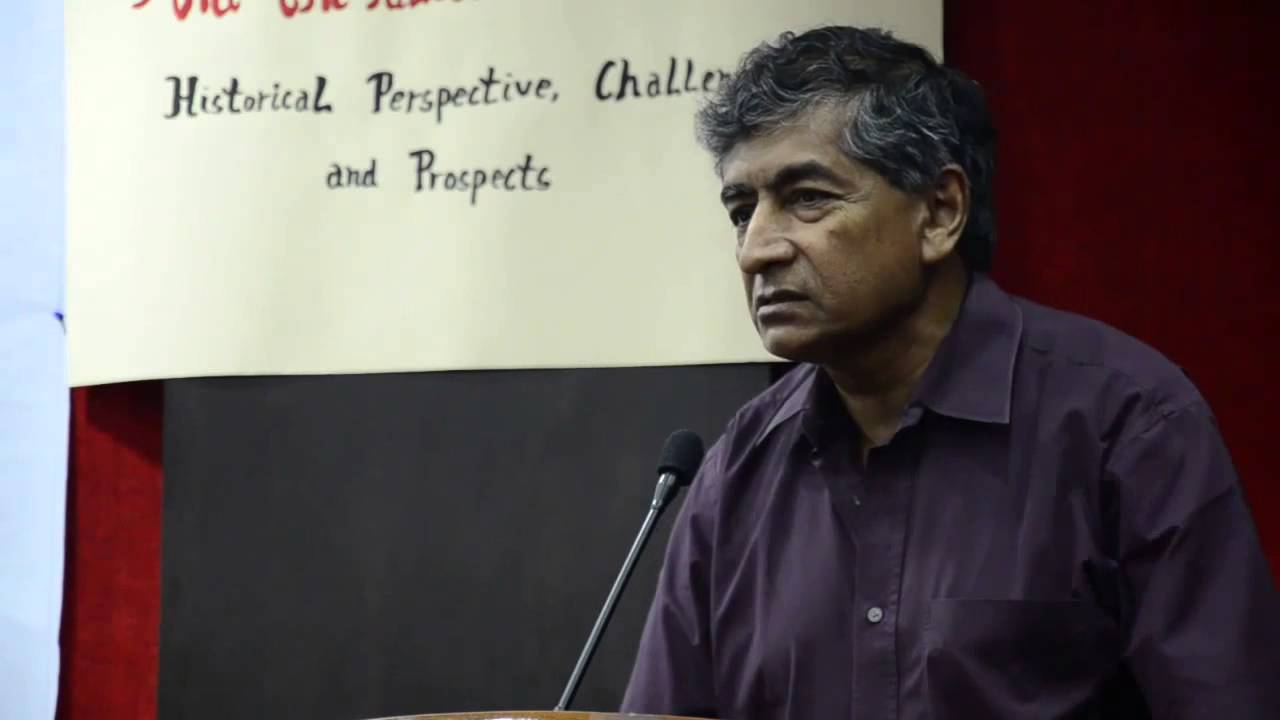
AEPF, Democratisation and Human Rights Populist Authoritarianism and Alternative Arguments
AEPF, Democratisation and Human Rights Populist Authoritarianism and Alternative Arguments

By Kamal Mitra Chenoy

There is valid concern about the  electoral victories  of right wing populists (RWP), and the rise of authoritarian nationalism across many countries and societies.  The moves by the far right for hegemony by changing discourse and changing citizenship laws needs to be challenged through the force of ideas and popular movements.

The current conjuncture of unbridled neo liberalism has resulted in social, economic, political crises. Such crises and rising aspirations causes anxieties amongst the popular masses. The RWP use these insecurities to blame and challenge minority communities, migrants, established institutions, create counter narratives, and mobilize forces to gain power. RWPs  blame the crises on  the liberals, universal rights, migrants, on ‘others’, corruption of past leaders, labour rights, etc. Identity assertion and especially Islamphobia, is often at the core of this mobilization.  However, RWP continue with neo liberal policies, with limited changes that were the real reason for the crises in the first place.

How can progressive movements challenge the rise of populist authoritarianisms?

Showing the economic irrational policies and politics of RWP

The reality is that neo-liberal policies of privatization and globalization, unfettered free trade, the increased corporate control over and above state policies have led to  increasing inequality, precarious livelihoods, decrease of public funding on social sector, unemployment and social pressures. The distress promoted the political rise of the far right. RWP promise a future constructed on a ‘pure’ imagined past and identity nationalism as the cure. The RWP narrative is that subsidies to the poor, especially migrants (who are generally citizens), affirmative action for the marginalised, people of colour; (US, EU), Islamic people (India, US, EU et al) entry of women into job markets, are a drain on the national economy, and threaten national culture, during which the  national (‘pure’ ‘nativist’ ‘victimized majority’) community suffers economically and their ‘traditional’ values (religious, family, mythical, etc) are under threat. They also blame liberals and the Left and call for supremacy of a unified, nativist majority mass.

RWP reject liberal rights as well as workers’ rights. They re-assert neoliberal policies, within an ultra nationalist framework. For example, the instrument of placing ‘tariffs’ (by President Trump) as an instrument of foreign economic policy, does not ensuring fair trade or workers’ rights, but appeals to nationalist emotions by only asserting barriers and raising costs. RWP seek to replace class inequality with identity based inequality, by putting in place policies that favour one community, or promoting particular oligarchs (As Putin has often done). So displacing minorities/  migrants/ others/ women and marginalizing them.

Authoritarian nationalism has to be challenged by a democratic and plural nationalism. By showing the impact of corporate control, challenging binding trade treaties, showing the value and inter-linkage of social justice, climate justice, rights and saving livlihoods de-militarization. It is evident that “Democracy in danger of becoming a shell in itself, if the present trend on concentration of wealth continues.” (Kurz Heinz, 2018)

Countering the RWP  project of Hegemony

RWP super imposes itself on   any form of political system, but is especially effective with the new and transitional democracies (Central-East Europe, South East and South Asia, Latin America). Once in power, RWP re-shape institutions and change laws to change the nature of citizenship and management and the state. RWP combine the method of electoral democracy with authoritarian control, shrinking participatory democracy in order to re-order the mass. Therefore the challenge to RWP is through counter ideas, evidence based arguments that show up the real nature and falsehoods of the RWP project.

The RWP agenda of changing state character is through the capture of institutions, changing privileges and laws of citizenship by marking insiders and outsiders.  Several RWP leaders from Presidents Trump, Putin, Erdogan, Duterte, Hungarian President Victor Oban, Brazil’s Bolsonaro,  Modi and others  work to restructure  the balance of power (the centre piece of democratic constitutions), potential sources of power and attack the idea of empowerment. Starting with complete control of their own parties, marginalizing their own cabinets, moving to control over the judiciary and changing the federal structure. In all states where RWP rule, there has been a serious decline of autonomous institutions and general decline in public expenditure. Of course the slide of the scale varies. This capture of institutions has to be resisted by popular movements, from municipality upwards.

RWP seek to fuse  exclusive identity assertions. The nation is identified with  a dominant, singular and homogenized community, based on religious or ethnic roots.  (‘Islamic State’,  ‘Hindu Rashtra’ Christian or Nativist etc). Those  ‘outside’ are politically,  culturally marginalized, with policies and laws. Economic degradation follows. These changes are legitimized by ultra-nationalism.

RWP gain legitimacy through politicized religion, the mythical past, rather than the plurality and complexity of history and reality. They use emotional arguments (‘motherland’, martyrdom and historical victimhood, etc.)  For example Trump called the  migrant caravan (Hispanics) of 4000 an “invasion”. So developing fear psychosis. Populism like other ideologies, makes claims in the name of the people, but the far right’s concept of peoples and policies are generally  exclusive to one dominant identity opposed to several others.

In the RWP project,  ‘outsiders’ are rejected and mocked. This process de-humanises the different and makes them vulnerable to discrimination and vigilante violence. (Jaraslaw Kaczynski  of Poland’s governing PIS described migrants as carrying  “various parasites and protozoa, which don’t affect their organisms, but which could be different here.” India’s Home Minister Amit Shah described Muslim migrants to Assam as ‘termites’). Millions of people from the state of Assam have been made non citizens, through a national citizens register. The Muslim dominated state of Jammu and Kashmir has been dissolved from statehood.

The idea of nation with singular and forced identity have been long challenged historically, theoretically and in practice. History has repeatedly shown the high cost of right wing militarist regimes. Many states have active and frozen conflicts and civil wars on account of suppressing minorities groups from equal citizenship (Sri Lanka, Myanmar). These facts and experiences need to be re-asserted and shown in new popular ways.

The Rise of RWP signifies a backlash against feminism and gender choices, as they focus on ‘set’ family values, stereo typed binary roles for women and express homophobia. Duarte for instance joked about raping Ms.Universe, and equated having a second wife to keeping a “spare tire” in the trunk of a car. (Time, July 23, 2018.) Feminists argue that RWP’s posses ‘toxic masculinity’ and they stereotype binary gender roles, even as these have been long rejected by the women’s movement. They reduce women  as a resource for national development. At the same time,  RWP  tolerate women who belong to their own identity and ideology, but cannot tolerate migrants, and the other.  Women have also backed RWPs from Duterte, Bolsonaro, Trump, on account of different reasons, But women’s movements have also strongly opposed RWP and are major allies in the resistance.

RWP infuse militarism into civilian life. Populists project revivalism as their cadre infuse militarist values into civilian life. Jair Bolsonaro, Brazil, former army captain, appreciates the hated dictatorship of Pinochet, champions unrestricted sales of firearms, argues that  police encounter killing is self defence. The peace movement and information about the rise of military spending has to be popularized to challenge this militarism.

Resistance

Peoples and grass roots democracy supported by a collective of minorities are a major force fighting right wing authoritarianism and populism. Liberals and Left are important part of the resistance, even as the Left has declined in many countries.  Further a major challenge is the condition of enforced silence. Even while liberals support neo-liberal policies and do not see the connect of neo-liberalism and the extreme right, yet they are defending democratic rights in a major way. But the real force that can defeat RWP will be people and alternate ideas. These ideas, practices exist and have defeated right wing authoritarianism earlier. We have to find ways to connect progressive ideas to the mass of people.

Resistance to RWP depends on the depth of democratic culture and rainbow coalitions in each country. This requires intervention in institutions, in constitutional structures, in political parties, social movements and on the streets. This has to be linked to material conditions,  popular livelihoods, popular rights and freedoms, based on peoples security and freedoms from want, fear and violence.

References

Cohen, Roger (2018) How democracy became the enemy, New York Times, April 7-8 2018.p.9.

Heinz, Kurz (2018) ‘Power, the bete Noir of Modern Economics, Ideas Working Paper, 01/2018 at http://www.networkideas.org/wp-content/uploads/2018/04/01_2018.pdf

Read More

Achin Vanaik on the Rise of Right wing / Far-Right Authoritarianism from Above and Below

Rise of Rightwing/Far-Right Authoritarianisms from Above and Below

By Achin Vanaik

Two Truths

Let us recognise that there are two basic truths that shape the existing world order. First, that we have and will continue to have for the foreseeable future the coexistence of a capitalist form of economic globalization and the multiple nation-states system. Second, that the principal form taken by authoritarian entities (states or movements) that have arisen throughout the world over the last few decades is authoritarian nationalism.

There is a connection between these two realities. While neoliberal globalization (understood as a general rightwards economic drift and not as a fixed ‘state of affairs’) is a transnational phenomenon, this can only be stabilised by right wing/far-right forces or governments having their own specific nationally-rooted politics and ideologies. There are thus both global and nationally specific factors that create the fertile ground for – but do not guarantee – the rise of authoritarian practices and populisms. If the main actors are national (states, parties, movements) nevertheless we can recognize cross-country common features requiring national, regional and more global strategies to counter and defeat these authoritarianisms.

The Factors

One of the key factors which has contributed to this rise of right wing and far-right authoritarianisms is the depredations, material and psychological, that has been caused by the ongoing processes of neoliberal globalization and the politics and ideological discourses accompanying it. Economically speaking, malnourishment and undernourishment continues to be the fate of over 1.5 billion of the world’s population. If we take into consideration unmet ‘basic needs’ concerning healthcare, decent education social security, leisure, decent housing and fair working hours and conditions of work, then one can add maybe a couple of billion or more of the world’s population to the earlier tally. At the same time this miserable state of affairs has seen dramatically rising inequalities of income, wealth and therefore of power. These have everywhere eroded substantive democracy even as procedurally speaking (e.g., elections, some civil liberties) has spread to some more countries of the South. Globalization has also led to much greater psychic destabilisation and greater clinging on to ‘unchangeable’ identities (ascription by birth) to cope with an increasing sense of powerlessness.

This process of neoliberal globalization then has created a huge set of ‘losers’ who have to a) be policed, hence erosion of democratic rights and freedoms; b) made to feel falsely empowered by diverting their anger and frustrations and mobilising them against the designated ‘enemy’ who is the scapegoat for supposedly causing, enhancing or benefitting from, their sufferings.

Another important factor associated with the process of neoliberal globalisation that must be taken note of is the Communications Revolution that has made TV and social media platforms (e.g., mobiles) the main mediums of public conversation between political persuaders and an increasingly atomised and individualised public audience. The result (a) is that the organisation of messaging including the generation of fake news and trolling rather than the quality of argumentation has become more and more important. (b) Political appeal for rightwing/far-right governments, parties, movements has become more ‘personalised’ and reliant on image projection and spectacle. This personalisation of politics has been enhanced by the fact of much greater policy convergence between the main parties contesting elections and striving for state power.

What is specific to rightwing populisms as distinct from leftwing populisms is the central role of scapegoating.  All such entities require the cultivation and spreading of ideologies that embody exclusivist anti-democratic nationalisms and promote new forms of racism. Here Islamophobia has become the dominant (though not the only such) form and has grown within countries as well as spreading across them to become regional phenomena (deepening connections between reactionary Hindu and Buddhist groups in Myanmar, Sri Lanka, India) and even globally via the spread of the dishonest discourses and practices associated with the ‘Global War on Terror’ (GWOT).

Why this Islamophobia? Apart from India where this is foundational to Hindutva ideology, this is because: (a) there is the refusal to deal humanely with migration (particularly of Muslims), forced or voluntary, from many parts of the world. Forced migration will only grow to an even bigger scale in the future because of the guaranteed environmental consequences that will now follow from the climate carbonisation that has already occurred; (b) There is the long history of Western imperialism by US and allies in the MENA (Middle East and North Africa) region; (c) There is the self-serving hypocritical endorsement of GWOT by other big powers e.g., Russia, China, India facing secessionist pressures in Muslim dominated regions.

What Parliamentarians Can Jointly Do

Since this discussion is taking place in an AEPF meeting in Kuala Lumpur, Malaysia where parliamentarians are present from a number of countries in Asia and Europe there is here a set of issues which I believe demand the attention of the AEPF governments and specifically of the Asian member countries. These are listed below and if fulfilled will constitute important steps forward  in the effort to reduce the power and influence of rightwing and far-right populisms in Asia and elsewhere.

  • All Asian countries (the main holdouts) to sign and ratify the ‘International Convention and Protocol on the Status of Refugees’, and even otherwise to abide by its injunctions. Even for non-signatories, Refoulement (Forcible Repatriation) is illegal.
  • Outright condemnation of Islamophobia and other forms of racism.
  • Against hate speech especially by those holding parliamentary and senior government positions thereby having greater power and public influence.
  • End all sanctions on Iran.
  • Call on all Asian countries which have not signed and ratified (brought into force on their territories) the ‘International Convention Against Torture and Other Cruel, Inhuman or Degrading Treatment or Punishment’ to do so immediately. These holdouts include India, Malaysia, North Korea.
  • Call on all states to sign and ratify the Treaty on Prohibition of Nuclear Weapons (TPNW) and promote steps to (a) bring about a Northeast Asian Nuclear Weapons Free Zone; (b) extend the Bangkok Treaty (Southeast Asian Nuclear Weapons Free Zone) to incorporate Bangladesh; (c) encourage Nepal to emulate Mongolia by moving towards declaring itself a Single State Nuclear Weapons Free Zone (SSNWFZ). Representative bodies of parliamentarians from some Asian (and European) countries should visit Bangladesh and Nepal to pursue these efforts.


ANNEXURE

The Refugee Question

The following are the Asian (excluding Middle East) Country Participants in the Convention on Status of Refugees:

Afghanistan, Azerbaijan, Cambodia, China, Fiji, Japan, Kazakhstan, Kyrgyzatan, Papua New Guinea, Philippines, South Korea, Tajikistan, Timor-Leste, Turkmenistan.

Refugees shall

  • abide by the national laws of the contracting states (Article 2)

The contracting states shall

  • exempt refugees from reciprocity (Article 7): That means that the granting of a right to a refugee should not be subject to the granting of similar treatment by the refugee’s country of nationality, because refugees do not enjoy the protection of their home state.[17]
  • be able to take provisional measures against a refugee if needed in the interest of essential national security (Article 9)
  • respect a refugee’s personal status and the rights that come with it, particularly rights related to marriage (Article 12)
  • provide free access to courts for refugees (Article 16)
  • provide administrative assistance for refugees (Article 25)
  • provide identity papers for refugees (Article 27)
  • provide travel documents for refugees (Article 28)
  • allow refugees to transfer their assets (Article 30)
  • provide the possibility of assimilation and naturalization to refugees (Article 34)
  • cooperate with the UNHCR (Article 35) in the exercise of its functions and to help UNHCR supervise the implementation of the provisions in the Convention.
  • provide information on any national legislation they may adopt to ensure the application of the Convention (Article 36).
  • settle disputes they may have with other contracting states at the International Court of Justice if not otherwise possible (Article 38)

The contracting states shall not

  • discriminate against refugees (Article 3)
  • take exceptional measures against a refugee solely on account of his or her nationality (Article 8)
  • expect refugees to pay taxes and fiscal charges that are different to those of nationals (Article 29)
  • impose penalties on refugees who entered illegally in search of asylum if they present themselves without delay (Article 31), which is commonly interpreted to mean that their unlawful entry and presence ought not to be prosecuted at all
  • expel refugees (Article 32)
  • forcibly return or “refoul”refugees to the country they’ve fled from (Article 33). It is widely accepted that the prohibition of forcible return is part of customary international law. This means that even States that are not party to the 1951 Refugee Convention must respect the principle of non-refoulement. Therefore, States are obligated under the Convention and under customary international law to respect the principle of non-refoulement. If and when this principle is threatened, UNHCR can respond by intervening with relevant authorities, and if it deems necessary, will inform the public.

Refugees shall be treated at least like nationals in relation to

  • freedom to practice their religion (Article 4)
  • the respect and protection of artistic rights and industrial property (Article 14)
  • rationing (Article 20)
  • elementary education (Article 22)
  • public relief and assistance (Article 23)
  • labour legislation and social security (Article 24)

Refugees shall be treated at least like other non-nationals in relation to

  • movable and immovable property (Article 13)
  • the right of association in unions or other associations (Article 15)
  • wage-earning employment (Article 17)
  • self-employment (Article 18)
  • practice of the liberal professions (Article 19)
  • housing (Article 21)
  • education higher than elementary (Article 22)
  • the right to free movement and free choice of residence within the country (Article 26)

The Question of Torture and Other Unacceptable Methods of State Behaviour

The following are the Asian (excluding Middle East) Country Participants in the Convention Against Torture and Other Cruel, Inhuman and Degrading Treatment or Punishment:

Afghanistan, Azerbaijan, Bangladesh, Cambodia, China, Fiji, Indonesia, Japan, Kazakhstan, Kyrgyzstan, Laos, Maldives, Mongolia, Nepal, Pakistan, Philippines, South Korea, Sri Lanka, Tajikistan, Thailand, Timor-Leste, Turkmenistan, Uzbekistan, Vietnam.

The International Treaty Prohibiting Nuclear Weapons

The following are the Asian Signatories to the Treaty on Prohibition of Nuclear Weapons:

Bangladesh, Cambodia, Fiji, Indonesia, Kazakhstan, Laos, Malaysia, Nepal, Philippines, Timor-Leste, Thailand, Vietnam. [Only the last two have so far also ratified the Treaty].

Read More

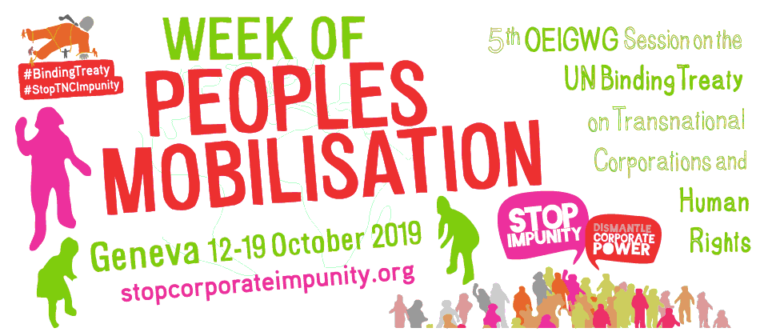
Save the date: October 12th 2019, Call to Action on Ending Corporate Impunity. Call to Sign and Implement the Binding Treaty on Corporations!

Save the date: October 12th 2019, Call to Action on Ending Corporate Impunity. Call to Sign and Implement the Binding Treaty on Corporations!

SAVE THE DATE!

WEEK OF PEOPLES MOBILISATION

12 – 19 October 2019

2019 WILL BE A DECISIVE YEAR FOR THE BINDING TREATY ON TRANSNATIONAL CORPORATIONS AND HUMAN RIGHTS!

 We call to mobilise worldwide on 12th October to denounce Corporate impunity, on the occasion of the Week of Peoples Mobilisation in Geneva

JOIN IN TO RECLAIM PEOPLES RIGHTS OVER INVESTORS AND CORPORATE PROFITS AND IMPUNITY

Neoliberal globalization has opened the doors for the savage exploitation of the world by the big economic powers. Megaprojects, agribusiness and militarization, among other processes, express a patriarchal, neoliberal and racist system that amounts to an assault  on life as such. As a result, peoples’ rights have been systematically violated, the Earth and its resources destroyed, pillaged and contaminated, while corporations continue committing economic and ecological crimes with total impunity. They also throw us into an environmental and climate crisis of unknown proportions, for which they do not take responsibility.

Driven by their imperative to maximize profits, transnational corporations (TNCs) seek to pit workers from different regions against one another throughout the entire supply chain. The systematic violations of human rights that affect millions of people, who were forcibly expelled by extractive industries, free trade or the business of war and forced to long migratory routes, constitute new markets and profits for civilian and military companies.

Communities and peoples are resisting the advance of this offensive that implies, in most cases, the combination of the institutional action of far-right governments with actions that violate the collective rights of peoples driven by actors such as transnational corporations. The evidence on the violation of human rights at the hands of these companies is widely documented and on the ground translates into environmental disasters, the death of activists, leaders of communities and peoples.

The signing of new international trade and investment treaties gives more rights to “the investors” than to the affected people and communities. Worse, through the investor-state dispute settlement mechanism (known as ISDS), corporate interests are shielded to the detriment of the public interest.

In order to challenge corporate power and the system that protects and benefits it, it is necessary and urgent to give a systematic response. We must unite our experiences, struggles, collectively learn from our victories and our failures, share strategies and analysis in order to curb the impunity of the transnationals. The United Nations Binding Treaty process on transnational corporations and human rights constitutes a space, within the framework of the Human Rights Council of the United Nations, from where we can force corporations to respect human rights, creating a mechanism so that affected states and peoples can sue transnational corporations.

The 5th Session of the Open-ended Intergovernmental Working Group (OEIGWG) in Geneva will take place from October 14 to 18. The Global Campaign to Reclaim Peoples Sovereignty, Dismantle Corporate Power and Stop Impunity will be there again, as every year since 2014, to continue to pressure governments and prevent them from derailing the process.

In that context:

  • We join the call of the European Campaign “Rights for people, rules for corporations – Stop ISDS” that will mobilize between October 11 and 18 in Europe denouncing corporate power.
  • We convene the Week of Peoples Mobilisation in Geneva (Switzerland) from 12 to 19 October   
  • We call to mobilise in protest against corporate power on October 12 across the planet and to pressure governments to advance the Binding Treaty. It is an important day that reminds the “discovery” of America initiating a colonial process that has a continuity with the current economic policies imposed by the most powerful countries to the Global South.

Who we are

The Global Campaign to Reclaim Peoples Sovereignty, Dismantle Corporate Power and Stop Impunity (Global Campaign) is a network of over 250 social movements, civil society organisations (CSOs), trade unions and communities affected by the activities of TNCs. These groups resist land grabs, extractive mining, exploitative wages and environmental destruction caused by TNCs globally but particularly in Africa, Asia, Europe and Latin America. The Global Campaign is a peoples global structural response to unaccountable corporate power. It provides facilitation for dialogue, strategizing, exchanging information and experiences and acts as a space to make resistance visible and deepen solidarity and support for struggles against TNCs.

The programme of the Week of Peoples Mobilisation will be published soon.

More information on the UN Binding Treaty process

Read More

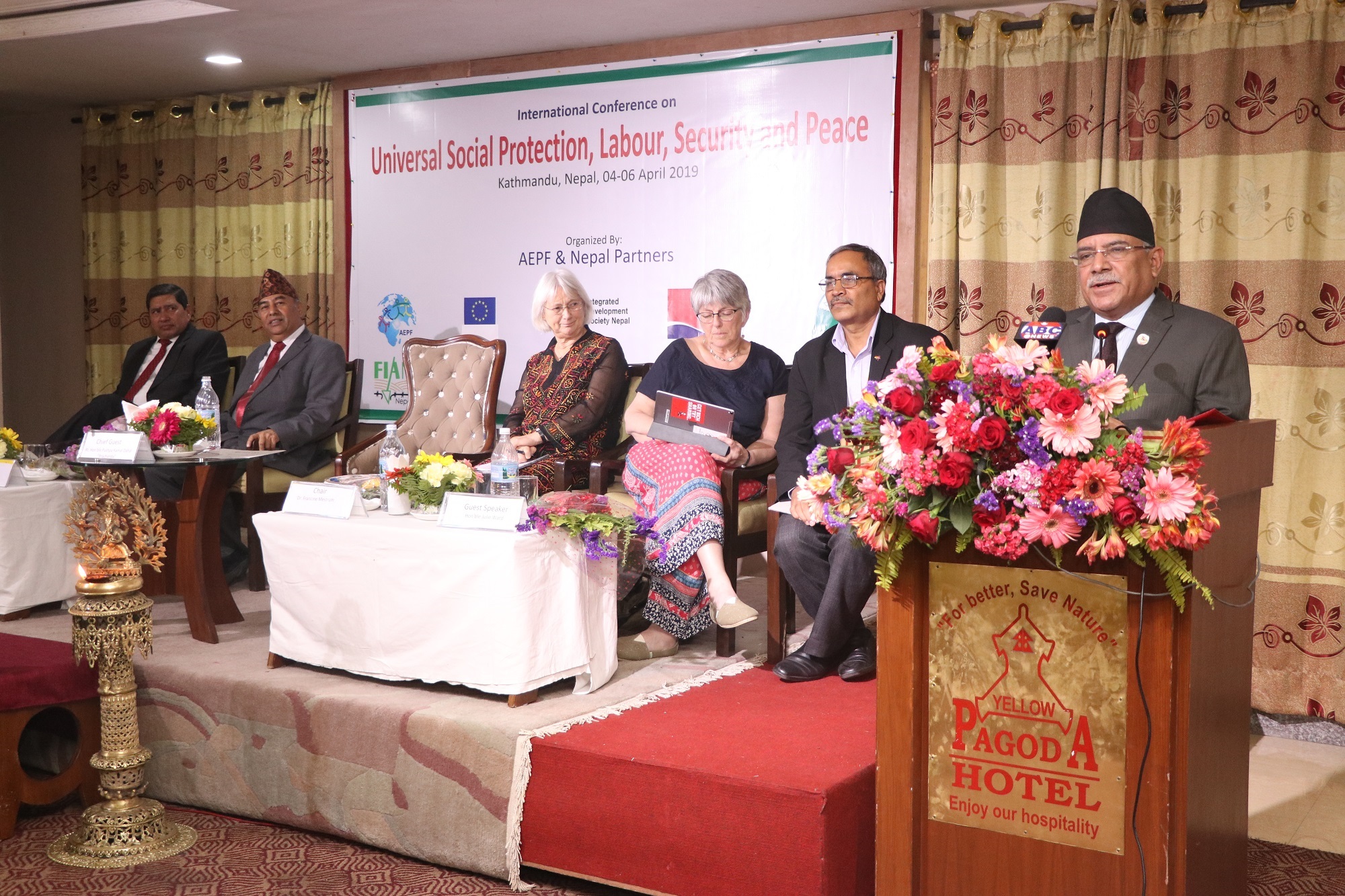
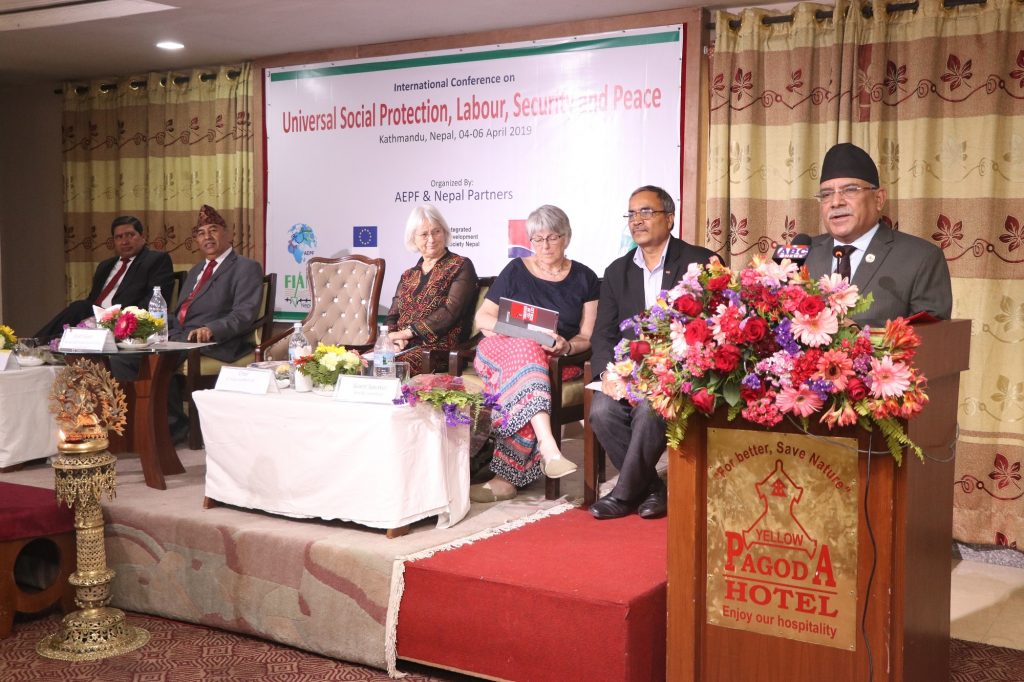
Rt. Honourable Former Prime Minister and Chairperson of Nepal Communist Party Pushpa Kamal Dahal “Prachanda” , Inaugural Speech International Conference on Social Protection, Security and Peace

Rt. Honourable Former Prime Minister and Chairperson of Nepal Communist Party Pushpa Kamal Dahal “Prachanda” , Inaugural Speech International Conference on Social Protection, Security and Peace

04 April 2019, Kathmandu, Nepal.

Chairs of the opening session Dr. Devkota and Dr. Mestrum, Former Deputy Prime Minister and Spokesperson of our Party NCP Mr Shrestha, Distinguished Guest on the Dais, Parliamentarians, Panelists, Participants, Media persons, Members of Civil Society, Ladies and gentlemen!

It is my immense pleasure welcoming you all, particularly the distinguished foreign delegates coming from different parts of the globe, to debate and try to seek potential solutions in this highly coveted conference on social protection, security and peace in our societies.

Nepal, the newest federal democratic republic, is the birth place of Gautam Buddha – which is also known as the light of Asia, and his world famous teachings that enshrine the messages of non-violence, social harmony and peace, among others. However, the Nepalese society at large was subjected to different types of suppression, exploitation, discrimination, inequalities and marginalization throughout the significant period of our history. Until the recent past, the country was ruled by a monarchy in disguise of party-less political system just dominated by handful of elite groups. This system remained in the country for nearly two and half centuries mainly brewing autocratic and feudal regimes controlled by the king and his family. So, when the rest of the countries and societies around the world were already enjoying popular participatory democracy and hence socio-economic development, the Nepalese societies were under the grinding stones yielding rampant violations of fundamental human rights, forget about the socio-economic development based on the principles of social justice and peace. It continued to create and perpetuate poverty and further injustices in different forms and manifestations.

Defeating the rulers of the period and bringing desired political changes, people of Nepal have no option but to sensitize, organize and revolt in all their capacities, under the leadership of Communist Party and other democratic political forces. The then Communist party of Nepal (Maoist) had taken up arms to fight against the establishment, and it smoothened the ground and created a favourable environment within a decade of ‘people’s war’ to overthrow the centuries’ old monarchy and establish long awaited republican set of governance in the country.

Now, after little long political transitional period, we have consolidated and institutionalized the hard won democracy by promulgating a constitution that is framed within the framework of international human rights principles and relevant instruments. It has guaranteed power sharing with all levels of governments that are elected through adult franchise, democratic processes and rule of law that are prerequisites for socialism oriented socio-economic development of the country. The three layers of governments – federal, provincial and local, are independent to exercise their powers as per the constitution. We believe in participatory democracy, and hence we had successfully elected people’s representatives to all tiers of governance very recently through ballots. These governments are working day and night to enact necessary laws and set up mechanisms towards ensuring the best delivery of their services to the people. Our current destiny as proclaimed in the constitution is socialism and sustained peace. We are determined to eradicate all forms of discrimination and exploitation, and ensure freedom, fundamental rights, periodic elections, adult franchise, participation, inclusion and press freedom.

The ultimate beneficiaries of good social protection policies and schemes are mainly the people encountering different levels of difficulties and hardships to live a life with dignity in ecological harmony with nature. These schemes, in whatsoever forms and modalities, are intended to prevent or reduce human sufferings and hardships in order to facilitate dignified enjoyment of human rights. They help human beings to elevate, to flourish and thereby to realize their potentials. In other words, social protection instruments not only prevent or reduce human hardships, sufferings and difficulties but also tremendously help to narrow down disparities, tackle injustices and inequalities caused by whatever reasons.

In our context, Social protection, peace and security are the fundamentals for realizing our visionary dream of “Happy Nepali, Prosperous Nepal.” Therefore, the government under the leadership of highly committed Comrade KP Oli, the other Chairperson of Nepal Communist Party, has been trying to promulgate laws, and policies and set up functional mechanisms for timely delivery of people friendly policies and plans. It is in this context that the parliament as well as the government have promulgated several Acts, regulations and guidelines, for example, the Compensation-based Social Security Act-2017, guidelines for establishing social security fund, the Right to Work Act, Labour Act, minimum wage, Prime Minister’s Employment Programme, and etcetera. The compensation based social security act is one of the most sought Acts, and is the first of its kind in Nepal.

The above mentioned laws and other provisions are necessary as the Constitution of Nepal has envisioned social security as a step towards establishing a welfare society. Although the state has many liabilities towards its citizens, welfare of the people and societies is one of its prime liabilities. Thus, the Acts were enacted as per the social welfare concept, and in accordance with which the people have rights to welfare of various kinds, such as taking care of people, especially vulnerable ones like the old, the widow, the sick, the disabled, the unemployed and children, in terms of providing them with food, shelter, healthcare, education, etc., thus promoting their wellbeing and allowing them to live in society with dignity and pride.

Having said this, positive developments are rapidly happening in the country, the proper implementation of the regulations and other relevant provisions is not free from challenges because we are still in the UN defined state category of Least Developed Countries. Availability of means of implementation, mainly financial resources and institutional capacities are yet to be further enhanced. The society is still marred by perpetual poverty, hunger, inequalities, discrimination and unjust and derogatory practices as a consequence of patriarchal mindset, feudal remnants, inadequate awareness and lack of effective governing institutions. But, the Nepalese government under the enabling leadership of Nepal Communist Party is confident to overcome the said challenges with the strong solidarity and support from different walks of life – the party cadres, development partners, civil societies and all the well-wishers and friends of Nepal, your best efforts being indispensable, in a way.

I believe, you will take home the best messages of our relentless efforts towards materialising social justice, peace and security of Nepalese people, acting locally and contributing to world social justice, peace and security. I think, social justice and peace are two sides of a coin -there is no sustained peace without comprehensive social justice and no social justice without peace. Hence, I wish this conference will dwell further discussions on ways and modalities for creating awareness, consolidating and expanding the achievements of our struggles, and finding new avenues backing Peace, Security and Social Justice through the appropriate mechanisms of social protection and rights. I am sure, people united will definitely achieve their noble goal of human dignity.

Finally, let me reiterate that I am very much delighted and proud to be part of this process. I wish for your meaningful meeting, grand success of the conference and pleasant stay in Nepal. While in Nepal, I am of the strong belief that you will enjoy the warmth of hospitality accorded by Nepalese people and the natural beauty of Nepal.  Nepal is a country of socio-cultural unity with diversity in terms of mix of population groups, their cultures, languages and the way they enjoy their socio-cultural lives. Nepal is a treasure of natural beauty and cultural diversity, which if observed and engaged will give a peace of mind and satisfaction.

I wish for your pleasant stay and meaningful days in Kathmandu.

Thank you all.

Watch the video of the speech here: 

Read More

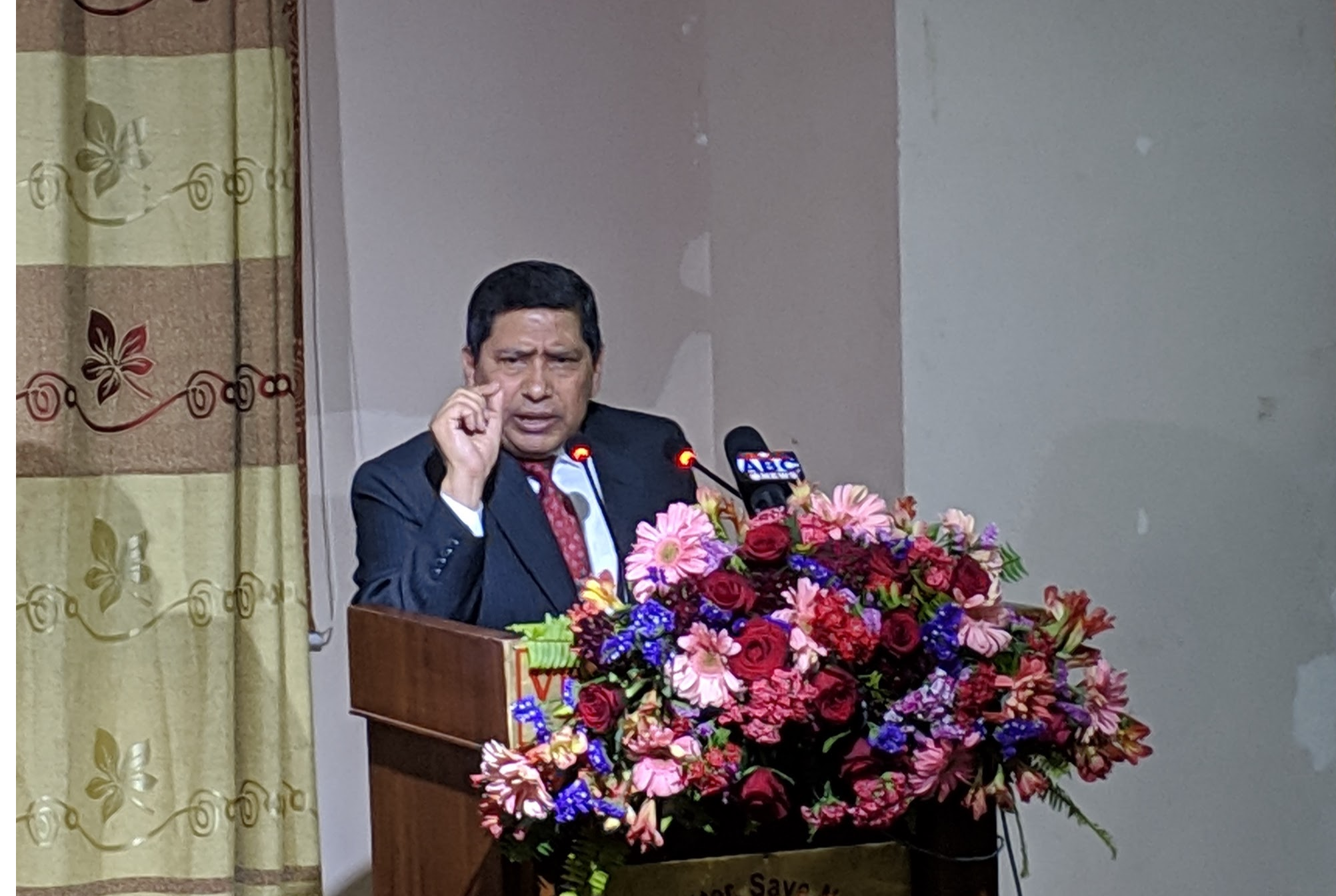
Narayan Kaji Shreshta, Former Deputy Prime Minister and Spokesperson of the Nepal Communist Party speech, at International Conference on Universal Social Protection, Security and Peace, 04 April 2019, Kathmandu, Nepal

Narayan Kaji Shreshta, Former Deputy Prime Minister and Spokesperson of the Nepal Communist Party speech, at International Conference on Universal Social Protection, Security and Peace, 04 April 2019, Kathmandu, Nepal

04 April 2019, Kathmandu, Nepal
Chairs of the opening session Drs. Devkota and Francine,
Rt. Honourable Former Prime Minister and Chairperson of Nepal Communist Party Pushpa Kamal Dahal “Prachanda”

Distinguished Guest at Dais,
Panelists, Participants, Media persons,
Ladies and gentlemen!

It is my great pleasure welcoming you all, particularly the distinguished foreign delegates from Europe and Asia in this Conference on social protection, security and peace.

First of all , I  want to highlight the ‘Maoist people’s war and the peace process.’ The war started on February 13, 1996 and officially ended on November 21, 2006, by signing a peace accord between the warring parties –the then Maoist Party and the state. These had remained the pivotal events in the history of Nepal that paved the path for establishing republican federal Nepal and overthrow the monarchy. Although the ‘people’s war’ spearheaded by the Maoist Party was not the first armed struggle in Nepal, but it left distinct marks and reverberations in the history of armed struggles within and beyond the borders of Nepal given its nature, volume and impact on contemporary political landscapes. The struggle was started and developed by forming more organised military formations, creating a militia and earning a strong support base with an instrumental and sustainable war mechanism to challenge state power.

It is important to note that the characteristics of the Nepalese people’s war and compare those characteristics against the parameters of an actual war.  The restoration of multiparty democracy in 1990 brought about hopes to the Nepalese people that they would gain more economic, social and political change. However, the hope of the people turned into frustrations due to the continuation of the previous state mechanisms and processes that was unjust, discriminatory, coercive and oppressing. A wide gap between the rich and the poor, high rate of unemployment, and a slow, ineffective and corrupt politicians and bureaucracy were the main reasons behind the people’s dissatisfaction. The rising dissatisfaction and mistrust of the people were capitalised to some extent by the Communist Party of Nepal (Maoist), and a war against multiparty political system and abolition of the monarchy was declared. The war against state power became widespread, and the Maoists were able to gain the support of lower and middle classes mainly from the rural areas. Government forces were defeated on several fronts. The state mechanism became almost defunct. Finally, a peace accord was signed in November 2006 between the Maoists and the Government of Nepal which ceased the struggle.

In contrast to other wars in the world, the people’s war gained massive success in developing a war mechanism and abolishing the social absurdities to some extent. The presence of the state was nil in those areas controlled by the Maoists, resulting in the establishment of a Maoist state mechanism. The Maoist army comprised of different caste groups, ethnicity and economic classes.  The participation of women in the Peoples’ Liberation Army was up to 75%. People who were marginalised socially and economically had greater participation in the Maoist force.

The most noteworthy impact of the people’s war is the political empowerment of the lower economic class, including women and socially deprived groups. The involvement of these groups in the war trained them to be more proactive in politics. They now have greater participation not only at the local level but also in the federal parliament and governments (local, Provincial and Central). Social perversions such as consumption of alcohol, gambling, polygamy and social segregation were made punishable to some extent.

The war also brought about significant positive changes. Development responses reinforced many ‘good practices’ including transparency, accountability, localization, and more equitable distribution of benefits. The war also forced many issues, suppressed for centuries, to surface, including recognition and inclusion of diverse groups and their culture, religion and education. Conflict helped to create space for greater leadership amongst women and youth. The issues of systematized exclusion for so long and  hence utmost necessity for inclusion of diverse groups of Nepal like Dalits (oppressed class based on caste system), women, indigenous people; Madhesi (people living in the plains), etc. came to the fore. The rights of differently abled people and other minority groups including their social-cultural issues, and the issues of polygamy, domestic violence and gender based violence (GBV), child marriage, land rights, etc. are now being openly discussed and resolved positively. However, it is for sure that these are mostly related with the structures of our society, so may take some long to completely do away, I think.

Many other instances of conflict are rampant throughout the nation after a decade of signing Comprehensive Peace Accord (CPA) to peacefully settle the war and enter into a new political era leading to People’s Democracy, Constituent Assembly Election, declaration of Republic nation and a new constitution drafted by the directly elected representatives of people for the first time in national history.

Human rights are the inherent rights of a person. Recognized in international laws and fundamental laws (constitutions) of the countries, human rights are considered as the basic rights that all persons are entitled to. Being a democratic country, Nepal has expressed full commitment towards human rights, as Nepal is a state party to major international human rights laws. It has enacted new laws and amended existing laws to align them with accepted international human rights instruments.

The Constitution of Nepal (2015) has ensured basic human rights as fundamental rights under the part 3, articles 16 to 46. Right to live with dignity, Right to freedom, Right to equality, Right to communication, Right to justice, Right of victim of crime, Right against torture, Right against preventive detention, Right against untouchability and discrimination, Right to property, Right to religious freedom, Right to information, Right to privacy, Right against exploitation, Right regarding clean environment, Right to education, Right to language and culture, Right to employment, Right regarding labor, Right to health care, Right to food, Right to housing, Right of women, Right of children, Right of Dalits, Right of senior citizens, Right to social justice, Right to social security, Right of consumers, Right against exile and Right to constitutional remedy have been comprised as fundamental rights. Articles 133 and 144 have empowered the judiciary to exercise extraordinary jurisdiction to enforce the fundamental rights effectively. The Constitution of Nepal (2015) has made the Human Rights Commission as a constitutional body.

In my opinion, there is very strong bondage between the provisions of social protection and enjoyment of human rights. Social protection is mandatory for ensuring full enjoyment of the human rights by those people and their groups that are so far systematically excluded and marginalized, and/or otherwise (for example old age, disability, etc.,) unable to  afford for a dignified living.

I believe and fully agree that civil societies, social, labor, peasants, women and peace movements and struggles have made proposals and arguments for the need of universal social protection as a conditionality for peace, security, development and social justice. I hope, this conference will further debate, consolidate and reinforce different social movements and struggles in order to bring sustained peace and security in our societies based on the universally accepted principles of Social Justice. In the long run, we may need to work hard in the wider agenda of this conference and further strengthen cooperation among peoples and their movements across the globe.

In conclusion, you have designed many plenary and parallel and side sessions, and I believe you will have enough opportunities for brainstorming, presenting left philosophy mainly  the situation in Europe and Asia in relation to unemployment, poverty and inequality, migration and climate crisis, as well as its consequences for democracy with the emergence of right-wing populism; the (new) geopolitical actors at the national and global levels; for the future of work in an era of new technologies with their consequences on labour markets; the gender and care economy problems ; Global Charter and identification of the concrete possibilities the work of social movements on social justice and many more; We are looking forward for your Kathmandu Call for Actions and Declaration as well.

With this, I remain, Thanks for all!

Read More

AEPF Peace and Security Conference Narrative Report – Kathmandu 2019

AEPF Peace and Security Conference Narrative Report - Kathmandu 2019

May 28, 2019

image3

The “Asia Europe Peoples Forum (AEPF) conference on Universal Social Protection, Labour, Security and Peace” was inaugurated on the 4th of April 2019. The conference held two-day parallel sessions of the ‘Social Justice Cluster’ and ‘Peace and Security Cluster’. The conference addressed concerns including 1) the major political shifts that are a consequence of the inequality and joblessness on account of the neo liberal agenda; 2) Backlash against progressive agendas, against women, minorities; (3) Anxiety about cultural invasion and disruption of traditional values; and (4) Resistances and challenges to fundamentalism and populisms.

Opening Plenary: The chief guest in the opening plenary was Rt. Honorable Pushpa Kamal Dahal “Prachanda”, former Prime Minister of Nepal, chairman of Nepal Communist Party (NCP). Addressing 130 Nepali delegates and 46 foreign delegates, Hon. Dahal shared his experience of political change, democratic transformation and people’s liberation in Nepal.

Narayankaji Shrestha, the spokesperson of NCP and former Deputy Prime Minister of Nepal highlighted the Maoist struggle against the monarchy and parliamentary government/system to make a sovereign federal secular country and to create social justice in the state. Guest speaker and Member of European Parliament Hon. Julie Ward, Dr. Rajan Bhattarai, Foreign Affairs Advisor to the PM of Nepal, Ms. Dagmar Walter, Prof. Anuradha Chenoy, Professor of Jawaharlal Nehru, Ms. Nimalka Fernando, Human Right Activist, Sri Lanka, and Hon. Daman Nath Dhungana also addressed the opening session.

Working Sessions: The four working sessions were about peace and security. The delegates discussed extensively on topics like “Populisms, Right Wing Populisms (RWP), Impact on Peace and Security”, “Different Fundamentalism and Institutions”, “Linkages and impacts of RWP and Fundamentalisms: Migration on Peace and Security”, “Future Programmes, Advocacy, Communications and Resolution”.

Closing Session: The closing session was chaired by Dr. Dinesh C. Devkota, Hon. Julie Ward. Ms. Meena Menon, Mr. Milan Dharel, Mr. Ronald Kulke, Dr. Sharad Onta and Mr. Amaar Ali Jan. The declarations from both clusters were read out and the conference was officially closed following the speeches by the chairs.

Read More

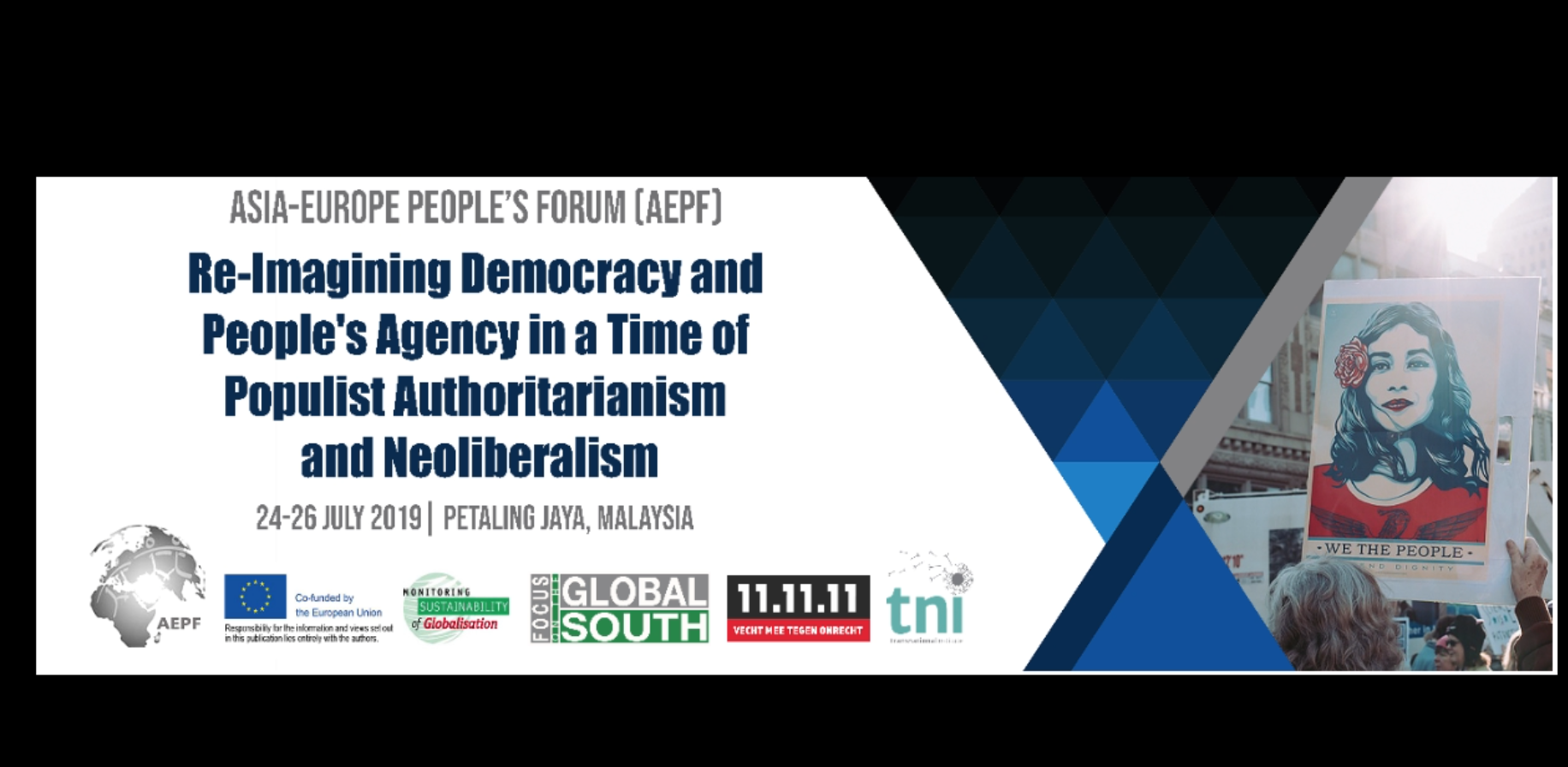
Overview of interface between Asian and European Parliamentarians and civil society representatives in Petaling Jaya (Malaysia), AEPF, 24th July 2019.

Overview of interface between Asian and European Parliamentarians and civil society representatives in Petaling Jaya (Malaysia), AEPF, 24th July 2019.

An interface with parliamentarians from 7 countries of Asia and Europe organised by the Asia Europe Peoples Forum (AEPF) and the Asian Parliamentarians for Human Rights (APHR) on the 24th July, 2019, in Kaula Lumpur on democracy and human rights in the context of populist authoritarianism and neoliberalism.

Read More

Statement from interface between Asian and European Parliamentarians and civil society representatives in Petaling Jaya (Malaysia) on 24th July 2019

Statement from interface between Asian and European Parliamentarians and civil society representatives in Petaling Jaya (Malaysia) on 24th July 2019

Petaling Jaya (Malaysia) Declaration

In this interface between Asian and European Parliamentarians and civil society representatives we declare the following:

Even while about 53% of people globally live under authoritarian regimes, democracy in many countries of Asia and Europe is being weakened. Several governments in collaboration with big corporations are using authoritarian methods to control institutions and curb people’s rights.

We the MPs from seven countries and civil society members from over 20 countries be-lieve in people centered democracy. Participatory democracies have the capacity to pro-vide sustainable development, provide welfare and lift people out of poverty. However with neoliberal globalization, the dominance of oligarchs, trans-national corporations, military industrial complexes and foreign capital has increased. These have disproportionate influence on social, economic, political and cultural policies. This trend is detrimental to democratic processes.

All our societies are diverse and plural in nature. But, religious fundamentalism marked by chauvinist identity politics, exclusive nationalism and selective violence is being used to curb all relevant forms of dissent and target rights.

There are ongoing crimes against humanity which are being normalised. (For example, the genocide of the Rohingya community in Myanmar and the siege on refugees in the Mediterranean). Migrants and refugees are being criminalized. People and organisations who express solidarity with victims of oppression are harassed in multiple ways.

People have lost trust in the system as they believe that democracy has not delivered basic needs. People, especially the youth are therefore turning to right wing movements. Decades of neo-liberal globalisation has increased inequality and about 1.5 billion people are malnourished while basic needs ( education, health social security, etc) are unmet. There is continuous devastation of the global environment, including climate change and loss of bio diversity. This anxiety is leading to a rise in hate speech against the ‘other’.

We Parliamentarians and civil society movements are committed to reclaim democracy and humane politics for people and make some recommendations:

Governments at all levels must become more transparent and accountable to people, and new forms of decentralisation of power and right to information should be institutionalised.

We commit to enhance our struggle against neoliberalism and corporate power. This is because the rise of big finance capital goes against the welfare of people and social jus-tice. It leads to varieties of corrupt power.

We support universal and quality social protection and call for an end to commercialisation in social sectors like education, health, water and energy. We support solidarity economies. For example, community and collective control over local resources, public-public partnerships, re-municipalisation, etc.

Young people have lost faith in the system. We should encourage their participation in progressive movements and in activities they wish to be part of without fear. The monopoly and use of social media by corporations and right wing forces is challenging social relations and democracy. We call for greater norms to prevent hate speech, fake news, trolling, etc.

We have decided to take initiatives to support in the UN the proposed Binding Treaty on Corporations, that makes corporates more accountable.

We call upon Governments to sign, ratify and implement the (1990) Convention on mi-grants and their families and withdraw threats against so-called refugees, many of whom are citizens.

Many of our fellow Parliamentarians have been jailed because of political vendetta. We call for a release of all political prisoners.

We recommend that Parliamentarians and public policy makers engage with civil society in a continuous and accountable way. We believe that governments have the responsibility to make democracy accessible by putting people in the center of policy making and implementation.

Charles Santiago (Chairperson of ASEAN Parliamentarians for Human Rights (APHR); MP, Malaysia); Mercy Chriesty Barends (MP, Indonesia); Deepak Bhatt (MP, Nepal); Tian Chua (Former MP, Malaysia); Aida Kasymalieva (Vice Speaker, MP, Kyrgyzstan); Hassan Murtaza (Member of the Punjab Assembly of Pakistan); Eulàlia Reguant (Former MP, Cat-alonia); Mylvaganam Thilakarajah (MP, Sri Lanka)

Resource Persons from Civil Society: Tur-Od Lkhagvajav (Mongolia); Tina Ebro (Philip-pines); Dr. Geo-Sung Kim (South Korea); Brid Brennan (Ireland and Holland); Kamal Mitra Chenoy (India); Farooq Tariq (Pakistan); Achin Vanaik (India).

Read More

AEPF and China’s Belt and Road Initiative

AEPF and China BRI

July 30, 2019

At AEPF12 in October 2018, activists and researchers began discussing the nature of China’s Belt and Road Initiative (BRI) and its impact across Asia and Europe.

Since then more countries have signed up to the initiative (152 countries and international organisations in total) and scrutiny towards the BRI has intensified with high profile BRI projects accused of causing debt distress and environmental damage, and exacerbating existing conflicts.

In June 2019 in Amsterdam, AEPF had another exchange on the BRI with activists and researchers working on the BRI. We continued to explore our understanding of the initiative including the drivers of the BRI from within China, situating the BRI within the current context of hyperglobalisation and mega infrastructure, and the controversies surrounding BRI projects in both Asia and Europe.

AEPF will continue developing our understanding of the BRI, its impacts and successful strategies to resist unwanted BRI projects through further research, analysis and discussion.

With the BRI impacting on all AEPF thematic clusters, it is hoped that people from all six clusters will be involved in this process.

If you want to be involved in this process, please let us know by e-mailing Stephanie Olinga Shannon (s.olingashannon@tni.org).

Read More