People’s Resistance Agenda Over FTAs and Corporate Impunity
May 5, 2018
Jakarta Call
The AEPF Cluster on Trade Justice & Corporate Accountability
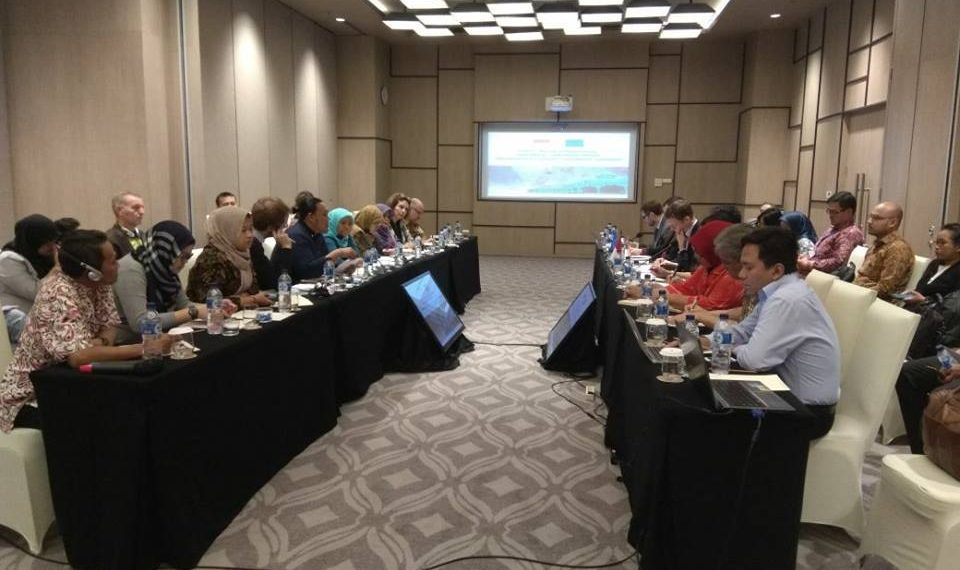
The AEPF week of actions in Jakarta (February 18-23, 2018) has become an important process to re-consolidate people’s proposals and strategies in both regions of Asia and Europe in the story of resistance against free trade agendas and domination of Transnational Corporations.
It has been realized that the control of transnational corporations on the agenda of economic globalization through the massiveness of free trade and investments has greatly contributed to the monopoly of control and exploitation of natural resources that impact on the loss of people’s access to land, water and sea as the source of their livelihood, and threaten their whole economic and life sustainability.
Transnational corporations are more powerful than many countries. They control a huge chunk of the world’s economy, and exert great influence on economic policies from trade to tax policies, and their operations across the globe have huge social, environmental and cultural impacts.
The state has become hostage to corporate influence to such an extent that the protection and fulfilment of Human Rights obligations are not implemented. People’s rights have been marginalized and set aside. Thus, the agenda of resistance on economic injustice over the Free Trade and Investment regime and corporate agenda needs to be re-formulated.
Two resistance agendas were therefore proposed and formulated in this conference, to strengthen joint followup actions: i.e: First, reclaim people’s rights (#ReclaimOurRights); and Second reclaim people’s economy sovereignty (#ReclaimOurEconomy)
1. People’s Agenda to #ReclaimOurRights
In the agenda to reclaim peoples’ rights, actions are cantered in the resistance towards (1) the free trade agenda and (2) corporate power and impunity.
On the Free Trade Agenda
FTAs are being aggressively pursued in the South East Asia region as well as globally. These are ‘new generation’ FTAs with serious problems: Investment chapter & ISDS, IPRs, Digital Trade, services, raw materials, covering non-trade regulations. No transparency in negotiations and no options for public participation – neither from Parliament or civil society. Corporate capture on the other hand gives access for corporate priorities to be carried on in the negotiations. Devastating impacts are experienced on the ground by way of violations of human rights, labour rights and environmental standards; land and sea grabs; de-forestation; toxifying land and water; denial of access to affordable medicines etc. We need more effective documentation on cases of impact and to popularise lessons from existing agreements.
We see human rights violations not only in politics but also in economy in relation with FTAs implementation. There are some strategies and campaigns where the civil society organisations (CSOs) are struggling to ‘Stop the FTAs’ which violate human rights, and these should continue.
First, in relation with Human Rights Impact Assessment (HRIAs). The EU trade policy always accompanies the proposed FTA with a sustainable impact assessment (SIA). However, the SIA only calls for flanking measures, to mitigate for negative impacts of the FTA. It does not change anything about the overriding agenda of liberalisation and de-regulation. The UN Special Rapporteur, indicated that SIAs are completely insufficient to map the human rights impacts of trade and investment agreements. To strengthen SIAs, the Un Rapporteur developed guidelines to address impact assessment that specifically looks at human rights violations.
The advocacy agenda on Human Rights Impact Assessment (HRIA) is necessary to be carried out before the start of the negotiations to make sure that sustainability and human rights are the overriding principles that guide the framework in which trade and investment can take place. Once the negotiations are completed, then the Parliament has to agree or disagree to the agreement and they should have the power to assess the negotiation results on the bases of these impact assessments.
Second, in relation with the Constitutional lawsuits over trade and investment agreements: There are some experiences from Indonesia, Philippines, and EU. Now, the Constitutional Court in Indonesia is examining the CSOs lawsuit about the international treaty law against the Constitution. The reasons for the CSOs challenge are because these investment and trade agreements have caused the loss of democracy where government power is too absolute, and to restore people’s sovereignty.
Like in Indonesia, there have also been legal challenges against the World Trade Organization and free trade agreements in the Philippines, with civil society and public interest groups filing petitions with the Supreme Court. Two such cases were filed against the Japan-Philippines Economic Partnership Agreement (JPEPA). The first petition sought the intervention of the Supreme Court for public disclosure of the negotiating texts and the request and offers made by the Philippine government. In 2008, another petition was initiated by various sectoral organizations against the ratification of the Senate in favour of JPEPA despite its constitutional infirmities. In both petitions however, the Supreme Court ruled in favour of the actions of the government. Despite these setbacks, Philippine civil society groups and social movements continue to demand transparency and public participation with regards to trade negotiations.
Therefore, the experiences from the CSOs lawsuit against FTAs should be documented by the movements and CSOs and become lessons learned for the ongoing campaigns and to strengthen the struggles.
On Corporate power and Impunity
There is widespread resistance to the operations of Transnational Corporations by affected communities. Criminalization of affected communities and workers as well as assassination of human rights and environmental defenders, including the shrinking space for CSOs activities. The human rights violation crisis and forestry fire cases are the results from the crimes and violations done by corporates. Legal instruments available today, both in national and international context, are unable to address the roots of the problems done by TNCs and other business enterprises. Trade and Investment agreements provide a legal architecture of impunity in which TNCs operate and access to justice is denied to affected communities and sectors. In the international context, even with certain certifications that claim to pursue human rights issues it is the TNCs that benefit in terms of their mode of operations and their accumulation of profit.
While efforts to hold corporations accountable have been in place for a long time – these have resulted only in soft law which is voluntary and based of TNC self-regulation. This critique towards soft law is that it is self-regulation and that in practice corporations are not held accountable for the violations that result from their operations. The experience from the implementation on UN Guiding Principles on Business and Human Rights (UNGP) for the past 5 years has not delivered effectiveness in relation to TNCs operations and impacts on communities and the environment. Similarly, the National Action Plans (NAPs) on the implementation of the UNGPs have not given positive results for affected communities or addressed the impunity of TNCs.
The experiences also from European countries have shown that NAPs are not effective. None of them comes with concrete plans to have legally binding and obligations on corporations. The Belgian government has drafted the NAP, but this is not resulting in binding obligations on TNCs. Belgium wanted to be one of the first to show their commitment of complying to human rights standards but this is on the level of recommendations. The NAP raises awareness but is not advancing obligations that are binding.
The same situation with NAPs in Indonesia where The NAP was drafted by the National Human Rights Committee (NHRC) and it was planned to be a Presidential Decree with legally binding power. However, when it was published, the Ministry of Foreign Affairs changed it into National Guidelines.
In the UN, due to persistent campaigns by affected communities, CSOs and responsiveness by some UN Member States, it was urged to develop a code and standards of conduct for TNCs that has a binding nature. In 2014, Resolution 26/9 raised in UN Human Rights Council (UNHRC) was supported by 20 countries in a vote and directed “to establish an open-ended intergovernmental working group with the mandate to elaborate an international legally binding instrument on Transnational Corporations and Other Business Enterprises with respect to human rights”. This was a historic resolution which for the first time raised the agenda of legally binding obligations for TNCs. The Resolution was voted positively by the following Asian countries – Indonesia, Philippines, Vietnam, India and China.
A very broad consolidation of movements, CSOs and affected communities is jointly campaigning for the Binding Treaty under the framework of the Global Campaign to Reclaim Peoples Sovereignty, Dismantle Corporate Power and Stop impunity (Global Campaign). The Global Campaign has developed the People’s Treaty which later became the basis for draft text on the Binding Treaty. This text Treaty on Transnational Corporations and their Supply Chains with regard to Human Rights was submitted to the IGWG last October 2017. The process of The IGWG so far has taken three Sessions 2015-2017 when the Ecuador Chair presented the “Elements” document as the basis for building the Zero Draft Binding Treaty for negotiation at the fourth Session in October 2018.
The negotiation process going forward throughout 2018 and into 2019 and 2020 will require a combination of public information work and advocacy with Parliamentarians and governments in the member states of the UN as well as concerted work with the Permanent Missions at the UN In Geneva.
Since we are members of the AEPF, which is a very important and fertile space to develop further strategies and discussion, and see how we can strengthen the synergy between the campaigns on Trade and Investment and the Binding Treaty.
2. People’s Agenda to #ReclaimOurEconomy
Restoring the sovereignty of people’s economy (#ReclaimOurEconomy) should become an important agenda against economic liberalization. One of the proposals is economic solidarity which in essence is generating the economic and political movements that encourages debate and exchanges of experiences on the hopes and possibilities of developing a more sustainable economy. It means strengthening the willingness and ability of the people to discuss their economic problems including technical start-ups (how to produce, how to manage consumption) how to deal with the current dominant economic framework including the FTA.
To reclaim people’s economic sovereignty, movements should start by discussing the solutions that can strengthen people’s sovereignty and their role in the economy. This can be achieved by three things: agrarian reform, industrialisation, and ecological justice. In relation with economic solidarity, it is key to start producing and empowering our own industry, and making sure the process both in upstream and downstream processes works well. At least there are specific steps to make this happen: first, consumption needs to be structured, then production, then distribution. The trade unions and cooperative institutions need to be strengthened.
The people’s movement must begin not only to criticize the existing FTAs, but it should begin to promote the model of the people’s economic sovereignty, both in practice and in legal recognition. There are similar narratives on this from Indonesia, Philippines, Myanmar, Vietnam, etc.
These dimensions of our resistance agenda should be followed up in every AEPF Forum.
Further Information:
Rachmi Hertanti rachmihertanti@gmail.com
Joseph Purugunan josephp@focusweb.org
Brid Brennan bridbrennan@tni.org